
Nothing To Do
Disability, Chronic Illness, and Passing Your Time
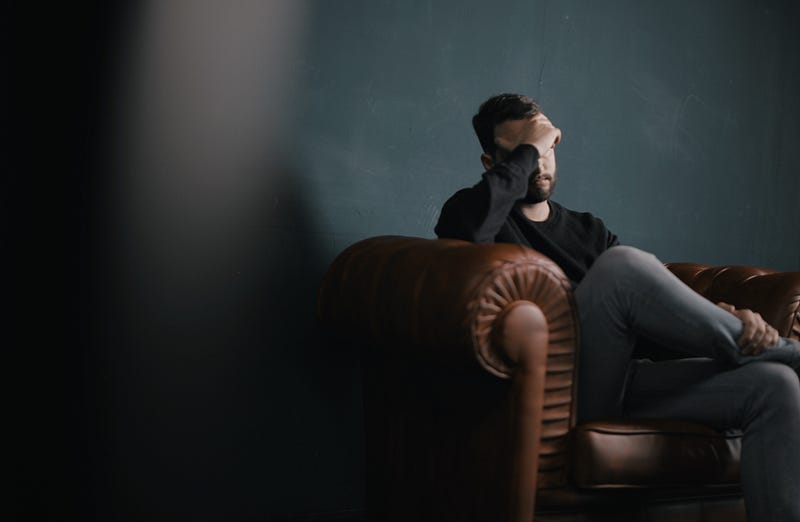
Nothing to Do
For me, a chronically ill, disabled individual, there is a phrase that I can only speak to people like me. If you speak it, it has a different meaning.
“I have nothing to do.”
I recently lost a connection I had to a volunteer job. This job, though quite small, was my connection to the world. Now, I have nothing to do. And if I say that to my friends, they kindly acknowledge my disappointment, but do not understand what this job meant to me.
My life, your life, is made up of projects. Work, career, raising a family, taking care of others, hobbies — these are the things that give life meaning. Without them, there is really nothing to do. I lost my career, my ability to work an 8-hour day, or even a 4 -hour day. My level of fatigue and pain dictate whether I can engage in things I enjoy, like painting, play guitar, reading, going out to dinner, or even having more than an hour conversation with a friend. The difference between me and other people is that, often I can’t fill my day regardless of what I plan to do.
“Nothing to do” is a deeply troubling feeling. It’s not boredom or being restless. It is truly nothing that I, and only I, should do. There is no project, no place for me to make or do something with any sense of purpose. This could be writing (like this) or practicing the harmonica. There is an end to it, a place holder in the universe for something I did. In my world it matters.
This is why small jobs or helping out in some useful way can be so important to the chronically ill and disabled. I return to the world, useful once again. The sun sets on a day that is different in the smallest of ways because of me.
I know from my pre-disabled life that life’s projects can be quite overwhelming. There were many times when I’d have loved to have nothing to do. But this is not the same. “Nothing to do” in a busy life is a project in itself: a relief from being too busy. Getting enough rest to begin again. This is not the disabled “nothing to do.” Mine is the nothing in its lack of activity that pulls you towards the future with some promise; the promise of making something where there was nothing before. Without this I am floating freely in a sea of no destinations.
As a former professional person, I have friends who since the COVID epidemic have worried about their jobs. Some physicians have been laid off — something previously unheard of — and scramble for employment. “I can’t imagine not being a doctor” they say. Well, I used to say that. Now I can imagine it.
“Relax” I’ve been told. “You are sick, it’s not your fault.” Well, I don’t feel guilty about it. I know it’s not my fault. The advice to relax and “take it easy” now that I am no longer fully able, tells me that the chronically ill and disabled do not get to have a meaningful life. Once I became sick, I was sent to the sidelines to watch life get played out without me. I am used to this. I talk about the comings and goings in the world with people as if I were really part of it. But mostly I’m faking it. The world passes me by. There is no longer a place there for each me by virtue of some role; worker, parent, helper, maker.
If there will be a place, I have to make it. Sometimes I need someone who is truly willing to enter my world. And when that place is taken away, there is nothing to do. Nothing.