
Notes on Camilla Grudova’s Beguiling Debut Novel, ‘Children of Paradise’
Tackling Grudova’s strange and unwieldy horror novel, one idea at a time
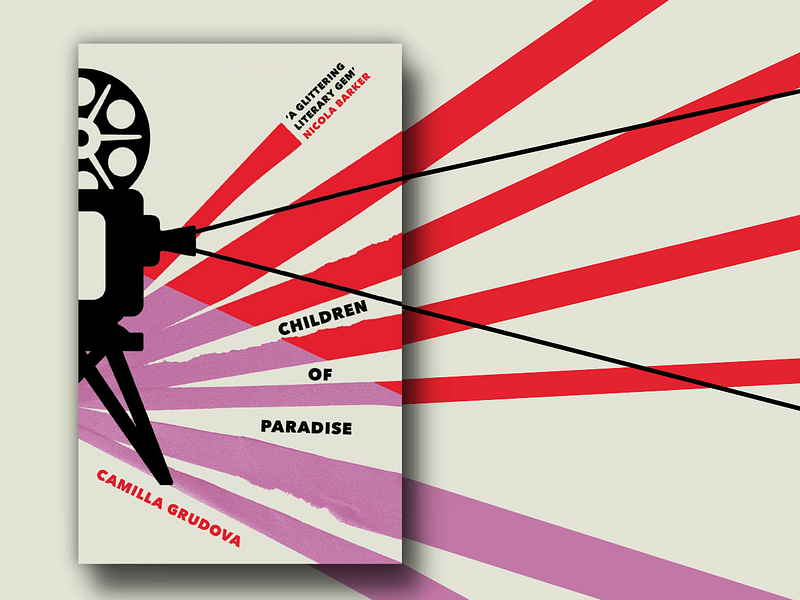
I will begin by admitting to you all that I read in maybe strange ways. Typically, I read one book at a time and hate to not finish a book, even if I am really not enjoying it. Lately, though, I’ve been reading multiple books at a time. Still, I must be the world’s slowest reader most of the time (aside from one week out of maybe every year where all I do is read, for some reason) and am now trudging through multiple books at once, desperate to lock their information into my brain.
So, I’m not the best candidate for joining in with book clubs to say the least. I am too slow and fussy of a reader to sign myself up for reading one specific book each month. There have been many times where I cannot wait to read something, and by the time I am 5 pages in, the mood has passed and I can’t wait to move on. However, beyond joining in with Counter Arts’ 2024 Book Club with a review of Caleb Femi’s POOR somewhere down the line, I received some questions from our lovely lead editor Sadie Seroxcat about this book — Camilla Grudova’s Children of Paradise.
The book is set in a cinema, and contains many references to a surprising variety of films. So, I was the go-to for questions regarding the context of these references and what they may mean within the book. Of course, having not read the book, I was of little help. The film titles referenced weren’t enough to give much away and, frankly, even after reading the book I think that more than half of the references are deceptive, sneaky distractions which can lead you to answers but also may lead you in the opposite direction. After some additional persuasion from Sadie, I got around to reading Children of Paradise, seeking answers to the hazy confusion I had about the book before I even opened it or saw the front cover.
Now that I have finished the book, some of those questions remain unanswered. But I am glad for this. Children of Paradise is a really strange book, unlike most I have read (more likely because of my love for poetry anthologies and non-fiction, but still). I was reminded of writers like Don DeLillo (Point Omega in particular came to mind a few times, with that book’s lengthy reference to 24 Hour Psycho) and even J.G. Ballard at times through Grudova’s debut novel, a book that I found mysterious, unpredictable and beguiling.
First and foremost, I am interested by its focus on cinema. That focus was pretty inevitable for me. The novel follows Holly as she gets a job in a crummy, ancient cinema — the first in its never-named city — and discovers that this strange cinema holds secrets… or does it? Following two threads at once — one being your typical coming-of-age/teen story where someone who feels outcast and lonely stumbles into a friend group and learns much about themselves in the process, the other being that of a truly disgusting and gory horror novel — Children of Paradise leans into film for reference points constantly. It is clearly written by someone at least somewhat engrained within film culture, referencing all sorts of films from the works of Jean-Luc Godard, Pier Paolo Pasolini and Marcel Carne all the way to making quiet fun of Marvel and DC blockbusters and their fans and celebrating the early features from Disney (such as Snow White and the Seven Dwarfs).
Some of these references made sense to me, and some of them didn’t. I can’t tell if that was definitely the intention — to sometimes slip in a misdirecting title as a distraction to the reader — but I did find it intriguing. For example, I have next to no idea why the opening chapter was named after John Schlesinger’s classic Midnight Cowboy, and I have no clue why one chapter was named after Martin Scorsese’s Taxi Driver… but, given the elusive style of the writing, I actually got some enjoyment out of not knowing, out of having to push myself into thinking outside the box looking for answers to my questions. Other chapter titles make more sense, as does the book’s title itself which doubles as a reference to Marcel Carne’s 1939 film The Children Of Paradise and a key idea within the book about the titular Paradise cinema and its workers. These many cultural references tend to serve as either ways to get to know the characters and their personalities and/or as a way to help the reader engage with the book’s ideas.
What also interested me was the use of the abject throughout Children of Paradise. Full warning, this book can be really gross at times. I didn’t find it particularly scary, but it was certainly unsettling and most definitely contains its fair share of gore. Chapters such as the one titled after Rosemary’s Baby are difficult to read due to their frank and vivid descriptions of gore, whether it be blood, vomit, cum or any other bodily fluid or waste. There is a lot of it within the 200 pages of this book! A lot! Sometimes that use of gross-out writing was effective and disgusting, sometimes it was (slightly) funny, other times I thought it felt a little juvenile and out of place. I think that that reaction may summarise my entire opinion of the book — it is always intriguing and entertaining, sometimes effective as a horror with some dark comedic elements, and sometimes less effective because it feels as though it is trying a little too hard to stand out.
What I loved most about Grudova’s novel was its atmosphere and setting. The unnamed city that the book takes place in is constantly mysterious and very well described — it is given enough description to create certain images for the reader, but never enough so that it loses any of its mystery. The same can be said for the Paradise itself. We hear of its myths and its mysteries, but the majority of them are never fully answered, leaving enough to the imagination that its more surreal elements carry with them a Lynchian discomfort, an uneasy fear of the unknown. It is as though there is something living within the pages, a creature that doesn’t fully want to be understood but which does want to be heard.
I also really enjoyed how Grudova engaged with gentrification within film, as the book’s one key plot point revolves around The Paradise being taken over by a chain of cinemas called CinemaTown. The character Andrew, who is made fun of in some pretty ruthless ways at times, is a basic representation of this shift from an old-school cinema focused on cinema as an art form to the modern model of filmgoing which is almost entirely centred on being as efficient as possible and on making money by showing the newest, biggest films a hundred times per day. I thought that this criticism was not only painfully relevant but alarmingly accurate, a pointed and almost satirical view of how contemporary filmgoing has really lost its art in most places. Particularly in small towns which are reliant upon either cinema chains or independent cinemas which have to sell out to try to keep up and avoid being closed down.
Overall, Children of Paradise is a strange and uncomfortable read. It is strange, a little disjointed even, but consistently quite effective. I think that, in some ways, its flaws actually made it all the more intriguing. Considering how slowly I read, I finished this book quite quickly — a testament to its snappy style and its vivid storytelling if ever there was. It’s a book full of subversions and surprises, but one that also refuses to give all of its answers away, maintaining some of its attractive mystery after its final word. It’s strange, sad, twisted and engaging writing, carried by its great atmospheric focus.
You can see the list of books for Counter Arts’ 2024 Book Club here:
For more from me on literature, see the list below:
Alternatively, if you want to support my writing, you can donate using Ko-fi.


