
Notes On Alice Walker’s “The Color Purple” Forty Years On: A Deep Dive
If I had a daughter, I’d insist she read this book
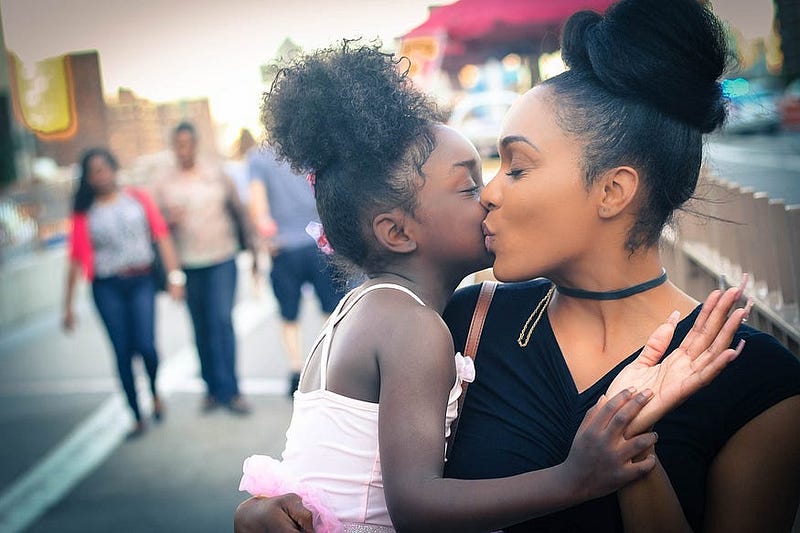
I’d go as far as to say that The Color Purple is a piece of literature I would insist that my daughter read if I had one. Why so? With reflection, honesty, and an open heart, each woman in this novel portrays how the world sees black women, how we see ourselves, or sadly in some ways even how our male counterparts within our community see us.
Published in 1982, Alice Walker’s The Color Purple won the Pulitzer Price in April of 1983. I was just two months and four days old. Revisiting this novel as a forty year old woman has been a personal and pleasurable journey for me. I imagine that if all black women sat down and dove into this author’s work, and sought out the messages within this classic novel, we could all experience a personal and pleasurable journey, there is so much to be taken away from Walker’s most famous book.
Having more knowledge of my female ancestors’ life cycle on a global level, and a better understanding of what the challenges were for black women at the turn of the twentieth century, has helped me appreciate the author’s storytelling more. I was able to see each female character in a different light, and relate to them better than I did when I first read the novel as a teenager finding my way in the world.
Sofia…
Take the fictional character Sofia and her plight. She was a black woman who fought back against what she thought was mistreatment or disrespect; she put people in their place and felt no way about it. Sofia didn’t care much for the person’s race or the gender of whom she dealt with, which was courageous for a woman of her time. She also would not stand for a man to tell her what to do, or how to do it, even if that man was her husband. While I really enjoyed the way this character jumped off the pages, her sassy, independent, sometimes blunt attitude landed her in trouble with what was then ‘the law’ during the period in which the novel is set. Sofia’s brave act of slapping a white woman who she felt violated her was the event in her life that put out the wildfire within her — but was she wrong?
As readers, we can recognise how Sofia’s ‘I can do this’ attitude manifests in the common, ‘independent woman’ label given to black women today. We can also see how Sofia’s attitude is her way of protecting herself, standing her ground, and surviving. Sofia’s personality type has manifested in the stereotypes about the ‘black matriarch’ the sociologist Daniel Patrick Moynihan studied in his report, The Negro Family: A Case for National Action (1965), just over fifty years after the era the novel is set in. According to Moynihan, the black woman ruled with an iron fist as the head of the household with little consideration for the black man. Moynihan called this a ‘tangled pathology’ as he asserted in his research that,
‘In essence the Negro community has been forced into a matriarchal structure, which because it is so out of line with the rest of American society, seriously retards the progress of the group as a whole and imposes a crushing burden on the Negro male and, in consequence on a great many Negro women.’ -The Negro Family: A Case for National Action (1965)
In 1965, Moynihan’s ‘tangled pathology’ was out of line with the cultural ideal of the man being the provider, protector, and strength of a couple or household. Sofia’s character could be Alice Walker’s way of bringing that ‘tangled pathology’ or ‘matriarchy’ archetype to the attention of the world in 1982.
On the myth of the superwoman
Michelle Wallace went on to refute Moynihan’s observations and discuss the way black women have been portrayed in her book Black Macho and The Myth of The Superwoman (1979). Wallace asserts that the idea of the black woman being a dominant force is largely a myth, based on the flawed way Moynihan interpreted his statistics, and mostly due to how black women were on the bottom of the social hierarchy at the time.
In the twenty-first century, the black woman is still labelled with derogatory attributes like ‘masculine’, ‘loud’, and ‘aggressive’ and seen as a matriarch that dominates the men within her community. The question must be asked: why is this? And also: in whose point of view? Is it from the black woman’s view? Or if the black woman has found herself in this ‘tangled pathology’ and role reversal, is this not a natural response to the environment the black woman is often in, fending for herself and sometimes her children?
Remember what Malcom X told us in 1962, before the Moynihan report:
‘The most disrespected person in America, is the black woman. The most un-protected person in America is the black woman. The most neglected person in America, is the black woman.’
Could Malcom X’s analysis be part of the Sofia archetype’s evolution, that led to people like Moynihan’s claims? But I digress.
Enter the “angry black woman”
Forty years on from the publishing of this great novel by Alice Walker, and over one hundred years since the period the author captured in the plot, black women may not be going to prison for backhanding white women in broad daylight, because this is a ‘crime’, as it was in Sofia’s era. However, we are still fighting, putting people in their place, and generally being seen as the ‘aggressor’ at times when this is not always the case.
The new term in today’s society that has replaced ‘matriarch’ is ‘angry black woman.’ In today’s context this term comes to mind when I think of Sofia, and this is not because I would label her as such; it’s because society in today’s world has made her that way. I would lean toward what Malcom X observed correctly in 1962 as to why the black woman may have a little bit of Sofia in her even today. Black women are in an unique position of vulnerability to mistreatment, not just based on their gender, but also their race.
Race discrimination can be received from all members of society, and gender discrimination from all men; there’s literally no demographic of society she is not susceptible to discrimination or mistreatment from. Not even the women who look like her is she protected from ( sometimes). This is because of colourism in the black community. If the black woman is darker skinned, she is vulnerable to mistreatment from both women and men in her community and beyond; this is something which Alice Walker touches on in the novel.
Black women are in an unique position of vulnerability to mistreatment, not just based on their gender, but also their race.
When one considers the modern workplace, assertiveness from a woman with darker skin can be interpreted completely differently than from a woman with white or lighter skin. This is based on the age old views that femininity, delicacy, and softness belong to the lighter woman, not the darker one. bell hooks (1952 -2021) clearly defined this significant difference between how both groups of women have historically been viewed, stereotyped, and labelled, when it comes to the idea of who and what is deemed the woman who possesses femininity in her thesis Ain’t I a Woman (1981).
When I was in the corporate world, I can think of countless times I too said what needed to be said, but always remained cautious of how I worded it, to avoid the stereotypes and tears from other women who would be seen as the dainty little flowers, hurt by harsh words from the scary, big, angry, black, woman.
There’s a little bit of Sofia in all of us…
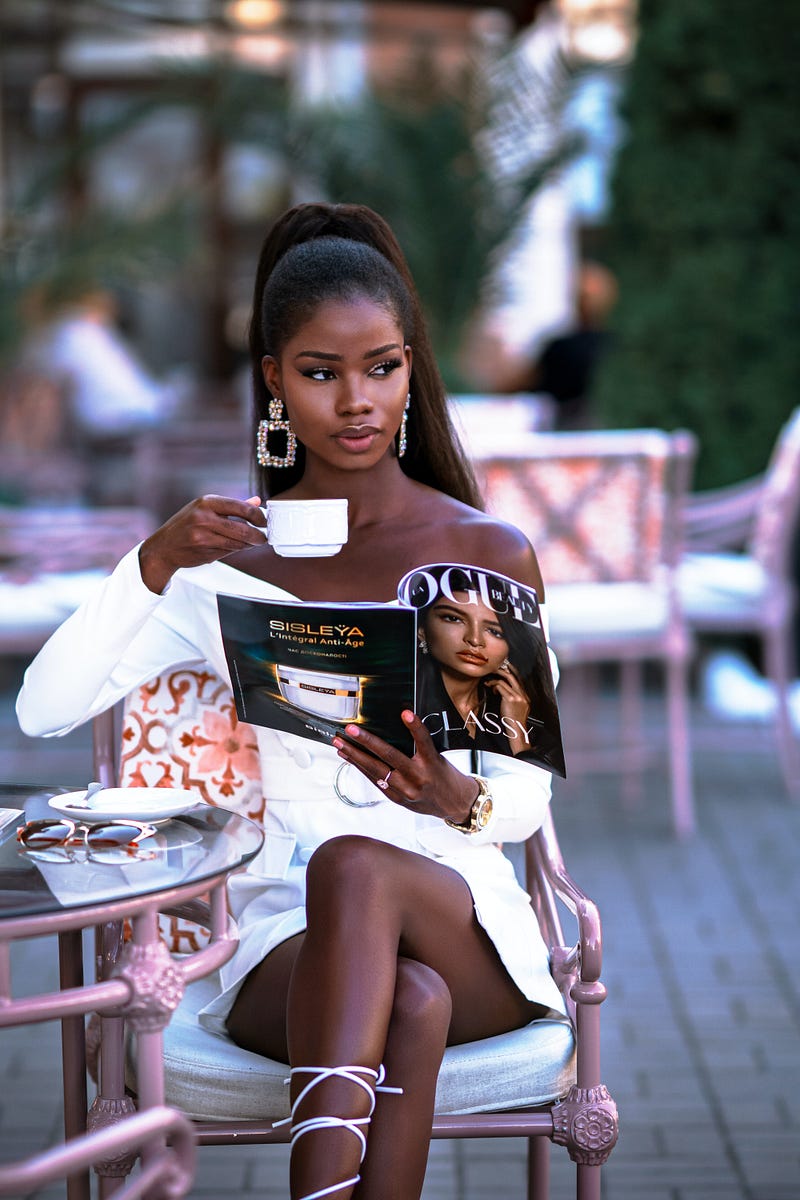
Deep down as a reader who absorbed Sofia’s plight and experience in The Color Purple and reflected on her as a woman, I related to her and felt that there’s a little bit of Sofia in all black women. This is because there needs to be a little bit of her in us, Sofia must be revered at times for the black woman’s own survival and navigation in certain situations, be it professional, personal, or when dealing with men romantically.
Her experience as a married woman to Harpo and wanting to maintain her independence, have a voice, or even be brave enough to say ‘no’ came across as an authentic experience of black women. Forty years after publication and more than a century since the period it was set in, there has been little evolution! All that has happened is Sofia’s experience has been repackaged.
Now the experience the black woman has when she expresses her grievances whether in a relationship or professional context is getting labelled as being ‘difficult’, ‘masculine’ or ‘non-submissive.’ The reality is more likely there is no fault in her; the men she crosses paths with are not giving her an incentive or reason to ‘submit’ to them, probably because they can’t lead themselves let alone a woman who has her life and affairs together.
Speaking from experience, yes, I have had an ex-husband resent me because of my career, salary, what I owned in my own name, and my ability to look after myself and then later myself and our son.
The other side of the black woman’s experience even if she is not overly dominant as Sofia, is even worse. If a black woman earns more money than her partner, has a professional job deemed ‘better’ than his, or was in any way self-sufficient before he came along (or worse, earned this personal achievement during the dating period) — it’s a wrap.
Speaking from experience, yes, I have had an ex-husband resent me because of my career, salary, what I owned my home and car in my own name, and my ability to look after myself and then later myself and our son. Did I throw any of this in his face? Nope. Did I make him feel less of a man intentionally, hell no. But, yes, I was told outright that this was his ‘issue’ with me. The non-combative, supportive, kind, and co-operative wife who just happened to also earn more than he and could look after herself and later our son — that was an ‘issue’ that sparked his jealousy. And yes, he used the term ‘jealous’ and he turned abusive.
Black women generally are standing very well on their own two feet, in their pretty stilettos they’ve paid for outright themselves. Good for them!
‘Choosing better’ as black women are often told to do is what I did. My life partner now wouldn’t dream of such unmasculine behaviour. Jealousy was the last thing I would have imagined, because I saw us as a team. Paule Marshall makes reference to this experience for the black woman in her essay, Reena (1962). Marshall confirms her observations and experience from just over sixty years ago at the time of me writing this that, ‘the eligible men around to date (at the time) purposely chose to marry women ‘without degrees and the fat jobs who are no threat.’’
I’ve read countless blogs on women’s experiences when they out- earn their partner, also heard it from the mouths of other black women, and it appears to be a very common experience that black women have. It’s either that, or they are floating households on their own unhappily while in relationships. Which I guess would make sense, if according to current data, in the USA black women are the largest group in society gaining higher degrees and starting businesses, hence increasing their earnings each year. In my own part of the world in Europe, it’s also clear to see that black women generally are standing very well on their own two feet, in their pretty stilettos they’ve paid for outright themselves also. Good for them!
She wasn’t wrong, was she?
Was Sofia wrong for her attitude towards Harpo? Nope, not from what I read. He didn’t appear to be a man worth ‘submitting to’ ( I don’t like that term and use it loosely), and his father was not leading him in the right direction either as an example. He didn’t appear to be a man that understood that men ( the right ones who know how) can bring out a woman’s femininity when they are operating fully in their masculine energy. Meaning, if any man has something to offer a woman outside of sex and good looks, when he infuses her with positive energy and nourishes her with his masculine energy, a woman could naturally soften. Masculine energy is not about strength in the physical body; if more men realised this, they would probably attract the women they want.
About the term ‘submission’
The word ‘submission’ that is thrown around so casually by men these days, as something they require from women to provide them with something other than d**k and headache really annoys me. Submission according to the Oxford English dictionary is a noun, and states: ‘the act of accepting that somebody has defeated you and that you must obey.’ Exactly when did relationships and marriage become about this, in the twenty first century? Why are men so hell-bent on women ‘submitting’ to them, not all men but just a certain demographic of them seem so caught up on this notion.
What did make me laugh was Harpo’s attempts to literally beat Sofia into submission and how this backfired on him, no thanks to Celie and her influence.
Sure, there’s the ‘traditional vows’ said in a church wedding which allude to ‘obeying’ your partner, and if my memory serves me right, not even Kate Middleton the current Princess of Wales and a British monarch agreed to use the word ‘obey’ in her wedding vows when she married Prince William in 2011. Submission also indicates that one person is a sub-ordinate, below, or on a different level to another. The person who is in submission is deemed less than. In order to feel some kind of masculinity, and in exchange for provision for women and children, this is what (some) men require from women. Harpo in The Color Purple appeared to be one of them.
This is especially true I think for black women and what’s required from them, because we have been historically and are presently in high numbers breadwinners, survivors, hard workers, community builders, mothers, friends, carers, and generally the backbone of our community and household, as Moynihan pointed out in 1965 and we see in 2023. It is my belief this is why black women always have a little bit of Sofia in them. The right man, the right environment, and the right respect for her — her body, her hair, her ambitions and goals, her voice, her point of view, and her culture — might soften the Sofia within her. This is something that can be noted especially for the men who try to demand ‘submission’ just like Sofia’s husband Harpo did, without loving her correctly, or offering her much else.
What did make me laugh was Harpo’s attempts to literally beat Sofia into submission and how this backfired on him, no thanks to Celie and her influence.
Celie…
Talking of Celie, the innocence that Alice Walker portrayed in her character really captured me. Her speech, thought processes about the world, and even how she told Harpo to ‘beat’ Sofia into submission screamed vulnerability. She was so vulnerable that she felt in her distorted view that physical abuse was right, justified, and something that women should expect or become accustomed to if they don’t ‘act right’, as she ‘acted right’ to Mister, her own husband.
The University of Chicago Women’s Leadership and Resource Centre reports that 54% of women who identify as black have experienced psychological abuse, and I will place myself in that category also, but I was so young I was unable to recognise it until I left the relationship of my own free will. Forty percent have experienced physical abuse, I will add my own sisters into this category as well. Their data also shows that black women are three times more likely to be killed by a man than white women, and 91% of black women killed by men knew their killers. The rate at which black women suffer from abuse at the hands of men is high, so high that to people like Celie it can appear to be what is ‘normal’ within the world of the average black woman. Especially if like Celie this woman is from a poorer background, has low self-esteem, and is not highly educated on the subject.
Cobun Place, a housing service for women who have suffered from domestic violence, confirmed in their report, A Layered Look at Domestic Violence in The Black Community (2020), that, ‘Black women also don’t necessarily want to turn an abusive partner into law enforcement. “I have been told personally [by a survivor] they can’t get help because they don’t want their partner to become a statistic,” said Cecily Johnson, director of strategic initiatives at the Domestic Violence Network. “There’s a genuine and legitimate fear that if they call the police, their partner could be killed or they, as the survivor, could be killed.”’
The rate at which black women suffer from abuse at the hands of men is high, so high that to people like Celie it can appear to be what is ‘normal’ within the world of the average black woman.
The issue around police brutality against the black community is another subject all together. However, it should not be overlooked that this comment from Cobun Place removes the focus from the violence that black women are being subjected to, as the issue. From this one observation by Cobun Place, it shows that it is common for black women to shift the priority of their own protection and make the protection of abusers a priority. Violence or non-violent abuse against black women is so abundant, so accepted, and so expected by (some) black women, that their response to it removes the spotlight from them at their own detriment. This is backwards thinking if black women wish to stop normalisation of violence against them as a group of women.
Celie’s mindset in The Color Purple was the same given how she responded to Harpo about how he should handle Sofia. How she felt she should be cared for, respected, and loved as a woman was distorted, and is a lesson for us all to take note of, as well as the researcher’s findings. On the other hand, as her storyline progressed, we see a little timid girl, or better yet a caterpillar that blossomed through all the hardship that life handed her, mainly from men. To see her growth, strength, and even her ‘inner Sofia’ become activated as the novel progressed at times brought tears to my eyes. I started to wonder, all these years later since the publication of The Color Purple, is there a part of Celie in black women too?
“There’s a genuine and legitimate fear that if they call the police, their partner could be killed or they, as the survivor, could be killed.”’
Expecting or tolerating physical abuse, being used as a sexual object, tolerating sharing a man and his ‘community d**k’, expecting to be cheated on, lack of self-love, seeing ourselves as ‘unpretty’ because of our skin tone, hair texture, features, etc? Yes, sounds pretty much like Celie is the black woman’s experience still today. Why? Low standards and expectations from romantic partners, being afraid to say ‘this is not what I want, good bye,’ the verbal reminders that we get from our male counterparts ( just like Celie did in the novel) about how unattractive darker skin and tighter curls are, not seeing ourselves represented in the beauty industry, and if we are it is an imitation placed on skin lighter with features that are more European. Then, there’s being forced to live up to a beauty standard that really is not ours. All these things are reasons why Celie’s character is revered as an experience for black women, even today just as much as it was at the turn of the twentieth century when the novel is set.
I must confess a long time ago I stopped listening to what society, and men especially, want to call ‘beautiful.’ I see myself as drop-dead-gorgeous already. I wish as many of us would feel this way as possible. If so, just like Celie we can turn into a wonderful butterfly, or beautiful swan, regardless of what society wants to place in front of us as a barrier to valuing ourselves and seeing our own beauty and worth.
Shug…
Shug on the other hand was a character that did not have this trouble. Shug came across as confident, no nonsense, and a very loving and warm woman. From reading Alice Walker’s other work, Gathering Blossoms Under Fire: The Journals of Alice Walker, (2022), which contains her personal journals from the 1960s-2000s, I started to place aspects of Shug into the author herself.
Shug loved to travel and seemed to be a citizen of the world (or more like each state in the USA, in the context of the novel), she was glamourous, outspoken, and bi-sexual — all things which come across in Alice Walker’s personal journals in the above-mentioned autobiographical work.
On the other hand, in parts of Gathering Blossoms Under Fire: The Personal Journals of Alice Walker, you can clearly see areas where the author struggled with her looks and beauty at times in her early life. The issues she had were rooted in her experience growing up with her father’s colourism. As a reader, we can see how she internalised this. Could it be then that Celie is the other side of the coin, and both Shug and Celie are parts of the author herself? After reading both works, and on reflection it appears so to me.
What can be taken from Shug’s character is her carefreeness, the way she accepts herself for who she is, her unapologetic ways, and confidence. If Celie is revered as the black woman’s experience today, could a part of Shug Avery’s bold and fearless character be the antidote to this… maybe?
Nettie…

Nettie, the brave heart who ran away from all that she knew and dared to think of a better tomorrow for herself, is otherwise known as Celie’s sister. What a life and experience she had, that brought many blessings to both the sisters by allowing Nettie to remain close with Celie’s biological children, who were taken from her. Here we see a woman who possibly could have been considered ‘bougie’ for her aspirations, the fact that she could read, tried to teach her sister how to, and wanted no parts of the ‘poor southern life’ on offer if she remained rooted where she was, was a breath of fresh air to read. Her character helped to pick up the novel in a positive way; her journey across Africa (which again seemed semi-autobiographical as in the 2022 publication of Alice Walker’s journals we learn she too travelled to the continent), in the context of the story’s plot and timeline showed Celie (when she eventually received Nettie’s letters), that there’s a whole world out here waiting to be discovered, if you dare to reach for it.
Could Nettie be another antidote to the black woman’s experience today? If one places Nettie’s daring spirit in a modern context, maybe so. On the other hand, she is already the antidote to the black woman’s experience, when you consider the degrees being gained, and businesses being opened, and the salaries being earned as we break glass ceilings and enter spaces that previously were only what society deemed appropriate for other demographics. The bravery of Nettie and her ‘bougie’ aspirations (even if they were probably more to do with security and survival than thinking she was too good for where she was), has translated in a positive way for black women, financially speaking, as black women are earning more, becoming highly educated, and creating additional streams of income with businesses.
Mister…
Ah… Mister, what a character. As I write this my mood instantly darkens. And I consider the increasing rate of femicide against black women (in the USA), high levels of domestic violence, a higher divorce rate than marriage rate for black women according to Bowling Green State University’s 2018 study, Marriage to Divorce Rate Ratio in the USA, and the sentiments that Dr. Ralph Richard Banks has in his book Is Marriage For White People, (2011), where he cites the result of black women who limit themselves to only one demographic of men leading to a lesser chance of finding a suitable husband, or worse ‘marrying down.’ Taking all this into account, Mister exemplifies the characteristics that cause a woman to want to divorce or leave her union as Celie did. He is the kind of man that could lead a woman to ‘marry down,’ and he was an abusive husband. His treatment of black women, forcing Celie to share him with another woman, and the slurs that black women are subjected to around their hair, features, bodies, and how ‘undesirable’ certain skin tones are all come from him. Based on Alice Walker’s novel, the recent data, and the well-researched books on the market mentioned, plus the remarks we see on social media from our counterparts about ‘undesirability’ based on hair, skin etc., is it fair to say that ‘Mister’ is possibly likely to be our experience romantically generally speaking, as black women? I think so.
I have certainly met my own ‘Mister’ and once I realised what was going on, I said goodbye — for good. I think it would be fair to say that we all meet a ‘Mister’ at some point, what we do with him is another story. This is where I believe firmly after reading books like Is Marriage For White People?, studying the data myself for marriage outcomes for black women, and using my own experience personally, that we should encourage black women to be more open to dating all races and ethnicities of men ( who prove themselves to be worthy to her) and may the best man win.
I have certainly met my own ‘Mister’ and once I realised what was going on, I said goodbye — for good. I think it would be fair to say that we all meet a ‘Mister’ at some point, what we do with him is another story.
As a woman, who are you the most compatible with? Who presents himself as an actual husband mentally, emotionally, financially, spiritually, and sexually is key over and above his skin tone. Skin tone fell off my list of ‘necessities’ once I deep-dived into the data around marriage for black women, had my own experience of marriage and divorce as a black woman at a young age, and looked at my previous dating experiences before marriage with deep reflection. I realised if I want a different outcome, I can’t continue to do the same thing when it comes to dating. I also read self-help books around marriage and relationships which opened my eyes.
It was clear to me from all this, and from opening my own dating options with men that, being ‘equally yoked’ (to place it in biblical terms for the religious folk) with a man is not dependent on his skin tone, there’s a lot more to it than this! If being well suited to a partner is based just on their skin tone, it’s likely to end in disaster. This is something I really need as many black women as possible to understand and understand quickly! The statistics for us around dating and marriage are not good, and it’s my one wish that they improve. While it is becoming clear that more black women are raising the standards and expectations while selecting men, and they are opening their options more to dating all races, nationalities, or ethnicities of men, I support all black women partnering with a man ( or woman if that’s your preference) who shows her she is loved, adored, treated well, not seen as competition, a priority, and appreciated rather than tolerating anything less.
As I absorbed this character Mister and what Alice Walker was trying to portray here, I intuitively picked up on how the black woman is often disrespected within society and dating, and left to her own devices in the home, just like Celie. Further research I called on while reading were sociology studies such as The Negro Family: A Case For National Action (1965), and the follow up report on this study done fifty years after its publication. I also picked up from Alice Walker’s writing that she (the black woman) is often talked down to and looked down on in society, but then she is needed when the s**t hits the fan at the end of the day. This in a nutshell is the dynamic between Mister and Celie.
I support all black women going where they are loved, adored, treated well, and appreciated rather than tolerating anything less.
The personality transplant Mister seemed to have at the end of the novel to me was somewhat surprising, but then when I considered the reality of what could happen to a man like Mister without a woman like Celie, who was willing to put up with his behaviour; His change would be inevitable. After that reflection, it became clear to me that no wonder he had a word with himself and checked his behaviour; he saw his own reality without Celie and felt his own downfall especially when she and Shug left as the novel progressed. His loss of Celie and his downfall was better shown in the movie adaption of the book than the novel. However, the fact that he asked Celie to remarry him ‘in spirit not just flesh this time,’ towards the end almost made me want to vomit in my mouth.
I then thought about the ‘Misters’ I had met and saw the similarities between the fictional version and my own reality! Yes, it’s the natural way. Men like this always come back and learn the hard way. We as women need to keep rejecting them, as Alice Walker made Celie do, thank goodness.
This is the main learning from Mister’s character, the understanding that while his behaviour may be a ‘normal’ experience for a large number of black women to cross paths with, it’s not a ‘normal’ behaviour to accept. Secondly, that if these souls do some searching and find their way back to a woman they mistreated, rejection is the antidote to them coming back to disturb a woman’s peace, just like Celie showed us. Her peace was maintained without him, especially once Nettie, Shug, and her children came home.
Thank You Alice!
I feel like I owe a lot to the author for this novel, not only has it opened my eyes personally as a woman, but it has also allowed me to understand, appreciate, and honour being a black woman who knows her worth in a society that may not always see it.
The inner Sofia that we all have should not be suppressed, I feel on reflection after reading the novel — not in the face of a society which may de-value you. She should always be on hand just in case she is needed.
Nettie’s bravery and ability to dare to find a better situation should not be overlooked; her plight is a valuable one to take note of. Her energy and efforts served her well.
Shug’s openness and freeness helped her to see and experience different things, even if not all of them were pleasant; this could translate and manifest as being able to create the life you desire and want as a black woman in a world that may not always value you, or worse may not want you to value yourself. Shug’s freeness and openness for the black woman can also translate into her dating choices, ‘freeness and openness’ to discover, date, and scope out whoever she wants to date who proves himself, based on the standards she has set for any man who wishes to be part of her life. ‘Freeness and openness’ to create the life you envision, and not feel bad for your achievements. “Your degree means nothing”, “Your high salary won’t keep you warm at night” are often things we hear thrown our way. I have seen a lot of this on social media, but hell, that degree, education, and salary will raise you out of poverty, and it will generate generational wealth for you and your children if you have them, and if you don’t it will provide you with a lifestyle you would like.
Mister serves as a reminder to have high standards and expectations while dating, and not to listen to the voices of men who see no beauty in you, for whatever reason.
The Color Purple is great novel, full of lessons even if the plight of the black woman today mirrors a lot of what Alice Walker fictionalised forty years ago, in a story placed over a century ago. This is why if I had a daughter, I’d insist she read it, later in life as a grown woman as I did, with some experience under her belt, so she too could see the gems Alice gave us.
Thanks for your readership, I hope my writing gave you something to think about. If I’ve caught you in a good mood or you’re feeling kind, you can buy me a coffee here: https://www.buymeacoffee.com/MeAndMyMuse
Why not follow me for more of my thought-provoking muse.
Further reading
For more of the good stuff, follow Fourth Wave. Have you got a story, essay, or poem that focuses on women or other disempowered groups? Submit to the Wave!


