
Not A Rapper, But Still A Success Story
Started from the bottom, now we here.
“Dad? You coming inside? It’s raining.”
“Baba, are you crazy? Listen to the rain hitting the umbrella….”
“Cool,”
“Baba. THIS IS HOME!”
“Great. I’ll leave you to it then.”
“Listen… can you hear it? LISTEN!!
So, I listened. Yes, I could hear it, raindrops hitting the umbrella.
“It’s my childhood; I love this sound.”
“Rain hitting the umbrella?”
“Rain hitting the tin ceilings in the mokhayam.”
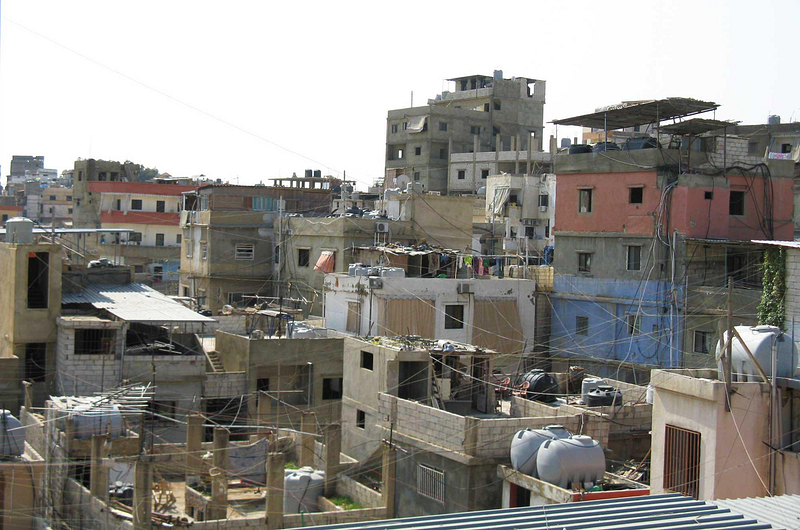
The mokhayam, the Arabic word for refugee camp or what some people refer to as the ghetto, is where my dad grew up. His, in particular, was in Lebanon, Burj al Barajneh refugee camp. It was established in 1949 by the League of Red Cross Societies and remains home to thousands of people who continue to live stateless.
My dad is a pretty sophisticated guy—a slick, well-spoken, put-together kind of fella — a real gentleman. The coolest cat in town, my friends called him. So fancy, he has a towel for each hand. Baba, when you don’t have to take a group shower anymore, you use a towel for each hand.
There are two types of refugees. It’s a huge injustice to become misplaced and basically degraded. Reduced to accepting handouts for survival and being discriminated against for something that’s literally out of your hands. Some refugees hate remembering or claiming where they came from. Who can blame them? I suppose we don’t get a vote about how they should feel unless we experienced that kind of humiliation.
But my dad was one of those really proud refugees. The ones who were able to wear it as their armor; take it in stride and even crack a joke about it. They say people with the saddest stories are the funniest, and my dad is the funniest guy in the world.
I mean, the man references where he came from to win any argument. Baba, I am from the mokhayam; tell COVID to wear a mask, not me.
I was around nine when we went to Lebanon for our summer holiday, and my dad told my siblings and me that we would be going to Burj el Barajneh camp, the place where he grew up. A camp? Nice! We had no idea what we were in for, but as I said, my dad is a really sophisticated guy, which made it all the more shocking.
We approach the mokhayam, and immediately, I knew this would be no Broummana High school camp. That was the day I found out what a real camp looks like.
“WELCOME HOME! “ my dad insisted.
“I thought we were from Mushrif mall Abu Dhabi?”
“What do you mean? This is where you are from; you should be proud.”
But I wasn’t. I wanted to be from Mushrif mall, Abudhabi.
“Dad, you actually lived here?”
“What do you mean, this is the mokhayam in five stars. When I was born, it was one big tent.”
For starters, the sky above the mokhayam was grey. It was the only grey area in all of Beirut- or so it seemed as a kid. It was also a gated community; only the gate is made from rubble and broken vehicles.
Inside, it was a whole other disaster, a bunch of mud houses piled on top of each other with interconnected electricity wires and laundry spilling out of windows. The already deteriorating mud houses even had bullet holes in them.
Upon entering, we were greeted by a bunch of kids- no older than me- who looked really rough. Like really rough.
“Baba, these are your cousins.”
Gulp.
They were not really my cousins, but I guess once you live in a sardine box together, you become family. These kids were waiting for us to get there. They had heard through the grapevine that their uncle was coming and wanted to greet us from the moment we got out of the car to walk us to my dad’s old family home.
After jumping through a hole in the wall and skipping over a river of garbage, we arrive at the family home, where the entire mokhayam was waiting to greet us. All 3,000 of them. They were standing at the entrance of the house — it didn’t have a door- it was just a big space in the wall.
“Look, baba, a tank drove right through here,” my dad said proudly.
Suddenly, someone caught sight of us — a sniper apparently- and gunshots were fired into the air. HE’S HERE! And a stampede broke out.
My dad was passed around like a bag of potatoes as the whole town grabbed him by the collar to kiss him, hug him, and pass him on to the next person to do the same. He was flying around in the air on people’s shoulders for a good forty minutes. I never saw him laugh so hard.
My cheeks were pulled in all directions, and people were shoving baklaweh in my mouth. These people were so gracious they refused to take no for an answer. I was forced to eat so much baklaweh in that one sitting; I never touched baklaweh again.
I was in pain. But by the end of being forced into a group dabke — a traditional Palestinian dance- something I thought was SO uncool; they won me over. I was drenched in slobber and sweat, but I never had so much fun.
I couldn’t believe how much these random people loved us.
My brother — The boy- was treated extra special, of course. The poor guy got a mushroom haircut against his will in the middle of the living room with an audience cheering him on. My dad tried to ease the situation; Baba, men, don’t cry in the mokhayam! He was five.
Then everyone proceeded to give him a sahsooh, a neck-slap. Something men do to each other to say “nice neck” for shaving it clean because it's an accomplishment to groom or something.
Another shocking thing was when my dad’s- cousin’s kids finally arrived, and one of them was black. Not like an extremely tanned Arab guy, no, a black man who busted out in “Al Salam A’alykom ya jama’aa.” This guy hugged us like we were his long-lost siblings.
“This is your cousin Hamoudi.”
“HOW?”
“What do you mean how? He is your cousin, and that’s it!”
“But … he doesn’t look … I mean, he doesn't look like us.”
My dad was infuriated. It was offensive to question whether this stranger was my family or not. We were all from the mokhayam, and that made us blood relatives. And that’s it.
The story apparently is that my dad’s cousin found a baby in the middle of the rubble in the Lebanon war. They don’t even know which war it was, just one of them. A random baby in the wreckage. So, he became ours, one of us. No one else seemed to find this shocking, but I couldn’t get over my cousin, Hamoudi, a black dude speaking Arabic and pronouncing the A’a (3’s) correctly- not like Drake in his latest song, but like a real Arab. I had never seen such a thing. I was still quite uncultured at nine.
Like my dad, Hamoudi was also born on Jan 1st because no one has papers to prove when they were born. So, when the government finally decided to recognize them as official refugees, they all got New Year’s as a birthday. Think of it as a re-birth. Imagine how good the dabke is on January 1st at the Mokhayam. It's the whole town’s birthday.
I learned so many amazing things on that trip. For starters, people hailed my grandfather, the hero of the mokhayam, because he provided electricity to them. I use the term provided loosely here; it depends on who you ask. My jido is a real-life Peter Pan? No way!
I also found out that my dad, who is the fifth of nine children, had his four older siblings work to send him off to a university in Turkey to study. They bought him a camel pass instead of a train ticket so he could get there. It was so far-fetched when someone from the mokhayam got out; the entire town hailed him off.
You know that meme about how annoying your parents are when they act like they had to climb Mount Everest to get to school? My dad really did that.
I left the mokhayam, a changed girl that day. I was humbled, even as a nine-year-old. But I couldn’t quite register how I was feeling. A bundle of emotions; denial, warmth, community, sadness — but they seemed so happy, I thought. That’s what made me feel slightly better. They had each other.
My biggest lesson from that trip was that the struggle has no face. No skin color. No religion. That’s what bonded the mokhayam. Their struggle and their plight to survival. An unbreakable trauma- bond. It’s so bittersweet.
Since that summer, my dad made it a point to take my siblings and me to the mokhayam every year. Even when I got older and started traveling to Lebanon because it has the best nightlife in the region, I would tell my fancy friends I’d meet them AFTER I visited my cousins at the mokhayam, and they thought I was kidding every time.
“I’m hitting up the BBC first.”
“BBC? You mean Baby- Fat the club? The one in Hamra?”
“No, Burj Il Barajneh camp.”
“Really? What do you wear there?”
“My clothes.”
If gunshots in the air, force-feeding you baklaweh, moist kisses and group dabke terrorize you; then you haven’t lived a day. My only regret is that I didn’t force my friends to come with me to visit the beautiful people of the BBC. The funniest people in the world, that’s where my dad gets his humor.
“Do you know who my father is?” is a line that I’m known for amongst my good friends. Sort of a running joke- a threat I make. It is not about his success; it is about where he came from, that he beat all the odds.
I’ve come across loads of people who didn’t understand why I was so proud to be Palestinian; this is my dad’s rap battle! He is my Nipsey Hussle, the guy who made it out of the ghetto but never left the people. The most sophisticated guy I know. A successful banker, a math Wizz, a consultant, a world traveler, a cigar connoisseur. A real gentleman. Someone who only eats his steak rare. But never forgets his roots, Baba; you can take the boy out of the mokhayam, but not the mokhayam out of the boy.
The man who never misses a chance to give back to his community. Why wouldn’t I be proud?


