
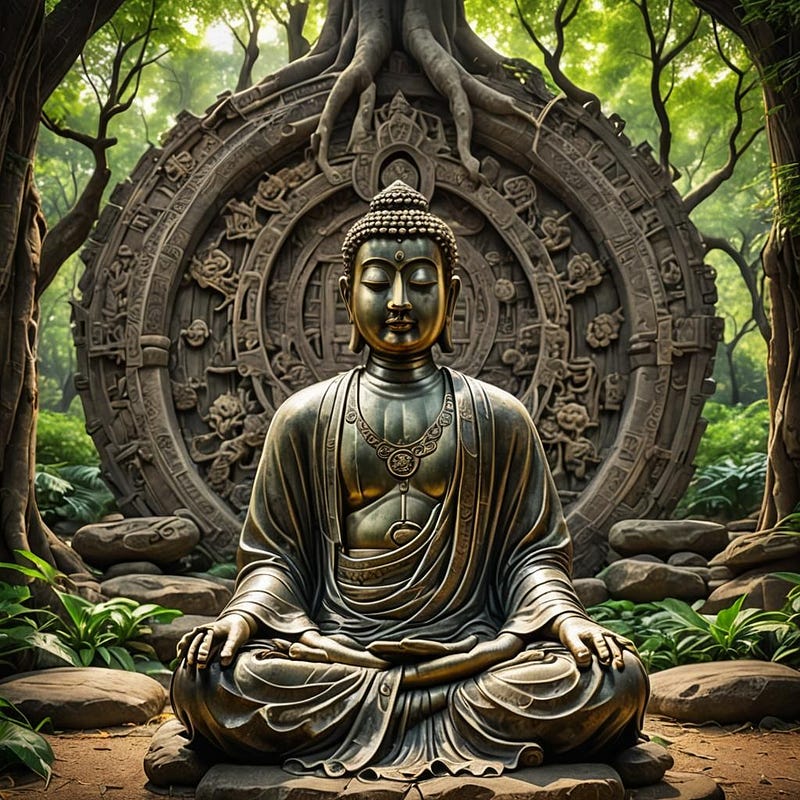
Non-Attachment: Cultivate Inner Peace and Find Lasting Contentment
Let thoughts come and go like clouds passing through the sky.
In the pursuit of happiness and contentment, many turn to the ancient wisdom of Buddhism, which offers profound insights into the nature of suffering and the path to liberation.
One key teaching in Buddhism is the concept of non-attachment, a practice that involves letting go of our clinging to thoughts, emotions, and outcomes.
By embracing non-attachment, individuals can cultivate inner peace and find lasting contentment in their lives.
Understanding Non-Attachment Non-attachment is a fundamental principle in Buddhist philosophy, emphasizing the impermanent and interconnected nature of existence. It encourages individuals to release their grip on desires, expectations, and attachments that lead to suffering.
According to Buddhist teachings, attachment arises from the illusion of permanence and the mistaken belief that external conditions can provide lasting happiness.
Letting Go of Thoughts Thoughts are incessant and often uncontrollable, but through non-attachment practice, individuals can learn to observe them without becoming entangled. Rather than identifying with every thought that arises, practitioners cultivate a sense of detachment, recognizing that thoughts come and go like clouds passing through the sky. This detachment allows for greater mental clarity and freedom from the cycle of rumination and worry.
During meditation, practitioners may observe thoughts as they arise without judgment or attachment. Instead of getting caught up in the content of the thoughts, they simply acknowledge their presence and let them go, returning their focus to the present moment or their breath.
Releasing Emotions Emotions can be powerful forces that sway our mood and behavior, but non-attachment practice teaches individuals to experience emotions without being consumed by them. Rather than suppressing or indulging in emotions, practitioners develop a sense of equanimity, allowing emotions to arise and pass away naturally.
When faced with anger or frustration, instead of reacting impulsively, practitioners may pause and observe the sensations in their body and the thoughts associated with the emotion. By maintaining a stance of non-attachment, they can choose how to respond skillfully, rather than being driven by the intensity of the emotion.
Letting Go of Outcomes In life, we often cling to specific outcomes and expectations, believing that they will bring us happiness or fulfillment. However, non-attachment practice encourages individuals to relinquish their attachment to outcomes and embrace the uncertainty of life. By letting go of rigid expectations, practitioners open themselves up to the flow of experience and possibility.
In everyday situations such as job interviews or romantic relationships, individuals may set intentions and work towards their goals while remaining open to different outcomes. Rather than fixating on a particular result, they trust in the process and accept whatever unfolds with grace and equanimity.
Practical Techniques for Non-Attachment Practice
Mindfulness Meditation Mindfulness meditation is a powerful tool for cultivating non-attachment, as it allows individuals to observe their thoughts, emotions, and bodily sensations with detached awareness. During meditation, practitioners focus their attention on the present moment, letting go of distractions and mental chatter.
Breath Awareness Breath awareness meditation involves focusing on the sensation of the breath as it moves in and out of the body. By anchoring their attention to the breath, practitioners cultivate a sense of presence and detachment from the fluctuations of the mind.
Loving-Kindness Meditation Loving-kindness meditation involves cultivating feelings of compassion and goodwill towards oneself and others. By practicing loving-kindness, individuals develop a sense of interconnectedness and reduce their attachment to self-centered concerns.
Impermanence Contemplation Contemplating the impermanent nature of existence is a central theme in Buddhist teachings. By reflecting on the transient nature of all phenomena, practitioners come to see that attachment to anything fleeting inevitably leads to suffering.
Non-attachment practice offers a path to inner peace and contentment, allowing individuals to break free from the cycle of suffering caused by attachment.
By letting go of thoughts, emotions, and outcomes, practitioners can cultivate a sense of equanimity and acceptance towards the ups and downs of life.
Through mindfulness meditation and other practical techniques, anyone can begin the practice of non-attachment and experience greater freedom and joy in their lives.