
US-China Strategic Competition
Nobody Expected It To Happen That Fast–Is The West Losing The Great Technology Race Against China?
According to an Australian think tank, China beats the US in 37 of 44 key technologies. The strength of democratic countries lies in cooperation.
In a world that increasingly seems to be splitting into two economic camps, it is becoming more and more important to control the key technologies. After all, computer chips and artificial intelligence are the basis for countless applications, from the energy transition to the military. The US and China are fighting for dominance — but who is leading, and in which areas?
The think tank Australian Strategic Policy Institute (ASPI), which is close to the Australian defense establishment, has tried to determine more precisely who is ahead.
Its conclusion sounds alarming: Western democracies are losing the global technological race, the race for breakthroughs in science and research, and the ability to retain the world’s best minds.
These, she says, are crucial prerequisites for developing and controlling the world’s most important technologies, including those that don’t yet exist.
The ASPI examined 44 technologies, ranging from high-tech materials and radio communications to electric batteries and quantum computers to modern aircraft engines and drones.
The result: China leads in 37 of these areas — the US in the remaining ones.
But how do you measure technology leadership? ASPI counts scientific publications in the various research fields and gives greater weight to those that are cited particularly often. There is a clear correlation between registered patents and the most frequently cited research results. Therefore, the scientific performance of a country or an institution can be measured in this way.
China’s breakthrough in hypersonic weapons should have been anticipated
The fact that it is worth taking a look at published research results is demonstrated by the example of hypersonic weapons. These are guided missiles that fly faster than five times the speed of sound. They are considered to be almost impossible or difficult to intercept. In 2021, American military officials were surprised when it became known that China had tested a hypersonic weapon that could be armed with a nuclear warhead.
Yet there were clear signs that China was leading the way. Almost half of all high-quality research reports on modern aircraft engines — which include hypersonic engines — come from China, and seven of the world’s ten leading research institutes in the field are Chinese.
The recent affair about the Chinese spy balloon over the US was a similar case: Chinese universities specializing in defense research have been researching balloons and similar flying objects more intensively than probably anyone else for years, including for military missions. With its new index called Critical Technology Tracker, ASPI now wants to create the basis for preventing further such surprises.
The USA still leads in quantum computers
In quantum technologies, for example, China is well ahead of the USA in three out of four categories. Quantum technologies take advantage of the fact that, unlike conventional particles, a quantum particle can assume several states simultaneously. This allows certain calculations to be performed much faster. For example, it may one day be possible to crack the RSA encryption technique commonly used today, a main security concern.
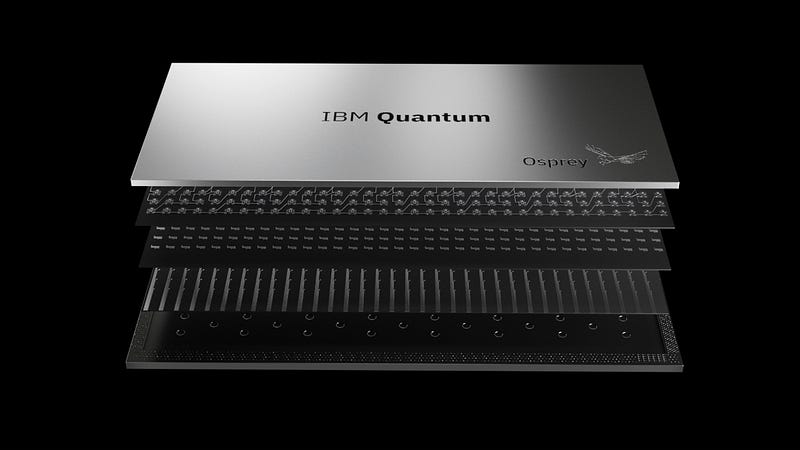
In the field of post-quantum cryptography — i.e., an encryption technology that will one day be able to withstand quantum computers — China leads with 31 percent of studies and patents, ahead of the U.S. with just over 13 percent. The situation is similar for quantum communications, which are secured via such encryption. In the development of quantum computers, on the other hand, the ASPI somewhat surprisingly sees the USA clearly ahead of China.
Probably the most publicly discussed technology at present is artificial intelligence (AI); after all, the human-like chat software Chat-GPT, released in November, has already been downloaded more than 100 million times worldwide. Here, too, ASPI sees China ahead or almost on par with the US in several categories, such as the development of AI algorithms as well as the design of powerful computer chips.
However, the focus on research studies and patents in this area, in particular, reveals a weakness of the study: The best research is of no use if you cannot manufacture the corresponding products yourself. In China’s case, this is evident, for example, in chips with AI capabilities. This is because the US issued comprehensive export bans and other restrictions against China’s chip industry last October.
Monopolies would give China opportunities to exert pressure
In 8 of the 44 areas, the ASPI authors see a risk that Beijing could achieve a monopoly. According to their methodology, this is the case when the output of Chinese research exceeds that of the next country by more than three times and 8 of the top 10 research institutes in the field are in China. This is a concern because, in the longer term, the authoritarian regime in Beijing could gain the ability to blackmail other countries.
It has already shown on several occasions that it will not hesitate to do so. In 2010, China blocked the export of rare earths to the Japanese electronics industry after Japan arrested a Chinese ship captain who had rammed a Japanese coast guard ship. Beijing also banned imports of numerous Australian products after Canberra called for an investigation into the outbreak of the coronavirus pandemic.
The Chinese position in the scientific field should not come as a surprise insofar as the communist government had long declared this leadership as a goal. The authors of the study recommend that Western countries develop strategies to promote research and provide appropriate funding.
The danger that key global technologies could be dominated by an authoritarian state is mitigated by the fact that, behind China and the USA, the democracies India, Great Britain, Germany, South Korea, Italy, Australia, and Japan share the top 5 positions in almost all areas. Of the authoritarian countries, only Iran makes it into this league several times. Research cooperation between democratic nations thus has security policy relevance.
Thanks for reading. If you liked the article, you can engage with my story and support me, as well as thousands of other creators, by signing up to Medium to gain instant access to all articles. Follow me on my journey to explore economics, finance, and politics around the world, by leaving your e-mail address here to get a message whenever I publish a new article. Thanks!