
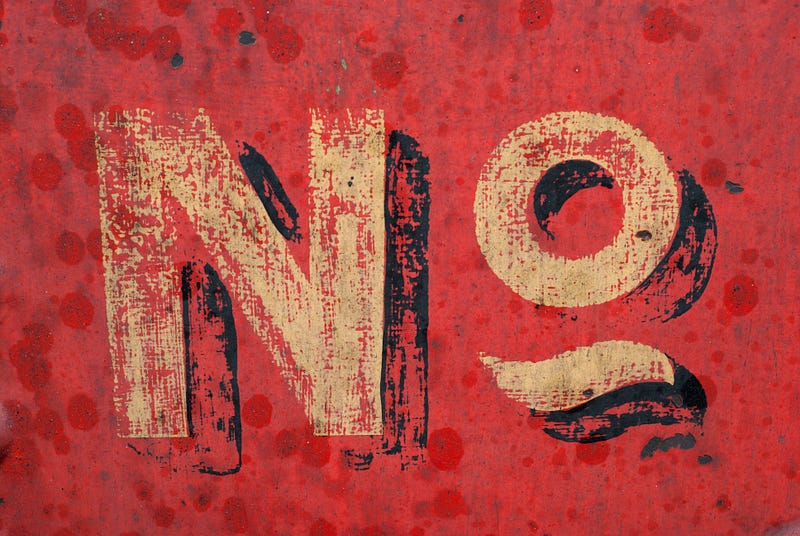
Nobody Can Write A Book. . . or build a house, or make an omelet.
I have witnessed countless writers, myself included, terrorize themselves into creative frigidity because their dream of writing a book overwhelms them when they sit down to work. New and newish writers have the expectation that an idea or a passion for writing comes with a magic button that, once pushed, spews forth pages and pages of prose.
They have an idea for a story and imagine that if they dedicate themselves to writing four or five hours a day, the story will transform itself into A BOOK in no time at all.
They try willing words to appear when typing them doesn’t seem to work.
And then they sit in front of their writing equipment, the pad and pen, computer, tablet, or phone, and stare at the blank page. They try willing words to appear when typing them doesn’t seem to work. The clock ticks by; they check their email, their snail mail, their media accounts. They’ll suddenly realize they must wash the windows or alphabetize their tax receipts, or rotate their tires. When those tasks are done, oh no, look at the time. What happened to the day? No time left to write.
So it goes. Day after day, month after month. Their beautiful story has become a monster hovering over the writing space, daring them to sit down and try to tame it. Come on, it growls. Write this book. You’ve told everyone you’re a writer. How many words today? How many pages?
No wonder writers drink.
It happened to me. Not the drinking part. I’m mostly a teetotaler.
I came to writing in a roundabout way, through my love of cooking. Many years ago while working at Stanford Medical School, I began teaching cooking as a lark. A cardiologist friend heard about my classes and asked me to write a heart-healthy cookbook with him. At the time, I was up for anything. Sure, I said, not really believing anything would come of it. After all, cooking was my jam; I wasn’t a writer. Yet the project changed my life because when I sat down to write, I discovered my true passion was writing not cooking.
I spent the first half dozen years or so learning as much as I could about the craft, and probably the next half dozen developing the confidence to show my stories to anyone who would read them.
Most of my stories never found an ending, though. I’d run into a wall when the initial burst of inspiration ran out. A real writer would know what happens next, I’d tell myself. I don’t know how to write a short story. I don’t know how to write a book. So I’d give up.
Or, I’d write as much as I knew about my story, and when I got stuck, I’d put it away for a day, and then another day, and then a week might fly by, and before I knew it six months would pass, and I’d come across it in a drawer. By then I’d have another burst of confidence and try it again.
But getting back on the horse is hard
But getting back on the horse is hard. I’d have to wade through doubt and confusion about what I was trying to say in my story. And then one day a breakthrough would happen. And I’d start with the promises. I’ll write every day of the weekend. For hours and hours at a time. I had a day job, and those were the only days I could devote to writing. But I won’t quit this time I’s say.
Enthusiasm would fuel the first days when I was back on the wagon so to speak. But soon the story would get a little fuzzy. They always do. Doubt would creep back into my thoughts, and the story would get stuck again. Before I knew it, the tax receipts would need alphabetizing again.
I spent years playing this yo-yo game because I truly loved writing. Something deep inside me told me I was a writer. I just didn’t know some essential thing. And I didn’t know how to discover what it was. If I had a penny for the times I gave up!
And then my cardiologist friend asked if I’d write another cookbook with him. What happened there is a long story. Maybe I’ll tell it some other time. Short version, we wrote a book that garnered a starred review in Publisher’s Weekly. But not before a massive rejection, heartbreak, and demand for the return of a big advance from one publisher that had me vowing I’d never write again. When I couldn’t sustain that defiant, defensive reaction, I said, okay, I’ll write again. But I’ll never show my work to anyone. And I’ll definitely never submit my work for criticism. What I meant was, I’ll never let anyone hurt me or my writing like that again.
So, in the devastatingly painful year before our book was salvaged, I found a day job and set my alarm for fifteen minutes earlier than I had to get up. I’d free write for those fifteen minutes, print out a page, and tuck it in my purse. I wouldn’t work on it during the day, but when I opened my purse for change for the bus or for lunch money, it reminded me what my true work was, and my day got easier. That page of writing was my umbilical cord to my real self.
In time, the fifteen-minute spurts of random writing became a story, and I started setting the alarm for twenty minutes, then thirty. Then I was finishing stories; then I found an idea for a novel. Before I knew it, I was writing for two hours before work and revising on the bus. Taking writing classes, reading my work in critique groups, sending my work out. When I discovered Kindle many years later, I began publishing ebooks. I now have 55 titles on Amazon.
It started with my fifteen-minute burst of defiance every morning to show that a massive rejection wouldn’t stop me from writing. And I discovered that I wasn’t writing a story or a book. I was just writing sentences, scenes, characters, a little bit, every single day. Because that’s what makes up a book.

My little pieces became paragraphs, chapters. Sections. But what I really was doing was more profound. I was developing a writing process. I was learning discipline. The discipline of writing. I always hated the word discipline, as I often led a scattershot life. But the dictionary says discipline comes from disciple. And a disciple is a follower. That rang my bell. I was a disciple, a follower of writing. Writing became my teacher.
For twenty-five years I missed maybe five or seven morning writing sessions a year, including recovery from surgeries and vacations. Nothing interfered with my morning writing sessions. They taught me to write. They taught me about myself. I learned that the urgency of finishing a fifteen-minute session gives you no time to waste; they teach you the discipline to sustain longer periods of writing. And that’s just the surface.
My discipline taught me we don’t write books. That’s too intimidating.
We write words. We write for fifteen minutes, not five hours. Not at first. When you decide to train for a marathon, you don’t run twenty miles, you run for twenty minutes. When you train for weights, you don’t pick up a hundred pounds, you lift ten. When you want to write, you don’t write a book, you write a page or a paragraph. And then another, and another, and another. You let fifteen minutes become twenty. When that feels right, you stretch it to thirty. When you have a good head of steam, a few weeks or months later, try forty minutes.
Fifteen minutes a day may not seem like much. A paragraph or a page a day might seem piddling compared to a best seller who churns out a chapter a day. But fifteen minutes is better than no minutes. A paragraph is better than a blank page. Building up to a scene fifteen minutes before work or on your lunch hour is better than saying I have no time to write.
No work of art, especially a book, comes out whole as soon as you set pen to paper, or fingers to keys.
It’s the first rule of process, and writing is nothing if not process.
Nobody can write a book. But anybody can write a sentence, sketch an idea for a roofline, or crack an egg. Because every creation, from making a baby to writing timeless books starts with the first step, the first word, and keeps on going from there.


