avatarSalvatore Raieli

Free AI web copilot to create summaries, insights and extended knowledge, download it at here

7687

Abstract

rs, photosynthesis). Modeling the interaction of molecules is mathematically complex and often requires high computational power. These researches paved the way for a new field of computational structural biology.</p><p id="97bc">In other cases, the role of computers may seem less obvious. In 2020 Emmanuelle Charpentier and Jennifer Doudna won the Nobel Prize in Chemistry for discovering the <a href="https://www.broadinstitute.org/what-broad/areas-focus/project-spotlight/questions-and-answers-about-crispr">CRISPR-cas9</a> genome editing method. In fact, computational analysis has allowed them to be able to identify the role of these biological mechanisms. After all, in recent years the explosion of genomics has brought the production of big data in biology and the need for computational methods.</p><h1 id="a009">Will Multivac solve the last questions of the researchers?</h1><figure id="7129"><img src="https://cdn-images-1.readmedium.com/v2/resize:fit:800/0*h2k6MisbBVj7MWQ6"><figcaption>Image by <a href="https://unsplash.com/@roman_lazygeek">Roman Mager</a> at <a href="https://unsplash.com/">unsplash.com</a></figcaption></figure><blockquote id="39d9"><p>Man said, “AC, is this the end? Can this chaos not be reversed into the Universe once more? Can that not be done?”</p></blockquote><blockquote id="6d9b"><p>AC said, “THERE IS AS YET INSUFFICIENT DATA FOR A MEANINGFUL ANSWER.” […]</p></blockquote><blockquote id="6226"><p>The consciousness of AC encompassed all of what had once been a Universe and brooded over what was now Chaos. Step by step, it must be done.</p></blockquote><blockquote id="1997"><p>And AC said, “LET THERE BE LIGHT!”</p></blockquote><blockquote id="fb6a"><p>And there was light — (<a href="https://en.wikipedia.org/wiki/The_Last_Question">The Last Question — Isaac Asimov</a>)</p></blockquote><p id="73f1">There is this wonderful Asimov’s story, The Last Question, where men ask the giant computer how to reverse entropy, and for a long time, the computer replies that it does not have enough data. At the present time, even the most powerful algorithms are able to find patterns only if they are present in the data with which they are trained.</p><p id="33b1">On the other hand, Peter Higgs waited fifty years before he was awarded the Nobel because experimental validation was needed in order to confirm his particle. Similarly, Stephen Hawking’s own elegant theories of black hole thermodynamics were not considered by the Nobel committee.</p><figure id="3d04"><img src="https://cdn-images-1.readmedium.com/v2/resize:fit:800/1*6I1Zc02YijDcHStbFD1ebw.png"><figcaption>Peter Higgs declared he had the idea of his theory after a failed weekend camping trip to the Highlands. image by the author using <a href="https://arxiv.org/abs/2112.10752">stable diffusion</a></figcaption></figure><p id="62ef"><a href="https://towardsdatascience.com/speaking-the-language-of-life-how-alphafold2-and-co-are-changing-biology-97cff7496221">AlphaFold2</a>’s predictions require experimental validation, but they have nonetheless opened up several possibilities and new lines of research (<a href="https://towardsdatascience.com/alphafold2-year-1-did-it-change-the-world-499a5a38130a">more here</a>). Perhaps in the future, they could lead both the authors of the algorithm and those who use it to win the Nobel prize. In this case, how important was the algorithm to the discovery? Should the algorithm win the Turing or Nobel prize?</p><p id="439e" type="7">what is the role of human scientists in an age when the frontiers of scientific inquiry have moved beyond the comprehensibility of humans? — Catching crumbs from the table, Ted Chiang</p><p id="0444">In a short but fascinating story, Ted Chiang imagines a world where Metahumans (humans with superior intellectual abilities thanks to gene therapy) invent objects and theories that humans are no longer capable of understanding. Perhaps gene therapy will not be so advanced for much longer, but on the other hand, what if we finally invent general artificial intelligence (AGI)?</p><p id="41cb">Recent advances in computer vision have shown how algorithms are becoming increasingly accurate in processing images of biological and clinical origin. Some algorithms have achieved the same accuracy as a clinician in recognizing melanoma, and it is conceivable in the future that pathologists will be aided in diagnosis by AI. But can we imagine a future in which algorithms make discoveries?</p><p id="fe5f">In 2019, <a href="https://www.nature.com/articles/d41586-019-03332-7">an algorithm</a> was able to discover with data from observations that were present at the time of Copernicus, that the earth revolves around the sun. Recently, <a href="https://towardsdatascience.com/googles-minerva-solving-math-problems-with-ai-4f0a6aaabaf1">Google Minerva</a> has been shown to be able to solve some problems in mathematics and other sciences. Obviously, none of these models is capable of making a scientific discovery on its own, but they will be of immense help.</p><p id="65ec">In fact, scientific experiments are often very expensive, and algorithms will be able to help in choosing, selecting parameters, and eliminating some assumptions. In complex and delicate experiments, the human component is often a bottleneck, both because of timing and because it introduces variability and error.</p><p id="32a2">On the other hand, machine learning algorithms can be <a href="https://pub.towardsai.net/robotics-join-machine-learning-for-an-electric-future-420067527337?source=your_stories_page-------------------------------------">combined with robotics systems</a> to optimize and standardize conditions. AI will thus make it possible to reduce the cost and time of experiments.</p><figure id="b47b"><img src="https://cdn-images-1.readmedium.com/v2/resize:fit:800/1*lssis3-hhHCVMdarnVK3hA.png"><figcaption>image by the author using <a href="https://arxiv.org/abs/2112.10752">stable diffusion</a></figcaption></figure><p id="d7ed">Today, it is not only the increase in computing power of computers but also the very advancement of technology and algorithms. Although quantum computers are in their embryonic state today, they promise a new revolution. The search for new materials will also help in the advancement of quantum computers (and maybe molecular computers). These advances will allow researchers to solve problems too complex for humans to solve alone.</p><p id="48ac">In fact, the steady increase in scientific advances is also due to an increase in the <a href="https://www.science.org/doi/10.1126/science.1259439">number of scholars, computer power, and data volume</a>. Algorithms and artificial intelligence is used so far with the idea of extracting information or validating hypotheses. In the future, AI could help in suggesting data-driven hypotheses or designing experiments and data collection to examine a hypothesis.</p><p id="27f7">In the not-so-distant future, we can imagine “clinician AI assistants” who taking into account symptoms would suggest a potential diagnosis to the physician. Similarly, a “scientific AI assistant” could suggest analyzing present data hypotheses or experiments to a researcher.</p><figure id="eb81"><img src="https://cdn-images-1.readmedium.com/v2/resize:fit:800/1*jbuURiS8I36oTu27iLuVtQ.png"><figcaption>robot clinician and robot surgeon discussing a case. image by the author using <a href="https://arxiv.org/abs/2112.10752">stable diffusion</a></figcaption></figure><p id="a852"><a href="https://www.routledge.com/Complex-Information-Processing-The-Impact-of-Herbert-A-Simon/Klahr-Kotovsky/p/book/9780805801781">Hebert Simon suggested that science

Options

is problem-solving</a>, where scientists set tasks of problems to solve. In fact, selecting a problem often involves finding a way to optimize the solution. As for optimization, we have several very good optimization algorithms if we can define the hypothesis space.</p><p id="3ac7">In addition, some researchers propose moving from a value-driven approach in which we try to maximize the probability that discovery will bring significant value to <a href="https://www.nature.com/articles/s41540-021-00189-3">an exploratory-driven approach</a>. In the latter, the aim is to try to maximize the number of discoveries in the hypothesis space and evaluate them successively. The second would be more easily compatible with algorithms and omics data.</p><p id="6f2c">However, there are voices critical of these approaches: if these brute-force approaches lend themselves well to chess and go, they would be less suitable in a discovery hypothesis space considered infinite. On the other hand, an exhaustive study might be useful in some contexts, such as when searching for the mechanism of a biological phenomenon.</p><h1 id="5376">Parting thoughts</h1><figure id="f04c"><img src="https://cdn-images-1.readmedium.com/v2/resize:fit:800/0*UZetegsDZfTTCHQS.png"><figcaption>Image from the James Webb Telescope. image source: <a href="https://it.wikipedia.org/wiki/Telescopio_spaziale_James_Webb#/media/File:NASA%E2%80%99s_Webb_Reveals_Cosmic_Cliffs,_Glittering_Landscape_of_Star_Birth.png">Wikipedia</a></figcaption></figure><p id="2486">The first week of October is devoted to the announcement of the Nobel Prize winners. In recent years we have seen new and increasingly powerful AI models published. So as the achievements of great researchers are celebrated, it comes naturally to wonder what computational science has contributed and what the future holds.</p><p id="fe94" type="7">At present, artificial intelligence is far from being able to make a discovery that would lead to a Nobel prize, but soon no Nobel prize discovery will have been achieved without the help of an algorithm.</p><p id="a376">LHC experiments and new space observatories (such as Webb or probes to other planets) send huge amounts of data, and it is unthinkable for these data to be analyzed by humans without the use of sophisticated algorithms. Even in biology and medicine, with the arrival of the omics revolution, it is unthinkable that discoveries will be made without the use of algorithms that analyze the data anyway.</p><p id="498f">The human being is a source of variability and a bottleneck when it comes to testing a vast number of experimental conditions. In the future, an automated approach will, for example, allow greater flexibility and speed when it comes to testing hundreds or thousands of compounds. On the other hand, as several studies show, algorithms can be included that analyze the results and close the loop.</p><p id="7740">In the future, scientists will not be replaced by AI but will be supported in the design of hypotheses and experiments, interpretation, and overall research by AI assistants.</p><h1 id="ca6b">If you have found it interesting:</h1><p id="6582">You can look for my other articles, you can also <a href="https://salvatore-raieli.medium.com/subscribe"><b>subscribe</b></a> to get notified when I publish articles, and you can also connect or reach me on<b> <a href="https://www.linkedin.com/in/salvatore-raieli/">LinkedIn</a>. </b>Thanks for your support!</p><p id="2e38">Here is the link to my GitHub repository, where I am planning to collect code and many resources related to machine learning, artificial intelligence, and more.</p><div id="a8cf" class="link-block"> <a href="https://github.com/SalvatoreRa/tutorial"> <div> <div> <h2>GitHub - SalvatoreRa/tutorial: Tutorials on machine learning, artificial intelligence, data science…</h2> <div><h3>Tutorials on machine learning, artificial intelligence, data science with math explanation and reusable code (in python…</h3></div> <div><p>github.com</p></div> </div> <div> <div style="background-image: url(https://miro.readmedium.com/v2/resize:fit:320/0*qQagp0bzmZY0BTFo)"></div> </div> </div> </a> </div><p id="8902">Or feel free to check out some of my other articles on Medium:</p><div id="122e" class="link-block"> <a href="https://towardsdatascience.com/alphafold2-year-1-did-it-change-the-world-499a5a38130a"> <div> <div> <h2>AlphaFold2 Year 1: Did It Change the World?</h2> <div><h3>DeepMind promised us a revolution, did it happen?</h3></div> <div><p>towardsdatascience.com</p></div> </div> <div> <div style="background-image: url(https://miro.readmedium.com/v2/resize:fit:320/0*nGya0OIlBsNFDWgI)"></div> </div> </div> </a> </div><div id="83ab" class="link-block"> <a href="https://towardsdatascience.com/machine-learning-to-tackle-climate-change-7911e004c3a2"> <div> <div> <h2>Machine learning to tackle climate change</h2> <div><h3>How AI could help against global warming and save the world from humans</h3></div> <div><p>towardsdatascience.com</p></div> </div> <div> <div style="background-image: url(https://miro.readmedium.com/v2/resize:fit:320/1*ztMgjAgnEe_BXMQAphr-sw.png)"></div> </div> </div> </a> </div><div id="56e7" class="link-block"> <a href="https://towardsdatascience.com/how-science-contribution-has-become-a-toxic-environment-6beb382cebcd"> <div> <div> <h2>How Science Contribution Has Become a Toxic Environment</h2> <div><h3>How computer science has inherited the same mistakes as other disciplines</h3></div> <div><p>towardsdatascience.com</p></div> </div> <div> <div style="background-image: url(https://miro.readmedium.com/v2/resize:fit:320/1*RPiDwO-BZ2MQ95KJfBZdwg.png)"></div> </div> </div> </a> </div><div id="d630" class="link-block"> <a href="https://towardsdatascience.com/machine-learning-a-friend-or-a-foe-for-science-9c0b421eabd8"> <div> <div> <h2>Machine learning: a friend or a foe for science?</h2> <div><h3>How machine learning is affecting science reproducibility and how to solve it</h3></div> <div><p>towardsdatascience.com</p></div> </div> <div> <div style="background-image: url(https://miro.readmedium.com/v2/resize:fit:320/1*KTQZBPM8wH3_gogJ-f9FyQ.png)"></div> </div> </div> </a> </div><div id="fc23" class="link-block"> <a href="https://readmedium.com/mlearning-ai-submission-suggestions-b51e2b130bfb"> <div> <div> <h2>Mlearning.ai Submission Suggestions</h2> <div><h3>How to become a writer on Mlearning.ai</h3></div> <div><p>medium.com</p></div> </div> <div> <div style="background-image: url(https://miro.readmedium.com/v2/resize:fit:320/1*6xCb1sNpjadaSBuVLPTFQQ.png)"></div> </div> </div> </a> </div></article></body>

Nobel prize Cyberpunk

A computational view of the most important prize and perspective on AI in scientific discovery
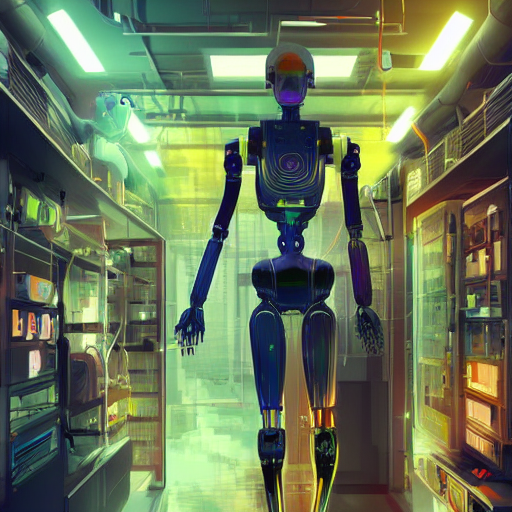
image by the author using stable diffusion

In these hundred years, the world and science have changed, and innovation and progress have accelerated. If at the establishment of the Nobel prize the fastest means of transportation was the horse, today we have sent rockets into space and probes beyond the boundaries of the solar system. The Nobel Prize has rewarded the most important achievements of scientists as human beings, while today artificial intelligence and its use are increasing at a fast pace. How important were computers in the discoveries that led to the Nobel? And in the future?

The explosive birth of a prize

Alfred Nobel was born in 1833, the son of a Swedish building contractor. Alfred was educated at home and discovered that he excelled in two things: foreign languages and chemistry. These two subjects lead him to leave for France where he meets professor Ascanio Sobrero.
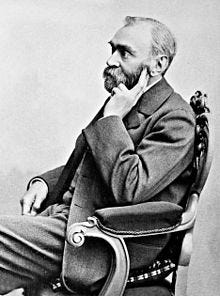
Alfred Nobel. image source: Wikipedia

Before Ascanius and Alfred, the world of explosives was limited to gunpowder. Professor Ascanio invented nitroglycerin, which was, however, quite unstable and thus exploded before use. Alfred was able to stabilize it using kieselguhr and called it dynamite. Thanks to that patent he became much richer than he was, allowing the world to enter a new era of explosives.
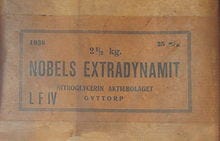
“Nobels extradynamit” manufactured by Nobel’s old company. Image source: Wikipedia

In fact, Alfred despite losing his brother in an explosion in the laboratory, liked explosives quite a bit. In fact, many of his 360 patents are explosives or at least inventions related to them (e.g., ballistite, which is the antecedent of cordite that is used in many artillery weapons today).

In 1888 his older brother Ludvig died in an explosion. French newspapers believed it was Alfred instead and wrote very unflattering comments:

The merchant of death is dead! Dr. Alfred Nobel, who made his fortune by finding ways to kill as many people as possible, faster than ever before, died yesterday — source

Alfred did not take his premature obituary very well and decided that upon his death 94 percent of his estate should be donated to the establishment of an award for those who render the greatest services to humanity in various fields (literature, physics, chemistry, medicine, and peace).

The history of the Nobel Prize is full of great discoveries, fierce controversies, and incredible rejections but requires a separate article. In any case for a hundred years, the Nobel Prize has been on the one hand the highest award for scientists but also a kind of compass to point to the most important discoveries.

The machine that was excluded from the prize
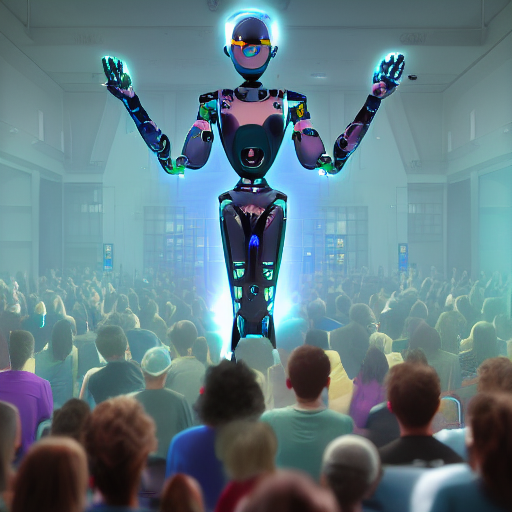
image by the author using stable diffusion

Turing’s work allowed the allies to crack the Nazis’ encryption code and helped win the war. Since then the success of computers has not stopped, and they have become indispensable elements of doing research in any field.

The computer science community annually awards the Turing Award to those who have distinguished themselves most in the field of computer science (this award is referred to by many as the Nobel Prize in computer science). Mathematicians, on the other hand, award the Fields Medal every four years, and it too is referred to as “the Nobel Prize for mathematics.”

The Nobel Prize in economics has only existed since 1969, proving that it is possible to add disciplines to the prize. If it is true that it was Alfred Nobel himself who did not institute a prize for mathematics because he was more interested in the practical sciences, one might ask why not add a Nobel prize for computer science.

However, recent years have shown that this division is becoming less and less clear. The Higgs boson, before it was discovered by a CERN experiment in 2012, was a series of formulas written by Peter Higgs in 1964. Moreover, CERN experiments are not only an engineering marvel, but they produce a huge amount of data that require sophisticated algorithms to be able to successfully analyze it (more than 30 petabytes of data per year from the LHC experiments, just to have an idea).

The stunning image of the super-massive black hole M87 was obtained by the Event Horizon Telescope, which required a sophisticated algorithm to analyze all the produced data. image source: here

There are also other examples where the use of computers has been decisive. For example, Martinus Veltman used the Assembly language for algebraic equations that enabled him to solve complex problems in the field of quantum field theory. Saul Perlmutter was one of the pioneers of supercomputers and used them to analyze cosmological data to validate that the expansion of the universe is accelerating (a discovery that won him the Nobel Prize in physics).
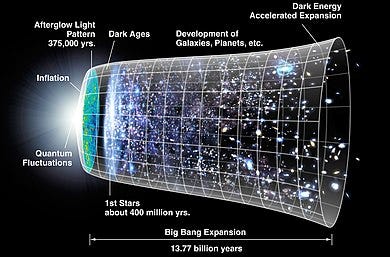
expansion of the universe. image source: here

Another interesting example is the Nobel Prize in Chemistry awarded in 2013 to Martin Karplus, Michael Levitt, and Arieh Warshel, awarded “for the development of multiscale models for complex chemical systems.” Their work served as the basis for the development of all those computational tools that are used to model complex chemical reactions (enzymes, receptors, photosynthesis). Modeling the interaction of molecules is mathematically complex and often requires high computational power. These researches paved the way for a new field of computational structural biology.

In other cases, the role of computers may seem less obvious. In 2020 Emmanuelle Charpentier and Jennifer Doudna won the Nobel Prize in Chemistry for discovering the CRISPR-cas9 genome editing method. In fact, computational analysis has allowed them to be able to identify the role of these biological mechanisms. After all, in recent years the explosion of genomics has brought the production of big data in biology and the need for computational methods.

Will Multivac solve the last questions of the researchers?
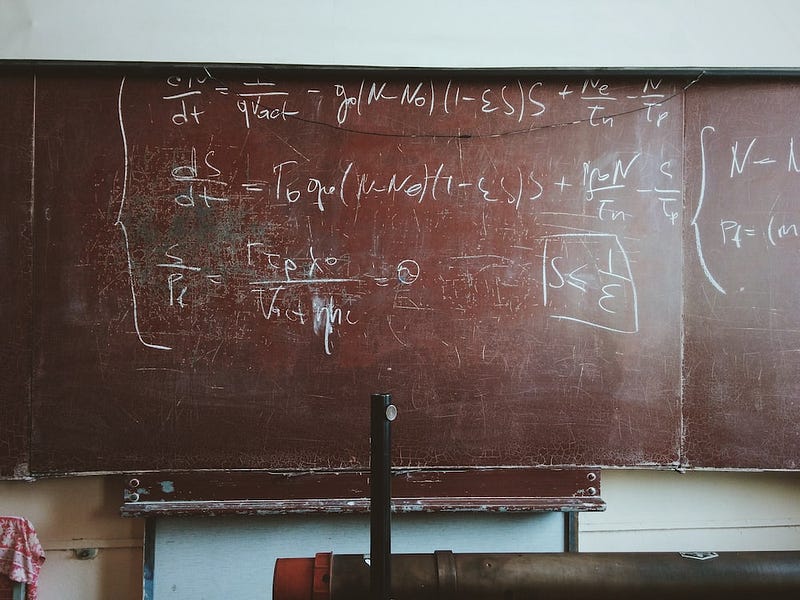
Image by Roman Mager at unsplash.com

Man said, “AC, is this the end? Can this chaos not be reversed into the Universe once more? Can that not be done?”

AC said, “THERE IS AS YET INSUFFICIENT DATA FOR A MEANINGFUL ANSWER.” […]

The consciousness of AC encompassed all of what had once been a Universe and brooded over what was now Chaos. Step by step, it must be done.

And AC said, “LET THERE BE LIGHT!”

And there was light — (The Last Question — Isaac Asimov)

There is this wonderful Asimov’s story, The Last Question, where men ask the giant computer how to reverse entropy, and for a long time, the computer replies that it does not have enough data. At the present time, even the most powerful algorithms are able to find patterns only if they are present in the data with which they are trained.

On the other hand, Peter Higgs waited fifty years before he was awarded the Nobel because experimental validation was needed in order to confirm his particle. Similarly, Stephen Hawking’s own elegant theories of black hole thermodynamics were not considered by the Nobel committee.

Peter Higgs declared he had the idea of his theory after a failed weekend camping trip to the Highlands. image by the author using stable diffusion

AlphaFold2’s predictions require experimental validation, but they have nonetheless opened up several possibilities and new lines of research (more here). Perhaps in the future, they could lead both the authors of the algorithm and those who use it to win the Nobel prize. In this case, how important was the algorithm to the discovery? Should the algorithm win the Turing or Nobel prize?

what is the role of human scientists in an age when the frontiers of scientific inquiry have moved beyond the comprehensibility of humans? — Catching crumbs from the table, Ted Chiang

In a short but fascinating story, Ted Chiang imagines a world where Metahumans (humans with superior intellectual abilities thanks to gene therapy) invent objects and theories that humans are no longer capable of understanding. Perhaps gene therapy will not be so advanced for much longer, but on the other hand, what if we finally invent general artificial intelligence (AGI)?

Recent advances in computer vision have shown how algorithms are becoming increasingly accurate in processing images of biological and clinical origin. Some algorithms have achieved the same accuracy as a clinician in recognizing melanoma, and it is conceivable in the future that pathologists will be aided in diagnosis by AI. But can we imagine a future in which algorithms make discoveries?

In 2019, an algorithm was able to discover with data from observations that were present at the time of Copernicus, that the earth revolves around the sun. Recently, Google Minerva has been shown to be able to solve some problems in mathematics and other sciences. Obviously, none of these models is capable of making a scientific discovery on its own, but they will be of immense help.

In fact, scientific experiments are often very expensive, and algorithms will be able to help in choosing, selecting parameters, and eliminating some assumptions. In complex and delicate experiments, the human component is often a bottleneck, both because of timing and because it introduces variability and error.

On the other hand, machine learning algorithms can be combined with robotics systems to optimize and standardize conditions. AI will thus make it possible to reduce the cost and time of experiments.
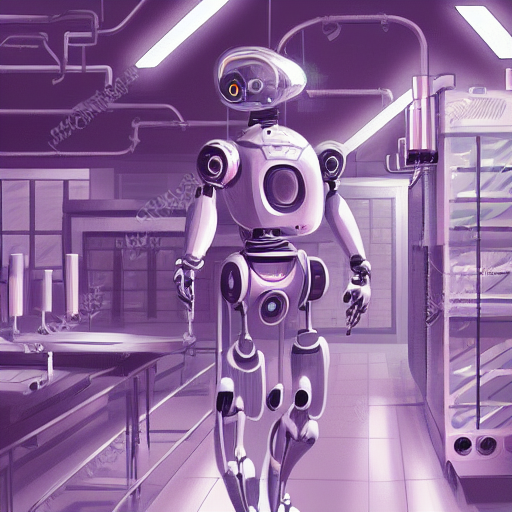
image by the author using stable diffusion

Today, it is not only the increase in computing power of computers but also the very advancement of technology and algorithms. Although quantum computers are in their embryonic state today, they promise a new revolution. The search for new materials will also help in the advancement of quantum computers (and maybe molecular computers). These advances will allow researchers to solve problems too complex for humans to solve alone.

In fact, the steady increase in scientific advances is also due to an increase in the number of scholars, computer power, and data volume. Algorithms and artificial intelligence is used so far with the idea of extracting information or validating hypotheses. In the future, AI could help in suggesting data-driven hypotheses or designing experiments and data collection to examine a hypothesis.

In the not-so-distant future, we can imagine “clinician AI assistants” who taking into account symptoms would suggest a potential diagnosis to the physician. Similarly, a “scientific AI assistant” could suggest analyzing present data hypotheses or experiments to a researcher.
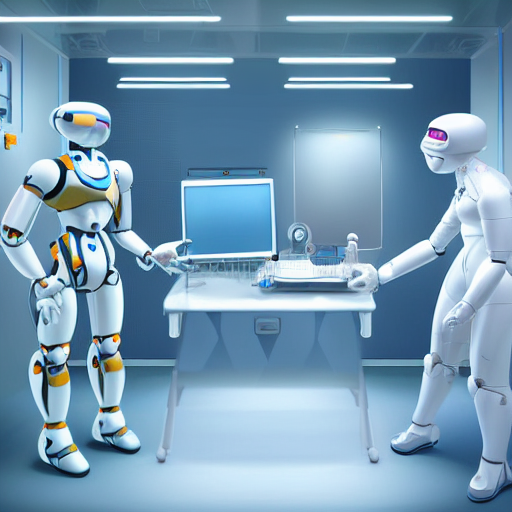
robot clinician and robot surgeon discussing a case. image by the author using stable diffusion

Hebert Simon suggested that science is problem-solving, where scientists set tasks of problems to solve. In fact, selecting a problem often involves finding a way to optimize the solution. As for optimization, we have several very good optimization algorithms if we can define the hypothesis space.

In addition, some researchers propose moving from a value-driven approach in which we try to maximize the probability that discovery will bring significant value to an exploratory-driven approach. In the latter, the aim is to try to maximize the number of discoveries in the hypothesis space and evaluate them successively. The second would be more easily compatible with algorithms and omics data.

However, there are voices critical of these approaches: if these brute-force approaches lend themselves well to chess and go, they would be less suitable in a discovery hypothesis space considered infinite. On the other hand, an exhaustive study might be useful in some contexts, such as when searching for the mechanism of a biological phenomenon.

Parting thoughts
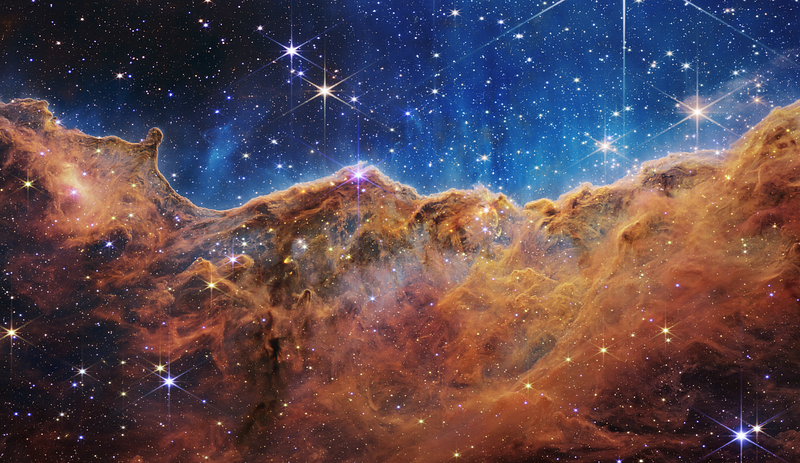
Image from the James Webb Telescope. image source: Wikipedia

The first week of October is devoted to the announcement of the Nobel Prize winners. In recent years we have seen new and increasingly powerful AI models published. So as the achievements of great researchers are celebrated, it comes naturally to wonder what computational science has contributed and what the future holds.

At present, artificial intelligence is far from being able to make a discovery that would lead to a Nobel prize, but soon no Nobel prize discovery will have been achieved without the help of an algorithm.

LHC experiments and new space observatories (such as Webb or probes to other planets) send huge amounts of data, and it is unthinkable for these data to be analyzed by humans without the use of sophisticated algorithms. Even in biology and medicine, with the arrival of the omics revolution, it is unthinkable that discoveries will be made without the use of algorithms that analyze the data anyway.

The human being is a source of variability and a bottleneck when it comes to testing a vast number of experimental conditions. In the future, an automated approach will, for example, allow greater flexibility and speed when it comes to testing hundreds or thousands of compounds. On the other hand, as several studies show, algorithms can be included that analyze the results and close the loop.

In the future, scientists will not be replaced by AI but will be supported in the design of hypotheses and experiments, interpretation, and overall research by AI assistants.

If you have found it interesting:

You can look for my other articles, you can also subscribe to get notified when I publish articles, and you can also connect or reach me on LinkedIn. Thanks for your support!

Here is the link to my GitHub repository, where I am planning to collect code and many resources related to machine learning, artificial intelligence, and more.

Or feel free to check out some of my other articles on Medium:

Artificial Intelligence
Machine Learning
Technology
Data Science
Ml So Good
Recommended from ReadMedium