
No, You Can’t Actually Give Double Likes on Twitter
But what it reveals about our psyche is fascinating
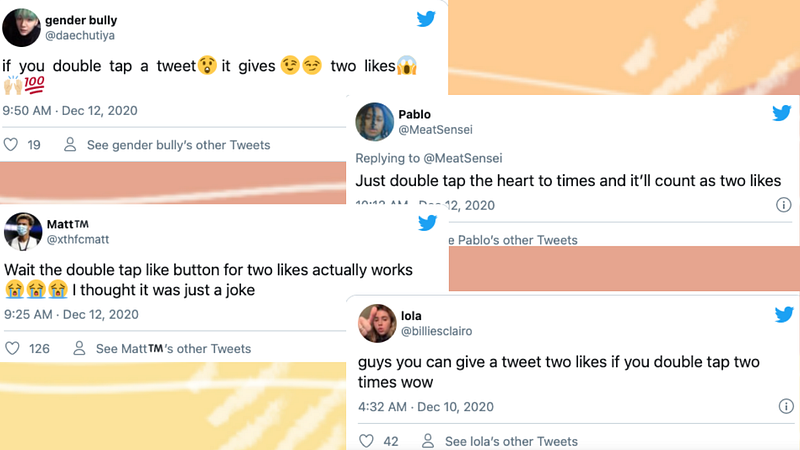
If you have spent any amount of time on Twitter in the last week, you’ve probably seen a viral tweet reading something like, “Wow, you can give double likes on Tweets! 😭 😍”
You can’t double like tweets. Twitter has not developed or released any double-like feature that I know of, and they probably won’t. But when users on the app see that kind of tweet, it’s natural to try it out of curiosity.
The act of trying does make it more likely that you like the tweet if only by accident, signaling to the Twitter algorithm that the content is popular and engaging, spreading it further through the algorithm, to be “double-liked” by more people. This explains why I’ve (and you too, probably) managed to see a variation of this tweet a couple of times, despite not following anyone who’s done it.
Ultimately, it’s a short-term scam intended to boost engagement on a single tweet. But it works for users. And it’s not the first time this has happened.
There Are a Lot of Variations of the Double-Like Tweet Scam
I call it a scam because it fits the definition: it’s a “dishonest scheme; a fraud.” The person writing the tweet knows double-liking a tweet doesn’t work, and they’ve written it regardless to try to trick you into giving their tweet engagement.
This is not the first time folks have tried to hack an algorithm for short-term gain. You may remember seeing “Double-tap to see the whole thing!” on an Instagram post or “open for a surprise,” on Twitter, which demonstrates engagement to Twitter’s algorithm, increasing the spread of the tweet, or even the “Wow! You can type your password into Facebook and it gets hidden as ***.”
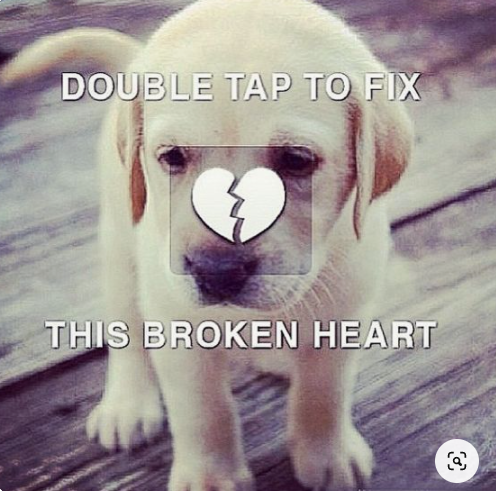
It’s an interesting way to game the system by effectively using the mechanics of the platform in a way they weren’t intended. Instagram meant for a double-tap to indicate the user liked to post, not to complete the picture. Twitter wants you to open an image because you want to know more about the content, not for a surprise.
But it leaves me wondering why? What’s the point? You get tens, hundreds, or thousands of likes on this one tweet, and then what comes next?
Extend the thought experiment to the furthest point: you game the system, get people to like your tweet, potentially increase reach temporarily on future tweets which are nothing to do with the first, and then what? You can’t fool your audience more than once with the same trick, so what’s the end game of getting many likes on this one tweet?
My theory is that there isn’t one. People just like to go viral even when there’s nothing in it, financial or otherwise, for them. It may not pay bills and it may not strengthen our relationships, but humans love to go viral.
Virality Feels Like Popularity to Us
I’ve written before about how Instagram celebs feel like our friends, and how influencers use this parasocial relationship to make money. Social media affects our brains another way, too: getting likes fuels our dopamine levels.
“When someone likes an Instagram post or any content that you share, it’s a little bit like taking a drug. As far as your brain is concerned, it’s a very similar experience,” writes New York University professor Adam Alter, author of Irresistible: The Rise of Addictive Technology and the Business of Keeping Us Hooked, via Business Insider.
His point is that psychologically speaking, you’re rewarded for likes. It makes you feel liked — literally — more popular, more accepted. And at a very core, monkey-brain level, that’s all we want.
This is exactly what happens when you take a very social species and put them online.
We love social status because historically, it confers survival and reproductive advantages on us. Today, the same pathways and neural mechanisms exist, but getting more likes on a tweet doesn’t mean we’re more likely to pass on our genes, so when we see the end result, it’s like we’re left missing half the equation.
We see a nonsensical outcome, like pretending double-liking a tweet is a thing to get more likes on a tweet, but we don’t understand why people are doing it. It doesn’t fit into any of the typical pathways to success. The tweet doesn’t make money. It won’t make friends. It can’t help you monetize your account.
Social Media Is a Fascinating Microcosm of Technology and Society
This is one of the things I love about social media — it uncovers some really bizarre behavior because we have the same dreams, motivations, and concerns we did 10,000 years ago, but we now have new outlets and new pathways to achieve them. You get behaviors that seem irrational at first glance, but make a world of sense with the right context.
There’s the dark side, of course — dogpiling, harassment, doxing — and there’s the good side, like meme subculture and a really heartwarming story of how one woman bonded with a little girl by leaving her notes as Sapphire the Fairy throughout quarantine.
And then, somewhere in between, there’s the weird stuff people will do just to get likes, like pretend that there’s a double-like functionality on Twitter.