
“No Spoons or No Bones Day?” How one Pug on TikTok is changing the discourse on disability, energy, and chronic illness
Noodle the Pug is a TikTok sensation. Here’s why thousands of viewers tune in every day to see whether or not he has bones.
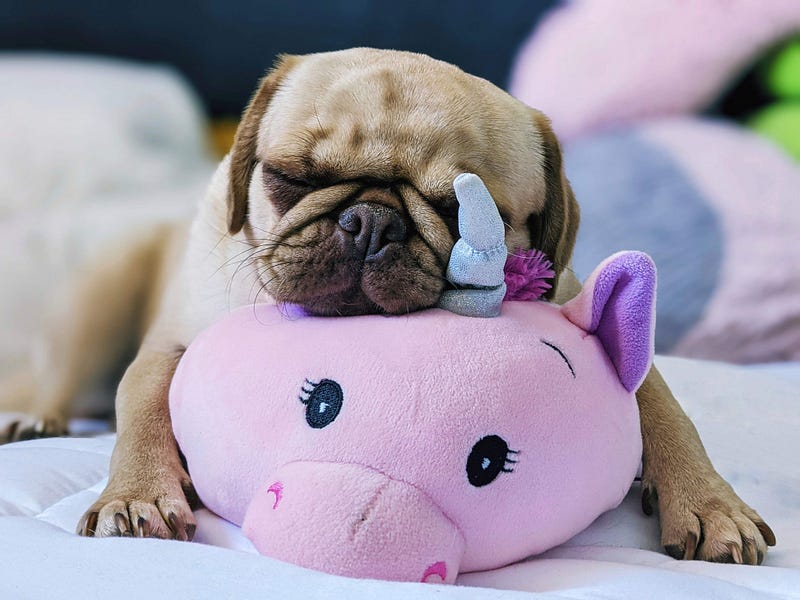
It all started with a thirteen-year-old pug named Noodle. Every morning a man named Jon Graziano on TikTok (@ Jongraz) checks to see if his very old pug has any bones, and the TikTok world is fascinated. He does this by picking up Noodle, who is a very chubby, sleepy pup, and standing him on his feet in his soft dog bed. Noodle then decides how everyone’s day will go by doing one of two things: flopping back into bed, or standing on his own two feet.
“Good morning everyone, and welcome back to yet another round of ‘No Bones,’ the game where we figure out of my 13-year-old pug woke up with bones, and as a result we figure out what kind of day we’re gonna have.”
Most days are “no bones days” for Noodle. He is very tired and would very much like to go back to sleep. For a dog as old as Noodle (pugs live an average of 12–15 years), getting up in the morning can be very strenuous. His “bones days” might be far and few between, but they inspire his loyal TikTok following to seize the day and make the most out of this rare burst of energy.
No Bones Day
A “no bones day,” for Noodle, means staying in bed. For viewers, “no bones days” mean self-care, taking it easy, treating oneself. Graziano recommends wearing soft pants, saying “no” to plans if you don’t want to go out, and taking a long bath. A “no bones day” is a day meant for recharging. A “no bones day” is a day meant for staying in, eating well, and watching a movie. Maybe do some light yoga. Eat an extra piece of desert. Call your mom. Snuggle your significant other.
Bones Day
A “bones day,” on the other hand, is the kind of day where you wake up with confidence, a sense of purpose, and the energy to make things happen. A “bones day” is a good day to start a new project, to take a few risks, to jump at new opportunities. Ask someone on a date. Start a new hobby. Buy a lottery ticket. Do a high-energy activity, like going for a hike or taking a trip to the gym. Clean the house. Meal-prep for your next “no bones” day. Take advantage of your “bones day” while it lasts, and try to balance the day with work and leisure activities.
The response to Graziano’s videos have been overwhelmingly positive. He said in an interview with Today,
I get mentions from people who say they it was a ‘bones day’ so they decided to propose to their partner. They put a down payment on their house. A woman the other day said it was a ‘bones day,’ so she bought a lotto ticket and won half a million dollars.
The internet sensation has truly resonated with Millennials and Gen-Z, who have picked up the terms “bones day” and “no bones day” as a sort of shorthand not only for what kind of day it will be, but how much they think they will be able to accomplish with the energy that they wake up with each morning. It is a familiar shorthand to those familiar with Spoon Theory, a way of talking about chronic illness invented by Christine Miserandino.
Spoon Theory
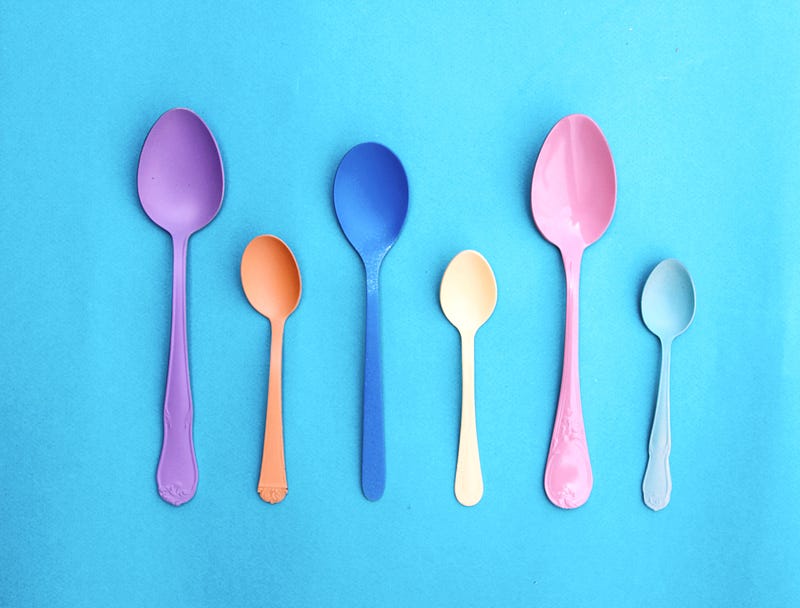
In order to explain how her lupus affected her day-to-day activities to a non-disabled friend, Miserandino collected twelve spoons for her friend. These spoons represented the amount of energy available to her for a whole day. Every activity, including “simple, low energy” tasks like getting out of bed, showering, eating breakfast, and getting dressed, cost a spoon. Before even getting to work, she had only six spoons left. Every activity had to be carefully chosen and considered — is it worth a spoon to cook dinner, or better to order in and save it for putting on a load of laundry? Some activities may even take two spoons. Miserandino’s friend was overwhelmed by the realization that Christine lived every day this way, constantly saving, spending, and exchanging metaphorical spoons. The spoons themselves acted as a physical representation of how easy it is to overtax oneself and run out of energy by doing those “simple, low energy” tasks that the non-disabled take for granted.
Until Miserandino’s Spoon Theory, many chronically ill people, and especially those whose disabilities are “invisible,” had trouble articulating the experience of living with chronic fatigue, pain, or physical limitations which diminish one’s overall capacity to complete daily tasks. Spoonies, as those who use the theory sometimes call themselves, adopted Miserandino’s story as a way of creating a shorthand for energy-consumption and management: “I don’t have the spoons for that today,” has been a staple in disability discourse for almost two decades. It has been adapted, such as by adding the idea of Big Spoons and Little Spoons; sometimes, you might have a spoon, but that spoon can only be spent on a specific task. There are Spoonie communities online, and the hashtag #SpoonieChat on Twitter connects those who identify with the metaphor.
However, Spoon Theory never really made it into the mainstream, even after the explosion of social media in the 2010s. For most Spoonies, every new person they meet still needs Spoon Theory explained to them, and many non-disabled people still “don’t get it” or don’t understand the exchange of metaphorical spoons for tasks.
Some Spoonies are concerned that the narrative of “no bones day” might be overtaking spoon theory in a negative way. As Twitter user @ KarLeia points out, spoons theory has been available and popular for years, but now that the face of chronic fatigue is an adorable pug, non-disabled people are taking notice. Noodle is a fan favourite of disabled and non-disabled people alike, but it is perhaps worrisome — and dehumanizing? — that non-disabled people can relate to a dog having a “no bones day” but are unable, or unwilling, to empathize with chronically ill people being “low on spoons.”
However, other Spoonies are welcoming “no bones day” with open arms. It is, for some, much easier to explain to the non-disabled people in their lives. Since the “spoons” of spoon theory were chosen arbitrarily (Miserandino having been in a café and having spoons available to use as a physical object to represent task-energy), it can be difficult, without retelling Miserandino’s entire story, to simply state that you have no spoons. The “no bones” theory, on the other hand, is explained in the first five seconds of every one of Graziano’s TikToks. Show someone a Noodle TikTok, and they understand “no bones.” The pug’s adorable little flop forward represents how many Spoonies feel when they wake up low on mental or physical energy.
The thing about Noodle is that his “bones” are available to anyone. There is no gatekeeping “no bones day,” whereas some Spoonies have felt incredibly protective over the spoons metaphor, arguing that non-disabled people should not use it — because having no spoons is very different from being “regular” burned out or tired. In an article titled “Stop appropriating the language that explains my condition,” Naomi Chainey expresses her frustration over spoon theory being used by the able-bodied community to refer to non-chronic forms of fatigue and mental exhaustion.
The wider disability community cottoned on and started using spoons to describe any unusual fatigue. People struggling with particular tasks (rather than all tasks) began to say they’d run out of “social spoons” or “walking spoons”. One friend claimed she’d found the key to increasing spoons (sex!). Healthy disabled people used it to describe entirely normal fatigue. Able-bodied activists got hip to the lingo and suddenly lacked the spoons to deal with mansplainers and racists. And on it went. Let’s be clear. This is appropriation. […] Spoon Theory was intended for the chronically ill. There’s a fair argument that it applies to mental illness and people on the spectrum. It’s hardly a universal disability experience though, and the appropriation effectively erases the concerns of a marginalised group.
Chainey’s concerns that the use of spoon theory by non-disabled people (and even by disabled people who do not experience chronic pain/fatigue) further marginalizes an already doubly-disadvantaged group — those who are chronically ill and/or have invisible disabilities — are not unwarranted. The appropriation of group-specific language by mainstream culture can lead to that term being seen as less serious, or less specific, as is the case when non-black communities turn AAVE into popularized slang, often white-washing or erasing original contexts and nuance. A healthy person saying they don’t have the spoons to complete a task may not mean that they physically cannot perform that task without injuring themselves, but that is exactly what it means for a Spoonie. Using that language, then, might perpetuate the idea that a Spoonie really could perform that task if they just tried harder, which isn’t the case and creates an awful precedent of able-bodied people demanding we use more of our spoons, or borrow from tomorrow’s spoons, when we don’t have enough to do something they think needs to be done.
However, Noodle’s bones or lack thereof do not appropriate spoon theory. In fact, offering an alternative language for days when the resource pool is too shallow to draw from might be just the thing to stop non-disabled people from appropriating the language of chronic illness. Moreover — and this is important — one unexpected lasting effect of the COVID-19 pandemic is that many more people are experiencing new chronic pain and fatigue, and do not have the language to describe it.
One unexpected lasting effect of the COVID-19 pandemic is that many more people are newly experiencing chronic pain and fatigue, and do not have the language to describe it.
Due to “long COVID,” many previously able-bodied people are suddenly experiencing long term fatigue, shortness of breath, brain fog, and other lasting health effects for the first time. These conditions may ultimately prove to be temporary or improve over time, but long-haulers have already been living with these acquired chronic illnesses for months now, and it may continue to for years to come. Noodle’s “bones” give them the language they need to describe their new condition without a lengthy introduction to spoon theory, which, according to Chainey, they may not be “entitled” to use.
The pandemic has also worsened many people’s mental health, with lockdowns, stress, and “outrage fatigue” leading to increased anxiety and depression, especially in young people. For someone with depression, getting out of bed may seem an insurmountable task, and showering or brushing one’s teeth a huge energy drain. Even when the exhaustion is mental rather than physical (mental health does affect physical health!), a lack of spoons can make someone feel lazy and inadequate. A “no bones day,” however, gives you permission to take the day to rest, and is without judgement.
None of this is to say that we should retire spoons theory. Many people find it an important part of their vocabulary, and a useful tool for explaining to able-bodied people what it feels like to live within the limitations of chronic illness or fatigue. What “bones theory” adds to the discourse, however, should not be ignored. The two can be used in conjunction with each other, as respectful shorthand for a struggle that many of us know all too well.
In short, “bones theory” is relatable to able-bodied and disabled people alike, is in common usage among young people, and is a judgement-free zone. Having a “no bones day” is not a negative experience, but a way to turn your lack of mental or physical energy into a reason to recharge via self-care, rather than force yourself to perform tasks for which you have no spoons. Noodle might spend the entire day in bed, and you can too, if that’s what you need. Those rare “bones days,” though — they give you a reason to do the thing you’ve been putting off, get active, take a risk, start something new!
Is today a “bones day” or a “no bones day” for you?
Support the author:
Follow me on social media: Twitter: @ MyExplodingPen Facebook: caseylawrenceauthor YouTube: Casey Lawrence Instagram: @ kcntv TikTok: @ kctnv
If you enjoy my content, consider showing your support by buying me a coffee or joining Medium via my affiliate link to get unlimited access to all of Medium.


