
No, She Wasn’t Hired Because She Is Black or A Woman
The misunderstood concept of Diversity Hiring and negative repercussions
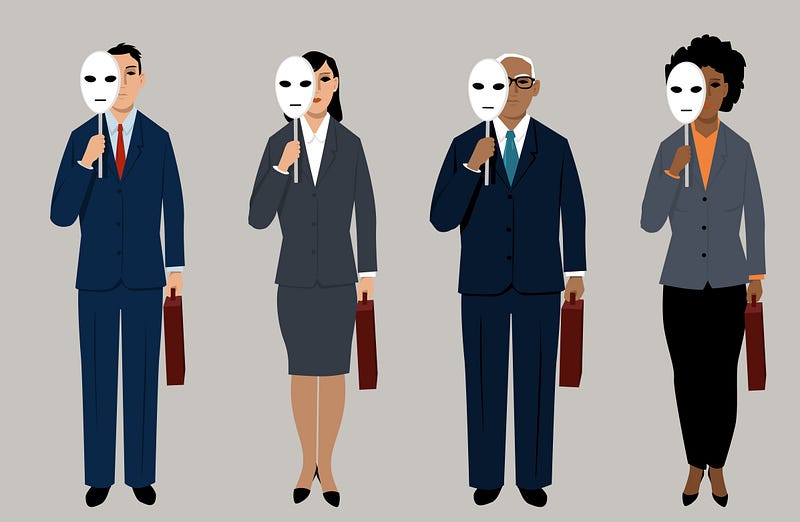
“That new manager they hired, she’s sure gonna make us look good on the diversity numbers.”
“I had no chance of getting that job, what’s the point even interviewing for it? They were looking for a “diversity hire” and a poor white male like me never had a shot.”
“I am surprised she got promoted over him. Well, I guess they needed to make the promotion pool look “balanced” on the diversity front. She checks all the boxes.”
Have you ever been part of any conversation like the above at a workplace or at least overheard others engaging in such talk? If the answer is no, you’re either not saying the truth or you’ve been living under a rock.
This is indeed the unfortunate reality of the mindset we live with and a hole that the corporate world has dug itself into. Let me give you some numbers to contextualize how grave the situation is before we get to the crux of the problem and a potential solution.
In May last year, Fortune came out with their latest numbers on the Women CEO within the Fortune 500 companies.
We celebrated a “record high.”
But, wait, how is that a “grave” situation and not a reason to celebrate?
Well, the record high sat at 37 of the 500 companies being led by women — a staggering 7.4%. Remember, we’re talking of a world that has a roughly even split of men and women, with America having slightly more women than men.
And, we’re celebrating 7.4% representation of women at the top levels? Go figure.
Earlier this year, we had another big win. The United States of America welcomed its first-ever woman Vice President in Kamala Harris. As I’ve written before, if it took over two hundred and thirty years and forty-six presidents for the US to have its first female Vice President, and still no female President, I am sorry, I won’t be joining that celebration.
That’s not it — the dismal numbers continue even at the levels below the chief executive i.e. “senior management” levels. In 2020 and 2019, we had a “record” representation of women globally in senior management positions — at 29%.
Ok, enough of being the bearer of bad news. What are we doing about it? Don’t give me problems, tell me solutions, you say.
Well, the solution is solving the problem at the root. You get “senior level” women representation if you hire enough women at the entry-levels to begin with — simple?
Enter, Diversity Hiring.
Diversity hiring and the misinformed definition
People, often men, and white men in the case of the Western world, or anyone who forms the comfortable and favored majority in their respective field, are averse to diversity hiring.
Here’s what they think diversity hiring is:
“Diversity hiring is the attempt made by leadership and senior management to force diversity onto an otherwise imbalanced workforce, by hiring minority candidates, i.e. women, racial minorities, members of the LGBTQ community, disabled people, and so on, just for the sake of diversity, where they obviously don’t have the requisite skills to be hired purely on merit.”
Unfortunately, that’s just about as true as believing all Indians are snake charmers, or Muslims are terrorists or Black men are dangerous — or any of the gazillion unfortunate discriminative stereotypes that exist.
The root cause of the misconception
Firstly, I will go on record to say that this world view of things is completely flawed and sits at the root of the whole problem — inherent bias and discriminative mindset that much of the world has conditioned as “normal” in their own mind.
We’ve gotten to a place where the workplace or corporate world has left certain significant and important sections of our society behind for a variety of different reasons.
These reasons vary in the case of different minorities —
- social and economic oppression in the case of blacks,
- traditional and orthodox patriarchy in the case of women,
- pure stigma and inability to accept the LGBTQ community,
- a false belief of lack of competency in case of the differently-abled, and so on.
All of these have meant that we’ve got a workforce that is absolutely out of synch with the actual demographic composition of the societies the workplace is supposed to represent.
Ideally, a world that has roughly an even split of men and women, should have a workplace with the same composition. According to studies, people of color will be the majority of the American working class by 2032 — so every level of seniority including the absolute top, should be representative of the same composition.
Yet, these ideal scenarios are far from reality.
What this means is that when firms bring in “fair merit-based hiring practices” and call them “diversity hiring” which is what all hiring should always be, the majority looks at it in a whole wrong light.
What is in fact meant to be a correction to the norm is seen as a forced overcompensation away from the norm.
The negative impact of the misconception
The resulting impact of this misconception around diversity hiring is the undermining of the true competitive abilities of the minority hires.
A woman is hired to a role or promoted to a senior position, and the world is whispering saying “she got it because she’s a woman.” While in reality, she may be the most deserving candidate on the list and more, but her gender overshadows all that and she’s deemed to be a “forced diversity hire/promote.”
A very capable Kamala Harris makes it to the second most senior position in the administration of arguably the most powerful country in the world — and all the world cares about is her being a first “woman, African-American, South Asian American” to do so.
Giving credit where credit is due and recognizing the achievements is no bad thing, but when it is done at the cost of overshadowing the complete merit in an appointment, that becomes a problem.
President Biden is credited to have “the most diverse cabinet in history” but that is where that recognition should begin and end. There should be absolutely NO room for thoughts that start to believe that these cabinet members were hired as a result of their gender or color or minority status or anything but their ability and virtue of being the best person suited for the job.
What Diversity Hiring Actually Is
Well according to a broad definition,
Diversity hiring is hiring based on merit with special care taken to ensure procedures are free from biases related to a candidate’s age, race, gender, religion, sexual orientation, and other personal characteristics that are unrelated to their job performance.
So, put more simply — diversity hiring is fair merit-based hiring — the way all hiring should be.
That, right there, is the problem. We’re in a world where something that is supposed to be a norm, is indeed an exception and touted as a “new-found-solution” to an age-old problem.
The false representation of the most basic natural phenomenon as a novel, contemporary concept leads to a natural resistance from people who are used to an unfair, biased “normal” world or are just resistant to change due to inertia.
What Must We Do to Address This?
We must educate and drill home the fact that diversity hiring isn’t an exceptional policy or practice that is aimed to fix an unfair system by overcompensating to the other extreme.
We must ensure that people realize that diversity hiring is a term used for “just and fair” hiring — the kind of hiring that should always have been the case, to begin with.
Maybe, we need to then call it something else then? Maybe remove the word “diversity” and call it “fair merit-based and non-discriminative” hiring or simply — Hiring.
People might then stop seeing “diverse candidates” with a lens that sees them as aliens, rather than deserving, rightful winners.
I wouldn’t want to be hired for a job for any other reason than my abilities to do justice to the job. I would surely never want to be labeled a “diversity hire” and I am certain no one else would either.
We must normalize the real normal and call out the unjust as the outlier and correct a wrong that has plagued our society and the corporate world for centuries. We must believe that being diverse isn’t the right choice, it is the only choice.
Other stories you might like:


