
How Visual Arts Helps Your Brain In Covid Pandemic?
Art Therapy: Eases the human mind (proven by research)
The COVID-19 pandemic stuck the world in the early months of 2020. A lot of people suffered from anxiety, stress, depression, and other mental ailments.
But thanks to my plethora of hobbies, which kept me mentally sound and healthy all the time. One of them was,
“Visual Arts! I kept painting at frequent intervals with colors and sometimes even with just a pencil and paper. I kept drawing spontaneous shapes based on the vibe I was feeling at that instant! Mostly, I kept painting after having an experience which was a walk in the park, a chat with the flatmates, listening to a new song or sometimes just after dreams, i.e. waking up from the bed before brushing my teeth! “
So, how did I feel each time?
When I engaged in visual arts, I witnessed a cycle of feelings, i.e. mindfulness, peace and rejuvenation, and a sense of achievement.
- Mindfulness: — In the beginning, when I was moving my pencil on paper or painting with a brush, I became fully aware of my actions.
- Peace and Rejuvenation: — As I kept flexing my fingers with the painting tools, my emotions kept flowing freely. With each stroke, I felt a vibe of peace and rejuvenation.
- Sense of achievement: — Later, as the visual art achieved its ultimate form, I became satisfied with a sense of achievement! Yipeee!
From the historical context, I found that visual art has been used for healing and it's one kind of ‘Art therapy’.
But I became very curious to know how visual art heals someone suffering from mental health ailments. So, I started with the uppermost organ of the human body, which is the brain!
How does visual art affect the human brain?
A term called ‘Neuroesthetics’ is coined in this context by Semir Zeki. In simple language, it’s a study about how the brain reacts to different forms of art. It is accomplished by using neuroimaging techniques on the brain.
Semir showed that every time the brain is exposed to visual art, the medial orbital frontal cortex of the brain (a pleasure center in the brain) gets activated. Some of the other areas of the brain i.e. including the occipital visual areas and the lateral frontal regions, also get lighted up during visual aesthetic experiences as these are also involved in emotional development procedures of the brain.
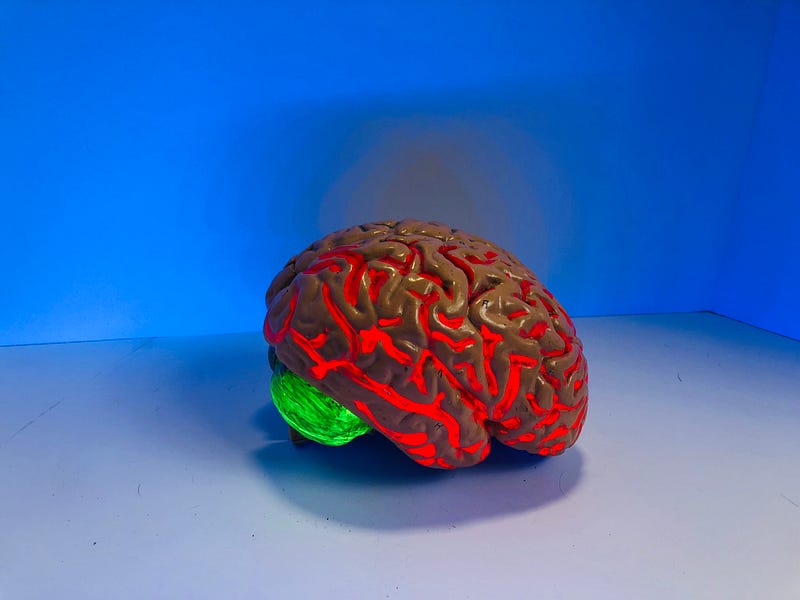
The brain also has a reward system that creates feelings of pleasure, like eating food, traveling, or other stimuli. I read in some studies that these reward systems get activated by neuronal activity, which is caused by visual aesthetic experiences. This results in a stress relaxation effect, which explains the mental resilience developed by visual aesthetic experience.
Some other studies found a direct correlation between visual art and decreased levels of the stress hormone cortisol.
So, that is all about the brain game!
What Next?
I will highlight some interesting studies that showcase the effects of artistic activity on a person.
Group Art Activity
In one study conducted in a mental health service company, service users and staff members were involved. They were divided into groups and asked to take part in an exercise to create artworks.
Later, interviews of each of the participants revealed five common experiences.
- Collaborative vibe due to group activity.
- Sensory experiences because of physical movements, usage of different colors, touching of chalks, and color brushes.
- A sense of liberation as participants felt they were not judged as compared to a routine job.
- Questions about self-revelation emerged in order to create artistic works.
- An atmosphere of equality was felt because the service users and staff worked collectively in the exercise with no hierarchy.
How color affects our emotions?
Before understanding the effect of color on our emotions, it is essential to know that color has three essential components, namely hue (wavelength), brightness, and saturation (intensity of color). Some of the relevant findings are
- The brightness and saturation jointly evoked more pleasure. And brightness provided relatively more pleasure than saturation.
- The red and yellow colors reported higher anxiety as compared to blue and green. Blue and green with shorter wavelengths generated more pleasure compared to red and yellow.
Now, I understand that when I am with nature I feel at ease. It’s because of the green color all around!
Even though these studies present a very interesting insight into the influence of color on our emotions, I think it depends on the context too. For example, visual art with red color would foster a different emotion compared to a room painted with red color.
So, that was all about the colors!
Clay Art Therapy
Clay art therapy refers to the process of using techniques like kneading, glazing, firing in clay art to make small clay sculptures of your own shape, color, and texture. A professional art therapist leads this entire process.
I found an interesting study, Clay Art Therapy (CAT) was found to have beneficial effects on patients suffering from anxiety. It fostered creativity and self-consciousness in them.
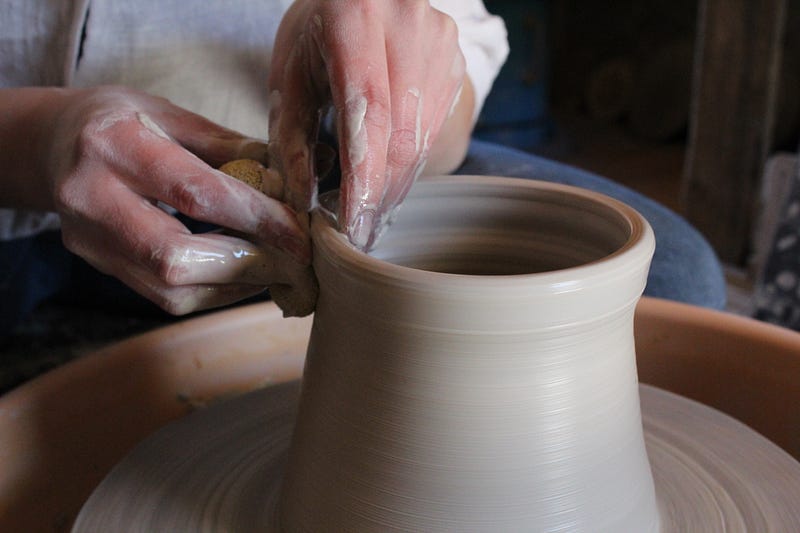
At the onset, it may seem to be a simple activity, but it has significant benefits. Some of these include:
- people exhibiting expressions and discovery about themselves
- Relief from stresses and thereby relaxation as one lives in the present moment
I saw that in another clinical investigation of 5 years, people with depression exhibited significant improvements after engaging in CAT as compared to people in non-directive visual art (VA). In the CAT, an art therapist along with an assistant were facilitating the clay-making process with the people, whereas in VA, activities pertaining to the interests of the group were undertaken by the people.
The positive results obtained in this study bolster the case of CAT as a potential treatment that can replace pharmacological treatment.
What to do now?
After all this self-investigation, I discovered the reason for which visual art was fostering a sense of calmness within me. Now, I feel more motivated to pursue painting activities more frequently.
On a final note, visual arts aid our emotional, well-being, creative mindset, and social skills. So, go, grab a paper and do some paintings. Or do some clay art! Share it with friends on social media platforms. Else, step out of your home and visit some art exhibitions!
If you like reading my posts and want to support me, please sign up using my invitation link to become a Medium member. I will make a small earning and you can access unlimited articles on Medium.