
No One Listened Until It Happened to Taylor Swift Too
When will women catch a break?
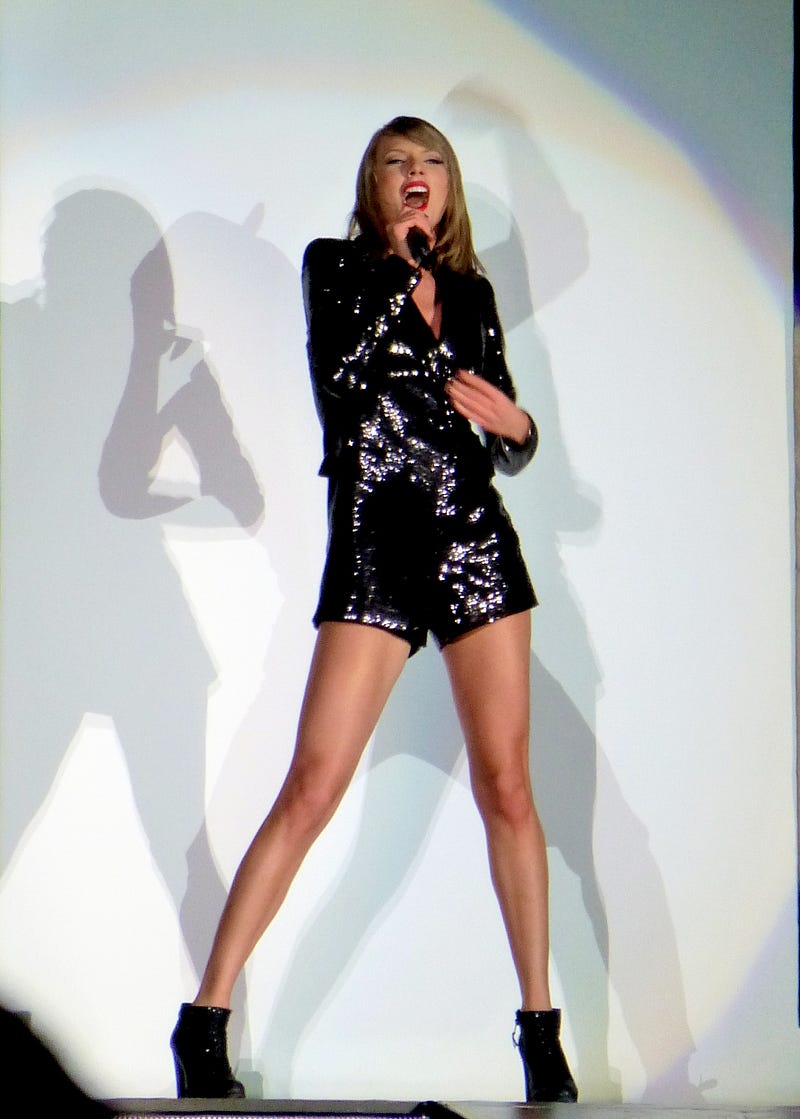
 ">Wikimedia Commons
The white house has described Taylor Swift’s AI-generated nude image situation as “alarming.” Press Secretary, Karine Jean-Pierre, is quoted as saying “There should be legislation, obviously, to deal with this issue.”
But, there isn’t strict Federal legislation protecting women and girls (mostly the victims) against this right now in the United States, and around the world.
Some background information
On Wednesday, 24th of January 2024, fake nude photos of Taylor Swift were shared on X (Twitter) and distributed by many smaller accounts, with one hitting over 40 million views, before being taken down.
At this point, we cannot measure the number of people who have seen the photos.
By Friday, the White House Press secretary spoke about it, and SAG-AFTRA had released a statement stating “The development and dissemination of fake images — especially those of a lewd nature — without someone’s consent must be made illegal. As a society, we have it in our power to control these technologies, but we must act now before it is too late.”
Taylor Swift is rumored to be considering legal action on the matter.
Other victims who you never heard about
You may be alarmed like the White House claims to be about this issue, but I assure you it is not the first time that AI porn harassment is happening, and it will not be the last until concrete action is taken.
Let’s look at some victims without “global superstar” status
- New Jersey Teenagers
In November 2023, it was reported that some young girls in Westfield High School discovered their male classmates had created nude deep fakes of them and shared them amongst themselves in a group chat. Investigations showed that this was done over the summer of 2023 but was only discovered, by the girls, in October 2023.
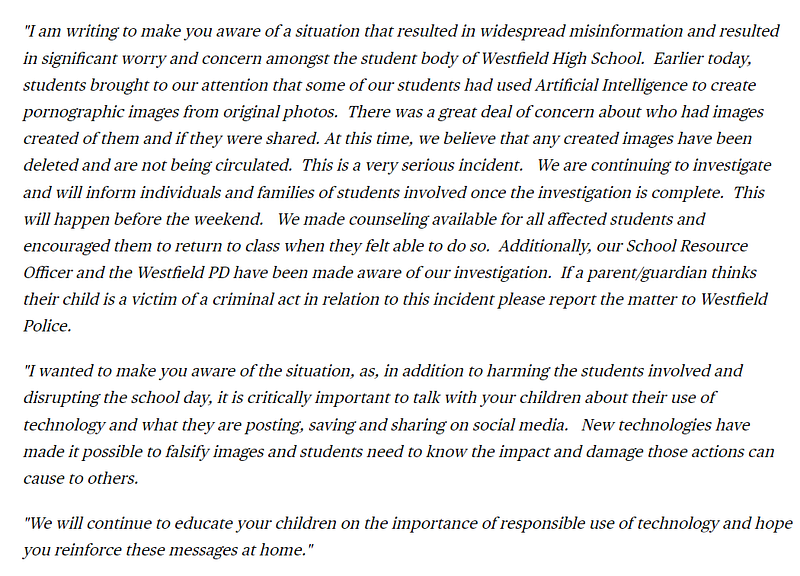
One of the victims, Fransesca Mani, who was 14 at the time began advocating against this matter, especially for the provision of legal protection against AI-generated sexual content for underaged children, going as far as writing to the White House in 2023.
- QTCinderella and fellow Twitch streamers
In January 2023, it was discovered that a fellow Twitch streamer had visited and paid to subscribe to a deep fake porn site to see AI-generated non-consensual nude photos and videos of over a dozen of his fellow Twitch stars, including QTCinderella, Pokimane, and Maya Higa.
“Every single lawyer I’ve talked to, essentially, has come to the conclusion that we don’t have a case; there’s no way to sue the guy.” — QTCinderella
- Rana Ayyub
As far back as 2018, this Indian journalist’s ordeal with deep fakes almost ruined her life and career. While advocating against child rapists, she became a target of deep fakes including edited tweet screenshots mirroring her account declaring hate for India and Indians and a pornography video with her face.
This led to her being doxxed, with people calling and texting her for her sex rates. It only took the intervention of the United Nations for some normalcy to resume in her life.
“From the day the video was published, I have not been the same person. I used to be very opinionated, but now I’m much more cautious about what I post online. I’ve self-censored quite a bit out of necessity. I always thought no one could harm me or intimidate me, but this incident really affected me in a way that I would never have anticipated.” — Ayyub
The use of these AI-generated deep fakes as weapons to humiliate and vilify women has led to breaking women down physically, mentally, emotionally, and financially.
Going down the rabbit hole of deep fakes
During the advent of Photoshop and its menace on women, it took some considerable level of expertise for the images created to pass as believable. However, these AI creations include both photos and videos, and a person does not require any expertise to make one.
These AI-generated non-consensual pornography materials are easily passable as real and usually not labeled as AI-generated content.
I did a brief experiment of face swaps on some photos to determine how much expertise I needed and how long the process took. Not long.
Barely two minutes.



I know my photo does not look so passable, but this is what an amateur can achieve in two minutes. Then, imagine how much farther and further someone who is looking to sell these images online will go.
While discussing this issue with my friend who is a cybersecurity expert, she told me that these perverts only need images/videos which we posted publicly on our social media, and AI text prompts to generate nude photos as well as videos that sync with the victim’s voice.
Where are we now?
According to Nina Jankowicz, Author of “How to Be a Woman Online: Surviving Abuse and Harassment, and How to Fight Back,” these AI models are trained on women’s bodies. So even if you feed a male image into the kind of face-swap tools that exist, it’s not going to work as well, because they have been created by men for the purpose of either demeaning women or pleasuring themselves. And it just doesn’t work as well on men’s bodies.
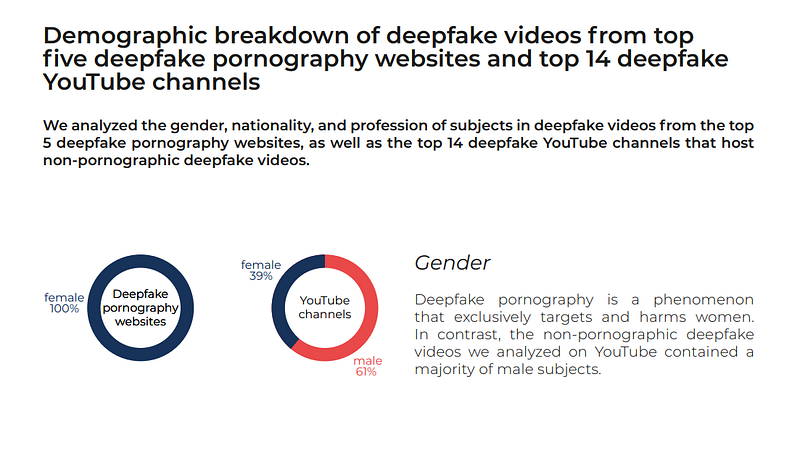
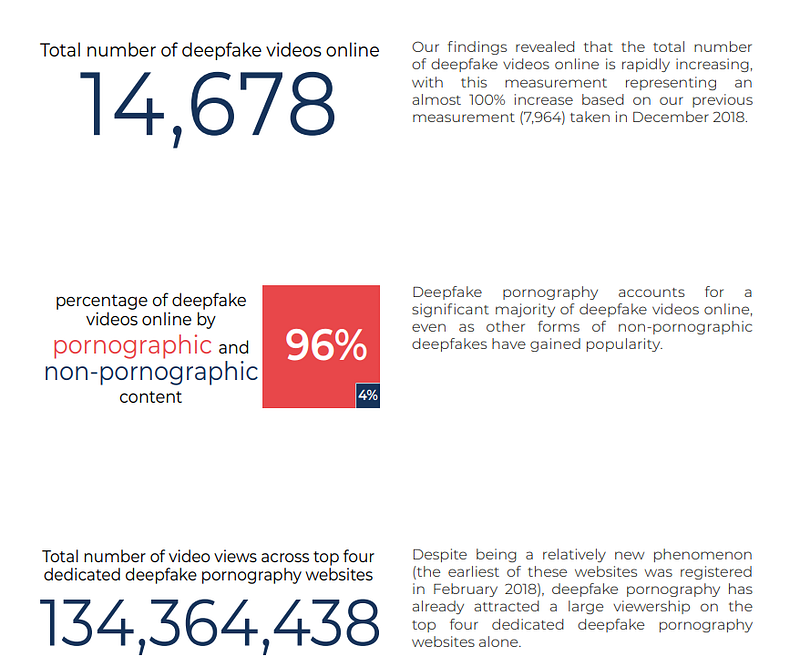
Britain’s Online Safety Act of 2023 gives the relevant Secretary of State the power, subject to parliamentary approval, to designate and suppress or record a wide range of speech and media deemed “harmful,” requiring platforms, including end-to-end encrypted messengers, to scan for child pornography.
This has been met with backlash, with experts stating that it is not possible to implement such a scanning mechanism without undermining users’ privacy.
Only a few states in the United States of America have legislation against deep fakes, but there is no uniformity in the legal definitions they use.
While Texas defines a deepfake video as “a video created with the intent to deceive that appears to depict a real person performing an action that did not occur in reality,” Hawaii defines it as “a realistic photographic image or video of a composite fictitious person depicted in the nude … or engaged in sexual conduct … that includes the recognizable physical characteristics of a known person.”
Only the USA, Britain, and China have some kind of laws to combat AI deep fakes. Even with this, victims are mostly unable to sue for damages, at least.
How will the next generation of women and girls remember our generation?
What Happens Next?
This problem of AI-generated non-consensual content has been traced as far back as 2017, but when it happens to a global superstar like Taylor Swift in 2023, at least the world pays more attention. It makes headlines. The media talks about it more, and even the Presidency acknowledges that it is a problem.
Posterity will remember what we do in the coming months, to protect women and girls from deep fakes. Currently, the only law that could be used to sue deep fake perverts is the slander/defamation act.
After all this research, The following are my takeaways:
- More young people should be adequately digitally literate, so they are well-armed about the dangers of social media before they make their choice. You could start with UNESCO’s Media and Information Literacy resources.
- As difficult as it seems, the law has to step up with current times and we are the ones to push for it. Women. With our words, demonstration, and reactions. As social media has proven, the more reactions to an issue, the more the public takes it seriously.
- This is in direct violation of SDG 5.2 which aims to — eliminate all forms of violence against all women and girls in the public and private spheres, including trafficking and sexual and other types of exploitation. The United Nations should get more involved in proposing recommendations for protecting women and girls from this social menace
- I love my privacy and would not want my messages going through any scanning devices, for terms deemed “harmful content,” as the British government suggests, but we need to have more dialogues and agree on more sustainable means of sifting these AI-generated pornography off the internet.
References
Taylor Swift deep fake nudes highlight threat of AI, as NJ teens experienced | NBC New York — NBC New York on YouTube
“Deep Fake” or Synthetic Media Laws” — Cyber Civil Rights Initiative
High schooler calls for AI regulations after manipulated pornographic images of her and others shared online — CNN
AI porn is easy to make now. For women, that’s a nightmare. — The Washington Post
I Was The Victim Of A Deepfake Porn Plot Intended To Silence Me — Huffington Post
White House, SAG-AFTRA Speak Out Against ‘Alarming’ Taylor Swift AI-Generated Explicit Photos — Billboard
Women face new sexual harassment with deepfake pornography — PBS News Hour
The State of Deepfakes: Landscape, Threats, and Impact, Henry Ajder, Giorgio Patrini, Francesco Cavalli, and Laurence Cullen, September 2019 — Deeptracelabs


