
RACISM + PUBLIC HEALTH
No One Can Use Water in Jackson, Mississippi Because of Systemic Racism
Neglecting a predominately Black city has dire consequences
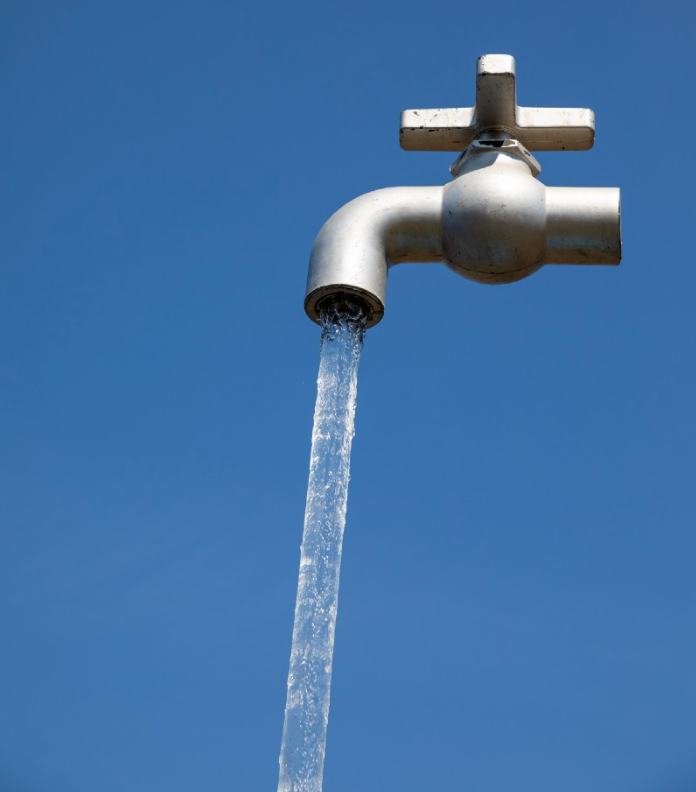
One way to see systemic racism in America is to examine its impact, such as the dilapidated infrastructure in predominately Black communities like Jackson, Mississippi. Currently, the city is experiencing a water crisis — residents do not have access to safe drinking water because the largest water treatment plant has failed. In some parts of Jackson, the water pressure dropped significantly, while other areas were left without any access. Public schools had to switch from face-to-face to virtual learning, as they did in the early days of the pandemic, and local hospitals had to bring in portable restrooms — the impact has been disastrous.
The city of Jackson does not have sufficient water bottles to supply residents, and the governor declared a state of emergency — a quick solution here is unlikely. Mississippi's decision to neglect predominately Black communities has been baked into the system. You can't unbake racism, but you can bake a brand new pie where Black residents are prioritized equitably. Generations of "inadequate funding for essential infrastructure and tension between state and city leaders" have contributed to this public health emergency. Simply put, systematically neglecting Black communities has consequences, and we're seeing them play out in real time.
In this case, systemic racism can be seen in the way Mississippi received $4.46 billion from the federal infrastructure bill and failed to use those funds to prevent the water crisis in Jackson. Congressman Steven Palazzo, a Republican who voted against the legislation, shared his ideas about how the state should use the funding: "we just need to spend the money wisely and invest in things that are going to benefit not just our current generation, but generations to come." Funny how Palazzo and others did not think that clean drinking water for Jackson residents was a worthy investment — actions speak louder than words.
Of the funding provided by the legislation, officials set $429 million aside for water and pipelines. Jackson is the largest city in Mississippi, so technically, investment here would have impacted the most people. However, systemic racism can be seen through the decisions officials make regarding Black communities. The water crisis in Jackson is not an accident; it's the result of generations of White people prioritizing their communities at the cost of Black ones. To top it off, Mississippi is using a racist 1890 law, which has blocked thousands of Black Americans from voting. So, Black people have less opportunity to change leadership to get their communities the resources they need — systemic racism is a deadly cycle.
Many communities throughout the United States are experiencing water poverty. And since "access to clean water and sanitation is a human right enshrined in international law," the government is responsible for finding expeditious remedies to the public health crises. A 2016 report indicated that 33 cities, like Flint, Michigan, have contaminated water.
Jackson, Mississippi, has 82.47% Black residents, a legacy of the Jim Crow era. After the Supreme Court decided in their 1954 landmark case, Brown v. Board of Education, that racial segregation in schools was unconstitutional; White parents had a choice — they could either send their children to school with Black students or move out of Jackson. Most White parents decided to remove their students from the district, a phenomenon called "white flight."
During the 1950s, White people fled to the suburbs, away from cities like New Orleans, Louisiana, Memphis, Tennessee, and Atlanta, Georgia, engaging in voluntary resegregation. "White flight" made it easy for politicians and community leaders to maintain disparities in Black communities by averting funding to cities like Jackson. In addition, racial redlining solidified White parents' individual decisions, making it nearly impossible for Black families to do what White families did — move freely. In Mississippi, communities of color are estimated to have lost $352 million because of redlining alone. White families could leave in mass, but Black families couldn’t.
The crippling poverty we see in many Black communities throughout America is not an accident — it's by design. Even now, Jackson, Mississippi, residents face an uncertain future, and the mismanagement of funds has become unmistakable. "Jackson might be the seat of power for the state government, yet many in the city contend that the water system is a glaring example of how the community has been starved of investment and attention." While many Americans think voting doesn't matter, situations like this show leadership matters. Politicians at the municipal, state, and federal levels that represent Jackson, Mississippi, should be ashamed of themselves, but the only ones that can make them experience accountability are voters. Because as long as this neglect is accepted as the status quo, Black communities will continue to suffer disproportionately.
While Jackson, Mississippi, is dealing with a crisis, we should be honest about how we got here — White politicians intentionally neglecting the capital city's water system because the residents are predominantly Black. Ashton Pittman noted that the water crisis is only the "latest chapter in the history of neglect" and may cost billions to fix. At this point, it's only a matter of time until Mississippi officials ask the federal government to help, even though billions were already allocated to Mississippi specifically for infrastructure this year.
To make matters worse, Jackson, Mississippi, is only one of the many cities with poor quality water or limited access — America has a water safety problem. In New Orleans, our city has forever chemicals in the water and issues boil-water advisories at least once a year. In 2017, Pittsburg, Pennsylvania, had to issue a boil-water advisory, while Milwaukee, Wisconsin, health officials "failed to warn families whose children tested positive for elevated lead levels from 2015 to 2017." Officials are still unsure if the water in Flint, Michigan, is safe, which has negatively impacted the Detroit public school system. In Newark, New Jersey, "officials have also discovered high levels of haloacetic acids (HAAs)," chemicals that may increase cancer rates amongst residents.
Washington D.C. has had "lead-contaminated water" for more than twenty years. In Brady, Texas, residents worry there is "radium in their water supply," and have seen brown, yellow, and green water coming out of their faucets. In Baltimore, a cloudy, potentially toxic water supply has been shown to have increased lead, although officials there have invested millions in finding a solution. The water supply in Dos Palos, California, has toxic chemicals "linked to cancer and kidney problems." And in Charleston, West Virginia, residents are still feeling the impact of a chemical spill there, which contaminated the groundwater; Miami, Florida, has "forever chemicals" in the water called PFAs.
Right now, no one can drink or use water in Jackson, Mississippi, because of the legacy of systemic racism that has strangled the city's resources. However, there is a way to help residents. The Mississippi Rapid Response Coalition consists of 30 organizations, and they're raising money to help Jackson residents "purchase water, reusable water containers, filters." Additionally, people can call their elected officials to discuss the water quality and push them on plans to resolve the issue. Finally, it's time to make those infrastructure dollars work for those who need them most. Sure, we need roads and bridges, but without access to safe water — nothing else matters.
Systemic racism is more than actively discriminating against Black people; it's also about passive-aggressively discriminating through neglect. Jackson, Mississippi, residents need and deserve safe drinking water. We share a collective responsibility to ensure residents get the help they need. And if we want to avoid future calamities, we must call out this systemic neglect of Black communities out for what it is — the legacy of Jim Crow.
The Mississippi Rapid Response Coalition:
For those who want to donate water, you can email [email protected], and they can arrange pick-up/drop-off. Additionally, Time Magazine published an article with additional resources for those who want to help Jackson, Mississippi residents.
🌹Learn more about the author here. 🖊Sign up to read all my stories and thousands more.