
No Mr Blinken, Juan Guaido is not the interim president of Venezuela and Venezuela is not a wholly-owned subsidiary of Washington
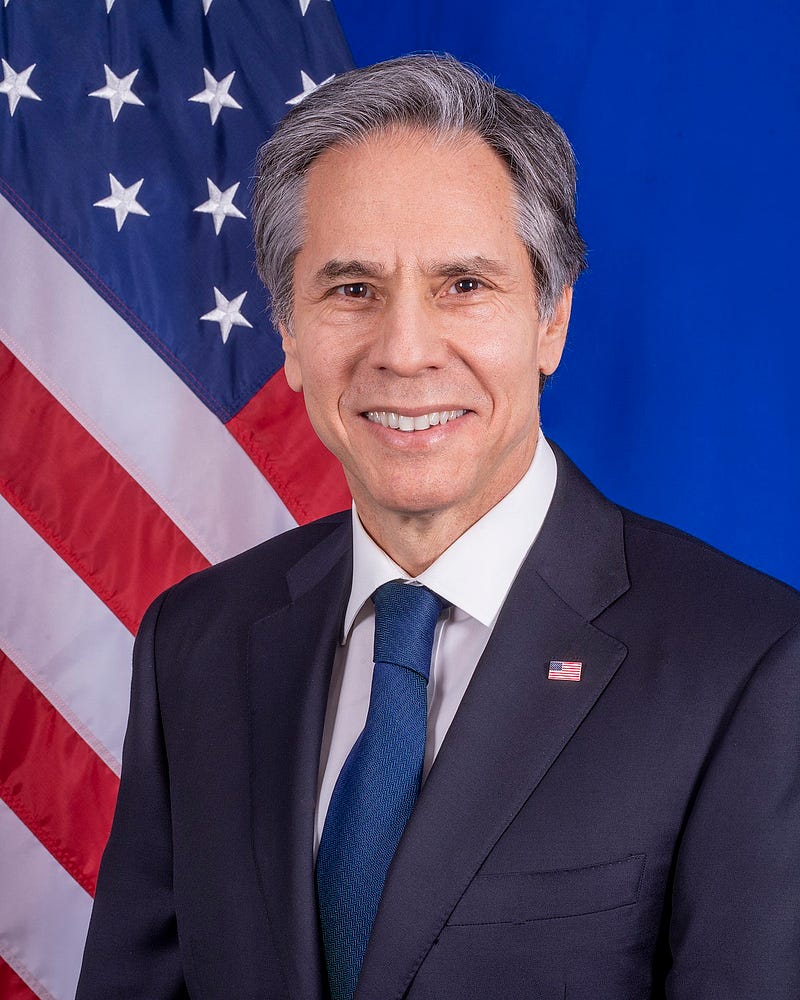
Confirmation that the office of US Secretary of State should rightly be renamed the office of US Secretary of US Imperialism has just been provided by the current incumbent, Anthony Blinken.
In a recent tweet Mr Blinken continued the charade begun by former US President Donald Trump in referring to Venezuelan opposition leader Juan Gauido as the country’s interim president. This he did in the context of a recent video of Mr Gauido being attacked and chased out of a restaurant in the Venezuelan town of Cojedes by a large group of local residents, who consider him to be an agent of the US rather than any kind of president, interim or otherwise.
Mr Blinken’s tweet also confirmed that rather than any serious departure from the Trump administration, Joe Biden’s administration is fits into the category of ‘meet the new boss, same as the old boss’ when it comes to foreign policy.
The legacy of Hugo Chavez
From the beginning, ever since Hugo Chavez dared liberate Venezuela from the iron grip of a US-controlled local oligarchy in the late 1990s, Washington has engaged in a concerted and unrelenting effort to return the oil-rich country to the status of a wholly owned subsidiary.
And with Venezuela possessing the largest proven oil reserves in the world, for a Trump administration that in many respects evinced the character of a New York mafia crime family more than a serious government, it was always inevitable that this campaign would be ramped up rather than tamped down upon his arrival in the White House in 2016.
Maduro under attack
Venezuela’s current ‘legally elected’ president, Nicolas Maduro, took over the presidency after Hugo Chavez died in 2013, pledging to protect and continue the legacy of radical reforms Chavez inspired and introduced. And under the aegis of the Bolivarian Constitution, the achievements of those reforms cannot be gainsaid.
The mass literacy program known as Mission Robinson was the biggest and most ambitious ever undertaken in the region since the Cuban Revolution. Its success was recognized by UNESCO in 2005, when it declared Venezuela ‘illiteracy-free’. Cuba, crucial to that success, was also involved in the establishment of health clinics across Venezuela, designed to provide free healthcare to the country’s poor.
Additionally, according to the UN, the quality of life of Venezuelans improved at the third highest rate in the world between 2006–11. Poverty was cut from 48.6 percent in 2002 to 29.5 percent by 2011, while at the time of Chavez’s death Venezuela had the lowest rate of income inequality of any country in Latin America.
In order to achieve such outstanding outcomes, the Chavez government moved against the country’s US-backed oligarchy, seizing the assets of over 1,000 companies. It also nationalized oil fields owned by US oil giants Exxon Mobil and Conoco Phillips.
Price controls were introduced in order to ensure the affordability of basic necessities, which along with free education, healthcare and the constitutional right to a home ensured that the Bolivarian Revolution was a beacon of hope to the poor and marginalized not just in Venezuela but throughout the region and across the wider Global South.
On foreign policy, meanwhile, Chavez proved a formidable foe of US hegemony, taking every opportunity to denounce the history of Washington’s role in subverting democracy, human rights and national sovereignty throughout Latin America, educating the Venezuelan people on the history of US imperialism in the process.
He sought and forged closer ties with Cuba, China, Russia and Iran — countries that likewise opposed and challenged US domination — and embarked on numerous initiatives throughout the region to foment closer economic, political and cultural integration.
This fruits of this policy were the establishment of the Latin American trading bloc known as Mercosur, the economic, political and cultural integrationist project knows as ALBA, and the pan-Latin American television and media network, Telesur.
Prior to his death, Chavez also had ambitions to set up a regional development bank in order to end dependence on the IMF and World Bank.
Since assuming office in 2013, Maduro has had to contend with a determined campaign conducted by a US-supported opposition — currently led by Juan Gauido — and US sanctions, which played a key role in plunging the country into economic, social and political crisis.
The result was skyrocketing inflation and a shortage of basic goods on supermarket shelves, blamed by Maduro on an orchestrated policy by the opposition of hoarding food supplies in order to foment social unrest. That Maduro has managed to survive and remain in power is testament to his own leadership and the legacy set by Hugo Chavez, outlined above.
Ultimately, Trump’s coronation of Mr Gauido was an open attack on Venezuela’s independence and sovereignty. That the current administration continues with this attack by recognizing Trump’s coronation is deeply troubling and an insult .
Significantly, given Mr Guaido’s recent rough treatment, it is an insult that the Venezuelan people are not minded to take.
End.
Thanks for taking the time to read my work. If you enjoy my writing and would like to read more, please consider making a donation in order to help fund my efforts. You can do so here.


