
No More Inflammatory News — Or at Least Less Of It.
Too much news and not enough reality makes Homer something something
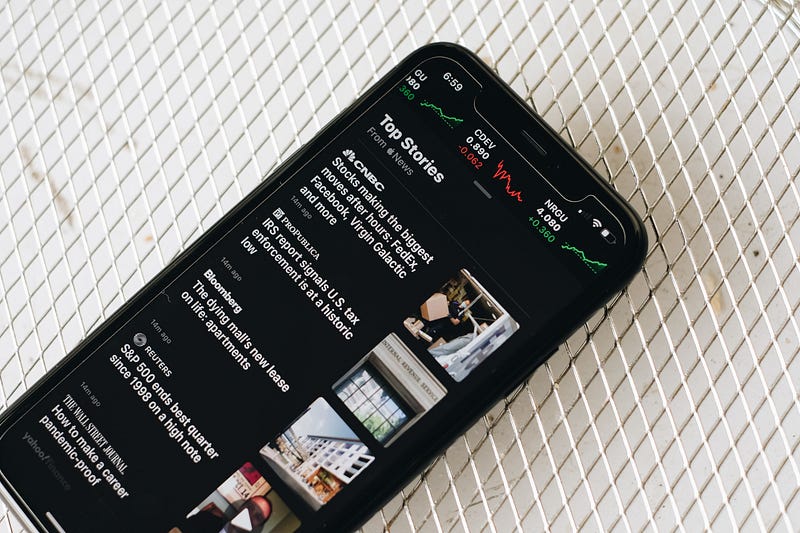
Today I was watching news on Youtube, and there was an upsetting video showing a recent run of student on student violent attacks (presumably the US). Who filmed these and why, I don’t know (meaning I don’t know if the attacker had a friend film it on purpose, or if an on looker filmed for evidence). And the reason I don’t know, is because I did not watch it.
I almost did. I even read a few of the comments for context. One person said it broke her heart to see. Another described it as a hate crime, but not the type that currently attracts news coverage. And that’s part of the reason I almost watched it. I was having these competing impulses. On the one hand, it disturbes me to see violence (not boxing or MMA, where the people voluntarily participate); but on the other hand, I was pulled toward watching out of self preservation instincts, “what if something like this happened to me, my child, someone I know!? I really should be aware of what’s out there, for protection sake.”
Even now, thirty or so minutes later, I’m wondering if I’m being naïve or soft for not exposing myself to the violent and (potentially) racially charged content.
Let’s start with violence. It happens. In fact, someone very close to me was recently physically attacked. It was upsetting. But, I was involved and understood things in a way someone viewing it online would not. And, then there’s race relations. My experiences with people in general are good, pleasant, or neutral. If I watch these clips and am anxious, fearful, and stressed, it isn’t doing anything productive or helpful, and in fact is likely harming my own impression of others and the world around me. I feel threatened and you are threatening me.
A study (I heard about watching this Modern Wisdom episode) that illustrates this point well, was conducted based on media exposure from the Boston Marathon bombings. Here’s essentially what it says, “we examined whether repeated media exposure to the Boston Marathon bombings was associated with acute stress and compared the impact of direct exposure (being at/near the bombings) vs. media exposure (bombing-related television, radio, print, online, and social media coverage) on acute stress. We conducted an Internet-based survey 2–4 wk postbombings with a nationally representative sample and representative subsamples from Boston and New York (4,675 adults). Repeated bombing-related media exposure was associated with higher acute stress than was direct exposure.”
Last year I went to Chicago for the first time. A few summers before this, I’d seen a ton of news coverage on social media of riots happening, and the bridges being lifted in Chicago. I didn’t let this stop me from visiting, but from what I’d watched, I was nervous. Would there be hostility and violence? Would it be safe? We spent the day there doing touristy things. The city was beautiful, the waterfront was clean and shiny, and the people were friendly. If I hadn’t gone I’d have been left with the impression I’d seen on the news.
Like giving a talk, or getting a needle, the news (at least some of it) creates anticipatory anxiety, which is known to cause extended distress and is almost always worse than the thing itself. The need to improve things is part of being human, but so is the impulse to ineffectually fill our minds with what we fear.
I think an interesting way of resolving this would be to break off from society and build communities of roughly 250 people. I’ll explain. There’s something called Dunbar’s number; the idea that we can only maintain 150 connections at once (though, the number of acquaintances a person can know at once is set at 500, so 250 is a nice number to represent a community of close connections, where you’d at least know everyone by name). The BBC article where I read about this says, “one implication for the era of urbanisation may be that, to avoid alienation or tensions, city residents should find quasi-villages within their cities.” Many institutions do this. For example, the LDS church keeps congregations of active members at about 250 people; after this a new ward (congregation) is made. This is because a ward is meant to create a small and supportive network of people where most of the adults volunteer to keep things running.
Unlike inflammatory news, these small quasi-villages allow for real opportunities to serve, get to know people, understand issues, and make a positive impact. I’ve been thinking a lot about this recently, the idea of getting more involved in my community, as a way to both make even a small difference, and also just better getting to know the community I’m a part of. Thanks to the encouragement of a colleague, I actually did research and voted in the last municipal election!
I’m more introverted and generally find it hard to settle into a new group, so I’m expecting some trial and error finding places I feel comfortable, and where there’s shared values and aligned purpose, or even just a fun time. But I think I’m ready to take the many small steps needed to get my mind less focused on the worry of the “what if’s” the news brings, to the more direct reality of getting involved.
https://www.pnas.org/doi/10.1073/pnas.1316265110