
No More Hide and Seek with AI: A (quick) Dive into Explainable AI
5 reasons why you should educating yourself on XAI — asap.
Ok, chit-chat later! Let me quickly take some scenarios that would impact you in daily life, where you would DEMAND an explanation and why you should educate yourself on Explainable AI a.k.a. XAI
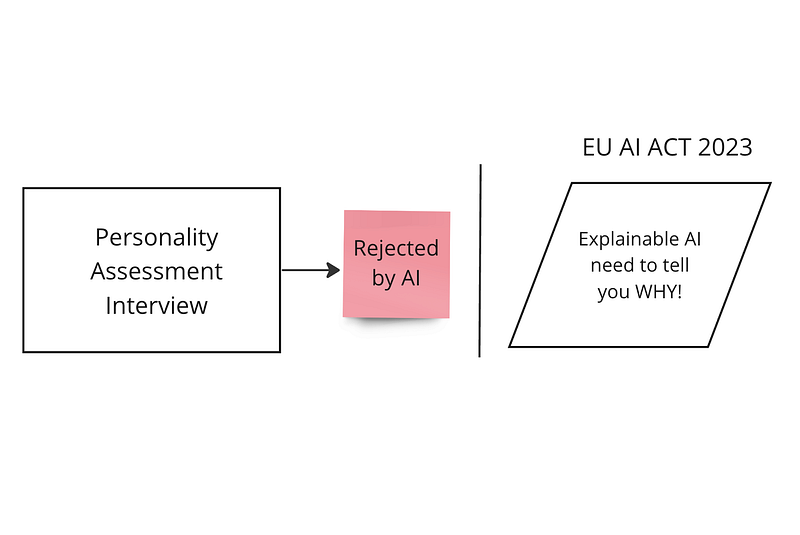
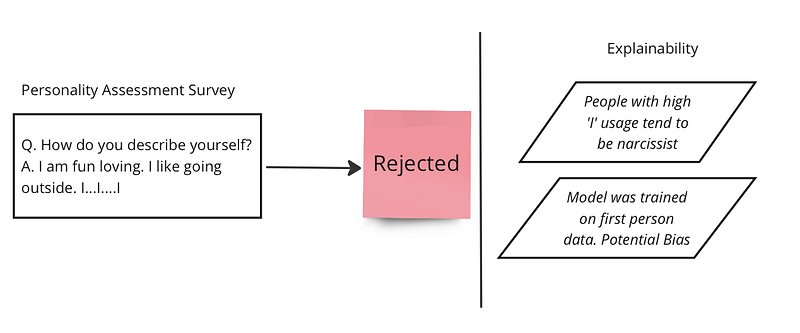
1. Rejected in an interview: You gave a personality test and scored less, despite being a good person and answering honestly. The HR department tells you: “Well, our system tells us you are not a good fit. Sorry, it’s automated, and I have no control. Meh!”. You should (SOON, by law) be able to demand how their algorithm works to assess whether it was biased
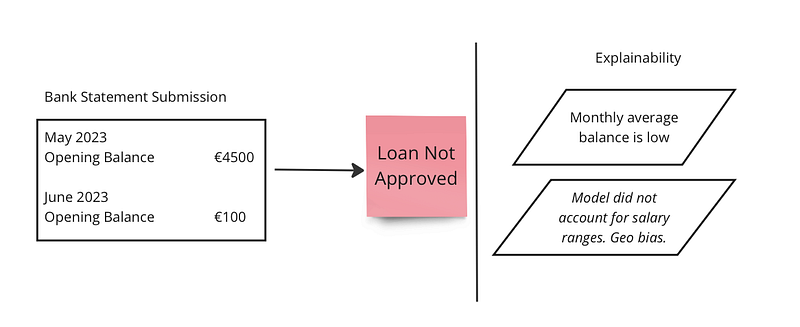
2. Unfair credit score: You apply for a loan and get rejected due to a low credit score, even though you have been responsible with your finances. The bank informs you that its decision was based on an automated credit scoring system. With Explainable AI (XAI), you would have the right to demand an explanation of how the algorithm arrived at that decision, enabling you to identify any biases or errors that may have influenced the outcome.
3. Unexplained medical diagnosis: You receive a diagnosis from a medical AI system, but the explanation provided is unclear or lacks transparency. With XAI, you would be able to request an explanation of the reasoning behind the diagnosis, ensuring that you understand the factors considered and can make informed decisions about your healthcare.
4. Unjustified insurance claim denial: You file an insurance claim for a valid incident, only to have it denied by an automated claims processing system. By demanding an explanation through XAI, you can gain insights into how the system assessed your claim, allowing you to challenge any inaccuracies or biases that may have led to the denial.
5. Unreliable product recommendations: You rely on an AI-powered recommendation system to suggest products or services, but you consistently receive irrelevant or unsatisfactory suggestions. With XAI, you can demand an explanation for why certain recommendations are being made, enabling you to understand the underlying criteria and potentially provide feedback to improve the system’s accuracy.
From the days of imagination and ink, when artificial intelligence (AI) was merely a fantastical concept penned down by Isaac Asimov and the like, we have come a long way to a world where AI isn’t just a novelty, but an integral part of our daily grind. From Siri on our iPhones to sophisticated image recognition tools and groundbreaking healthcare diagnostics, AI has woven itself into our existence. Yet, most of us haven’t the foggiest clue how these smart systems do what they do. This is where Explainable AI, affectionately known as XAI, struts onto the stage.
What’s Explainable AI?
In the simplest of terms, XAI is all about ripping off the veil of mystery from AI. It’s about the hows and whys of decisions made by our AI counterparts. XAI is about fostering a clear, two-way street between humans and AI systems, a place where we, mere mortals, can figure out, trust, and effectively manage these virtual demigods.


Why Does Explainability Matter?
AI systems, especially those with deep learning at their heart, are notorious for their black-box image.
They decide but do not disclose. And this dearth of transparency can give rise to anything from a simple shrug to serious ethical, legal, and safety question marks. Imagine an AI system deciding who gets a loan or a self-driving car making a life-or-death split-second decision; there’s an urgent need to understand the logic behind the choices.
The real reason why I decided to write this article was actually the upcoming EU AI Act which will makes XAI not important, but compulsory
The plot thickens in fields like healthcare, defense, and finance. Here, AI decisions can turn lives upside down. It’s crucial to ensure that these decisions are not simply based on correlations but causal relationships. Also, explainability holds the potential to keep AI in check, helping to pinpoint and rectify biases, leading to a fairer AI society.
The Magic Behind the Curtain: How Does Explainable AI Operate?
Now, explaining AI is a two-way street: one lane for ‘post-hoc’ explanations and the other for ‘inherently interpretable’ models.
*Post-Hoc Explanations*
Simply put, post-hoc techniques are all about why-dunnit. Why did the AI system make that decision? These techniques, often using data visualizations or textual explanations, help humans understand the workings of AI. For example, Local Interpretable Model-agnostic Explanations (LIME) create easy-to-understand models that explain how different features weigh into the AI’s final decision.

*Inherently Interpretable Models*
Inherently interpretable models, on the other hand, are the open books of AI. They are designed to be understandable from the start. Think decision trees, linear regression, rule-based systems, and the like. But remember, as much as we love transparency, there’s often a trade-off between complexity and interpretability.
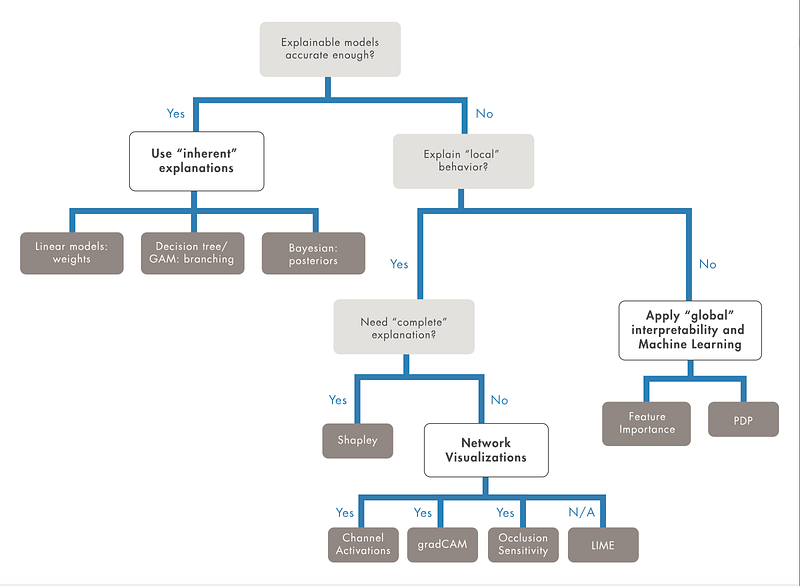
To understand the “decision tree” kind of Inherently Interpretable Model, just look at the image in the next section.
*How to select the appropriate interpretability method*
There is some very interesting data I found with Matlab:
*Challenges and What’s Next in XAI*
The road to transparent AI isn’t exactly a walk in the park. It’s a delicate balance between making AI as accurate as possible, while also ensuring it doesn’t turn into an inscrutable divination tool. Add to that, we need explanations that satisfy both tech geeks and novices, a challenging proposition in itself.
However, let’s not forget the silver lining. XAI isn’t just about improving trust and ethical behavior in AI; it’s about enhancing its efficiency, reliability, and overall goodness. In a world where we increasingly coexist with AI, making them explainable, understandable, and accountable isn’t just a nice to have, it’s an absolute must. So, let’s raise a toast to a future where we understand our AI buddies a little better and mistrust them a little less.
Below are a few recent and good links to learn about explainable AI:
- “What is Explainable AI (XAI)?” by IBM [https://www.ibm.com/cloud/learn/explainable-ai]
- “Explainable artificial intelligence (XAI) in banking” by Deloitte Insights [https://www2.deloitte.com/us/en/insights/industry/financial-services/explainable-ai-in-banking.html]
- “Explainable artificial intelligence: understanding the limits of deep learning” by Nature [https://www.nature.com/articles/s42256-020-00256-9]
- “Explainable AI: A Review of Machine Learning Interpretability Methods” by Frontiers in Robotics and AI [https://www.frontiersin.org/articles/10.3389/frai.2021.708648/full]
- “Top 5 techniques for Explainable AI” by Towards Data Science [https://towardsdatascience.com/top-5-techniques-for-explainable-ai-d682aac2f716]

This story is published on Generative AI. Connect with us on LinkedIn to get the latest AI stories and insights right in your feed. Let’s shape the future of AI together!
