
No Green Thumb? This is the Perfect Plant For You!
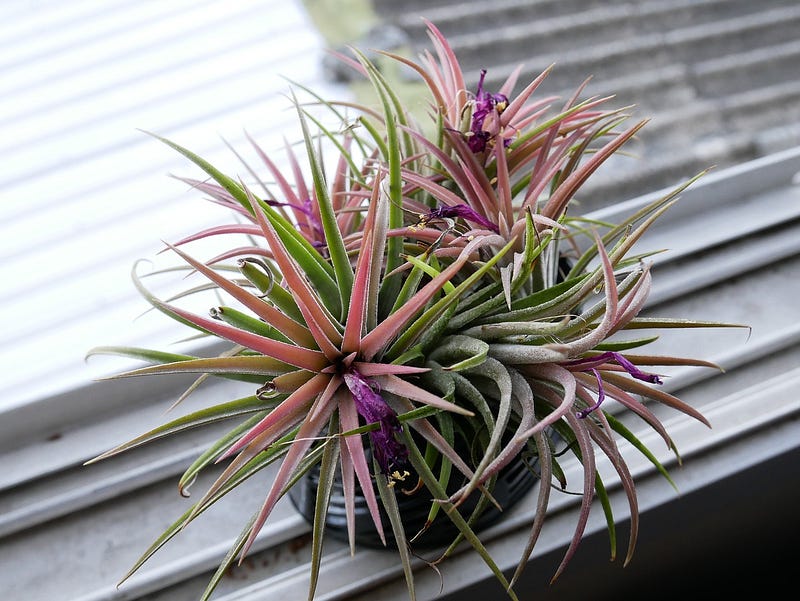
Tillandsia, also known as air plant, are easy to grow and perfect as houseplants.
In NCIS: Los Angeles, Season 2, Episode 15 titled “Tin Soldiers,” Hetty gives Callen a house plant saying, “It’s an epiphyte. It’s perfect for you. It doesn’t require soil. You don’t need to water it. It absorbs moisture from the air. It doesn’t even need roots. But they make it more stable.”
An epiphyte is an organism that grows on the surface of a plant and, as Hetty said, receives its moisture and nutrients from the air, rain, water, or detritus gathering around it.
I’ve always been a disaster for growing plants. When I was a child, my mom and I bought some succulents at the local market; they didn’t survive. So when I saw that episode of NCIS, I knew which type of plant would have been an excellent fit for my poor gardening abilities!
One day, I was distributing flyers at a small market and came across a lady selling Tillandsia. Most Tillandsia plants are epiphyte; they don’t need soil or a lot of water to live and are also known as air plants. I ended up buying three different types of Tillandsia. With my mother’s help, we placed them in a basket full of bark to make them stay comfortable.
How to Grow a Tillandsia
The Tillandsia are mainly perennial herbaceous plant belonging to the Bromeliads family.
It is typical of tropical and subtropical forests, but it can adapt to any climate. I’ve seen some of them hanging from trees in Scotland and Florida.
Tillandsia can be grown inside the house in a room where the minimum temperature remains 5–7 ° C, at least a few hours a day.
The best room for a Tillandsia is the bathroom, where there is a lot of humidity. It also needs a lot of light, avoid placing it in dark halls or in the kitchen where the air is too greasy. My Tillandsia are in the laundry room in front of the window.
During summer, Tillandsia, usually inside, can be placed outside in a sunny area but not in the direct sun.
When present, the roots are means of anchoring to the branches and bark of trees or other supports. Some of my plants developed roots after years and are now attached to some pieces of bark.
The best way to water a Tillandsia is by nebulizing some water with a pH of around 4,5–6,5. The lady who sold me the plants also said I could “soak” them in a bowl with room temperature water. Nebulizations can be done more often during summer if the plant is placed in a hot environment. All you have to do is put some room temperature water in a clean bottle and spray it on top of the plants. The Tillandsia will absorb the water, and all its nutrients thought the leaves.
The Tillandsia can be fertilized twice a month during spring and once a month during the cold periods by adding 0,50 g of fertilizer per liter of water. The fertilizer must contain nitrogen, phosphorus, and potassium with 20:20:20 balance, magnesium, iron, manganese, copper, zinc, boron, and molybdenum. Do not use too much fertilizer, or you will risk burning the plant.
Tillandsia blooms towards the end of summer and the beginning of the autumn; the fowers are usually colorful and ear-shaped. Once the flower dries up, remove the stem.
After the bloom, new plants will grow at the Tillandsia base, remove them gently from the adult plant. The mother plant might die after creating new plants.
The Tillandsia doesn’t need to be cut; all you have to do is gently remove dried leaves, and regularly check for aphids and scale insects.
If your Tillandsia leaves are dying, it means it is in a place too cold for it. On the other hand, if the leaves turn dark and fragile, move it to a shaded spot.
Curiosity and Legends About the Tillandsia
The Tillandsia isn’t only a pretty plant used to decorate homes; it also has some relevant and beneficial properties.
It can collect polluting agents responsible for cancer. Once captured, it metabolizes them, cleaning the air naturally. Each kilogram of plant can capture about 0.2 milligrams of toxic elements.
With no scientific proof, it is common to believe that this plant can absorb harmful electromagnetic radiation emitted by home appliances.
There are also legends connected to the Tillandsia usneoides, also known as “Spanish Moss.”
According to one legend, a Spanish man stole the Cherokee land to start his farm; as a warning, the natives cut his wife’s long hair and put it on a tree branch.
Another story, called “The Meanest Man Who Ever Lived,” tells about a man with very long white hair caught on trees.
In Hawaii, Tillandsia is also called “Pele’s hair” in honor of the goddess of volcanoes and fire who created the Hawaiian Islands.
Is Tillandsia Right for Your Home?
I’ve had Tillandsia plants for years now. Only one died after creating new little pants, which are all well and growing with two other plants my mom bought some time after.
We don’t nebulize the plants but soak them in room temperature water, as the seller suggested. Once a month, we add to the water some Orchids’ fertilizer to give them extra nutrients.
Air plants are super easy to grow, even for those who have no time to take care of plants but still want some as home decoration.
Place them into transparent bowls or macrame wall hanging to add green accents to your home.