
No, Getting Married Does Not Mean I Want a Child
One doesn’t always lead to the other
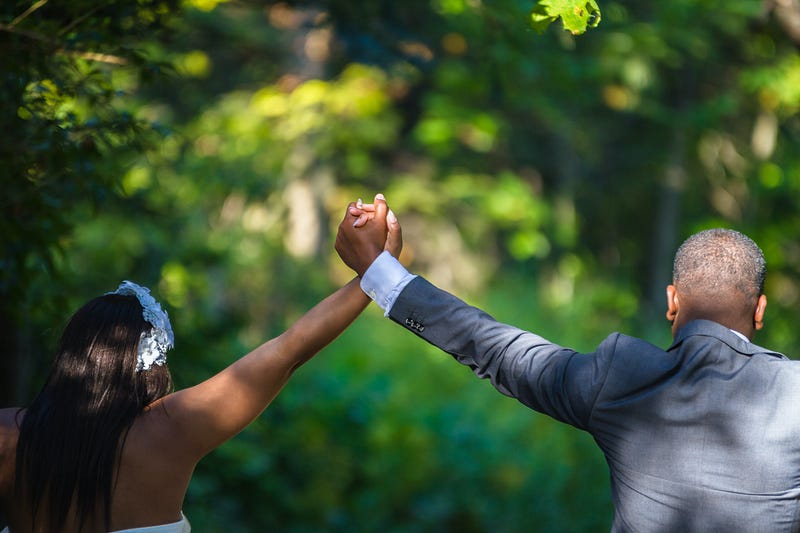
On the night of my wedding, my mother began to knit clothes for my baby.
There was no baby on the way. My uterus was as empty as it is now, 11 years later. But I was married, so she presumed a baby would soon be part of the picture.
I was 24 years old, living in a one-bedroom apartment in central London, partying most nights. But marriage means a baby and settling down in the suburbs, right?
Not for this woman. It surprised me too.
The Problem with Marrying Young
When you meet your husband at 19 and get married at 24, when no one else in your social circle is doing such a thing, people like to make plenty of assumptions. Like your faith doesn’t allow sex before marriage. Or you’re desperate for a baby. Or you already have a baby brewing.
This wasn’t our story. We just wanted to get married. We’d been together 5 years, we loved each other immensely, we fancied a party and we wanted to declare our intentions to the world. That was it.
I Assumed Babies Would Be Part of My Future
It’s been drummed into me since I was a child that I would be a mother. I come from a very active Christian background. My three siblings are all parents. My 16 cousins are too. I am the only one left.
What I found however is that I was prioritising everything else above getting pregnant. The problem with unintentional, vague plans like ‘oh I’m sure I’ll be a mother before I’m 30’ is that they get pushed down the priority list when something more exciting comes along because they were never really a priority in the first place. So they get exchanged for other things like careers, travelling, starting a new business or anything else that is considered more important.
In your twenties, it’s just about acceptable to be married and not prioritise child-rearing. But once in your thirties, it feels that you’re really pushing the boundaries of societal norms. I’m now 35. My husband is 38. After 11 years of marriage, neither of us yet feel the need to be a parent.
But the older I get, the more difficult it is for people to understand why I don’t have children. The questions get more frequent and more personal which doesn’t make it easy to separate the desire (or not) to have children with the pressure to do ‘what is expected of us’.
“So when are you planning to have a baby?” (Hairdresser the first time I met him)
“Do you have children? No? You want to change that.” (First-time customer in my store)
“You’ve been married HOW LONG? And you don’t have children??” (Stranger at a wedding)
Then there are assumptions that we may want children but can’t have them, posed with a tilt of the head, a sad smile, a low voice. Like it’s their business.
Would these questions be asked of me if I was in a long term relationship rather than married? Possibly not. After all only 6 in 10 people think that having children outside of marriage is acceptable.
Just because I chose the traditional path of marriage does not mean I have to adhere to all traditional paths. The world is just not that linear. However much my mum wishes it was.
Unexpected Freedom
Getting married young or deciding to not have children means you can do everything backwards. Or sideways. Or any which way you please.
You have rejected one of society’s major assumptions. There is something rather delicious about this idea that can give you the confidence to pursue different paths in other areas of life.
After a while, your friends and family assume you’re probably going to do something else that tears up the society rulebook so why not prove them right. Like travelling the world in your thirties. Or starting a business. Or anything you bloody well like, thank you very much.
It Comes Down to Questioning Traditional Societal Tropes
Being married without children is just one example. I write a LOT about questioning society because the whole thing makes me sad and annoys me in equal measure. Sad to think that some people can’t be authentically themselves because it doesn’t fit in with a particular world view. Sad about the internal turmoil that must make people feel. And annoyed because I have to field questions every day about my lack of children and other vaguely questionable life choices, as does everyone else.
Yes, I am married. No, I do not have children. Yes, some people may see that as an indictment of their own choices. No, it isn’t, because like everything else of a personal matter, how I decide to live my life is not a comment on how you live yours.
Now. Why is no one asking my husband these questions?