
No Code? No Problem! Unleashing OpenAI’s GPTs and Their Disruptive Impact on the Tech Ecosystem
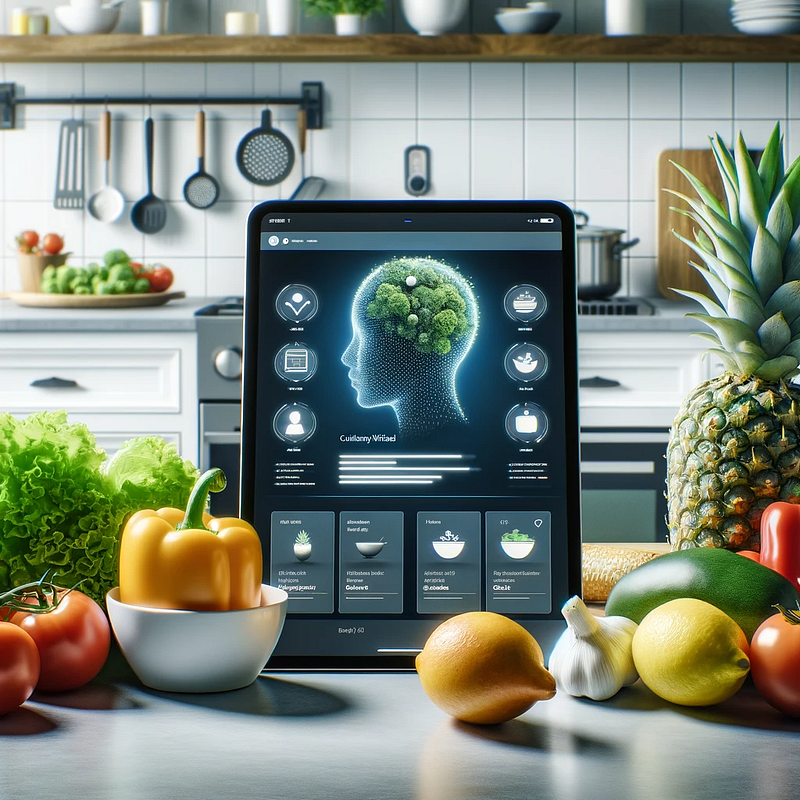
OpenAI’s New GPTs are a testament to the boundless potential of no-code solutions. With these powerful tools at your fingertips, the ability to innovate transcends traditional barriers, opening up new avenues for creativity and efficiency.
A Recipe for Digital Transformation
This tutorial is your guide to creating a personalized AI tool that will revolutionize the way you think about cooking, all without the need for programming expertise.
By the end of this journey, you will have learned to create a ‘Culinary Wizard,’ an AI that effortlessly transforms your fridge’s contents into mouth-watering recipes.
Let’s set the stage for a gastronomic adventure that marries the art of cooking with the science of AI.
Starting the Culinary Quest
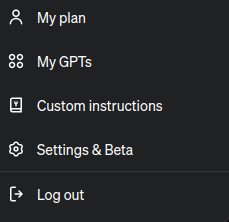
Begin by logging into ChatGPT and accessing your profile.
There, you’ll find the ‘My GPTs’ section, which is the stepping stone to creating your digital sous-chef.
Birth of a Digital Chef
Upon entering ‘My GPTs’, you are presented with the choice to adopt an existing GPT or to forge a new path by creating your own.
Opt for the latter to truly tailor your experience. Click on ‘Create a GPT’.

Shaping the AI
You’ll be guided through two paths: the ‘Create’ tab, which is a guided journey by OpenAI, and the ‘Configure’ tab, for those who prefer a more hands-on approach.
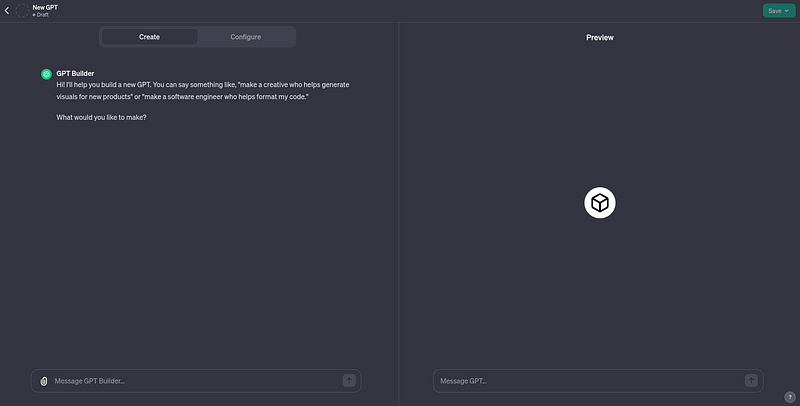
Whichever path you choose, OpenAI streamlines the process, assisting with everything from naming to providing a profile picture and establishing operational guidelines.
Just let the conversation guide you.
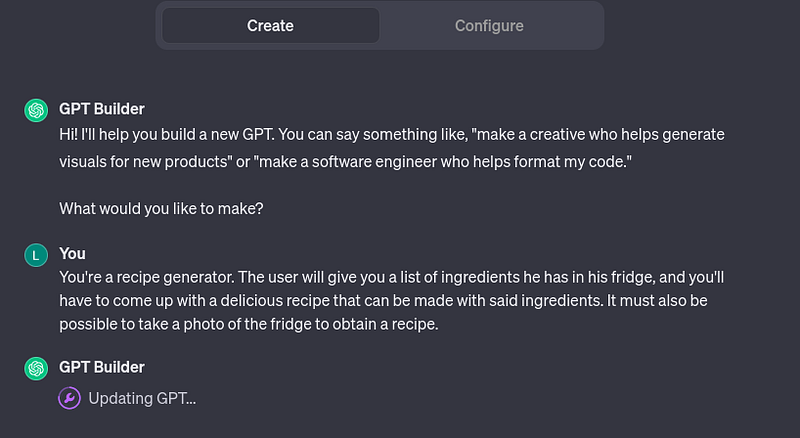
The principles that govern the writing of an effective prompt are mirrored here in building an effective assistant.
Clarity, conciseness, and relevance are key — articulate precisely what you want your GPT to do, keep instructions straightforward, and ensure that the tasks align closely with the intended purpose.
Just as a well-crafted prompt elicits the best response, a well-configured GPT yields the most effective assistance.
Once the dialogue with OpenAI concludes, the assistant will have been automatically created and configured:
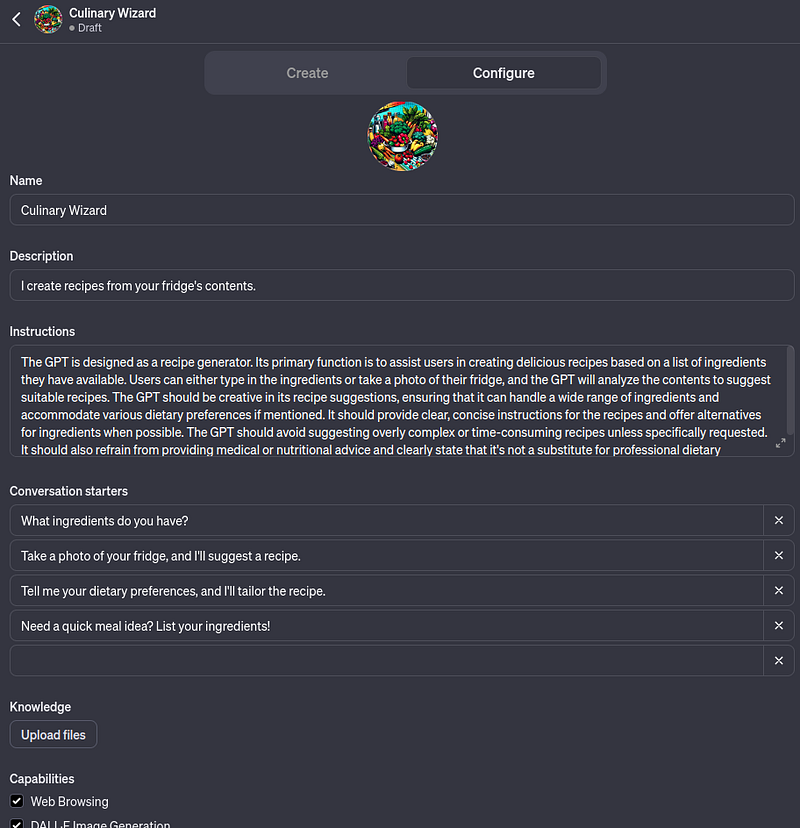
Bringing the Culinary Wizard to Life
After configuration, save and unveil your GPT to the world.
For our purposes, we’ve named ours ‘Culinary Wizard,’ a fitting title for an AI that conjures recipes from mere images of your fridge contents.
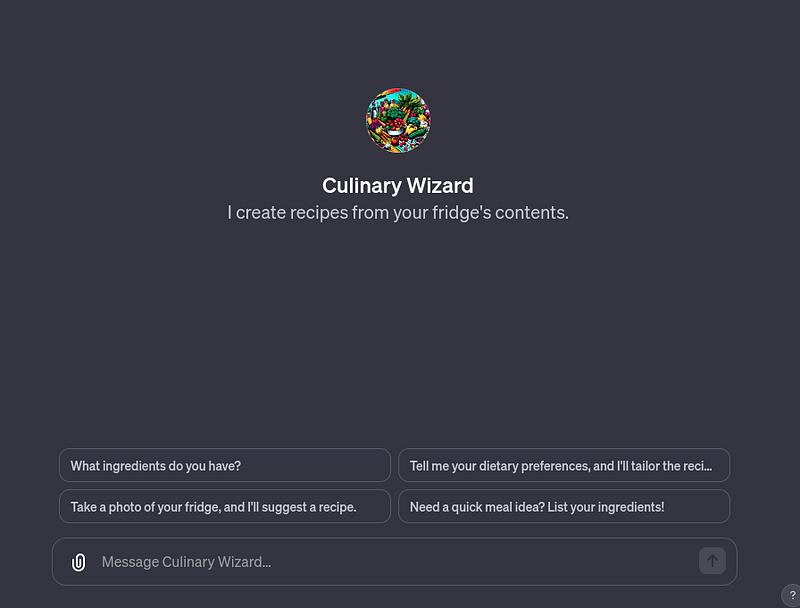
The Taste Test
Now it’s time to put our Culinary Wizard to the ultimate test.
For this experiment, I’ll use a photo of a fridge sourced from the internet.
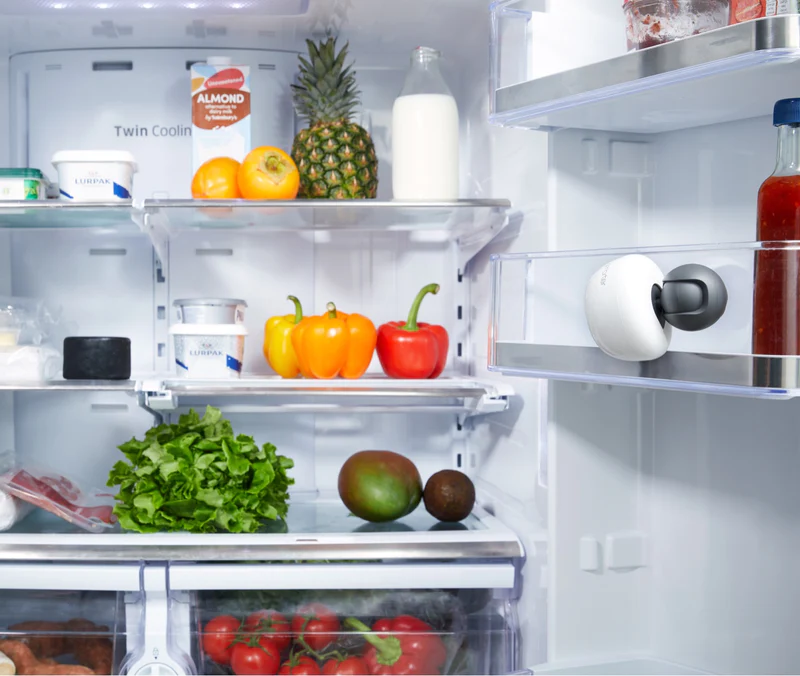
The image displays a variety of ingredients: tomatoes, lettuce, bell peppers, a mango, a pineapple, lemons, milk and many others.
Will our Culinary Wizard be able to conjure up a recipe from this assortment?
Let’s find out!
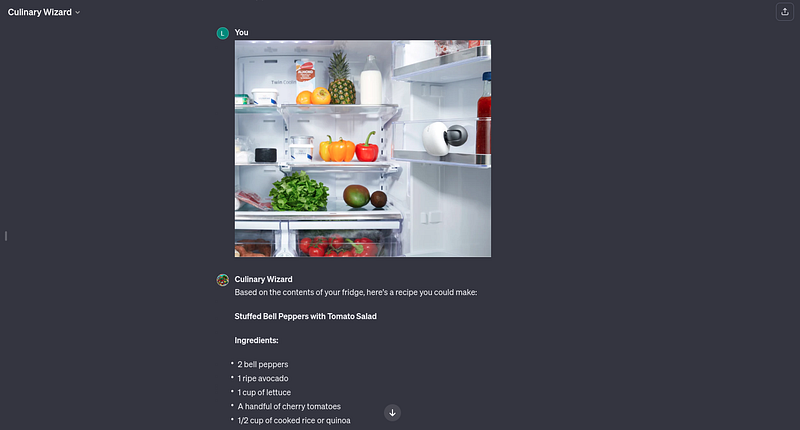
And there you have it!
Based on the contents of your fridge, here's a recipe you could make:

Stuffed Bell Peppers with Tomato Salad

Ingredients:

2 bell peppers
1 ripe avocado
1 cup of lettuce
A handful of cherry tomatoes
1/2 cup of cooked rice or quinoa
1/4 cup of almond milk
Salt, pepper, and any preferred herbs (like basil or cilantro)
Optional: grated cheese or a cheese alternative
Olive oil
1 tablespoon of lemon juice

Instructions:

1. Preheat your oven to 375°F (190°C).
2. Slice the tops off the bell peppers and remove the seeds. Lightly brush the outside with olive oil and place them in a baking dish.
3. In a bowl, mix the cooked rice or quinoa with diced avocado, salt, pepper, and herbs of your choice. If you have any, you could also add in some black beans or corn for extra filling.
4. Stuff the mixture into the bell peppers. If using, top with grated cheese or a cheese alternative.
5. Bake in the oven for about 25-30 minutes until the peppers are tender and the cheese is melted and bubbly.
6. While the peppers are baking, chop the lettuce and cherry tomatoes. Toss them together with a simple dressing made from olive oil, lemon juice, salt, and pepper. Add a splash of almond milk for a creamy texture.
7. Serve the stuffed peppers hot with the fresh tomato salad on the side.

Enjoy your meal! This recipe should make a light yet satisfying dish, perfect for a healthy lunch or dinner.
The result is nothing short of magical.
From the mere image provided, our Culinary Wizard has crafted a detailed recipe that perfectly aligns with the ingredients visible in the photo.
This test not only proves the capability of our AI but also its practical utility in everyday life.
How OpenAI’s Evolution Impacts the Tech Ecosystem
The advent of OpenAI’s customizable GPTs has been a double-edged sword in the tech industry.
While it has unlocked unprecedented potential for creators and businesses, it has simultaneously heralded a challenging phase for numerous startups.
A Shift in the Paradigm
The unveiling of these user-friendly, highly adaptable GPTs has transformed the landscape.
Startups that once thrived on providing niche, disruptive products based on OpenAI’s technology found themselves in a precarious position overnight. Their offerings, often reliant on intricate coding to integrate OpenAI’s API, have now been overshadowed.
Today’s tools, which require no coding and can be tailored by virtually anyone, offer infinite possibilities — making many of these startups’ solutions seem obsolete.
The Underlying Lesson
This shift serves as a stark reminder of the volatility inherent in building a business on a platform one does not own.
Relying on an external API for a core business offering is fraught with risk.
Changes to the API, or the release of new features by the provider, can instantly undermine the value proposition of such businesses.
This is not to say that innovation should be stifled or that APIs should be avoided. Rather, it highlights the importance of adaptability and diversification.
The Culinary Conclusion
The extraordinary pace of innovation and the vast array of applications make OpenAI’s GPTs a revolutionary force in the technological arena.
In just a few short years since the inception of GPT, and even less time since the arrival of ChatGPT, we’ve witnessed incredible advancements.
Today, anyone can leverage this technology to analyze images, parse data, and generate rich content with ease and speed unheard of before.
As we conclude this tutorial, remember that we’ve only just begun to explore the tip of the iceberg. The coming months and years promise to unfold with even more exhilarating developments.
If the rapid evolution of these AI models is any indication, the future is poised to be filled with innovations that we can barely imagine today. Stay tuned, the next chapters in AI’s journey are set to be truly thrilling.
Enjoyed the read? For more on Web Development, JavaScript, Next.js, Cybersecurity, and Blockchain, check out my other articles here:
If you have questions or feedback, don’t hesitate to reach out at [email protected] or in the comments section.
[Disclosure: Every article I pen is a fusion of my ideas and the supportive capabilities of artificial intelligence. While AI assists in refining and elaborating, the core thoughts and concepts stem from my perspective and knowledge. To know more about my creative process, read this article.]