
avatarAugusta Khalil Ibrahim
# Summary

The article discusses the societal pressure on women to be beautiful, particularly within male-dominated environments, where beauty is often linked with competence and value.

# Abstract

The author reflects on the widespread expectation in male-centric professional settings that women must possess beauty to gain attention or recognition. Stories shared by male colleagues about highly capable women who are also "amazingly" beautiful highlight this ingrained prejudice, which devalues women based on appearance. The author admits to an earlier inability to articulate the repulsion towards such narratives, now understanding it as a "toxic bid for possession" combined with a veiled insult towards less traditionally beautiful women. Photographs are presented to challenge this status quo, affirming the author's presence and self-acceptance despite such biases.

# Opinions

- The author feels repulsed by the way male colleagues conflate professional achievements of women with their physical appearance, implying that beauty is a prerequisite for attention and respect.
- The author acknowledges a difficulty in articulating their feelings about these narratives initially, suggesting that the underlying messages are subtle yet pervasive and damaging.
- The author identifies this phenomenon as a form of toxicity that not only attempts to possess women through objectification but also implicitly criticizes those deemed less attractive.
- There is a personal resolve to value oneself beyond the beauty standards set by a patriarchal society, as evidenced by the decision to share personal photographs with the statement "I am. Enough."
- The piece references Arabelle Sicardi's work to emphasize the importance of self-love and the value of one's inherent characteristics, separate from societal judgments of beauty.
- The author suggests the possibility of simple vanity as an alternative explanation but seems to lean towards understanding these experiences as indicative of deeper societal issues.
Oslo. Without beauty, as a woman, you have no value and you only get attention begrudgingly.

No Beauty, No Attention; Just Disappear

This is a sentiment prevalent in the (white) male-dominated environments in which I’ve worked.
The guys tell “hero” stories of smart women at the geology institute who were also “amazingly” beautiful.

I couldn’t then articulate why I felt repulsed by my fat white ugly privileged co-worker excitedly telling his hero story, about this brilliant woman who was beautiful and who drove off after giving a talk in a smart red sports car tossing her hair in the wind. It felt like his lunchtable story reeked of a second, barely stated, but clearly-understood agenda.
And now, after all these years, your essay is helping me to understand what was really happening in that anti-peristaltic undertow of a toxic bid for possession combined with a you’re-not-beautiful-like-her slur.

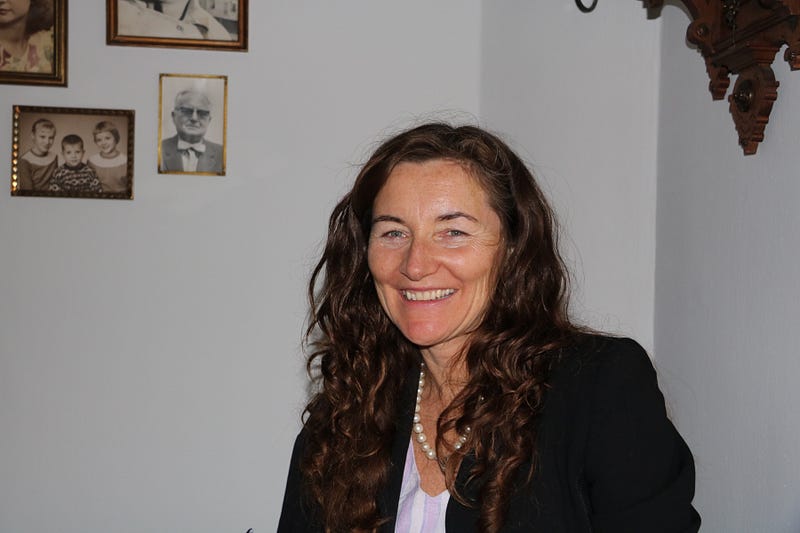
I feel a little embarassed to post photos of myself here but these photos make a statement:

I am. Enough.

Arabelle Sicardi: Brilliant, incisive, beautifully (!) and sensitively written. So much food for thought.

I will appreciate what I have:

Was it perhaps simple vanity as Kopjes Kattenoppas describes here:

Beauty
Possession
Women
Misogyny
Copenhagen
Recommended from ReadMedium