
Nirvana
What It Is and What It Is Not
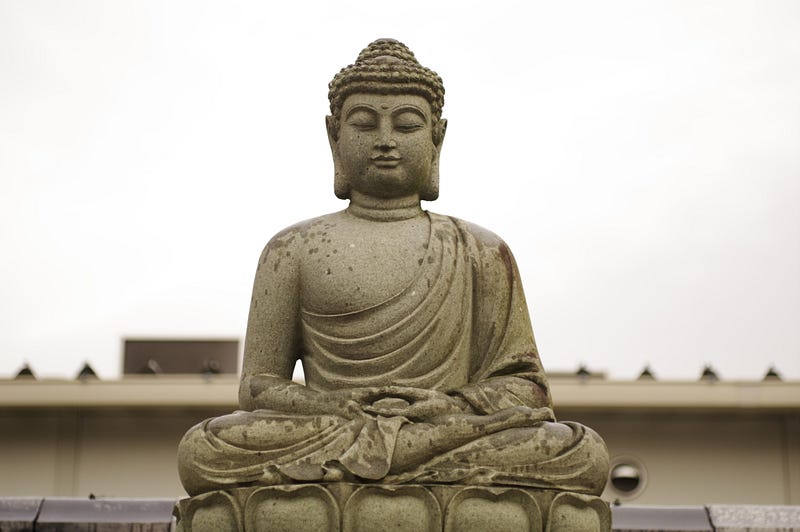
Apart from being a U.S. band from the 1980s, which is not what I’m talking about here, there are many other things that Nirvana is not.
It’s not a heroin high.
It’s not heaven.
It is not a place of infinite bliss.
It is not a soul hotel.
Although, to be honest, I have long hoped that it would be; would be an extraterrestrial rush advancing upon you out of nowhere and then arriving, welcoming you into inexplicable and forever bliss. Yes, I knew from a lot of reading (a lot of reading) that this wasn’t it, but there is quite a gap between reading (intellectual grasp) and experience (spiritual grasp), and it took me quite a while to bridge that gap — in some ways I’m still bridging it.
As a result of this bridge, today I view Nirvana as that state or condition of existence where there are no more questions. Each and every possible uncertainty certained and each and every possible question answered. The word used in Tibetan and Mahayana Buddhism is omniscience — the state of knowing everything, to quote the dictionary, but that by the light of the Mahayana folks, is a step beyond what they term Nirvana.
For they, (I say they even though these days I count myself among them) take a slightly different view of Nirvana, which according to much reverent speculating and commenting is a Hinayana (Theravada) goal; the Mahayana practitioner, the Bodhisattva, aims beyond, above that, for the full enlightenment they call omniscience.
Too, too often I have read in Mahayana scriptures that Hinayana Nirvana is a personal nirvana, a personal escape from the “endless” (I quote this word for there is no such thing as endless in our cyclic existence through lives and lives and lives) and cruel fate of Samsara.
I would like to sit down with some of these Mahayana elders, many of whom lived hundreds of years ago, and point out that there is no such thing as “personal nirvana”, and that there could not possibly be.
For Buddha nature, the primordial emptiness (Sunyata) that is nothing but pure potential, is single, and not even single as opposed to dual or multiple, it simply is, and this, if anything, is true Nirvana. But it is also Samsara, it is everything, and in truth, there is no “self” to arrive at and enter a “personal” nirvana. Should a practitioner reach and embrace this emptiness he or she would in effect “merge” (strange word, this but the only one that comes close) back into primordial awareness while also leaving all “the rest” of himself outside or behind. Just doesn’t compute, does it?
Anyone who professes that the Hinayana practitioner, for lack of compassion for his fellow beings, enters a personal nirvana, a nirvana for the “self” in other words, is also saying that this practitioner retains his “self”, the very self, the giving up of which, the letting go of which, is in fact the key to entering Nirvana. This is a severe contradiction in terms and I am surprised that the Mahayana elders did not see that.
Put another way: were you to enter a personal nirvana you would also be leaving yourself behind — quite a feat.
I know that omniscience is a big word and its implications beyond measure, but I believe that this is what True Nirvana is:
No more questions.
© Wolfstuff


