
ALPHABET TRAVEL CHALLENGE
Nir David — Life On A Kibbutz
A to Z of my favorite travel destinations – N is for Nir David
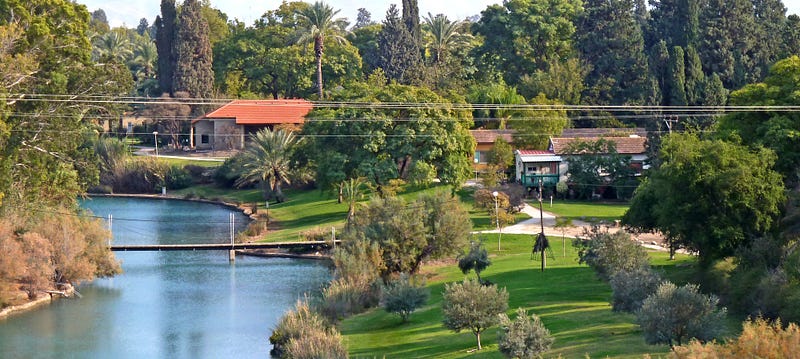
Before I traveled to Israel I had an image in my mind of what a Kibbutz was but it took spending some time at one to really understand it. I was told a Kibbutz was like a commune; everyone lived together in a small community, working together to support each other, eating together, and sleeping in big dorms or small cottages.
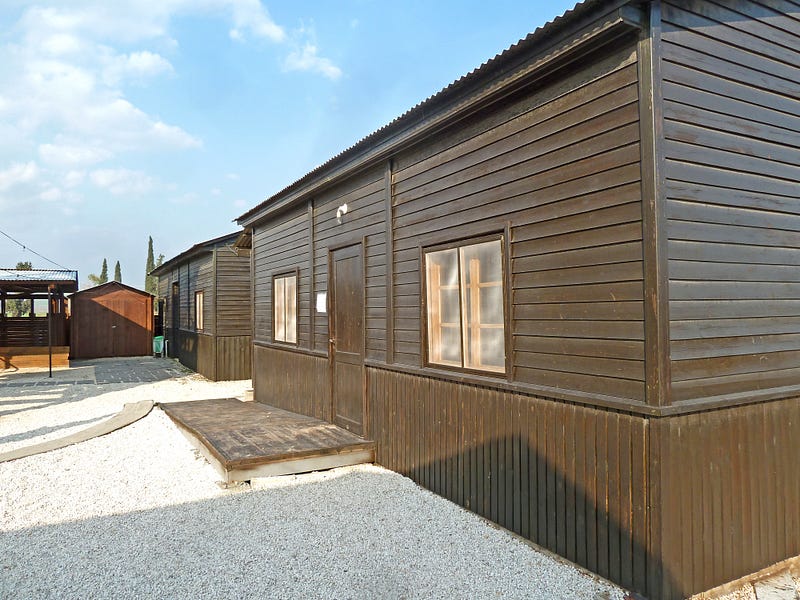
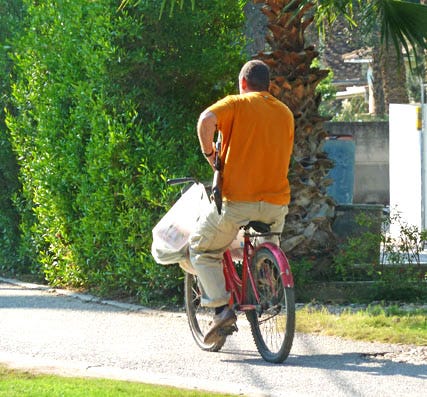
That was true in the past but it seems there has been an evolution in many of the Kibbutzim, now they are more like gated communities. People live in their own homes, paying minimal rent, and unlike in the past, most own their own vehicles.
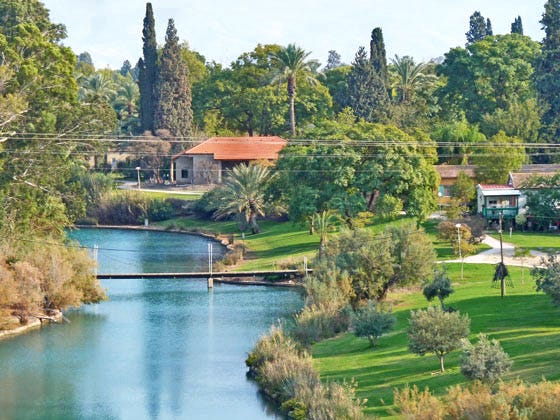
And while some people work there on the farm or in businesses that support the Kibbutz, many others work outside the community. I have visited the Nir David Kibbutz a few times, considered one of the most beautiful in all of Israel.
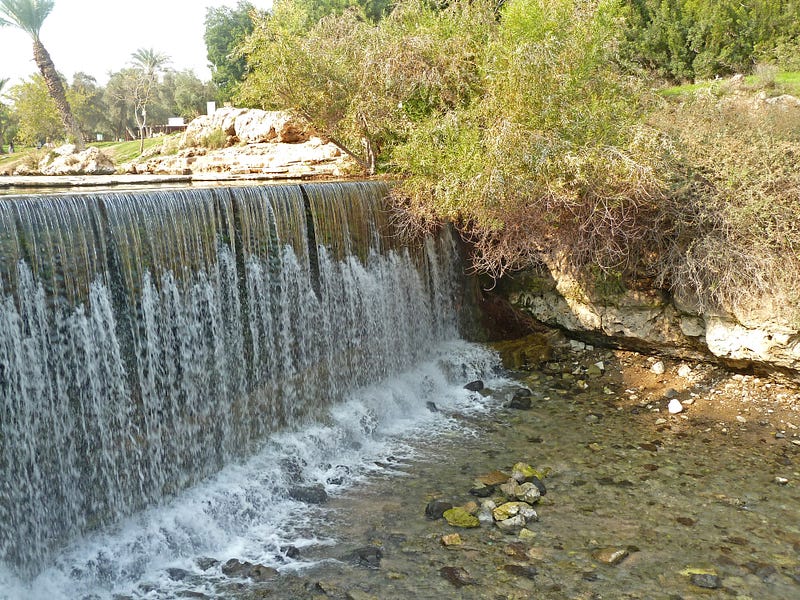
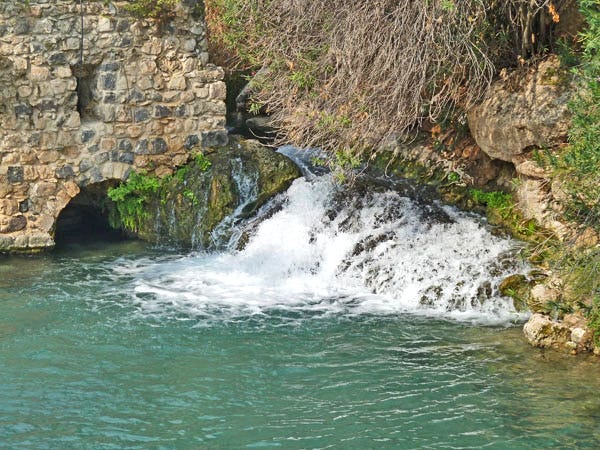
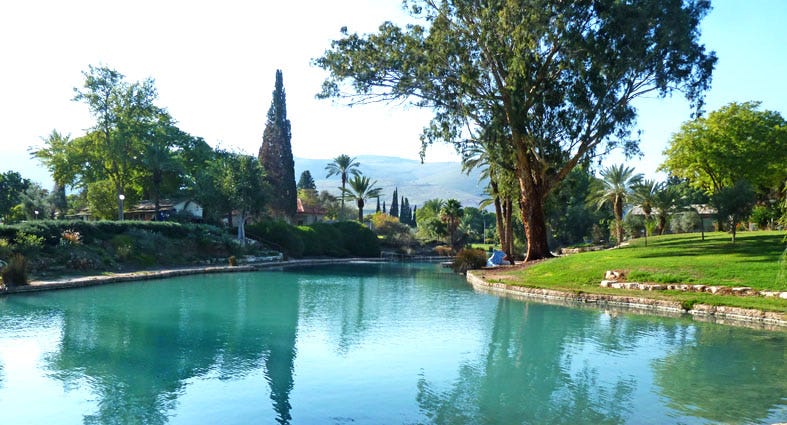
It is surrounded by olive groves, orange and lemon orchards, date palms, and farm fields and is built along the Asi River about two hours north of Tel Aviv. If you want to get back to nature, this is the place to do it. The river itself is heated by underground thermal springs so no matter how cold it can be outside, the river is always warm (not hot). There are waterfalls that feed into the river, and big trees along its banks to provide shade and spectacular photos.
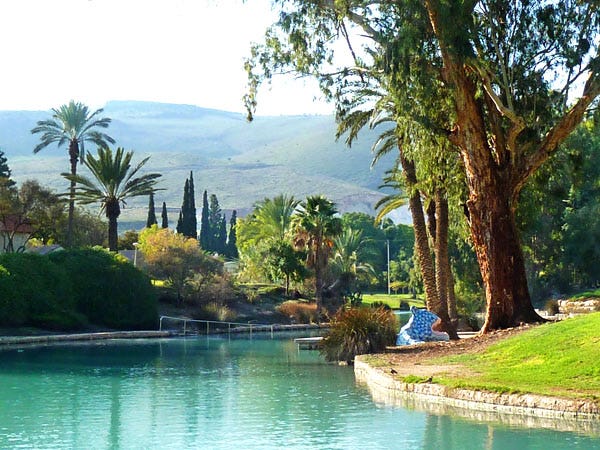
The river also has more fish than I have ever seen in any river or lake before. After breakfast at the one restaurant on the Kibbutz, the children are given leftover bread which they feed to the fish, creating a frenzy as thousands of fish scramble for a bite to eat.
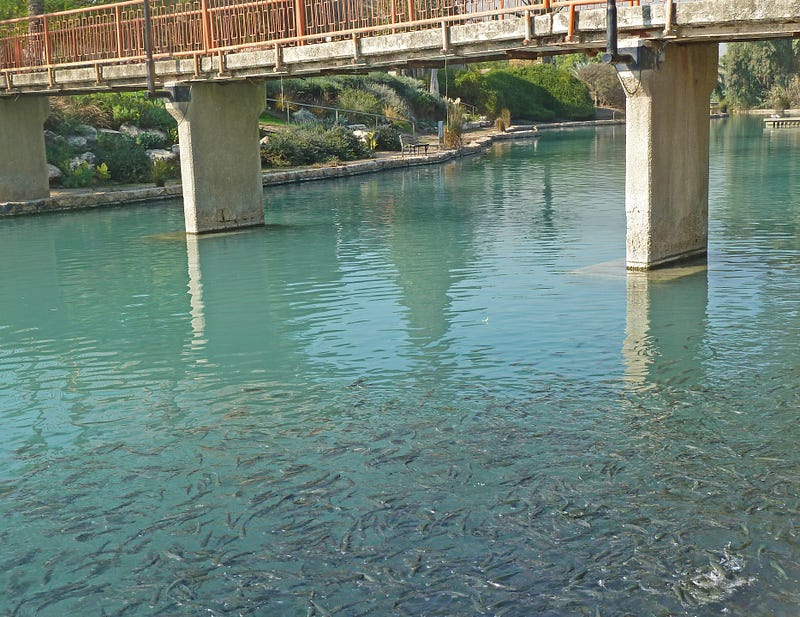
You can rent fishing poles to try your luck but there is only a small area where you can actually fish (or rent a kayak). There are signs everywhere telling you where it’s prohibited, all the areas of the river where most fish congregate. It seems the fish know that too and avoid the fishing area like the plague.
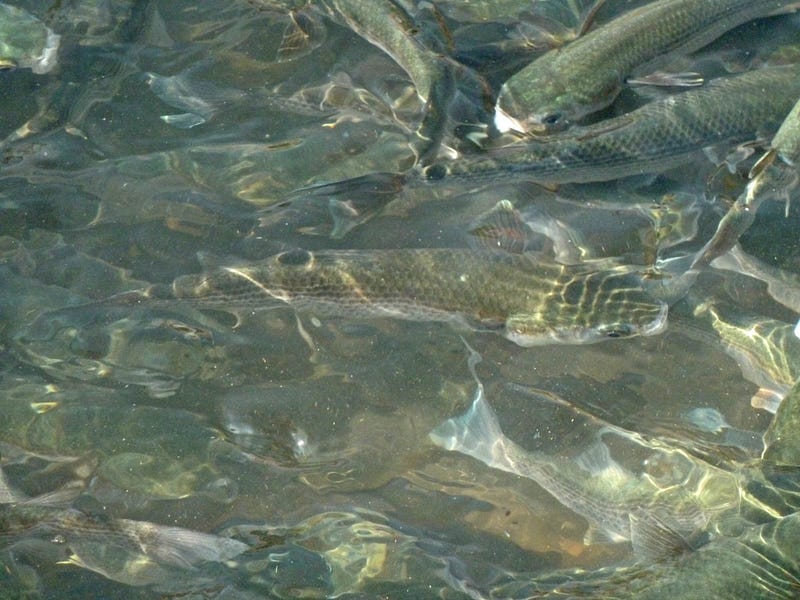
Despite all the fish you can see as you walk across the bridges or along the banks, there are only tiny minnows swimming through the part of the river where people are casting their lines, and they rarely catching anything. The people of the Kibbutz say they want to protect the river and the fish for the enjoyment of the community.
Agriculture (including a nearby fish farm), is an important part of the Kibbutz. But the bounty isn’t just shared among its members, instead, it is sold to other parts of Israel and countries around the world, and the proceeds are then used to support the Kibbutz.
There is a small supermarket where people in the community shop for their food and other household goods. There are also a couple of small factories, one that exports farm machinery.
You can see a bit of the history of Nir David too. An old fort still stands and has been turned into a historic site for people to visit and discover how the first settlers on the Kibbutz lived, defending themselves from invading Arabs.
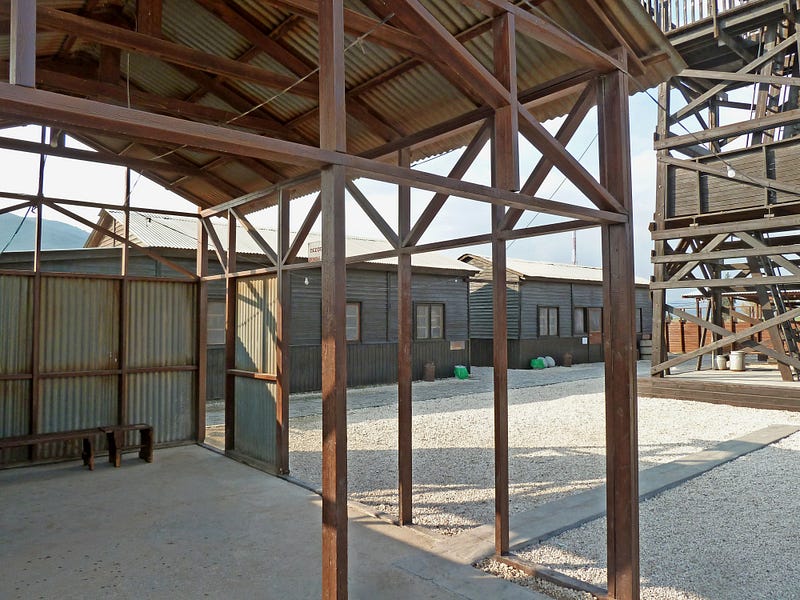
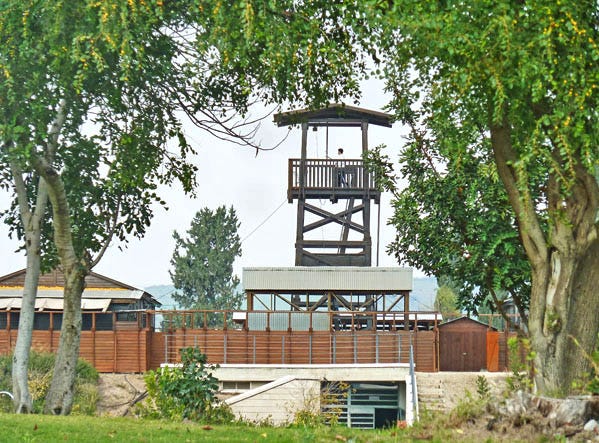
But it is the recreational opportunities that make Nir David such a great place to visit. Sachne, a freshwater park just outside the Kibbutz boundary has a beautiful swimming area with water cascading down a man-made waterfall and down a series of rocks that children slide down on.
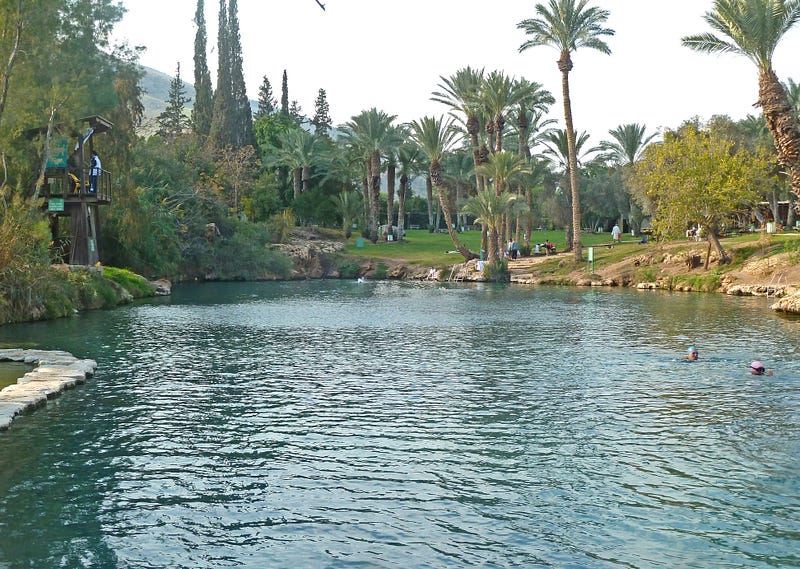
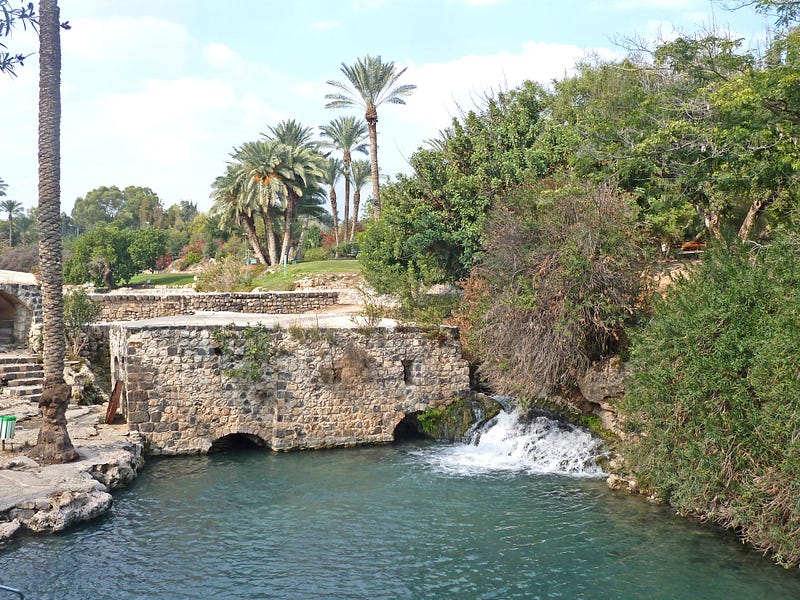
Of course, they also have a big water slide set up for people to play on (closed during the winter). There are great play areas for kids, including an old helicopter that they can play on.
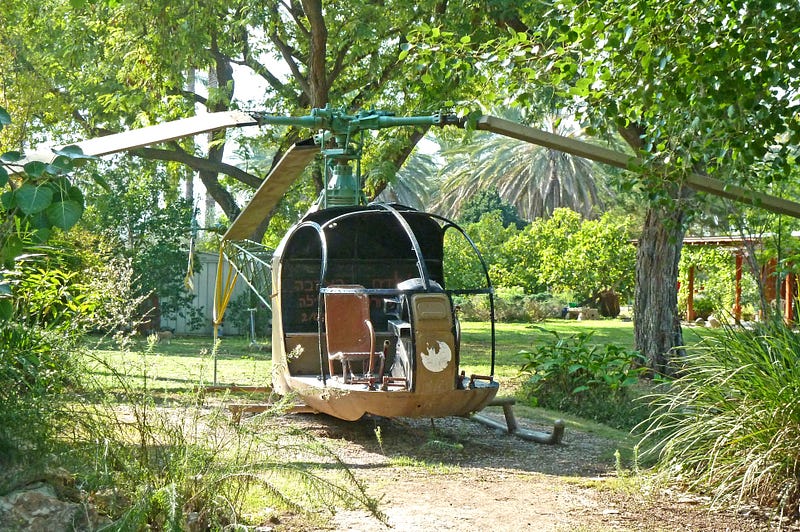
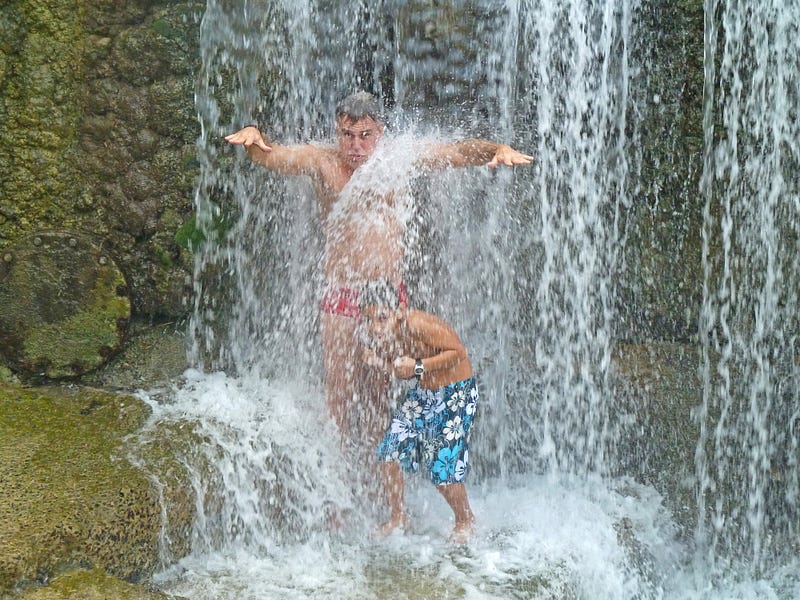
There is also a guest ranch that has dozens of horses to teach children and adults how to ride, including equestrian, as well as hayrides (without the hay). The Kibbutz has built an amazing sports complex as well, with a gymnasium, basketball court, and swimming pool. And just a little further down the road is the Australian Zoo where you can get up close and personal with the kangaroos and koalas.
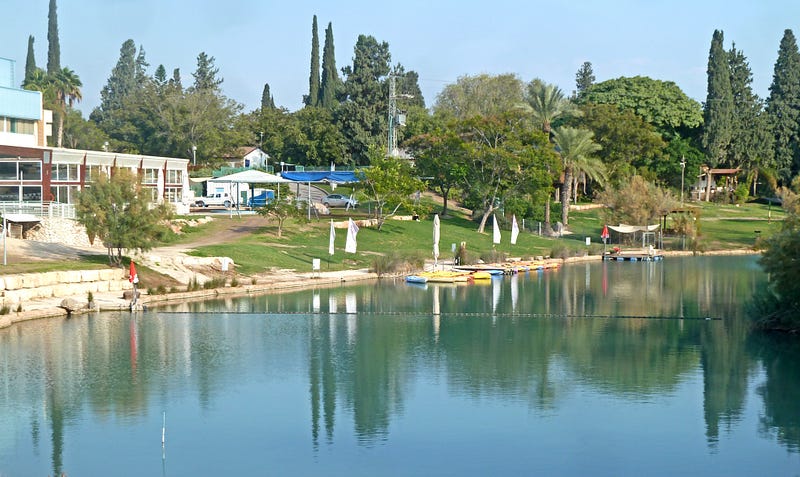
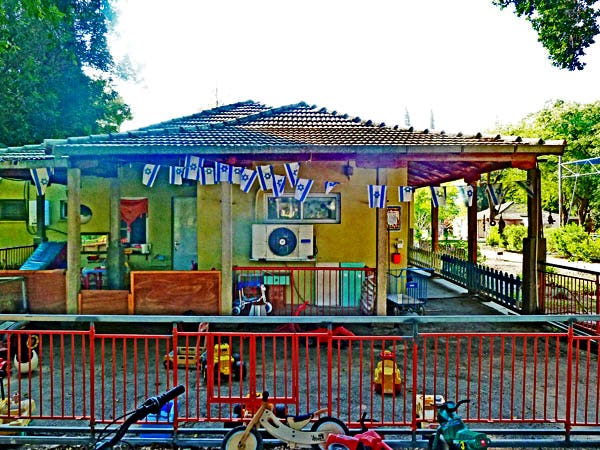
I used to think that visitors to the Kibbutz would sleep in the big dorms with the residents. But there are no big dorms… there is, however, very nice lodgings right on the site. There are more than 40 little cottages that are always booked up, providing even more income for the community.
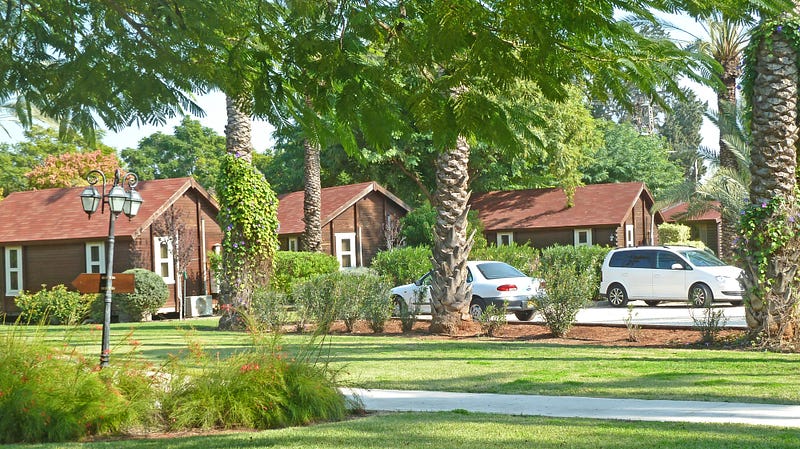
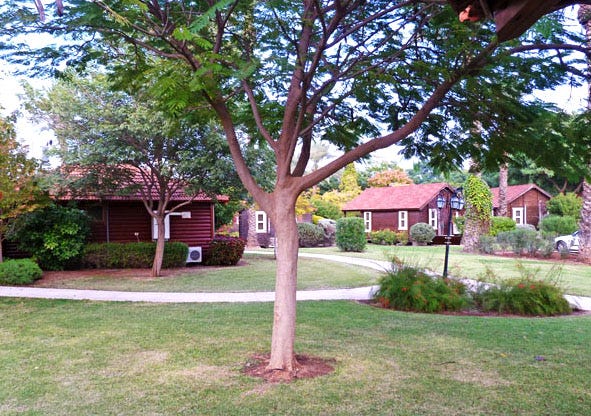
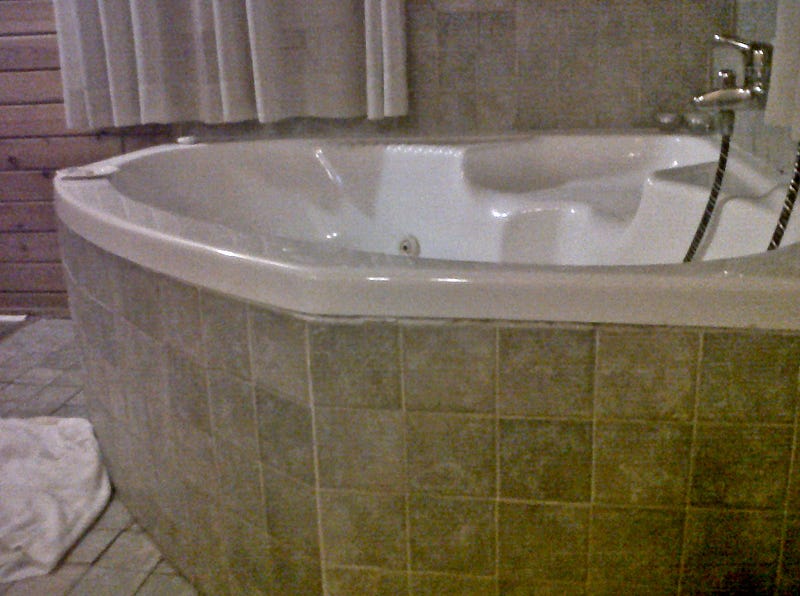
The cottages are quaint, stand-alone, cedar structures with high ceilings (some with a loft), a bedroom, a kitchen, sitting area, and best of all, many also have a jacuzzi-tub in the main room. But it was not cheap. 2 nights cost me 1100NIS or about $275USD in 2012.
If you have dreams of moving in though, that is almost impossible. There are about 200 homes on the Kibbutz and never any vacancies. Most of the people there have an east European background, their parents and grandparents arrived during and just after the Second World War. The homes are passed down through the generations. The only way you can hope to live there is if you have family ties.
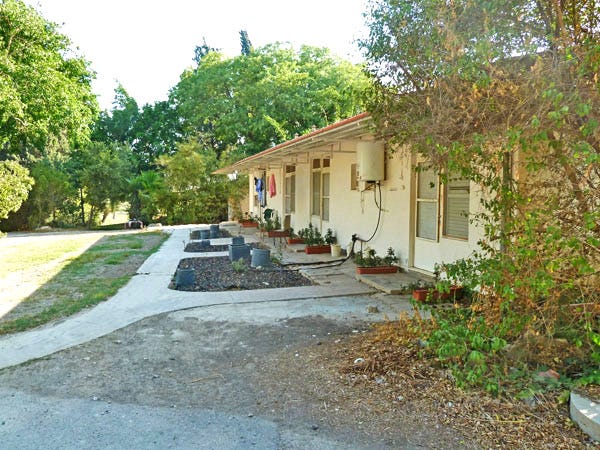
There is a very holistic approach to life on the Kibbutz. It is very calm and tranquil, with no loud parties to ever break the silence (although I was surprised to see a small bar had opened).
During one of my visits, I had been having some shoulder pain that was getting progressively worse. I booked a massage with a homeopathic rehab therapist who worked miracles on me and made me feel better than I had in weeks.
So the next day my friend, his son (who lives on the Kibbutz), and I decided to rent a Kayak for an hour. I was a little concerned about aggravating my injury but that didn’t seem to affect it until we got back to the place where we rented the kayak from.
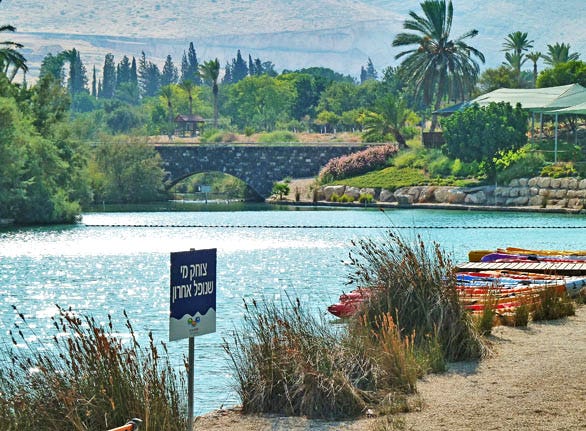
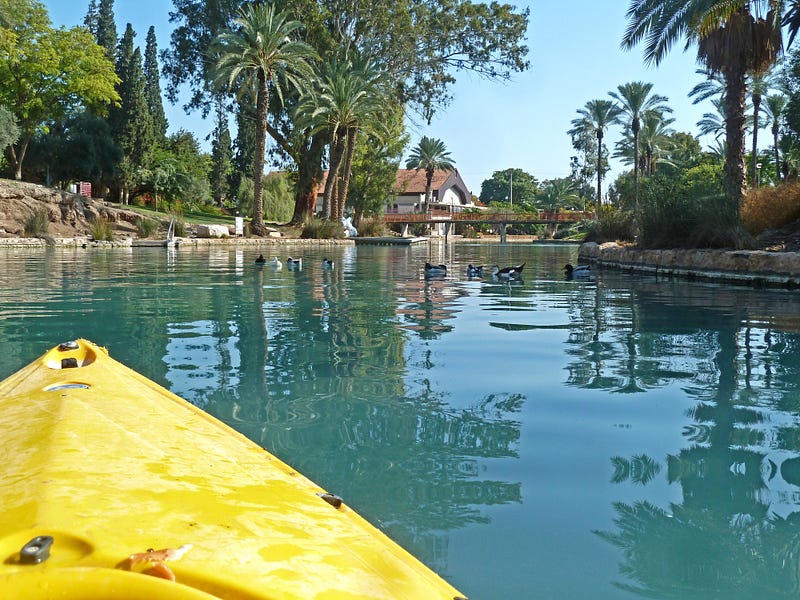
They had closed up and locked the gate, which basically gave us three options. We could try to reach them on the phone to come and open it back up for us, or we could wade into the river in waist-deep water to get around some razor wire that was protecting the boats or we could climb a 6-foot fence that had spikes on the top, to discourage just that.
Guess which one I tried?
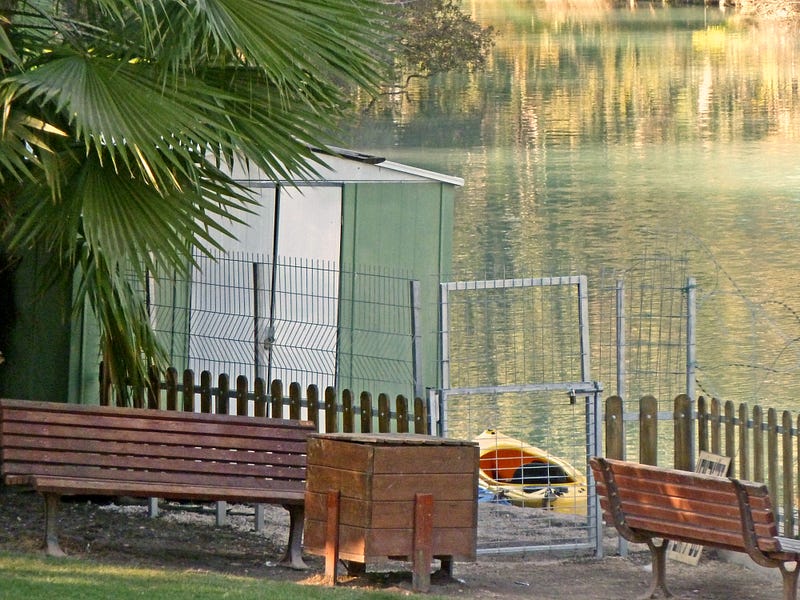
My friend and his son waded through the water and were fine. I decided to push my luck and climb the fence. It was no problem getting up, though it was tricky getting over the top without impaling myself on the razor wire. Once up there though, it was almost impossible to get my footing to jump clear of the fence and the nearby benches.
My friend backed up and I tried to climb onto his shoulders, but when he saw me slipping down toward the spikes he pushed me up in the air, I lost my handhold, flipped over the fence did a backward somersault, and landed hard. I wasn’t going to win any Olympic medals for it. Luckily I didn’t land on my bad shoulder, but the impact had jarred my entire body and now I was in excruciating pain, everywhere.
At first, I thought I had dislocated my shoulder but realized that I didn’t land on it. Still, my arm was shaking, my hand was getting cold and I couldn’t straighten my arm. I waded through the water and got back on shore and we made our way back to our cottage.
Over the next hour or so the pain began to ease but I still needed some kind of medical attention. I called the therapist I’d seen the previous day but he was with family and couldn’t get away so we called another homeopathic therapist who worked her magic. I couldn’t believe how much better I felt after one short visit. I spent the rest of the day relaxing in the Jacuzzi and left the Kibbutz feeling better than I had when I arrived.
I’ve now decided that a visit to Israel just wouldn’t be complete without a trip to a Kibbutz. It gives you a unique experience that you can’t find in any town or city. It also reminded me about what is important in life. Taking the time to stop to smell the flowers.
Now I get it. Now I understand why people who live on a Kibbutz never want to leave. I know I didn’t.
Thank you for reading. For more of my favorite travel destinations, you can check out my list of stories:


