
Nine MORE Old Personal Computers We All LOVED Back in The 1980s
Back when computing was exciting and fun
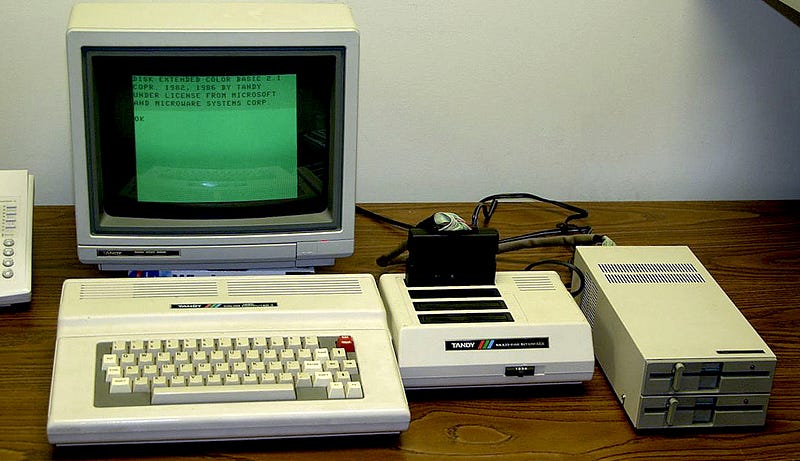

I tapped into the memory banks with my previous post, Nine Old Personal Computers We All LOVED Back in The 1980s.
Lots of commenters mentioned other venerable machines they recalled from those halcyon days. And my further research soon revealed that there were plenty to justify a follow-up post.
I remember those days for their excitement and innovation. By comparison with today’s rather bland and formulaic machines, computers in the 1980s were bold, fresh, creative enterprises.
They were also frequently unreliable and prone to breaking down!
But they were exciting times, filled with wonder and amazement (even if we had empty pockets much of the time).
So here are Nine MORE Personal Computers We All LOVED Back in The 1980s
1. Commodore Amiga
In the previous Medium story, we recounted how the Commodore 64 dominated the global home computing market. But as technology matured, the C64 looked old, dated and clunky.
In 1985, the Amiga solved those problems with a stroke. Its sleek OS could boot almost instantly. It rocked 256K of RAM to the C64’s mere 64K. It boasted a 256-colour display when most home computers, including the C64, couldn’t juggle more than 16.
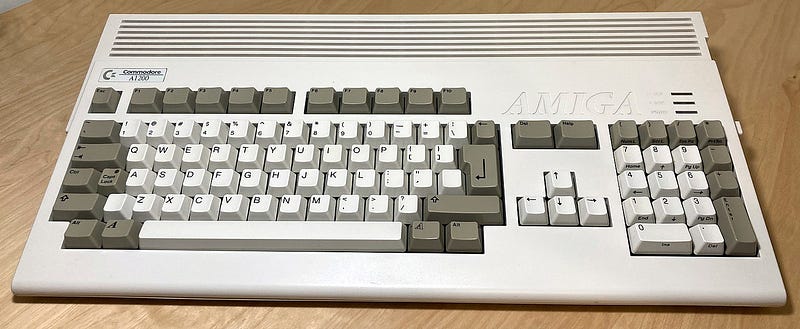
Of course, this “dream machine” didn’t come cheap. A fully kitted-out Amiga 1000 would set you back $1,790 in 1985 — but around 4.8 million units were sold.
Having established the Amiga, Commodore marketed it via two distinct paths — the lower-cost Amiga 500 as direct competition to the Atari ST, and the higher-spec Amiga 2000 focused on powerful sound, video, and business applications.
Poor marketing and slow technological advances resulted in the Amiga losing market share to the falling prices of IBM PC, whilst innovating console technology overshadowed its gaming prowess.
By 1994 it was all over for Commodore — but nerds still salivate over the Amiga today — there is a healthy community who swears by it even in 2022.
2. Osborne 1
Lauded as the world’s first portable computer, Osborne was released in April 1981 — memorably being described as the only computer which could “fit under an aircraft seat”!
Initially, it was a colossal hit, racking up sales of 11,000 units in 8 months — a phenomenal success for the machine projected to sell only 10,000 units in its lifetime.
Describing the Osborne as portable is relative. It weighed 24.5 lbs (11.1 kg), powered from a wall socket, as it has no onboard battery. It came with a tiny 5-inch screen — and critics lampooned it as “a perfect blend of a shrunken instrument panel of a DC-3 and a World War II radio.”
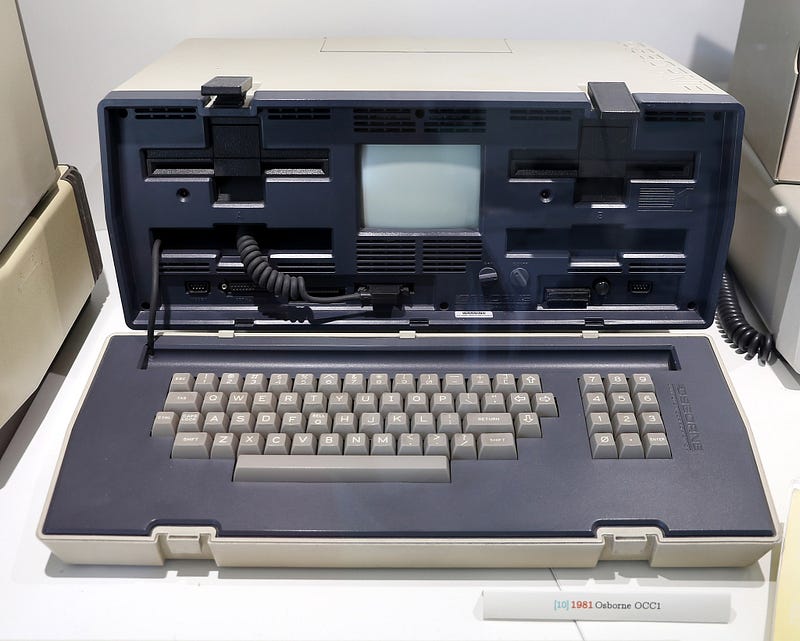
The Osborne started the trend of adding value through bundled software — the included word processing, spreadsheet, and other software alone were supposedly worth $1,500.
Poor marketing and management hampered the early growth of Osborne and the company soon made massive losses. Unsold inventory piled up, and despite dramatic price cuts, sales still did not recover.
Losses, already higher than expected, continued to mount. Osborne discontinued sales in 1983, and founder Adam Osborne declared bankruptcy in September of that same year.
3. Kaypro Model 2
They found Kaypro Corporation to compete with the popular Osborne 1. It produced a line of “luggable” CP/M-based computers sold with an extensive software bundle.
Some commentators mocked the design aesthetic of Kaypro — one mocked Kaypro as “producing computers packaged in tin cans”. It weighed in at 29 lbs, with twin floppy drives and a 9-inch screen.
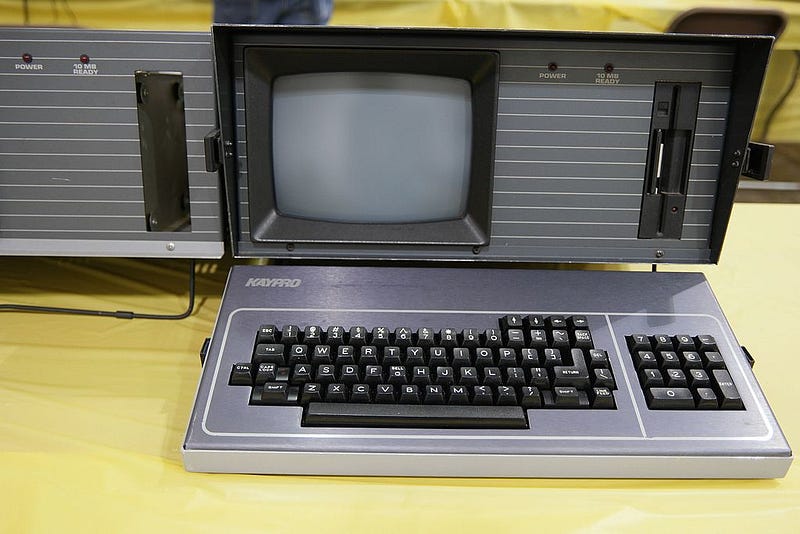
Many observers raved about the value offered by Kaypro, noting that the included software bundle of the $1000 machine had a retail value of over $1,595 and by mid-1983, the company was selling more than 10,000 units a month.
Once Kaypro established market superiority over Osborne, it suffered from a lack of expandability as compared to the emerging IBM models, meaning that it was perceived as a “hobbyist” machine.
Kaypro was exceptionally loyal to its original customer base — but slow to adapt to the changing computer market. It faded from the mainstream before the end of the decade and was eventually forced into bankruptcy in 1992.
4. Sinclair ZX-81
The Sinclair ZX-81 (badged as Timex Sinclair 1000 in the States) was how many of us entered the world of computing in the UK.
The ZX-81 sold for just $99 — the first home computer to be marketed at less than the magic $100 price point. The machine was not only cheap to buy — but felt cheap, with a membrane keyboard that was almost impossible to type on. The expansion port on the rear — which allowed memory expansion up to 16K was notoriously dodgy, often dropping off the connection point and losing data.
It shipped with 1K of memory, presenting a challenge to programmers. Remarkably, though, some rose to that challenge — a guy called David Horne produced a very serviceable Chess program with just 672 bytes of memory.
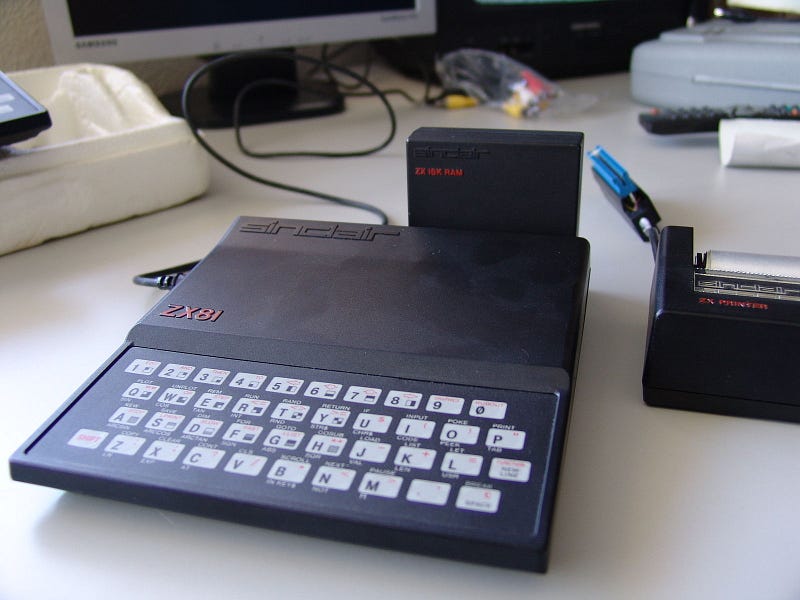
It’s easy to mock the ZX-81 — but it kick-started the era of home computing in the UK. You could go into WH Smith’s and buy one off the shelf for £69, take it home, plug it into your TV and enter the world of computing. For all its many limitations, the ZX-81 transformed computing from the realm of geeks into popular consumer appeal.
5. Memotech MTX
Memotech was a UK computer company founded by Geoff Boyd and Robert Branton in Witney, England.
When Sinclair released the ZX81 with its measly 1K of Memory, Boyd and Branson saw the potential for expansion RAM packs for the ZX81 and formed Memotech in Spring 1982 to exploit that opportunity.
When Sinclair brought out the 48K ZX Spectrum, the market for memory add-ons was going to shrink and Memotech refocused on their own machines — which would become the Memotech MTX series.
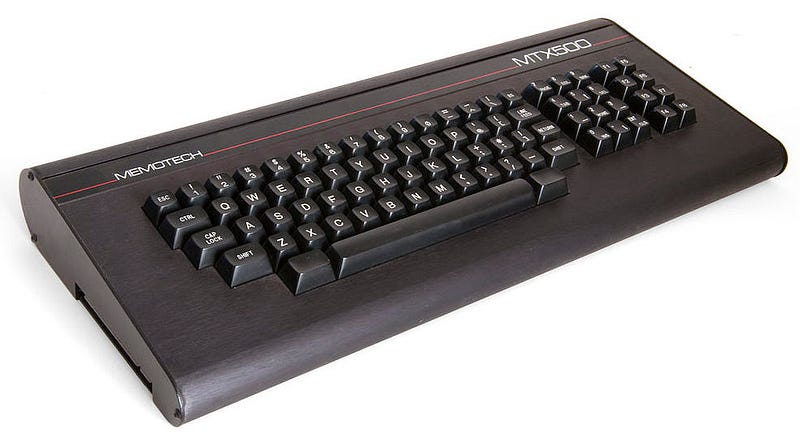
They pitched the MTX at the higher end of the market to compete more with the BBC Micro than the Sinclair Spectrum. It incorporated a high-quality Video Display Processor with dedicated video RAM, a multi-channel sound chip, a high-quality BASIC interpreter and a built-in Z80 assembler.
Unfortunately, by the time Memotech arrived, it was already too late — the market was close to saturation. By the end of that year, the MTX was effectively already doomed as a commercial product.
The last throw of the dice was an attempt to win a contract to sell many computers to the Russian school system. When this failed, Memotech Computers crashed into Administration in early 1986.
6. Commodore VIC-20
The VIC-20 was released in 1980 with the inexpensive MOS 6502 CPU and 5 kilobytes of RAM. The VIC graphics chip played colour video games, with graphics that arguably surpassed the Atari 2600, the reigning video game console in the States.
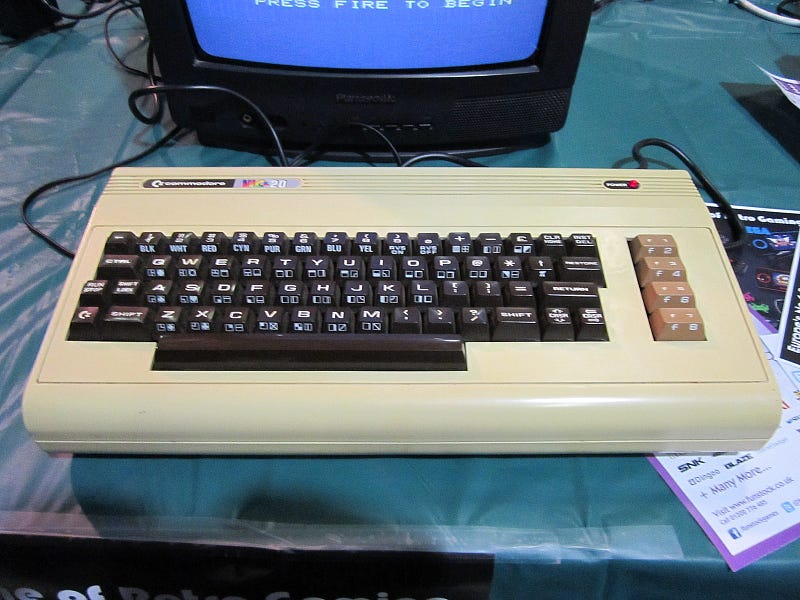
At the attractive price point of $299, it was an instant hit — and the VIC-20 was the first computer to sell a million units. By the end of its run in January 1985, it had sold 2.5 million units in total — phenomenal sales numbers at the time.
In industry terms, the VIC-20 set a template for its successor, the wildly popular Commodore 64, released in August 1982. That success would also prove to be the VIC-20’s undoing — and Commodore quietly pulled the plug on the VIC-20 in 1985.
7. Apple Lisa
Someone mentioned this machine in the comments of my previous post — due to its price point. The Lisa shipped in 1983 with a recommended retail price of… wait for it… $9,995. Yikes!
Unsurprisingly, the Apple Lisa was not a commercial success — only around 10,000 units were ever sold. However, it was lauded for its technological innovation. When it emerged in 1983, it was the first computer to feature a GUI (Graphical User Interface) and a mouse.
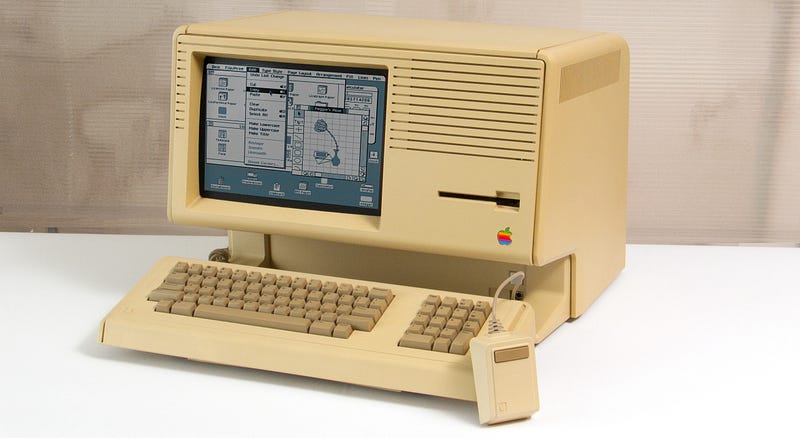
Officially, “Lisa” stood for “Local Integrated Software Architecture” — but it was also the name of Apple co-founder Steve Jobs’ daughter.
The Lisa Project suffered from personal conflict — in 1980 rivals forced Jobs off the team and the project fragmented without focused leadership and goals. Research and development costs of the Lisa spiralled to $50 million. Jobs then joined the rival Macintosh team.
The Lisa was too expensive, too complicated — and within a year — outflanked by the shiny new Mac.
Apple introduced newer Lisa models to address its shortcomings but, even after lowering the price, the platform failed to achieve sales compared to the much less expensive Mac.
The last model, the Lisa 2/10 became the Macintosh XL — the high-end model in the Macintosh series, and the Lisa brand name faded into history.
8. Oric Atmos
Oric was the brand name used by UK-based Tangerine Computer Systems for a series of 6502-based home computers sold primarily in Europe.
The initial model, introduced in 1982, was the Oric-1 — a direct competitor to the ZX Spectrum — which sold around 160,000 units in the UK, plus another 50,000 in France (where it was the year’s top-selling machine).
Oric developed an updated model in the 1984 Oric Atmos — the main upgrade was the excellent keyboard. They launched the Atmos with 16K and 64K models — albeit the 16K model was essentially obsolete upon launch and they sold hardly any.
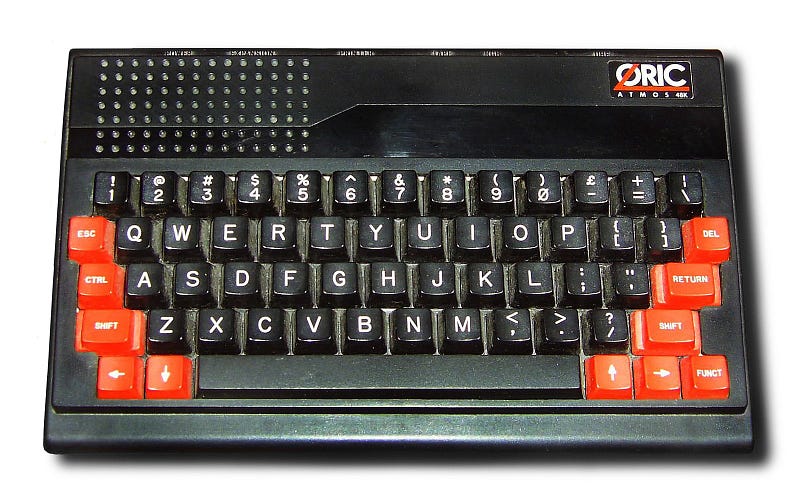
Whilst never quite able to compete with the Spectrum and C64 in the UK, the Atmos was phenomenally popular in France and across Europe.
Eureka, which produced the less successful Oric Telestrat (1986) bought the Oric brand. Oric closed down the year they released the Telestrat. They produced eastern European clones of Oric machines into the 1990s.
9. IBM PC5150
The IBM Personal Computer Model 5150 was the first microcomputer released in the IBM PC model line and the basis for the IBM PC compatible de facto standard.
Crucially — and by contrast to Apple machines — it was based on open architecture and third-party peripherals. Expansion cards and software boomed to support it.
The IBM PC debuted on August 12, 1981. Pricing started at $1,565 for a configuration with 16 KB RAM, CGA graphics, and no disk drives.
The reception was overwhelmingly positive and the IBM PC immediately became the talk of the entire computing industry. Dealers were overwhelmed with orders, including customers offering pre-payment for machines with no guaranteed delivery date.
Sales exceeded IBM’s expectations, and 40,000 shipped each month at one point. In 1983, they sold 750K machines. The company estimated that 70% of PCs sold went to the home.
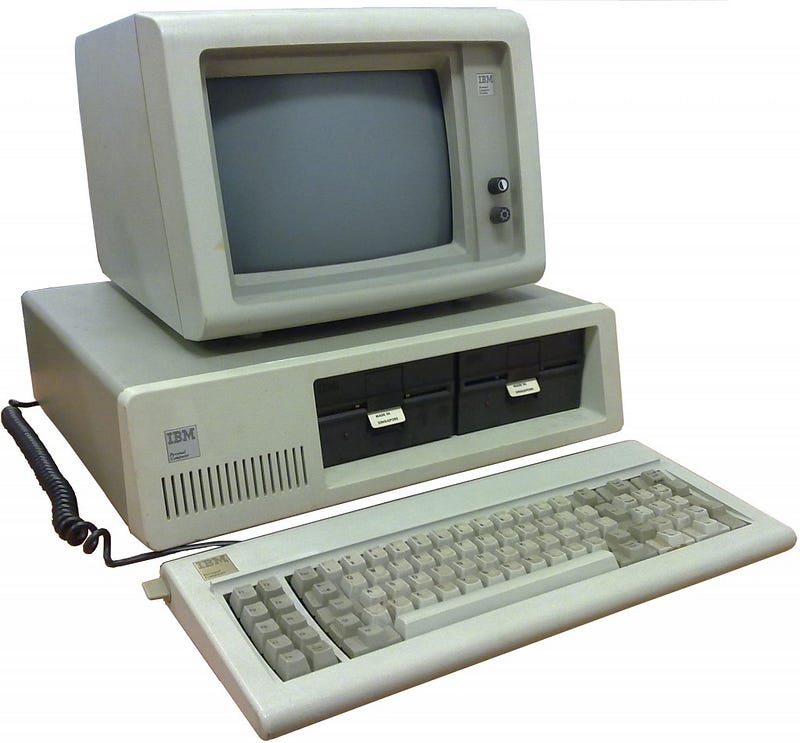
However, open architecture had its price. Almost as soon as the PC reached the market, rumours of clones began, and the first PC-compatible clone was released in June 1982, less than a year after the PC’s debut.
The PC had a substantial influence on the personal computer market. The specifications of the IBM PC became one of the most popular computer design standards in the world and most modern personal computers are distant descendants of the IBM PC.
So here’s our second (and final, I think) collection of Nine Old Personal Computers We All LOVED Back in The 1980s. Read this post in tandem with its predecessor.
Which of these machines found a place in your home? Do you STILL — even after all these years — have one of these beauties in your possession?
Here’s the latest story in my Internet Memory Lane series where I look at those amazing 80s and 90s computer games


