
Nietzsche’s “Will to Power”- Relevance in the 21st Century
Nietzsche’s concept of the “Will to Power” remains a provocative and influential idea in philosophy, even in the 21st century.
Developed by the renowned philosopher Friedrich Nietzsche, the Will to Power challenges traditional notions of values, morality, and human nature.
By viewing Nietzsche’s critiques of traditional values and morality, analyzing its potential application in contemporary society, and evaluating the benefits and dangers of embracing it, we can gain a deeper understanding of the lasting impact of Nietzsche’s philosophy.
Nietzsche’s “Will to Power”
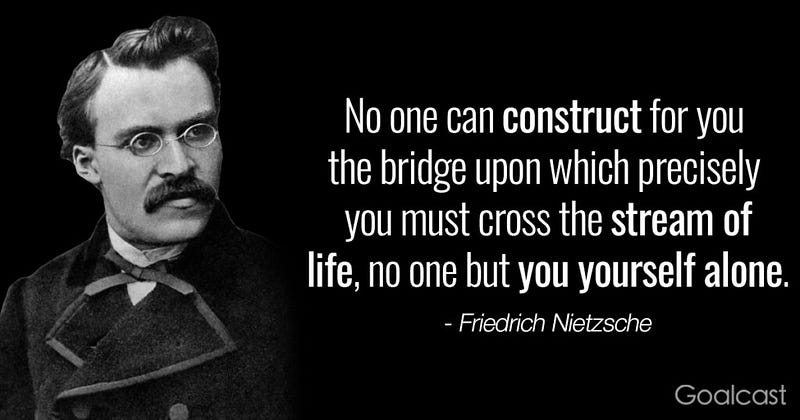
Friedrich Nietzsche
Friedrich Nietzsche, a German philosopher and cultural critic from the 19th century, is known for his radical ideas and distinctive worldview.
He questioned traditional values and morality, criticizing the religious and moral frameworks that he believed hindered human potential.
Nietzsche’s works, including “Thus Spoke Zarathustra” and “Beyond Good and Evil,” have had a profound influence on philosophy, psychology, and literature.
Nietzsche’s Philosophy
Nietzsche’s philosophy challenges conventional wisdom by emphasizing the individual’s pursuit of power and self-realization.
He believed that humanity’s true nature lies in the “Will to Power,” a concept that goes beyond physical strength and encompasses the drive for achievement, dominance, and self-assertion.
According to Nietzsche, this will is the fundamental force shaping human behavior and existence.
The Concept of Will to Power
The “Will to Power” is Nietzsche’s central concept, representing the driving force behind all human actions and endeavors.
It originates from his critique of traditional metaphysics and the belief in objective truths.
For Nietzsche, there is no objective reality; instead, reality is a product of individual interpretations and perspectives seeking to exert power over their surroundings.
Key Elements and Components of Will to Power

The Will to Power consists of various key elements and components.
It encompasses the desire for self-overcoming, the pursuit of personal excellence, the expression of one’s authentic self, and the quest for creative endeavors.
Nietzsche argued that embracing the Will to Power is essential for personal growth, authenticity, and the development of one’s unique potential.
Nietzsche’s Critique of Traditional Values and Morality
Analysis of Nietzsche’s Critique of Traditional Values
Nietzsche profoundly criticized traditional values, considering them as oppressive and inhibiting individual flourishing.
He believed that societal norms and moral systems imposed by religious institutions suppress the true desires and potential of individuals.
Nietzsche called for a reevaluation and rejection of these values, encouraging individuals to embrace their own desires and define their own values.
Examination of Nietzsche’s Critique of Traditional Morality
Nietzsche rejected traditional morality, arguing that it stems from a slave mentality.
He believed that morality, as it has been traditionally understood, is built on the resentment of the weak against the strong.
Nietzsche challenged the idea of good and evil, suggesting that moral judgments are subjective and vary depending on the perspective of the individuals making them.
Will to Power in the 21st Century
Exploring the Potential Relevance of Will to Power in Modern Society
In the 21st century, Nietzsche’s concept of the Will to Power remains relevant. It can be seen as a call to embrace one’s personal power and pursue individual flourishing.
In an age where conformity and societal pressures can stifle personal growth, the idea of exerting power over one’s circumstances and defining one’s own values is empowering.
Examples of Will to Power in Contemporary Politics, Economics, and Culture
The Will to Power can be observed in various aspects of modern society.
In politics, individuals and groups vie for power, seeking to assert their influence and shape policy agendas.
Economically, competition drives individuals to achieve success and dominate markets.
In culture, artists and creators strive to express their unique perspectives and leave a lasting impact on society.
These examples illustrate the continued relevance and manifestation of Nietzsche’s concept in the 21st century.
The Potential Benefits and Dangers of Embracing Will to Power

Examining the Advantages of Embracing Will to Power
When it comes to Nietzsche’s concept of the “Will to Power,” there are potential benefits to embracing this idea in the 21st century.
One advantage lies in the possibility of cultivating personal strength and resilience.
By understanding that individuals have the innate drive to exert their power and assert their existence, they can tap into their inner potential to overcome challenges and achieve their goals.
Additionally, embracing the Will to Power can encourage individuals to take responsibility for their own lives.
By recognizing their capacity to shape their own destinies, people can become more proactive in pursuing their passions and creating meaningful lives for themselves.
This mindset empowers individuals to seize opportunities and make decisive choices, leading to personal growth and fulfillment.
Analyzing the Ethical and Social Implications of Embracing Will to Power
While the Will to Power has its potential advantages, it is important to critically analyze its ethical and social implications.
Embracing this concept should not be interpreted as an endorsement of ruthless competition or the pursuit of power at the expense of others.
Nietzsche’s idea focuses on the individual’s internal drive rather than external domination.
However, there is a risk that the Will to Power can be misinterpreted or distorted, leading to negative consequences.
If individuals prioritize their thirst for power without considering ethical boundaries or the impact on others, it can lead to exploitation and harm.
Therefore, a balance must be struck between self-empowerment and ethical responsibility to ensure that the Will to Power is used for personal growth without disregarding the well-being of others.
Exploration of Nietzsche’s Influence on Modern Philosophy and Psychology

Overview of Nietzsche’s Impact on Philosophy
Nietzsche’s ideas have had a significant impact on modern philosophy. His critique of traditional morality and the concept of “slave morality” challenged long-held beliefs and opened the door for new ways of thinking.
Nietzsche’s emphasis on individuality and authenticity inspired existentialist philosophers and influenced philosophical movements such as postmodernism.
Furthermore, Nietzsche’s concept of the Will to Power introduced a novel perspective on human nature and motivation.
This idea sparked discussions on power dynamics, self-actualization, and the pursuit of personal excellence.
Many philosophers continue to engage with Nietzsche’s work, finding inspiration in his critiques of societal norms and his exploration of the human condition.
Examination of Nietzsche’s Influence on Psychological Theories
Nietzsche’s influence extends beyond philosophy and reaches into the realm of psychology.
His ideas on the human psyche, self-overcoming, and the pursuit of power have resonated with psychologists and influenced various psychological theories.
For instance, Nietzsche’s emphasis on the individual’s will to overcome challenges aligns with the concept of self-efficacy in cognitive psychology.
The idea that individuals can develop their own strength and resilience to achieve success echoes Nietzsche’s notion of self-mastery.
Moreover, Nietzsche’s exploration of the unconscious and the role of instincts has informed the work of psychologists such as Sigmund Freud and Carl Jung.
His ideas on the interplay between power, desire, and unconscious drives have contributed to our understanding of human motivation and behavior.
Criticisms and Controversies surrounding Nietzsche’s Will to Power

Critiques of Nietzsche’s Concept of Will to Power
While Nietzsche’s Will to Power has garnered considerable attention and admiration, it has also faced criticisms.
One critique is the lack of a clear definition and the ambiguity surrounding the concept.
Due to its abstract nature, the Will to Power can be susceptible to various interpretations, leading to misunderstandings and misrepresentations of Nietzsche’s original intent.
Another criticism centers around the potential for Nietzsche’s Will to Power to promote a dangerous individualism that neglects the importance of communal values and shared responsibility.
Critics argue that an excessive focus on personal power may undermine social cohesion and cooperation, ultimately leading to a fractured society.
Controversial Interpretations and Misunderstandings of Will to Power
Like many philosophical ideas, Nietzsche’s Will to Power has been subject to controversial interpretations and misunderstandings.
Some have misinterpreted the concept as a justification for oppressive behavior or an excuse for unethical actions.
It is crucial to distinguish between Nietzsche’s emphasis on personal empowerment and the misguided interpretation that condones manipulation or exploitation of others.
Moreover, the association of Nietzsche’s work with Nazi ideology during the 20th century has further contributed to the controversies surrounding his Will to Power.
While Nietzsche himself strongly opposed anti-Semitism and nationalism, his ideas were appropriated and distorted by the Nazis to support their oppressive agenda.
It is essential to separate Nietzsche’s original intentions from the misrepresentations that emerged during this dark period.
Evaluating the Relevance of Will to Power in the 21st Century

Nietzsche’s concept of the Will to Power continues to be relevant in the 21st century, offering valuable insights into human nature, personal empowerment, and the complexities of social dynamics.
Embracing the Will to Power can inspire individuals to recognize their own potential, take responsibility for their lives, and pursue self-actualization.
However, care must be taken to avoid misinterpretations and misunderstandings of this concept. It should not be seen as a justification for unethical behavior or a disregard for the well-being of others.
Nietzsche’s concept calls for a balanced approach that combines personal growth with ethical responsibility.
By critically engaging with Nietzsche’s ideas and acknowledging their potential benefits and dangers, we can appreciate the enduring relevance of the Will to Power and its contributions to both philosophy and psychology in the 21st century.
Evaluating the Relevance of Will to Power in the 21st Century
Nietzsche’s concept of the “Will to Power” continues to hold relevance in the 21st century, challenging conventional wisdom and offering a unique perspective on human nature and values.
While it sparks debates and controversies, the Will to Power invites us to critically examine our society, politics, and culture.
By understanding its components and implications, we can navigate the potential benefits and dangers of embracing this philosophy.
As Nietzsche’s influence persists in modern philosophy and psychology, it is essential to engage with his ideas and evaluate their relevance in shaping our understanding of the world and our place within it.
Whether embraced or critiqued, the Will to Power reminds us to question and explore the fundamental aspects of human existence in our ever-evolving society.
“I appreciate your presence here. Thanks for reading. Interested in more? Feel free to explore my profile for additional content and subscribe to receive my articles as soon as they’re published.”