
LIVING IN FRANCE
Nietzche Wrote That Great Thoughts Are Conceived While Walking. Languedoc’s Roaring Winds Might Have Changed His Mind
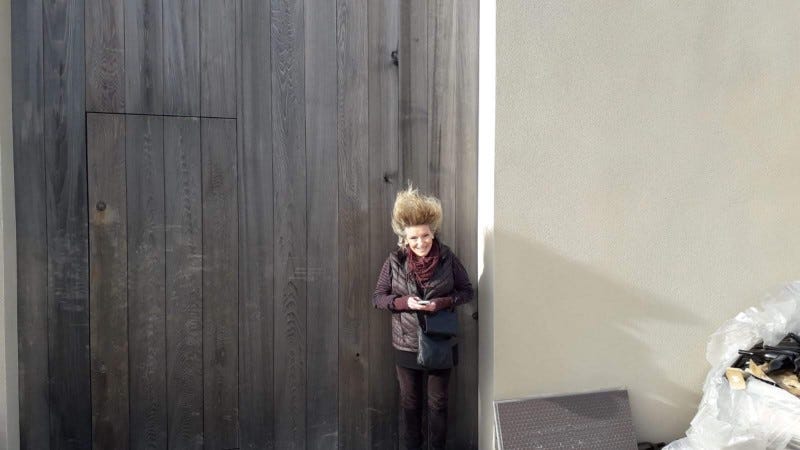
In gale-force winds, my thoughts fall short of greatness. They’re more along the lines of headlines that read, ‘Tree trunk falls on woman’s head, kills her instantly.’
Or, as I struggle to remain upright while watching a flying object picking up momentum as it hurls ever closer, I might wonder why the hell I ventured out.
Languedoc is the windiest region of France. It is also the hottest.
Did I know these things before I arrived?
Of course not — and please don’t ask how much research I did before I left: none — which is unfortunate for me because extreme heat and extreme wind top my list of weather conditions that I most dislike.
I hated the Santa Anas when I lived in California. . . they’re the hot dry winds that blow in from the desert and inspired Raymond Chandler to write that‘ ‘every booze party ends in a fight. Meek little wives feel the edge of the carving knife and study their husband’s necks.’
I know that feeling.
But at least California only has one wind.
Languedoc, The Land of Wind, has five. All blowing from different directions and, I suspect, conspiring to see which one can cause me the most misery.
Come on guys, the chestnut trees are full of blossoms and the mimosa is loaded with pollen. You know what it does to her allergies. Let’s all blow as hard as we can and cover her with it. Get plenty in her hair, up her nose, don’t forget her eyes. Haha, look. She’s sneezing. And check out that hair.
Provence, Languedoc’s ritzy neighbour, also has a wind — the Mistral, which, of course, is more famous. More genteel too, a stiff but pleasant breeze beautifully scented with lavender.
One of Languedoc’s tough guy winds, a blowhard that swaggers in from the Sahara, can supposedly blast the paint off cars.
But even if Nietzche never experienced the windy brutes we have here, I do agree with him about the creative benefits of walking — and other writerly types felt the same. Wordsworth, who, lonely as a cloud, clocked thousands of miles, tramping over vales and hills probably walked and contemplated what would rhyme with daffodils.
Thoreau also had thoughts on the subject.
“How vain it is to sit down to write when you have not stood up to live! Methinks that the moment my legs begin to move, my thoughts begin to flow.”
Exactly.
I’ve demonstrated it myself. However much I want to believe that schlepping around the apartment searching for my missing glasses might count as exercise, it doesn’t. Nor does it get that creative juices flowing like a walk out into the vineyards.
I start walking, try to clear my mind, then wait for an idea. Or, sometimes I’ll work out a writing problem I haven’t managed to solve sitting at the desk. And because the ideas often seem so brilliant (walking can induce delusions) I often stop and make notes on my phone so that I don’t forget when I’m back at the desk.
And, because I also believe in the health benefits of walking, I’ve bundled up in layers when the temperatures fall, dragged myself out in the pouring rain which, admittedly, doesn’t happen a lot in these parts and braved the storms.
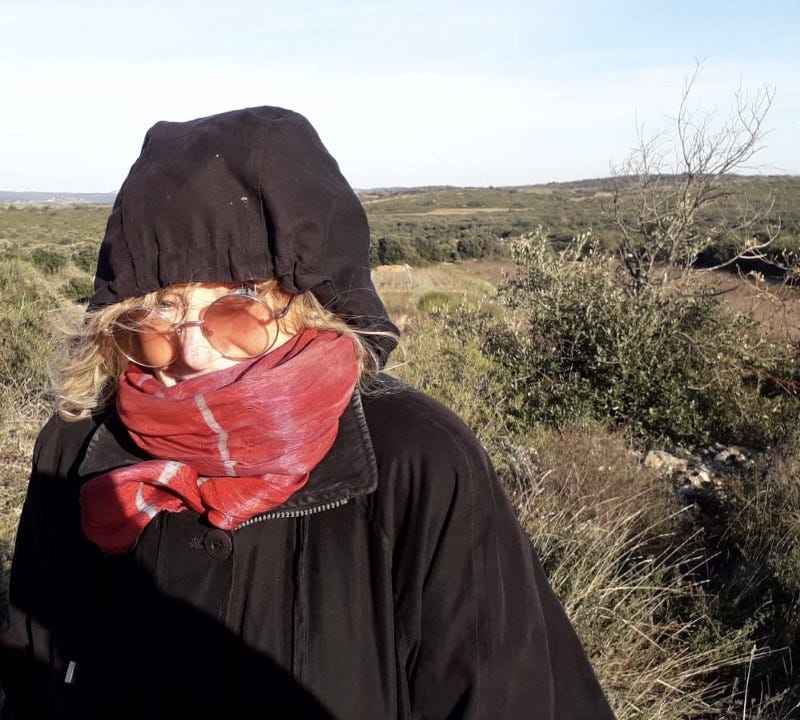
And, to avoid my other least favourite weather condition — intense summer heat — assuming I’m sufficiently motivated, I set out before sunrise or late in the evening.
Trooper that I am, I say bring it on — cold, rain, heat.
Just not the winds.
Sometimes they’re forecast, other times they just, pun intended, blow in like unwelcome guests.
Intending to walk the next day, I set the alarm, organise my clothes and shoes so that I won’t stumble around the apartment, still half asleep, trying to locate the left one which might be lurking under the couch or wherever else I’ve pulled it off.
All ready to go.
And then, in the wee hours, long before the alarm, I awaken to howling, gusting winds — a sound somewhere between an express train roaring down the track and a violent storm at sea.
I turn off the alarm. The winds often blow for days. Any great thoughts will have to be conceived at my desk.
But, on the bright side, the wind is good for winemakers — dries out mould — and windsurfers who flock to the windiest area along the coast between Narbonne and the Spanish border like it too.
And while the winds might temporarily prevent me from following Nietzche’s advice, my dislike of them puts me in the company of a couple of other creative types.
Georges Brassens, an iconic French singer, who came from the nearby town of Sete, wasn’t a big fan of gusty conditions.
“Me rendra fou.” They make me crazy.
I think the song was from a Victor Hugo poem. Apparently, they drove Hugo crazy too.
If you’d like to read other stories about my life in France, plus thousands of other stories by Medium writers, please consider subscribing.
Part of your subscription will help me and many others who write on Medium. Thanks!
Just hit the link: https://janicemacdonald.medium.com/membership
Merci, bien


