
NFT Another Surprise of the Century
Hello, we will explore what are NFTs and their impact on global business.
The way we value things is changing due to technology. The following image is from Nyan Cat which was a viral meme back in 2011. In 2021 the original GIF was sold at an online auction for 300 ETH, the cryptocurrency that powers the Ethereum network. That was equivalent to nearly $600000 at the time. You might be wondering how could the original copy be sold when it was circulating the internet.
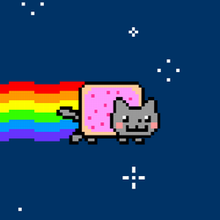

It was sold as a None Fungible Token (NFT) which acts as a digital certificate of authenticity. The size of the NFT market climbed hugely from about $40 million in 2018 to $380 million in 2020. Many people are skeptical regarding the assigned value, especially since NFTs can be seen only on the internet.
To understand the inner workings of NFT we have to understand the meaning of fungibility. It refers to the ability of an asset to be exchanged or substituted by similar assets of the same value. A good example is when you replace ten one-dollar bills with one ten-dollar bill to save space in your wallet, in this case, the value of your money remains the same disregarding the form it takes. That is not the case for NFTs, each of them is unique and cannot be substituted with something similar.
The idea behind NFTs is that the buyer has a unique digital signature in the way that a great work of art might bear the signature of its artist so when someone looks at the original one realizes it is authentic and the real one.
NFTs have their digital signature through blockchain where the information is recorded. NFTs are actually cryptocurrencies but unlike fungible cryptocurrencies like Bitcoin, they are unique. They are stored as a string of numbers and letters on a blockchain ledger with information that shows who owns the digital asset, who sold it and when it was sold. The data is encrypted to ensure the authenticity of the digital asset. Scarcity and uniqueness help drive up the prices.
A more straightforward explanation of NFT is that they are digital assets stored and encrypted using the software used for cryptocurrencies. They are bought and sold online using cryptocurrencies.
The following link has a good explanation of blockchain and ledger:
One of the early applications of creating this concept was the digital collectible game CryptoKitties which emerged in 2017. Users were able to buy, trade, and breed digital cat collectibles. Each new cat was an NFT which certified its originality and ownership. Since then the idea has been applied to video games, digital art, and sports memorabilia. An example is NBA Top Shots which allows users to procure a collection of digital basketball highlights like a video clip of a posterizing dunk. By mid-March, NBA Top Shot had achieved $338 million in sales since going live in October 2020.
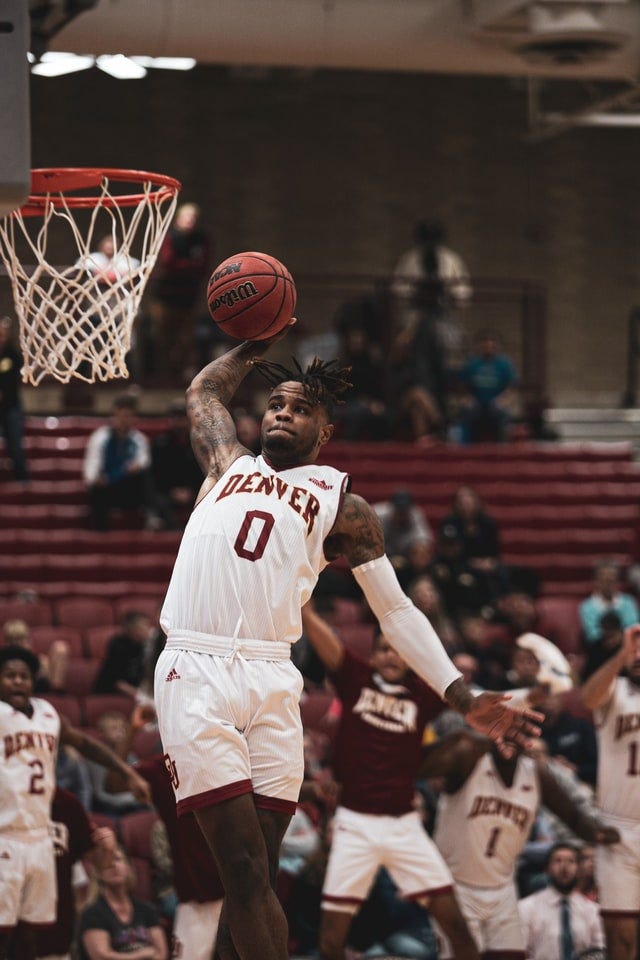
The link to NBA NFTs: https://nbatopshot.com/
Technically anything digital can be sold as an NFT. To make an NFT a digital file (a GIF, an MP4) must go through a computational process called minting in which the file gets registered on the blockchain.
To store an NFT you must have a crypto wallet. An authenticated display of an NFT happens in the virtual world of CryptoVoxels which is powered by the blockchain. The connection between the owner’s crypto wallet and CryptoVoxels is made possible by IPFS (InterPlanetary File System) protocol. This is their website:
NFTs are making their way into the mainstream of the art world as well. Christie’s Auction house opened bidding for its first purely digital art NFT and bids skyrocketed into millions of dollars. Some popular online marketplaces for NFTs are OpenSea, SuperRare, Nifty Gateway, NBA Top Shot, and Sorare.
Unlike Bitcoin, you can do more complex things with NFTs such as setting terms within it. For example, the original creator can get some amount for each resale. You can have an NFT which itself mints other NFTs, so regrading its potential only the surface has been scratched.
One of the issues with NFTs is that not all of them verify that the seller is actually the original creator, which is problematic in online marketplaces. Another issue is that even though a buyer owns the original NFT but can not stop others from changing and sharing it online. There have been many scams due to these issues and as a result, critics point out this might be a digital bubble.
Thanks for reading. Wish everyone a smile. You can press the like bottom and follow, I write about technology and business.