
NFT 101: The Reality of NFT Utility
Putting NFTs is perspective for collectors and those new to the crypto space.
Lack of understanding: What can an NFT REALLY do?
There is no shortage of internet articles, news reports, blog posts, and videos describing what an NFT is and how to create one. However, within all these sources there are many realities that go unmentioned. It is amusing to hear financial and technology experts miss the mark when tasked to describe what an NFT is and what it can do.
It seems to be easier to talk about the popular topics on good news like “NFT Sells for $5.4 M”, temporary market drops like“Jack Dorsey’s $2.9 M. NFT Dropped 99 Percent in Value”, and scams like “Investors lose $20.7 million in Bored Bunny NFT”.
Popular belief: NFTs are Digital Art
The reality behind what Non-Fungible Tokens are often gets obscured by flawed definitions and mass media. Popular definition continually creating the perception of art being at the heart of it all.
Due to the perception of relative newness of the NFT and crypto world, most people have only been exposed to the topic through word of mouth or third parties on the internet. All sources pointing at NFTs to describe them as digital art. This is usually followed by either strong skepticism or an urge to join the gold rush.
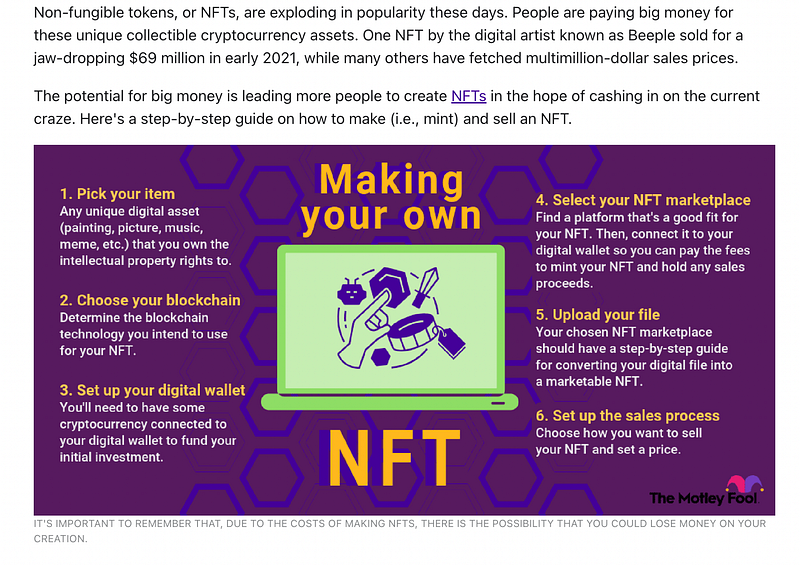
In NFT Marketplaces like OpenSea and Rarible, you will find a wide range of NFTs. Ranging from uploaded images from someone’s cell phone to legitimate professional teams offering utility and true value. The problem is that without consumer education, it is extremely hard to identify fad from fraud, and fraud from value.
Reality: Art is just the beginning
Many NFTs are in fact collectible in the sense that each token is part of a “collection” unless created as a 1-of-1 piece. Moving forward, I will use the Ethereum Blockchain to expand on some NFT and blockchain terms.
An NFT can be set to have utility which can make it way more powerful than is offered by the concept of mere collectability. The fact that an NFT can be represented by a cool looking drawing, 2D or 3D graphics, or an endless looping MP4 video mean nothing. These are really just physical features that have absolutely nothing to do with the possible utility that can be added to an NFT token.
In the simplest way to explain what an NFT is, my “go-to” definition to illustrate my point quickly is that of a digital receipt or invoice. An NFT is a cryptographic token that is unique and lives inside an unchangeable blockchain. What you do upon owning the NFT is only limited by the imagination of its creator. If it’s just art, then you’ve reached a dead end.
Fact: Anyone Can Create an NFT
Today, there are many platforms that allow for anyone to upload an image or video file, fill out information about the file, and pay. With a couple of clicks, a new NFT is now created and ready for sale. Now a long string of questions emerges.
What blockchain was this NFT created on?
With the boom of cryptocurrencies and independent blockchains, separate networks are being created to act as foundations to hold digital assets. These digital assets include meme coins, cryptocurrencies, and tokens such as NFTs. Repeating the history of the dot com bubble, it is very safe to foresee that not all will make it (sorry WAGMI Army, it needs to be said).
Is this a one of one NFT or is it a project?
In the case of Ethereum NFTs this question depends on the protocol used to create the NFT. ERC stands for Ethereum Request for Comments, which is how developers of the Ethereum Blockchain propose changes into the code utilized to create cryptographic tokens.
Is it really non-fungible?
An ERC-721 NFT token is unique and truly non-fungible. Even two visually identical ERC-721 tokens have ONE characteristic that makes them unique, that is their token identification number inside the smart contract in which they were created. Similar to identical twins from the United Sates, the two identical NFTs have a unique social security number. So even if they had the same name, there is an unchangeable characteristic that makes each one unique.
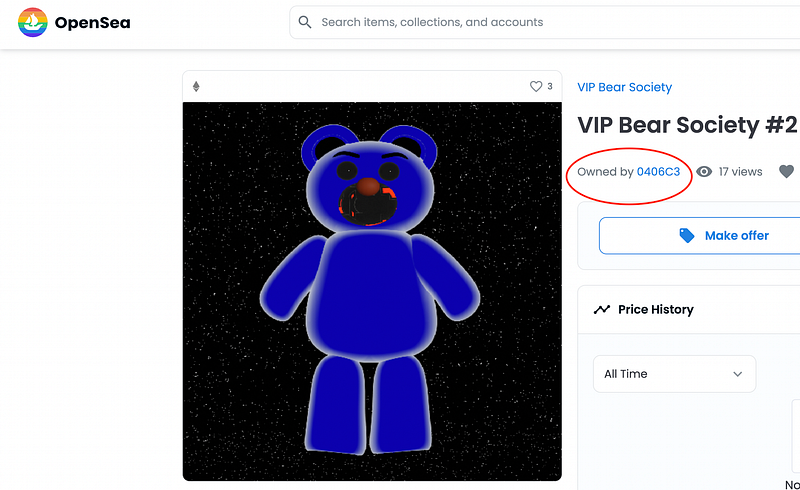
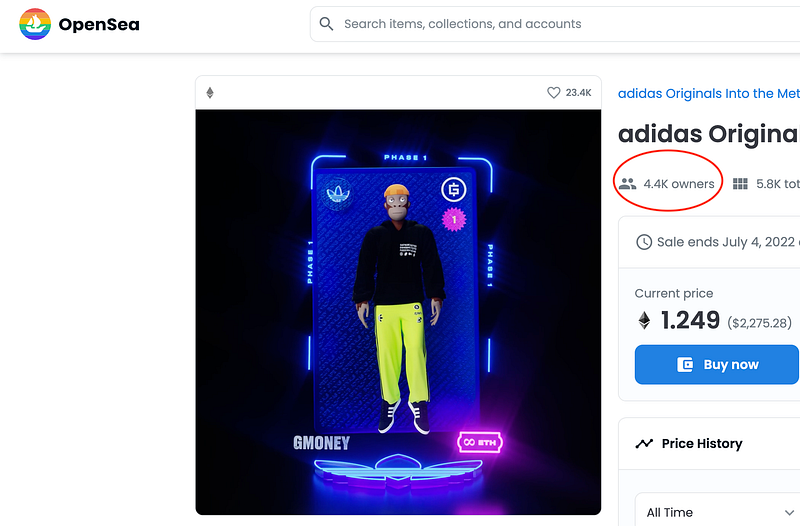
An ERC-1155 token has a sense of uniqueness in the fact that it represents only one version of a token but all the NFTs are the same from a visual perspective. Furthermore, NFT collections that are created using the ERC-1155 standard can grow if their creator decides to add more tokens in the future.
The ERC-1155 can best be explained in the sense of video game items or cars. For example, cars in the real world (assuming no aftermarket mods) are created equally and are only differentiated by looking into their serial number or VIN.
Who is behind this project or sole NFT?
An NFT project that is meant to deliver value to token holders requires a vision. Unfortunately, many projects can publish false statements that make them seem legitimate and responsible. Here is where a “doxxed team” comes into play.
Due to the original nature of freedom, decentralization, and anonymity that surrounds the crypto space, many creators and development teams choose to remain anonymous. Those who are willing to publish their identities are referred to as being doxxed.
A doxxed team does not guarantee that the project is to be successful or well operated but does provide a layer of authenticity that lacks in an anonymously ran project. On the opposite spectrum, it is unfair to not credit NFT teams that remain anonymous and do provide value to their community.
Are there plans for sustainability?
The vision of the person or team behind an NFT project will largely have an impact on its future, sustainability, and longevity. For example, a project that offers to return ETH to all its holder by monthly or quarterly airdrop dividends must have the means to earn more ETH outside of just by selling more NFTs. For this reason, reading projects’ lite papers and white papers is critical.
Who wrote the smart contract?
Don’t worry if you are not familiar with the term smart contract. All you need to know is that every NFT is built on source code. This source code is what gives it a purpose, if used correctly, and the reason why a screenshot of an NFT is not the same as ownership of an NFT.
A smart contract describes an NFT token identification number within the blockchain. The smart contract also controls whose digital wallet owns the NFT upon creation, how much its initial cost is, and how sales royalties get divided upon retail.
There are many other functions, but this is only a basic overview. Do know that smart contract hacks are one reason why crypto is lost to hackers if they exploit flaws in the code.
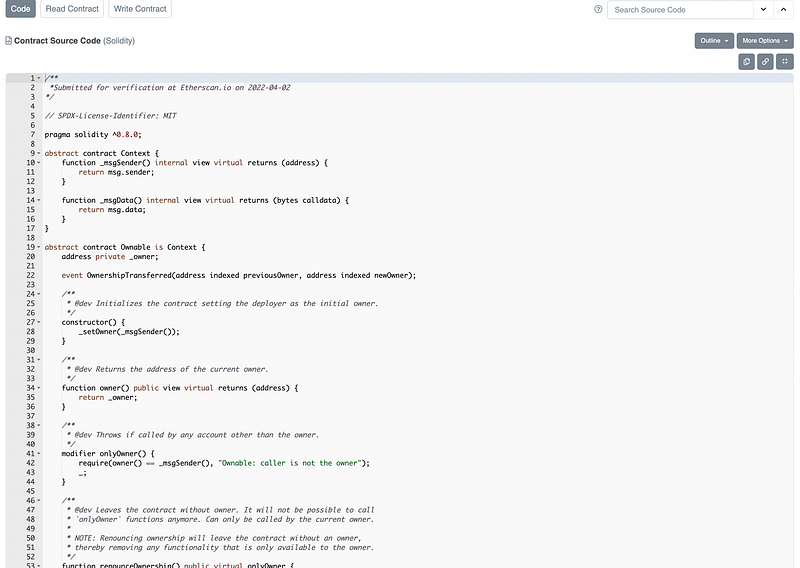
In the case of automated NFT upload platforms like OpenSea and Rarity, the smart contract is transparent to the “no-code NFT creator”. Therefore, the true ownership of the NFT or NFT Collection is not controlled by the creator. Nor are the abilities to ensure the smart contract is secure.
Conclusion
An NFT can be the most powerful and reusable receipt of purchase. The true possibilities of what an NFT can do are only limited by the imagination and technical capabilities of the team behind it.
Although the metaverse is the buzz term that often accompanies the term NFT in conversations, there are applications in the physical world for NFTs that go unnoticed.
Those real world applications are what creators must focus on since we still have time before the various disconnected “Metaverses” actually become one, just like the world wide web of separate networks became the Internet.
I will write a creator’s perspective following this article. I hope you enjoyed this overview on NFTs and that it provided a better understanding on some concepts related to this cryptographic technology. Feel free to comment on your point of view, share your personal experience, and ask any questions.
I hope you enjoyed reading this and that you’ll support me and other writers on Medium. It’s just $5 a month ($50 per year) and you get unlimited access to all the amazing articles by the best writers on Medium. Click this link, to become a member of my Medium family and get unlimited access to Medium.
Medium’s the biggest information bargain on the net.
Of course, I also want to thank my followers and referred members. You make writing so much more fun, and I appreciate every single one of you, and your comments and emails.
I also hope you’ll signup to get an email whenever I post a new story. Just click this link to be notified of new stories.