The Massive Comet With A 5 Hundred Thousand Mile Long Tail Speeds Toward Earth For A July 14th Flyby As NASA And The Space Science Community Watch In Awe
This thing’s HUGE!!! It’s already visible if you’ve got a telescope. And It’s speeding into the inner part of the solar system at over 2 million kilometers an hour.
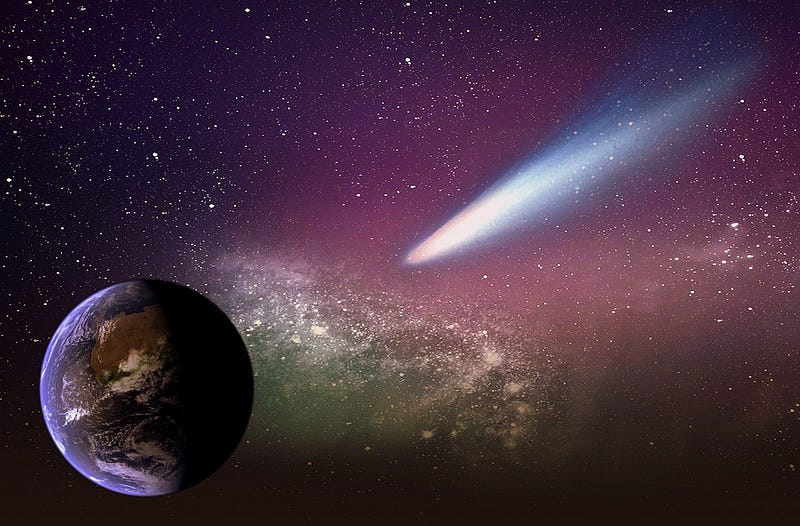
Update On Comet K2
One of the largest comets known to man is approaching our world. And, if you are lucky enough, you might be able to find it from your backyard. It’ll require a telescope, but based on the sure size of the comet and its incredibly long tail, it shouldn’t be hard to spot.
Comet C/2017 K2, or just K2, will make its closest approach to Earth on July 14th, just 5 days from now. So, how can you watch K2?
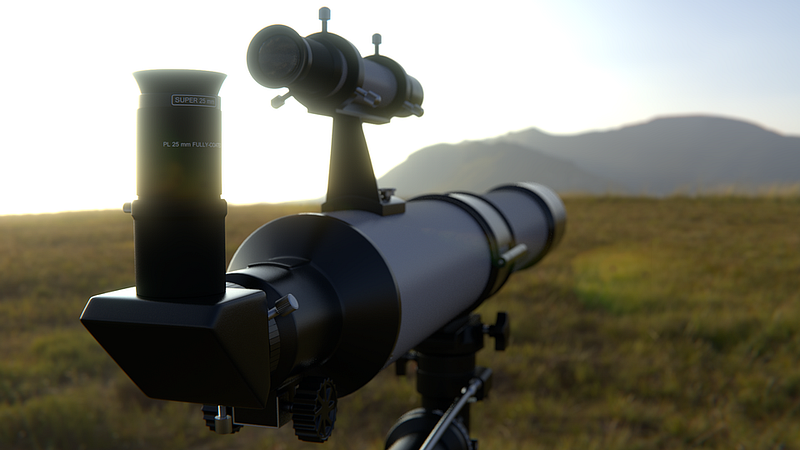
Even if you don’t have a telescope to view it with, there are sites on the internet, like the virtual telescope, that you can use to get a look at the event. If you have a telescope, you can see K2 from your backyard. K2 is already visible from both the north and south sky viewpoints and will likely remain visible to telescopes with a 200mm aperture for the next month.
The above scope is an excellent choice for anyone interested in seeing the comet, as well as numerous events still expected this year. And, there’s still time to have one delivered by Thursday for the big day.
A Giant Comet Is Coming To Earth
We’ve all heard of Haley’s Comet. If you don’t remember what a comet is, they’re essentially a galactic boulder made of frozen gases, rock, and dust that orbit the Sun. Frozen, they’re the size of small cities. When the orbit of a comet gets closer to the Sun, the comet warms and spews dust and gases into a giant glowing head larger than most planets. We then get the experience of seeing them fly through our solar system, hopefully not getting too close to our world. If one did, it would be catastrophic.
Next month there is a comet due to fly by Earth. This once record-setting-sized comet will make for an interesting experience for astronomers, amateur astronomers, and space buffs of all ages.
Comet C/2017 K2
C/2017 K2 was originally spotted using Hawaii’s Pan-Starrs telescope and followed up with observations by the Hubble later in the year. At the time it was deemed a record-breaker, becoming the farthest away inbound comet ever seen. At a distance of 1.5 billion miles from the Sun, it was spotted past Saturn’s orbit.
Back when the comet was first found, it was already developing an 80,000-mile-wide tail of dust, also known as the comet’s coma, as it approached the sun. For context, the comet’s coma was nearly as big as Jupiter. After five years, the comet is much closer and will be passing Earth in just a few weeks. The closest point will be achieved on July 14 according to the Earthsky space website.
Scientists don’t know exactly how enormous comet C/2017 K2 is, they just know it’s a giant. Initially, it was expected it may be more than 100 miles wide. A further study from the Hubble data suggests it’s near 12 miles wide or less.
Either way, 100 miles or 12 miles, for those that have a telescope or for those that obtain one, C/2017 K2 will be possible to find today if you look close to the star Cebalrai. Check out some stargazing software and get help finding C/2017 K2.
Having fun in the summertime can become an adventure if you’re into star gazing, and it’s the place where dreams of space and exploration are born from. There’s plenty to watch, especially lately, as the Sun actively discharges solar flares, Elon Musk launches satellites regularly for the Starlink system, asteroids and meteors continue to fly by, as well as watching for the mysteries of space.
The Next Big Comet
Besides C/2017 K2, we have C/2014 UN271 to look for in the not-so-distant future. What will continue to make C/2014 UN271 so intriguing to people is that it has the largest nucleus of anything astronomers have ever discovered. Its incredible size is magnificent, from a scientific point of view.
First found by Pedro Bernardinelli and Gary Bernstein, its size was determined using the Hubble. At that time it was about 3 billion miles away.
David Jewitt, a professor at UCLA, researched the comet and published his findings. This comet is ancient, as much as 4 billion years old. The team studying it estimated it to be near 500 trillion tons. If true, it’s a hundred times greater than the mass of a typical comet.
“Big and blacker than coal.”
— David Jewitt
We’ve got a while to wait on C/2014. Even as it hurtles inward toward Earth’s orbit at 22,000 miles per hour, it won’t be close to Earth until 2031 and scientists predict the distance will be equivalent to the distance between Earth and Saturn.
There are two others coming this year that might be of interest to even amateur stargazers. Get a telescope and get ready for an exciting second half of 2022 as there’s plenty to watch.
- Comet 73P/Schwassmann-Wachann 3 on August 25th, 2022
- Comet 81P/Wild 2 on December 15th, 2022


