
News Flash: Mozambique, Faces An Alleged “Islamist Insurgency”, Amidst Covid-19
Philanthropy Is The New Norm, A Call To Action
Introduction
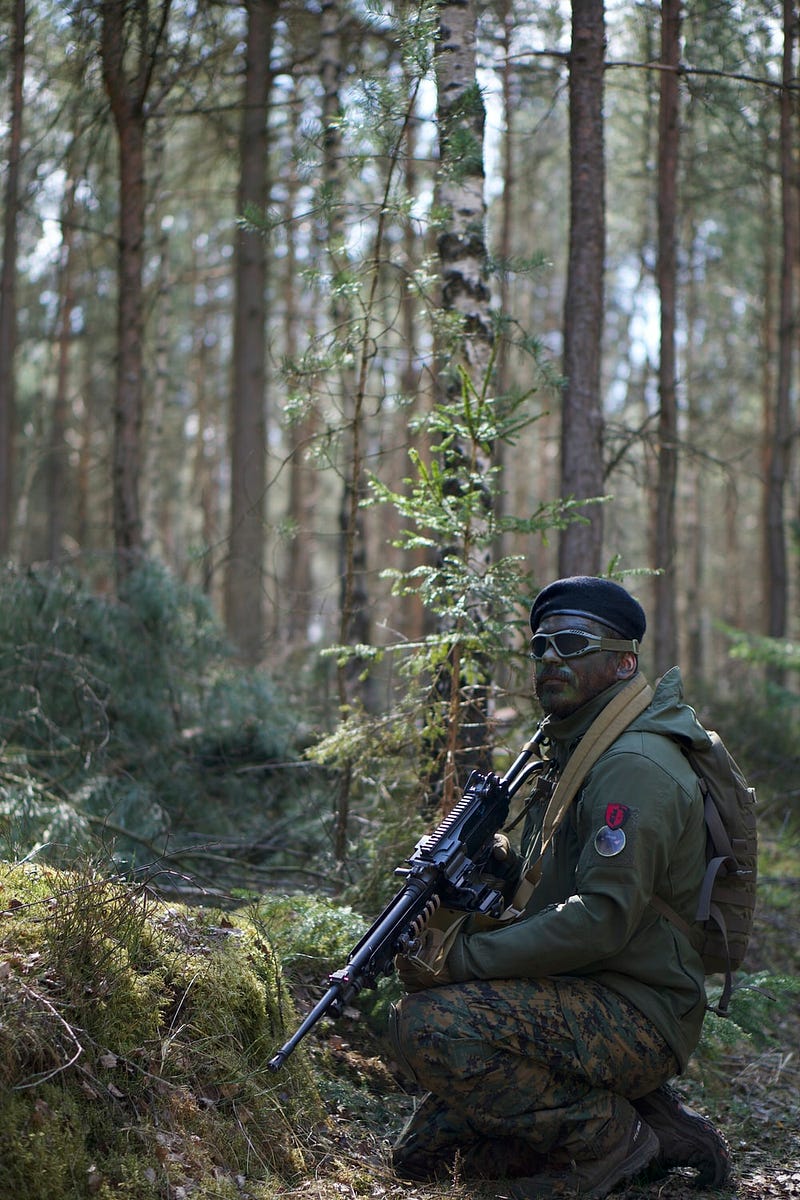
On March 16, 2021, a BBC News story, https://www.bbc.com/news/world-africa-56411157, conveyed that children as young as 11 are being beheaded in Mozambique’s Cabo Delgado province. Allegations by this news agency are that Militants linked to the Islamic State (IS) group are behind a conflict. Further, a Wikipedia explanation is that the revolution terrorizes Northern Mozambique residents as Islamic militants seek to establish an Islamic state in the region. Mozambican security forces, on the other hand, resist this Islamic state formation agenda. Sadly, when elephants fight, ants suffer.
Innocent Children Caught In The Cross-Fire
No one wishes to make sense of current world affairs while caught in a revolution that seeks to impose human violation on a country’s future, children as young as described via the BBC report. Although we are aware of the Mozambique army’s resistance to the revolution, my heart goes out to the country’s civilians whose lives are impacted.
Why Does The Insurgents Aspire For An Islamic Northern Province?
Wikipedia began this talk by alleging that the Islamic group’s revolution aims at gaining independence from the central government. This data may further benefit from historical analysis as we unpack the country’s current affairs. In this segment, I am happy to begin things by saying that, as a southern African, I am aware that Mozambique was initially inhabited by the Khoisan people, viz. San hunter-gatherers.
Subsequently, the Nguni (Bantu) people migrated southwards, starting perhaps as early as the 3rd century AD, from the north and west of Africa, crossing the Zambezi River valley basin, which was a major barrier, and down the coastal plain, according to http://www.mozambiquehappenings.co.za/mozambique_history.htm.
The arrival of the Bantu-speaking nations disturbed the migratory natives, although not majorly compared to the rest of the immigrants to the region. An Arab writer, Al-Mas’udi, archived his nation’s arrival in Mozambique, as he mentioned the town of Sofala, — 45 km south of Beira in and around the 10th century (923 AD), (Ibid).
When describing what happened to the indigenous societies of southern Africa when they encountered this group, the cultural shock would be an understatement. A recap, around Al-Mas’udi’s writing, Mozambique had had only the arrivals of fellow Africans from the North before meeting and co-existing with peoples of Arabic heritage. Also, power relations would be another aspect to focus our attention on while deliberating Mozambique’s Arabic history.
Mozambique, Water-ways & Trade
Arab traders benefited from the Indian Ocean’s monsoon winds. During the summer, the winds blow north, and during the winter months, they blow south. Thus, the trading Arabs sailors could either go to Africa or Indonesia in the winter and return in the summer, (Ibid). So far, we have understood Mozambique-Arab ties as linked by the region’s water benefits to the latter. However, this was not to remain for longer.
Mozambique had not been the only region beneficiary to Arab commerce. For several centuries, Arab commercial and slave trading (Black Gold) had existed along the coast and outlying islands. In-depth, the Arabs traded ceramic pottery, cloth, glass, beads, salt, and metal goods with these Bantu-speaking people in exchange for gold, palm oil, rhino horn, amber, hides & skins, and ivory. With the cooperation of the African chiefs, this trade expanded, (Ibid).
Arab-European Mozambique History
A famous Portuguese sailor, Vasco da Gama, In 1498, rounded the southernmost point of Africa. By 1505, the Portuguese had occupied Sofala, and Portugal had become a major trading power by conquering the Arab trading settlements of the European imperialists. With the advent of this reality, a power battle ended with Portuguese rule in Mozambique, (Ibid). There you have it, the story of how Islamic heritages linger in Mozambique.
Languages And Ethnicity Breakdown In Current Mozambique
Information gathered via The World Fact Book, https://www.cia.gov/the-world-factbook/countries/mozambique/, informs us thus, the country’s population is 30,888,034 (July 2021 est.) The country’s nationals are Mozambican(s). People in Mozambique converse at the following language ratios: Makhuwa 26.1%, Portuguese (official) 16.6%, Tsonga 8.6%, Nyanja 8.1, Sena 7.1%, Lomwe 7.1%, Chuwabo 4.7%, Ndau 3.8%, Tswa 3.8%, other Mozambican languages 11.8%, other 0.5%, unspecified 1.8% (2017 est.).
In as far as faith goes, I found this religious data useful in the conversation at hand, please see: Roman Catholic 27.2%, Muslim 18.9%, Zionist Christian 15.6%, Evangelical/Pentecostal 15.3%, Anglican 1.7%, other 4.8%, none 13.9%, unspecified 2.5% (2017 est.). Notably, while Islamic languages fared lesser than Portuguese, the country’s official language, the faith rates second to Catholic in Mozambique. Maybe, the digits express the revolution’s sought independence tragedy.
I further realized that the area under discussion is one of Mozambique’s ten provinces. To evidence, 10 provinces (provincias, singular — provincia), 1 city (cidade)*; Cabo Delgado, Gaza, Inhambane, Manica, Maputo, Cidade de Maputo*, Nampula, Niassa, Sofala, Tete, Zambezia, (Ibid). With this information, we may progress to exclusively study Cabo, the Islamic northern part of Mozambique that mercilessly attacks government armed forces and civilians.
Cabo Delgado
Cabo Delgado wants to stand aloof in Mozambique. According to Aljazeera, 2010 was a turning point when a vast-quantity of natural gas discoveries were discovered. The locals were cleared under false promises by state officials. Aljazeera mentioned that more than 550 families relocated from their lands and fishing grounds to make way for the Afungi LNG Park. Thus, the displaced lost their livelihoods owing to the construction project. At the same time, international companies and foreigners benefit from this land. Plus, the Mozambican regime neglected them and focused, instead, on pleasing the foreign investors. All in all, the 2010 natural gas mines caused the population to grow angry and frustrated, (Ibid).
The Aljazeera mineral discovery narration has been eye-opening into the region’s multi-faced atrocities owing to state and investment organizations since 2010. For instance, the Mozambican army’s in Cabo Delgado control included grave human rights violations during “counter-terrorism operations” in Cabo Delgado, “including arbitrary arrests, abductions, torture of detainees, excessive force against unarmed civilians, intimidation, and extrajudicial executions, Human Rights Watch report in (Ibid). That said, I still fail to comprehend the child-targeted inhumane responses by the Islamic revolution in Cabo Delgado. Thus, please come with me as we narrow our gaze to the group.
Militants linked to the Islamic State (IS)
“Legal Fares”, https://www.lawfareblog.com/islamic-state-mozambique, is an international blog that on January 24, 2021, issued a publication titled “Islamic State in Mozambique”, written by Tore Refslund Hamming. In it, the writer covers the mid-August 2020, Islamic State-affiliated militant’s capture of the northeastern port city of Mocimboa da Praia in Cabo Delgado province that made international news. Yet, this event was not an isolated occasion, continued Hamming. Lesser is international studies and publicized about Neo-Capitalism’s pragmatism in the “global south.”
As confirmed by Hamming, this fact creates hostility when investors go to bed with state officials, leading to internal poverty and loss of confidence in the rule of law, and causing irrational logic and human rights violations. If I could, the world would open its eyes to the production chain, Its blessings, and its human consequences, particularly in Africa.
America Reacts To The Cabo Delgado Province Fiasco, Military Style
At times, being removed from lived experiences, births obscured responses to any matter, and this case is true regarding how America responded to the revolution under discussions. Before I evidence my claim, may I kindly recap what we have realized as causing the Cabo Delgado province-wide unrest? 1) 1) So far, the information indicates the arrival of Islamic culture and the Portuguese takeover of livelihoods in Mozambique. 2) 2010 was discussed via the Aljazeera report to speak to investment consequences in the region and subsequent civilian dissatisfaction at the state armed force’s brutality in foreign mining. 3)
3) Finally, Hamming used the “legal fare” to point out that the only Islamic Mozambique territory takeover to have been internationally reported on occurred in mid-August 2020, which coincides with the Aljazeera natural gas extraction schedule. All else went unrecorded and thus unaccounted for at the international level.
International Criminal Justice Court (United Nations)
Disappointingly, the International Court of Justice (ICJ), as the United Nation’s principal judicial organ, could have settled Mozambique’s legal disputes, but problematically all grievances must be made by States (https://www.icj-cij.org/en/court). The statement shows how the governing body has unlimited powers and little corresponding accountability, especially on a global scale.
Lack of freedom of speech
The long-term attacks on media organizations have exacerbated the reality of misinformation in Mozambique. For example, the information contained in Amnesty International 2020 is that the Mozambican independent daily Canal de Moçambique was burned to ashes on Sunday, August 23, 2020, by an unidentified group, https://www.amnesty.org/download/Documents/AFR4129472020ENGLISH.pdf.
Lack of freedom of speech will deprive anyone of the right to express themselves. In the speaking up process, one may heal, and hopefully, they can find the solace of others in similar difficulties or get the help of experts. Sadly, this idea is not Mozambican’s case, as the state, via its armed forces, terrorizes civilians and instills fear of verbalizing their grievances. My claim follows the Human Rights Watch report of arbitrary detentions in Cabo Delgado province as carried in the paper by Aljazeera. Therefore, I am dissatisfied that the United States has responded by sending more military forces to Cape Delgado as if it did not. Let’s follow America’s militia response below!
Mozambique Officials Resorted To Hiring Foreign Private Security Contractors
The situation in Mozambique is complicated. Reports carried by the BBC claim that the state began to hire foreign security contractors — allegedly from Russia, the US, and South Africa — to help the army crush the rebellion, but without any significant success, https://www.bbc.com/news/world-africa-52532741
Currency Exchange Rates Mozambican Metical- American Rand
Outsourcing Mozambique’s armed duties must have cost the country a lot, judging by the countries whose services it sought, Russia, America, and even neighbouring South Africa. As shown in the figure, every 1 Mozambican metical is equal to 0.014 U.S. dollars. Then, 0.98 Mozambique metical equals 1.06 Russian rubles, while the 0.28 South African rand data provided by Morningstar is used for currency, and Coinbase provides for cryptocurrency.
I think the cost of hiring foreign/international private security forces is high. The Burgen Project (TBP) has reliably documented the reality of Mozambique, and I am pleased to refer to them in its work entitled “Ten Facts about Poverty in Mozambique’’. Kindly see, https://borgenproject.org/about-poverty-in-mozambique/, for more of the ten lists we discuss below:
1) As a result of the civil war in Mozambique from 1976 to 1992, infrastructure was destroyed, 6 million people were displaced and as many as 1 million people lost their lives. Thus, neighbouring countries of southern Africa have received many Mozambican nationals who escaped the war. The problem is that Mozambicans are struggling to surpass their borders due to a lack of English skills. This fact has affected the country’s economic growth in the Southern African Development Community and other regions.
2) Extreme climate conditions, including floods and droughts, hinder the country’s development. Severe floods and droughts threaten people’s ability to obtain clean drinking water, as well as their ability to grow and maintain food through agriculture. Might I add that most decolonized countries face the problem of unmet basic needs, and water is a scarce service that can cause water wars?
3) Another post-independence reality and globalization problem is poverty. Mozambique ranks 181 out of 187 countries in the most recent UNDP’s Human Development Index; 70 percent of the population lives in poverty. Where I grew up, I shared the border with this country, and I have fully grasped the multi-level problems it faces, especially as the only Portuguese speaker in an English-speaking region. As far as I know, English hinders Mozambique’s business development in Southern Africa. The only other Portuguese ex-colony is Angola, and they are far apart.
4) In a 2017 study conducted by the United States Agency for International Development (USAID), 94% of girls in Mozambique were in elementary school, and by the fifth grade, more than half of the students had dropped out of school. In my opinion, a person may understand how life in a poor country can weaken the enthusiasm of civilians for education.
5) According to data from the US Agency for International Development, malaria accounts for 42% of deaths among children under 5 years of age. However, due to floods and droughts, 100% of the population is at risk of contracting the disease.
6) According to UNAIDS, Mozambique has the eighth-highest prevalence of HIV in the world. It ranks third in the world for children who have contracted the disease. I feel very sorry that people who are this overwhelmed still contract infectious diseases.
7) UNICEF reports that one in every five children is severely deprived of education and 39 percent have no access to newspapers, radio, or television.
8) Almost one-third of the population is undernourished, and one-fifth of children are severely undernourished.
9) According to statistics from the World Bank, 17% of children under the age of five die because of poor drinking water and sanitation.
10) 10) As of 2015, life expectancy in Mozambique is only 55 years compared to 79 years in the U.S. Factors contributing to the short life expectancy include a high rate of poverty, communicable diseases, and poor water quality, and sanitary conditions.
Reporting this information is an emotional activity. It arouses my enthusiasm and hopes to get various forms of advocacy and charity from readers. When coordinating moving forward with charity, may I consider the ten listed areas listed by the Burgen Project (TBP) for Mozambique’s philanthropy? Thank you so much for reading this article so far.
Back to How America Handles International investment Fiasco In Cabo Delgado
The CBC online news publication, https://www.cbsnews.com/news/mozambique-isis-insugency-decapitations-cabo-delgado-us-support/, said that the United States has been paying attention because the Russian armed forces that were sent as the first international batch to aid Mozambican National Armed Forces were severely beaten by the Islamic Revolutionary Party after at least seven of their own were killed on the battlefield.
Next, South African air-troops landed, and they too could not withstand the attacks at Cabo Cape Delgado. Finally, CBS mentioned that America, U.S.A, had been observing the Russian and South African deployments. When both suffered defeat, the U.S. is said to have watched this all play out with deep concern. Later, the U.S formally designated the ISIS group in Mozambique, known locally as Al-Sunna wa Jama’a, as a global terrorist entity and imposed sanctions on its leader, named by the U.S. as Abu Yasir Hassan. By and large, America is all arms, as the CBC continues to add that it is working to provide Mozambique with training in civil-military affairs capability; combat casualty care programs, and other specialized training, (Ibid).
The situation on the ground, how will life be in Cabo Delgado in 2021? Covid-19!
Similarly to all of us, Mozambique is part of the epidemic. As per Worldometer, there have been 66,879 positive Corona-virus cases, 758 deaths, and 55,074. Additionally, Jose Tembe, a Mozambique-based journalist reporting via BBC News, Maputo, wrote concerning the arrival of 39 Cuban health practitioners to help the country respond to the Covid-19 pandemic. This Cuban team followed 14 healthcare workers from their country that arrived in Mozambique earlier, https://www.bbc.com/news/topics/cjnwl8q4x1lt/mozambique.
I would like to draw your attention to the different steps Mozambique has been in “rescued” between Cuba, Russia, South Africa, and the United States. My humble opinion is that Cubans believe that Mozambican civilians are worthy of care, and this sentiment has been put into practice by sending health personnel instead of increasing armed forces. For anyone without African-Cuban relations, kindly see the following video that recaps ways Fidel Alejandro Castro Ruz, a Cuban revolutionary, and politician who served as Prime Minister of Cuba from 1959 to 1976, stood up for the liberation of Africans before. The Cuban-African Anti-Portuguese Colonization was narrated via the following YouTube video titled “The Untold Story of Cuba’s Support for African Independence Movements Under Fidel Castro”, https://www.youtube.com/watch?v=U1iUe3NmMh8
Whenever discussing this part of the Cuban Revolution, I express my gratitude to this country that has never ceased to be pro-peace and humanitarianism thus far. Therefore, please allow me to bless Cuba, Cuba’s philosophy and heritage, because of Cuba’s tireless dedication to its compatriots, especially in the Mozambican discussed Covid-19 case study.
Poverty and economic imbalances across Mozambique caused the ongoing instability
The data carried by the British Broadcasting Corporation (BBC) is a window into Cabo Delgado. For the most part, this news backs up our research and findings that locals in the northern parts of Mozambique are complaining about their government’s handling of their ancestral land post the discovery of minerals in the region. “they occupied [towns] to show that the government at the time was unfair. It humiliates the poor and gives the profit to the bosses,” said the tall, unmasked man, in khaki uniform, surrounded by other fighters, source, https://www.bbc.com/news/world-africa-52532741
The above-cited news adds that the insurgency offers an alternative path for unemployed youths frustrated by a corrupt, neglectful, and heavy-handed state, (Ibid). As the saying suggests, idle hands are the devil’s tools.
Islamophobia Allegations
Others look at ongoing issues from an academic perspective. Professor Yusuff Adam, for example, alleges that the army, from the beginning, beat people up, took them to jail, tortured them. There’s a lot of Islamophobia [in the majority Muslim province of Cabo Delgado]. They’re discriminated against because they’re northerners — people think they’re dumb, (Ibid).
Call To Action
Mozambicans are in trouble in many ways, and the state and investors have not relaxed everything for them. Thus, can we explore how we can inject a good atmosphere into this country now and in the future? Cuba is a positive example in these regards. Despite living in a global pandemic, health experts landed in Mozambique armed with Cuban health skills to perform the Lord’s work, showing everyone that they too might still be good to others.
I can share a YouTube video with you about philanthropy and how anyone can participate in philanthropy, https://www.youtube.com/watch?v=aC-9jwDQm7w
Conclusion
In the persistent epidemic era, I thought it wise to share news of the ongoing Southern African revolution that may not have reached your shores. Thus, this news broadcast offers background analysis, using history, to explain how Mozambique came to have Islamic traits as a former Portuguese colony. Subsequently, the paper listed various causation's for the fiasco. I covered the country’s post-decolonization governing dilemmas, namely Neo-liberalism, international relations, and armed forces while paying due attention to general Mozambican poverty. Also, Professor Yusuff Adam drew our attention to the possible Islamophobia in Mozambique. Lastly, you were cordially invited to be part of change like Cuba has been for many years in Africa, particularly. Thank you that you have read this article, stay well.


