
New Orleans Casket Girls: Oyster Poorboys
Oral Legends That Transcend Time In A Recipe
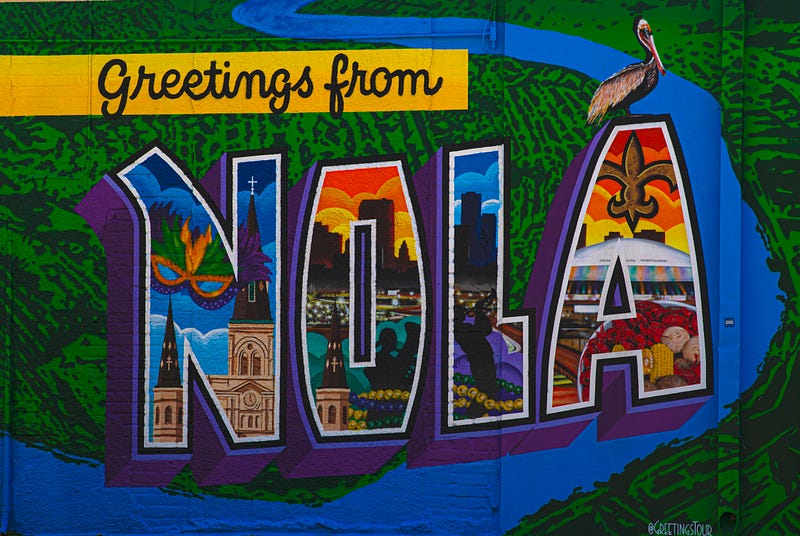
It’s true, I am a complete history nerd student, always have been. I’ve spent years writing and documenting the backstories of those who in the rewriting of history by the conquers would otherwise be lost in their truths and histories. This for me is a life long passion project.
Much of Louisiana’s history has been lost as a result of hurricanes, fires, flooding, and now sinking. Sharing what I know online is all I have left to offer knowing fully well that with climate change, the endless lists of “Ain’t There (dere) No More New Orleans” are going to grow as the the city is at risk of becoming uninhabitable if sea levels continue to rise and storm surges become more frequent and severe.
New Orleans is already below sea level in some areas, and the ground is sinking due to a combination of factors, including natural subsidence and human activity. Climate change is accelerating sea level rise, and it is also making storms more intense. With it we will sadly likely lose more history when the inevitable flooding of the city comes.
The Casket Girls Of New Orleans
Casket girls or cassette girls, were women brought from France to help populate the French colony of Louisiana. With them, they carried small chests (in French called cassettes) of personal belongings and clothing.
The chests resembled small burial caskets of the time, hence the name “casket girls.” Most of the girls came from orphanages and convents. They were often poor and supposedly guaranteed to be marriageable virgins.
This method of recruiting marriage age young women for male colonists had been successfully accomplished for more than sixty years by the French government. The government even provided dowries.
While stubborn legend would have it, that the girls were less than ladies, that wasn’t always the case. However, about two hundred of these young “unfortunates” were women of questionable reputation (in those days being poor or orphaned qualified you for this category) towards the end of this practice.
In my dreams, I often see a thirteen year old casket girl holding the hand of a five-year-old orphan, both wards of the Ursuline Convent in 1729, in the mystical city of New Orleans, Louisiana. Both of them were authentic girls, the combined bloodlines of each flow through my veins. The oral myths and verifiable details of their lives, also flood in and out of my heart, as I think of what to share with you.
On many visits there over the years, my imagination has seen their footprints and small hands on the oak treads and banisters at the Ursuline Convent. Imprints worn to a golden patina on wood crafted more than two hundred and ninety-five years ago, that are still there today, as a reminder of these two young women.
The older of the two was a young “casket girl” named, Catherine Josephe Gautru. She was educated and trained in womanly arts, such as embroidery, playing the piano, and learning to read and write, by the Ursuline nuns, prior to her marriage to Antoine Boudrot.
She wrote of her experiences in diaries — of “Living in the land of “Moustiques vampires” (giant mythical mosquitoes) and how there were so many of them, that they plugged the nostrils of cattle until they suffocated the poor animals which led to them also being referred to as “Moustiques à vaches.” Both titles were fitting in a swampland forbidding.
Beyond those diaries I once viewed on a research trip to New Orleans, by family oral tradition, she was a feisty girl, who before leaving France had worn a red ribbon tightly around her neck for all to see — in protest of deaths by guillotine. She came to this country with her deceased mother’s candle mold, her grandmother’s teapot, two dresses, and a fine sewing basket — all tucked inside her cassette.
The younger of the girls (Marie Carmelite Navarre) was an orphaned survivor from the Ft. Rosalie Massacre. She was the daughter of the King’s surgeon major, Nicholas Navarre. Both he and her mother were lost in the Natchez raid. Like Catherine Josephe, she was given in marriage by the Catholic Church to Jean Charles Boudreaux. She came to the convent wounded in soul and in body, yet survived to raise sixteen children.
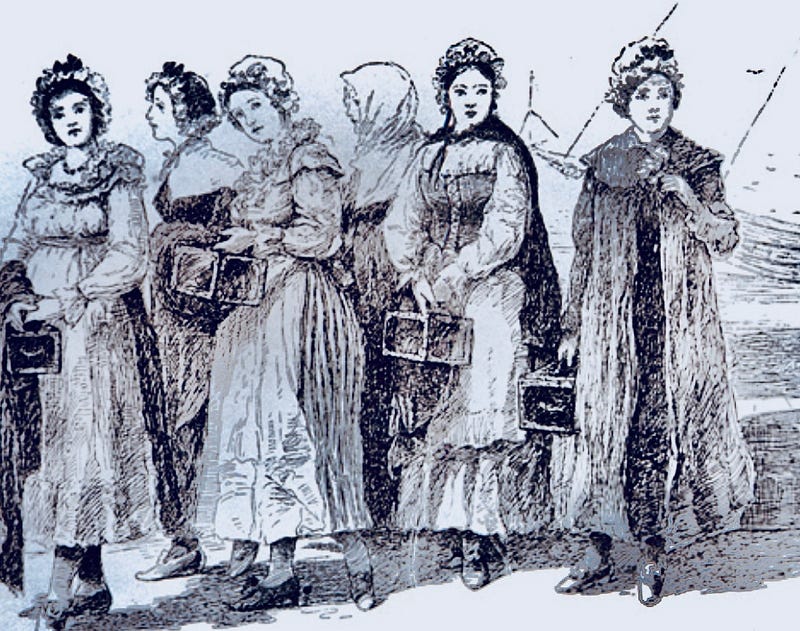
Where History Meets Myth
In Cajun folklore, we grew up hearing stories of Feux-folets, Madame Longfingers, Marie Laveau, the ghost of Jean LaFitte, Jean Sot, the Loup Garou, Voudu, and of course, vampires. Legend has it that vampires first came to New Orleans via the cassettes of the Casket Girls. It was whispered that instead of marriage trousseaus, the cassettes actually contained the dead earthly bodies of living vampires.
All of the girls were housed on one of the top floors of the convent school, where a desperate priest (once he was aware of the problem) sealed the windows and the caskets with wooden screws. Then, he blessed each and every girl — However, one vampire escaped into the night, with the help of a wayward and naughty Casket girl, and slipped out the one remaining unsecured window — forever to haunt New Orleans.
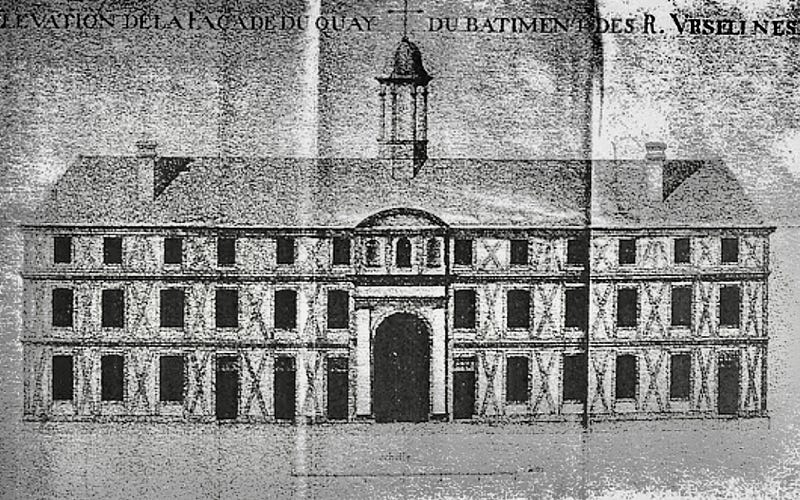
Ursuline Convent and Academy in New Orleans
The Sisters of Ursula (The Ursulines) were sent to New Orleans just a year before the more notorious second wave of Casket girls arrived at their Ursuline Academy (the oldest girl‘s school in the U.S.). They were greeted by mosquitoes, yellow fever, mud, hurricanes, and other Catholic nuns who had been tending to the needs of the citizens of New Orleans for over a decade.
While a small number of orphans were being cared for by the sisters who had preceded them, they were the actual founders of the school and the orphanage for girls. They also worked tirelessly for the needs of the poor and the ill.
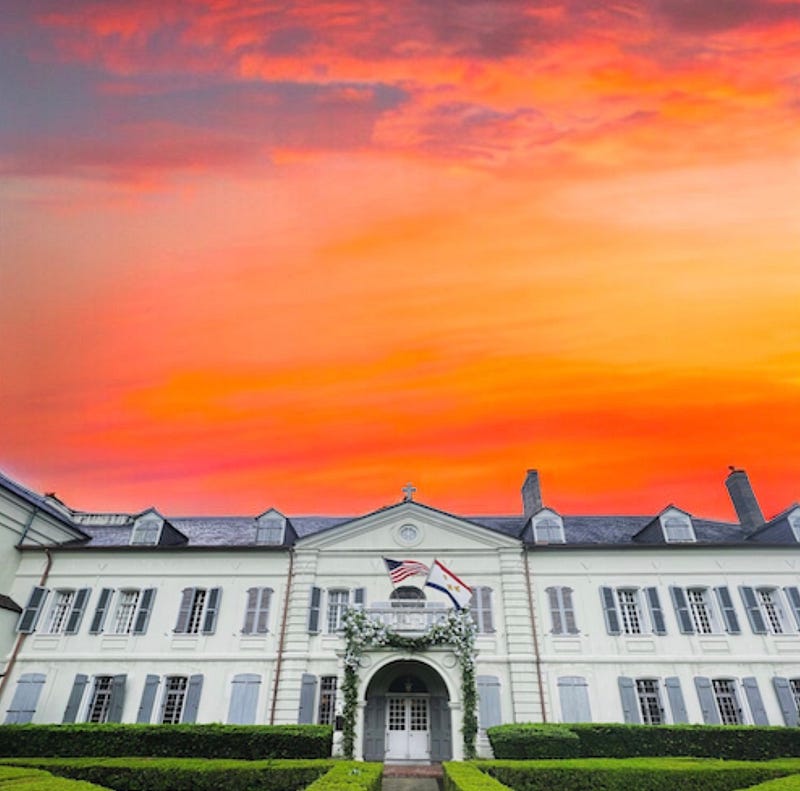
In New Orleans today, from the outside you’ll see an unimpressive very plain set of buildings that comprise the convent, church, museum, and school. Don’t let that exterior convince you that there is nothing worth seeing on a tour of this historical place. By contrast, inside, you’ll see very a very beautiful, ornate, old world craftsmanship and art.
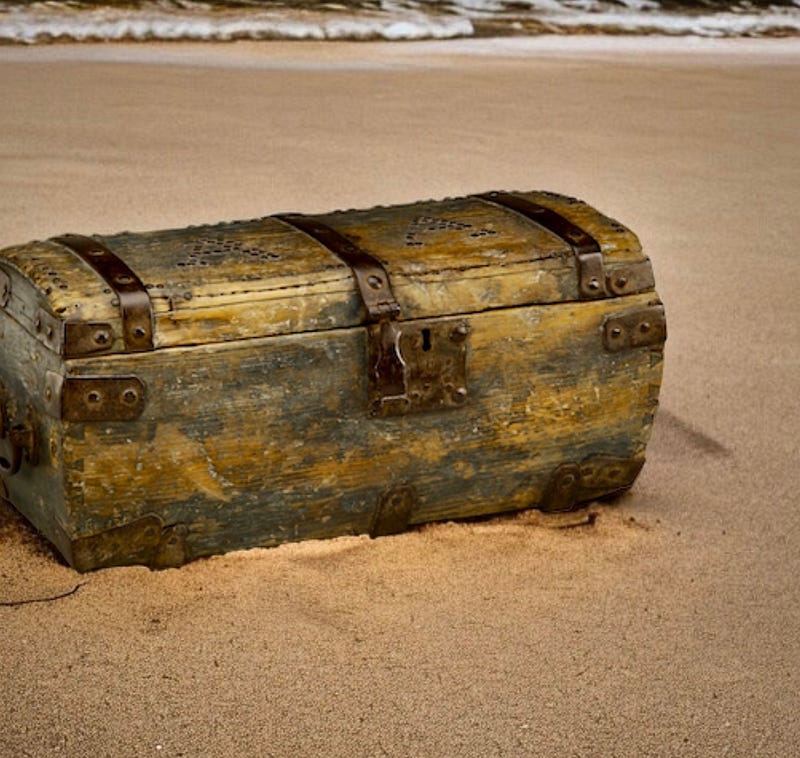
Massacre St F. Rosalie — Natchez Massacre in 1729
Known as the Ft. Rosalie Massacre, on the morning of 28th of November, 1729 — the Natchez Indians under the guise of wanting to trade for an upcoming hunt — attacked and killed nearly two hundred inside the fort, and made slaves of those women and children, who didn’t escape or weren’t killed.
The Natchez were known for being a very peace loving people. History, almost always being told from the perspective of the French, and later English tellers — mostly fails to point out that the land French settlers were clearing, were long-time burial grounds for the Natchez, nor mention that the colonists regularly raided the Natchez and often enslaved their peoples.
In retaliation for the Massacre at Ft. Rosalie, the Natchez were hunted down for more than two years before the French ended their war with them and had just about wiped out their tribe and sold captives as slaves.
It’s not known how little Marie Carmelite Navarre survived, but it was recorded that she arrived at the Ursuline Convent near death.
They were two French girls, neither of them of Acadian descent, all mixed up in the bloodlines of Acadian, Chitimacha, Huron, and Micmac — in one family — my family. What I have to offer you today are two recipes. One is for a dry red wine, the other is for a popular New Orleans oyster sandwich. Neither works well without the other. Oral family history told of how neither girl would have survived without the other’s help.
They are a marriage of sorts from the beginning — Just like these two “unrelated biologically” sisters, ended up being related by marriage and unique circumstances. I think of the recipes that survived, in this post only one from Marie Carmelite Navarre, as a testament to how the will to survive, can transcend generations. Tattered crumbling paper in French, now translated to English online, I hope you enjoy it.
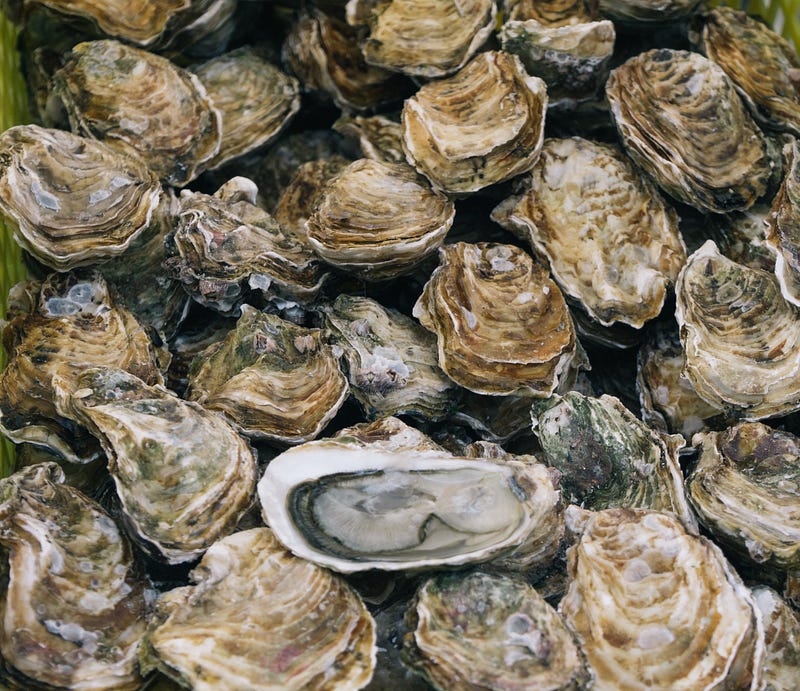
Casket Girl’s Wine Stained Oyster Sandwich (from Marie Carmelite Navarre)
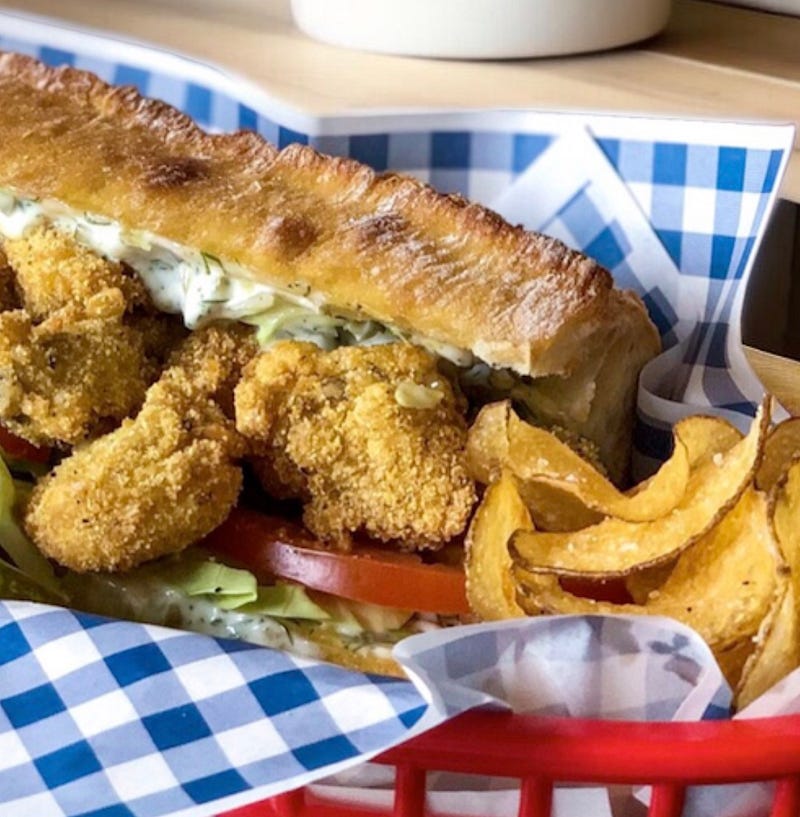
In recipes, rumored to be handed down from Jean Baptiste Le Moyne (Bienville), some of the casket girls became experts at preparing a locally very popular oyster sandwich. My Navarre family recipes refer to them simply as “Casket Girl’s Oyster Sandwiches’’ or sometimes as “Casket Girl’s Wine Stained Oyster Sandwiches.”
The basic original recipe has become somewhat removed from yesteryear’s oyster sandwich. I think the old recipe is better, less doctored, more authentic.
Ingredients:
Pistolets (french roll) 6 inch size — sliced lengthwise Dry red home-made wine Fresh oysters 2 beaten eggs Cornmeal (or flour if you prefer Butter (never use any butter substitute) Salt and pepper to taste
Instructions:
- Drizzle dry red wine over both sides of the cut surfaces of the roll (hard crusted rolls are better)
- Dredge fresh oysters in egg
- Dredge fresh oysters in cornmeal (or flour)
- Salt and pepper them to taste
- Fry them in butter until slightly brown
- Cover one half of roll with fried oysters, fold other side on top of oysters
Modern day additions to this recipe (they are also known as Oyster Loaf Sandwiches) have been:
- Lettuce
- Sliced tomatoes
- Mayo
- Mustard
- Catsup
- Tabasco Sauce
“Preserving the history of New Orleans is not just about honoring the past, but also about safeguarding the soul of a city that has withstood the test of time many times over. It is a reminder that our multi-ethnic roots run deep, and by cherishing our heritage, we ensure a vibrant future for generations to come.” — Jerilee Wei © 2023
PS I did not include our family recipe from Catherine Josephe Gautru as her’s for making homemade wine is quite involved and lengthy.


