Artists are updating Christian art
Let’s see something new?
If it seemed that Christianity has been fast becoming irrelevant, I was amazed to see what new artists have been doing with it.
This Holy Week, as Christians like to call the week prior to Easter, here’s some images steeped in Christian tradition—but with a few twists.
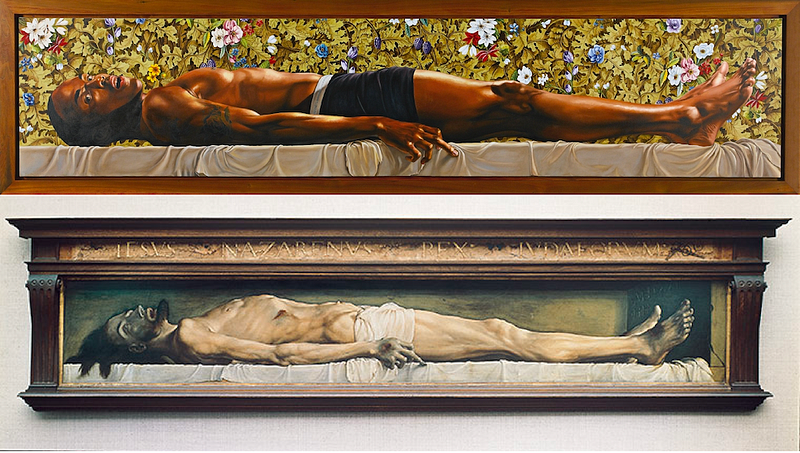
Kehinde Wiley has been giving the religion a fresh coat of paint.
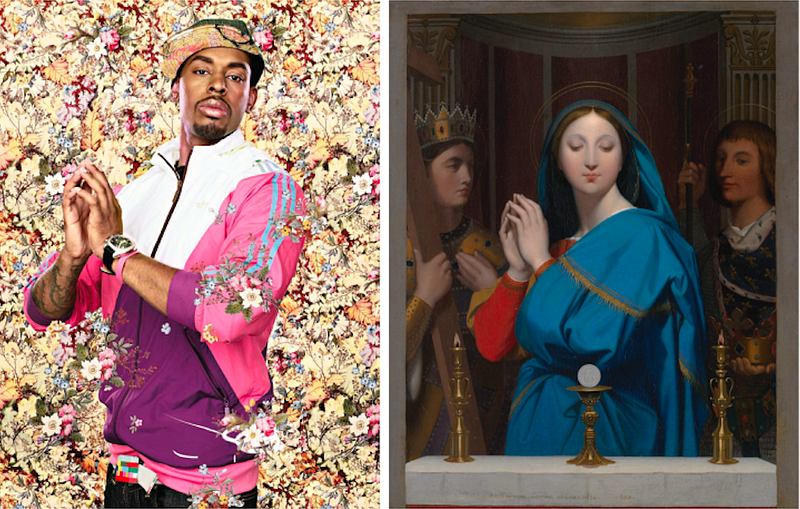
He takes classic Christian paintings and recasts everyone from Jesus to the Virgin Mary using Black men.
As an exhibition catalogue noted in 2016:
“In inserting the urban black male figure into the art-historical canon, the artist brings the canon up to date and at the same time questions its centuries-long exclusion of such figures.”
Wiley is gay, and his paintings become a Christian love letter to Black men, presenting them as sacred figures. And why would you not?
Tyler D. Ballon grew up Pentecostal in Greenville, New Jersey.
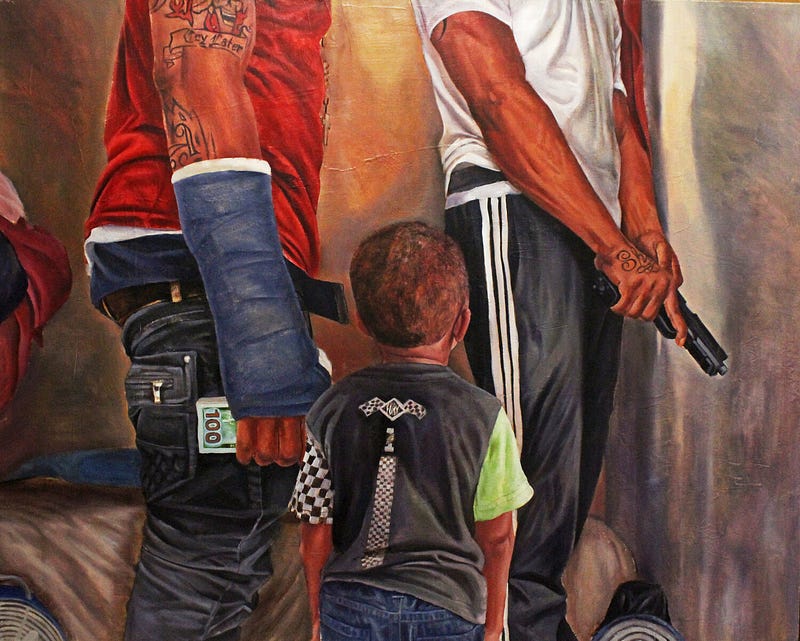
The son of pastors, he remains Christian. He calls himself “God’s Artist.” As a painter, like Kehinde Wiley, he began to paint familiar scenes in the Jesus story as if they were taking place in Black communities in America.
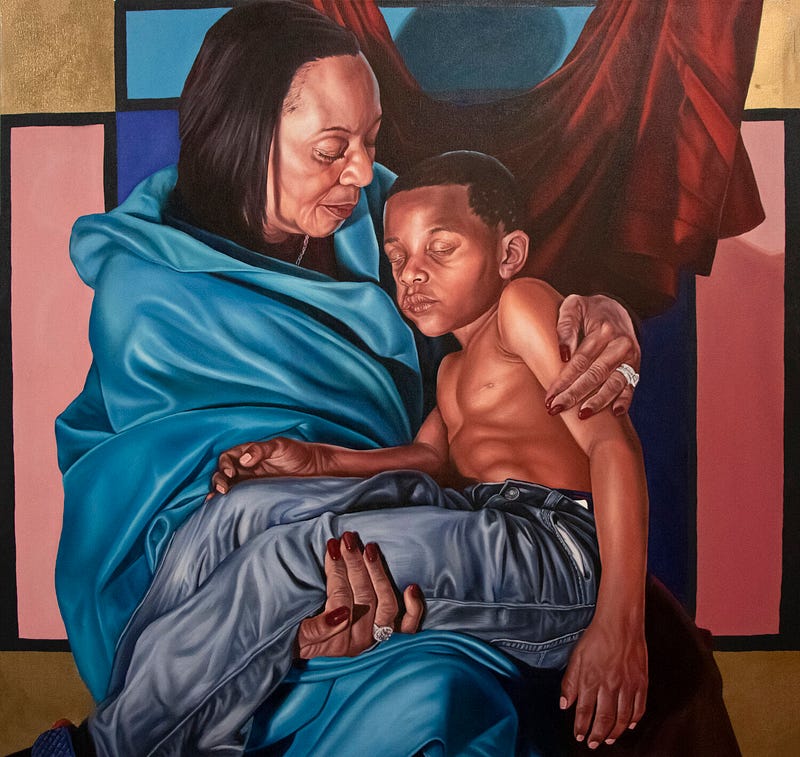
Looking over many of them I began to re-think the gospel story through his eyes. Here is Young Christ in Temple.
His 2018 painting The Deposition reworks Caravaggio’s The Entombment of Christ. Jesus becomes the people around us…or us.
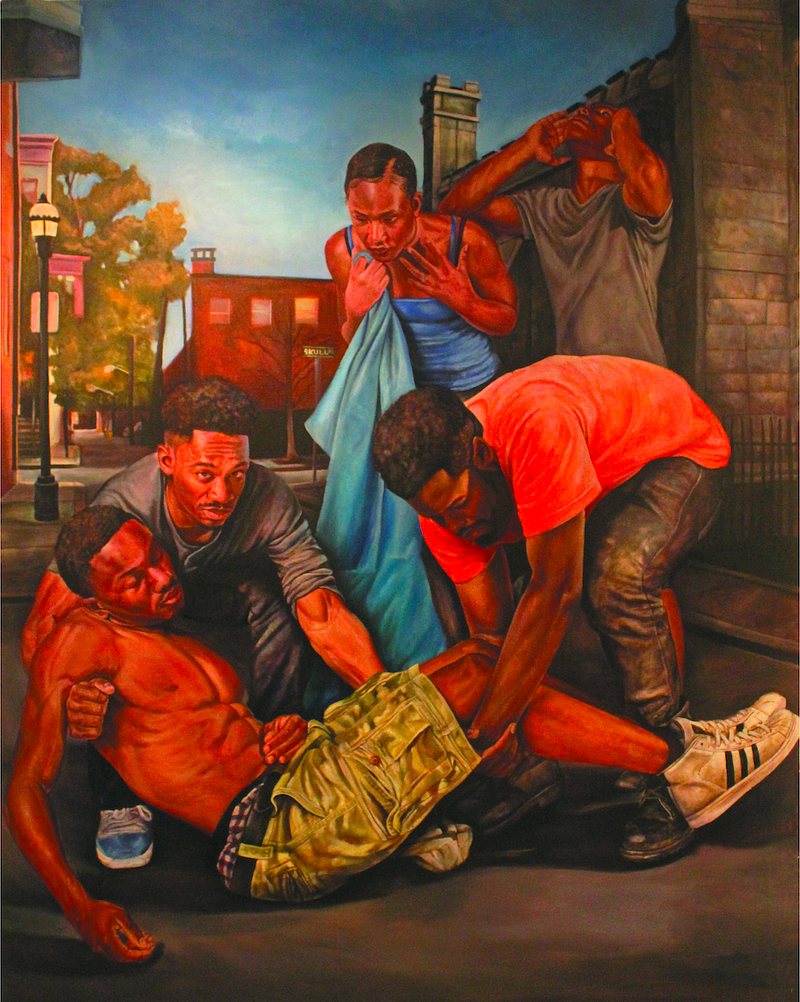
An artist profile for an exhibition notes:
“He views the Black church as a place of comfort and strength. It is a structure to pass down information, commemorating the accomplishments of the past and inspiring the present generation to change the future.”
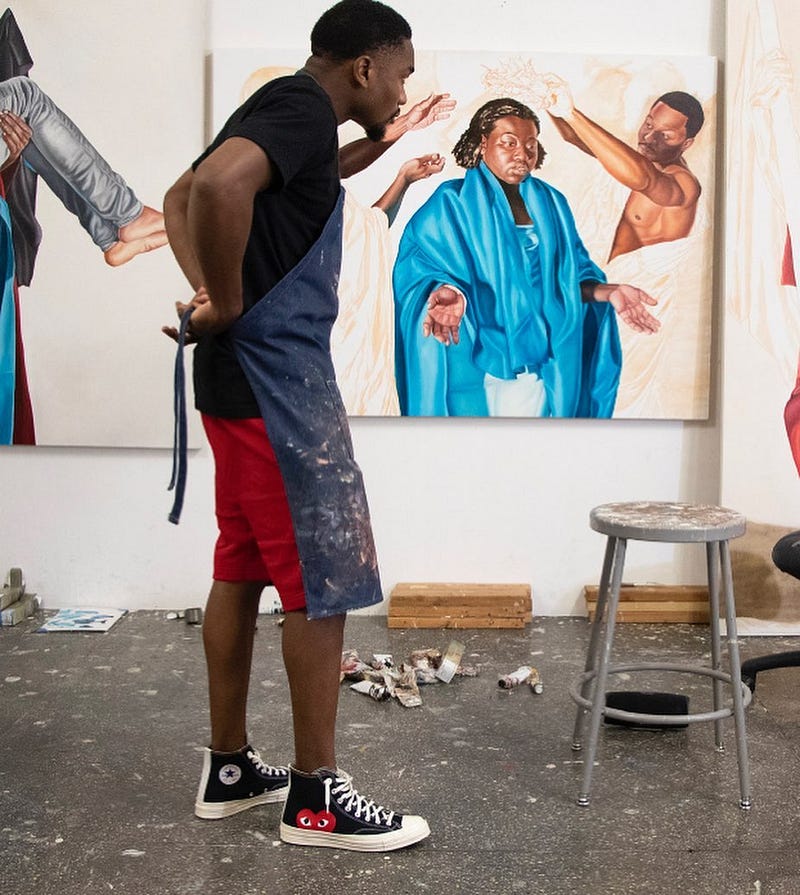
Titus Kaphar is a young Black painter who often dwells on Christian themes.
His Black figures break into familiar imagery—forcing us to think about all that Christian tradition has excluded, as in his 2014 painting, Holy Absence II.
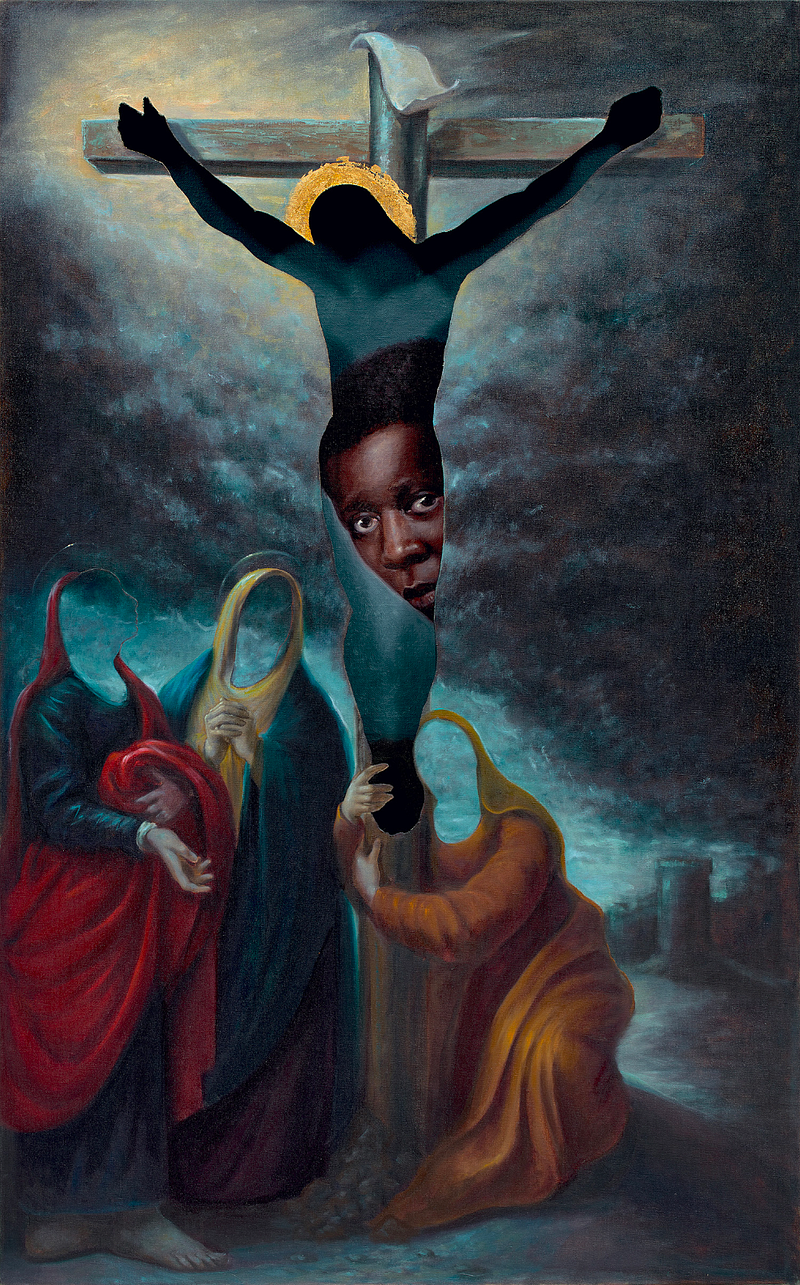
His 2016 painting Ascension includes a ‘quotation’ from a famous Jesus painting, Rogier van der Weyden’s Descent from the Cross (1435).
An exhibition catalogue explains:
“It can take a few minutes to survey in this single work these three distinct scenarios: the outlines of the basketball player’s body mid-dunk, the suffering of Christ on the cross, and the emergent form of a person being lynched.”
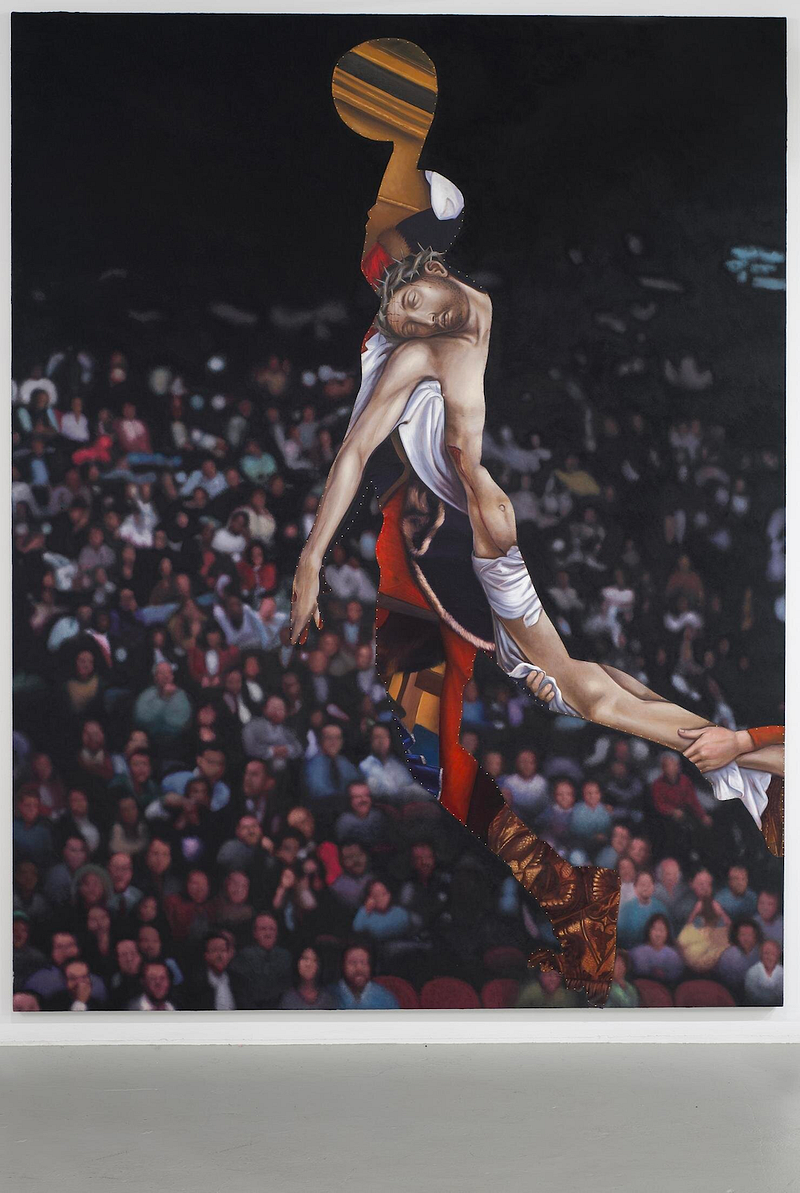
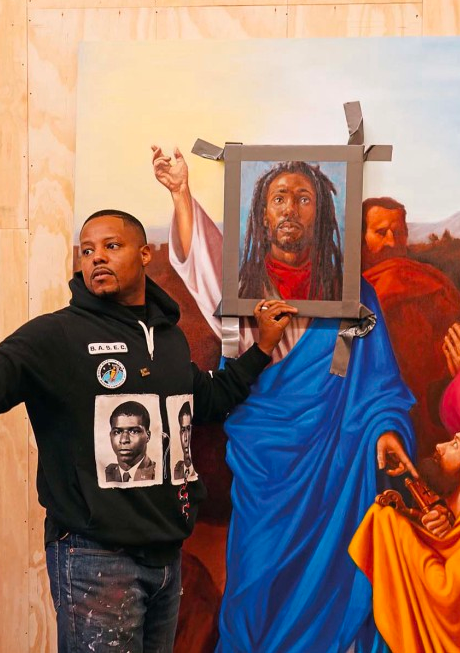
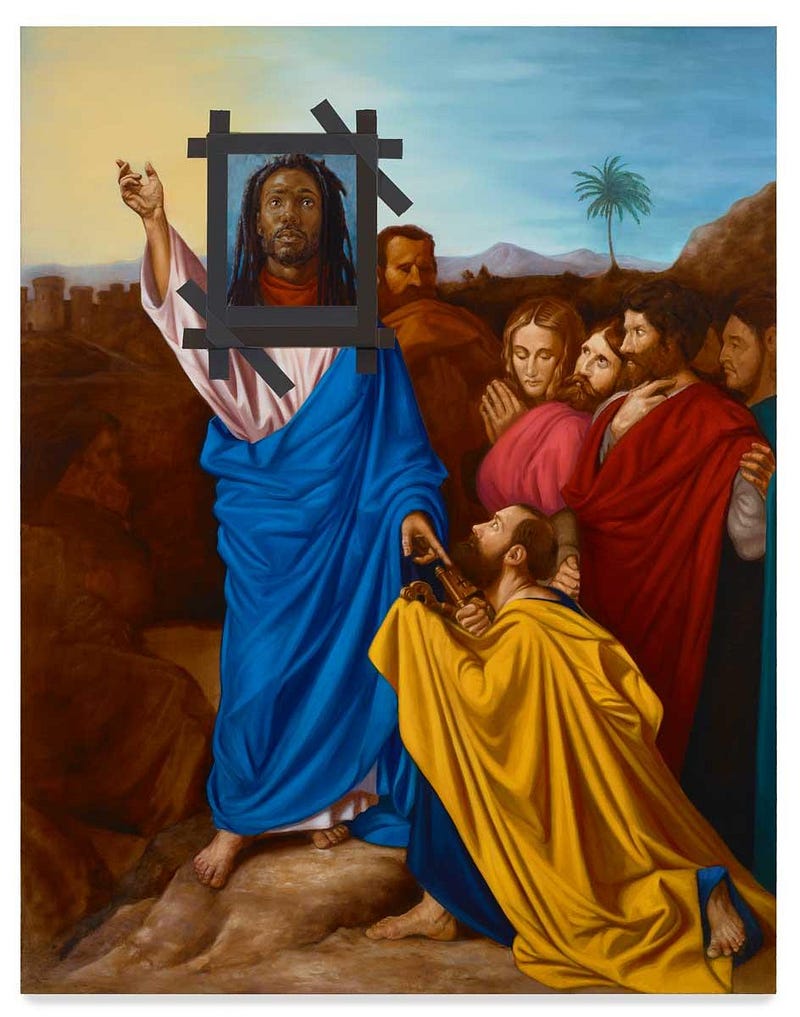
His 2020 painting, Jesus Noir, pasted the face of a Black Jesus over another well-known white Jesus painting.
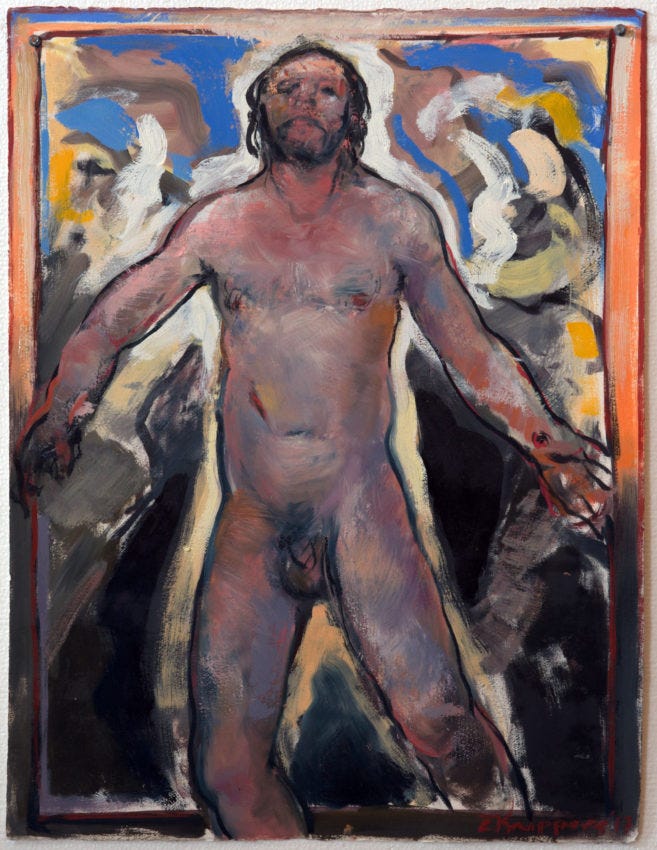
Edward Knippers’ naked Evangelical Jesus
He’d drift over into Anglican practice, but the American painter Edward Knippers started out Evangelical. He started to paint on biblical themes, and his biblical figures were often naked.
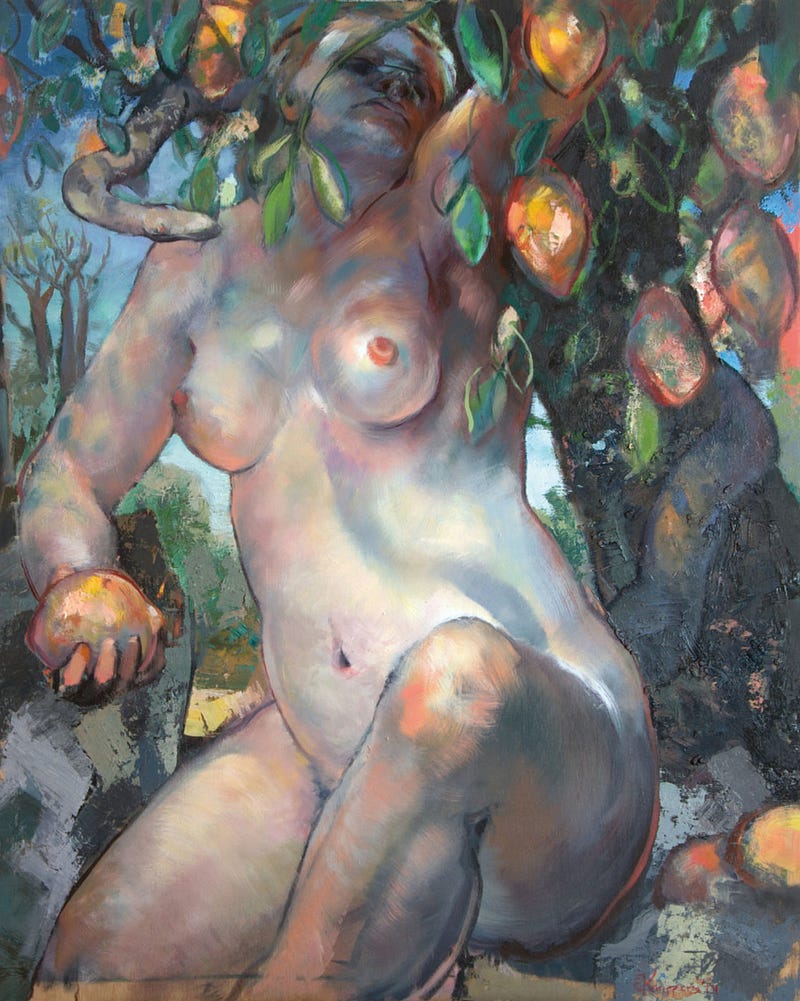
It was a tough sell. A well-known gallery told him that even to do an exhibit would “mark the gallery.” His work has been vandalized.
And he kept on going.
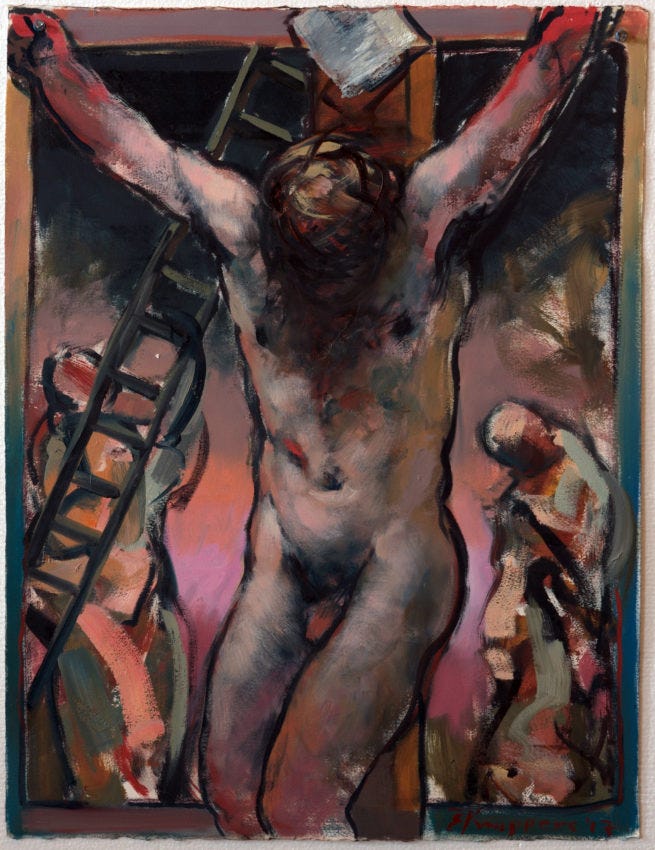
His many paintings are be among the most vivid and descriptive images of the Bible ever to be painted, more startling, immediate and strange for having the figures being mostly naked.
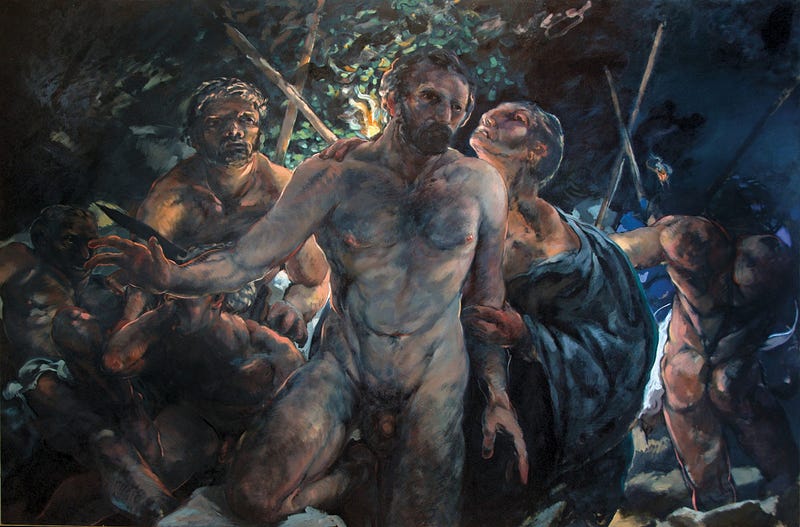
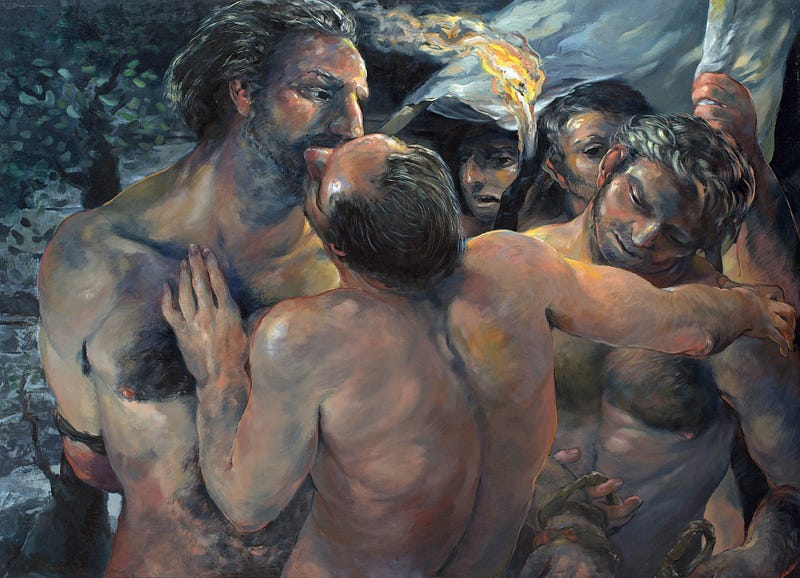
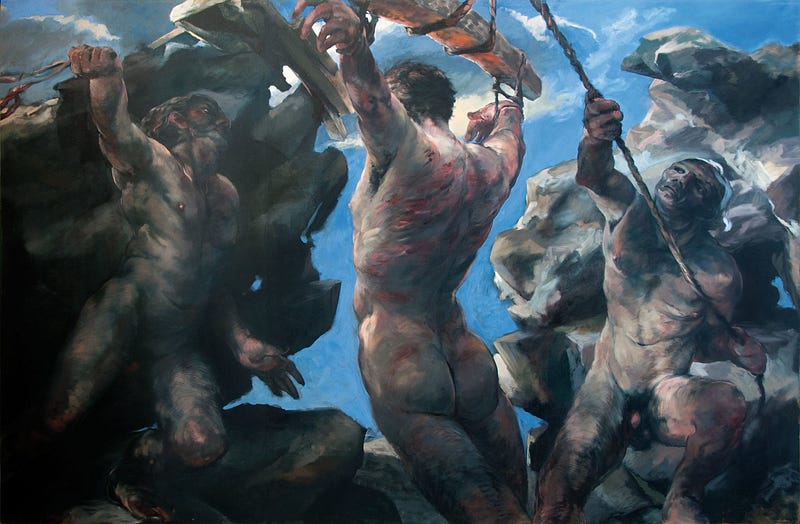
He made a statement about his work:
“As artists, we plow fresh ground in our time by trying with God’s grace to be true to the vision He has given us, not in trying to be new. We must remember that our chief aim as Christians is to glorify God and to make His Truth plain for all to see.”
Oksana Shachko did Jesus with a feminist twist
The Ukrainian artist and feminist activist killed herself in 2018. I think of her work as personal inspiration. She makes a female Jesus, suffering for the world, not a stunt, but perfectly believable. It was the role that Shachko played during her life.
I told her story in my post “The Naked Saint.”
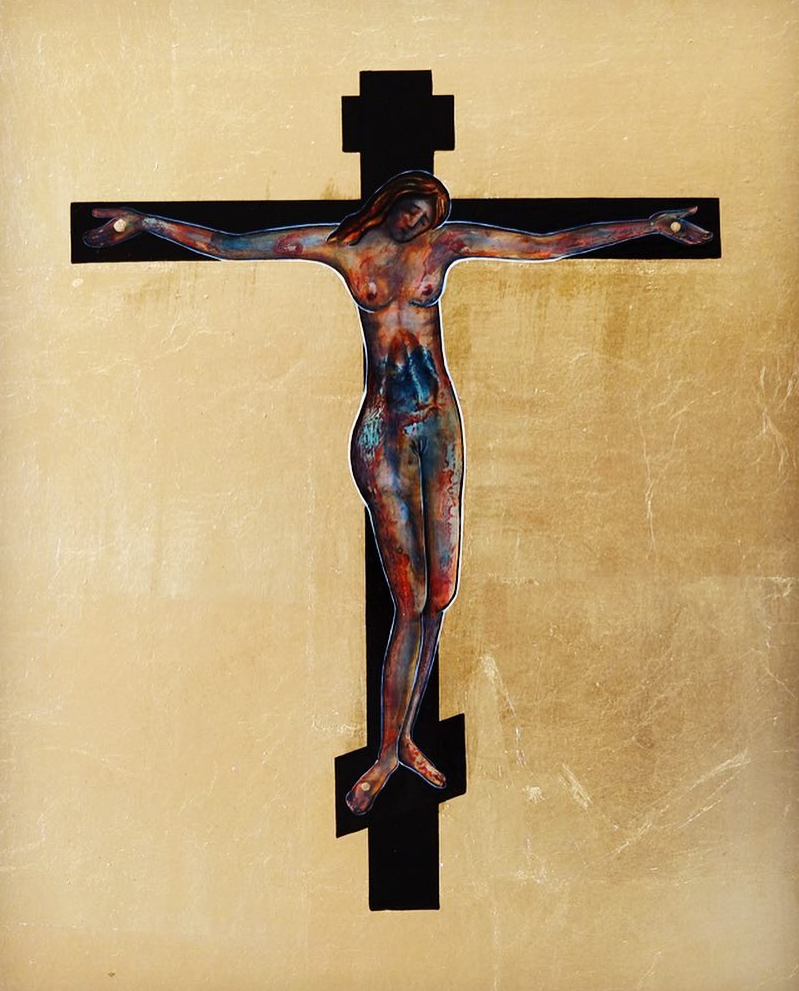
As posted to her Instagram account, her work, infused with rage and beauty, remains on exhibit for the world—like her naked female Jesus being burned at the stake.
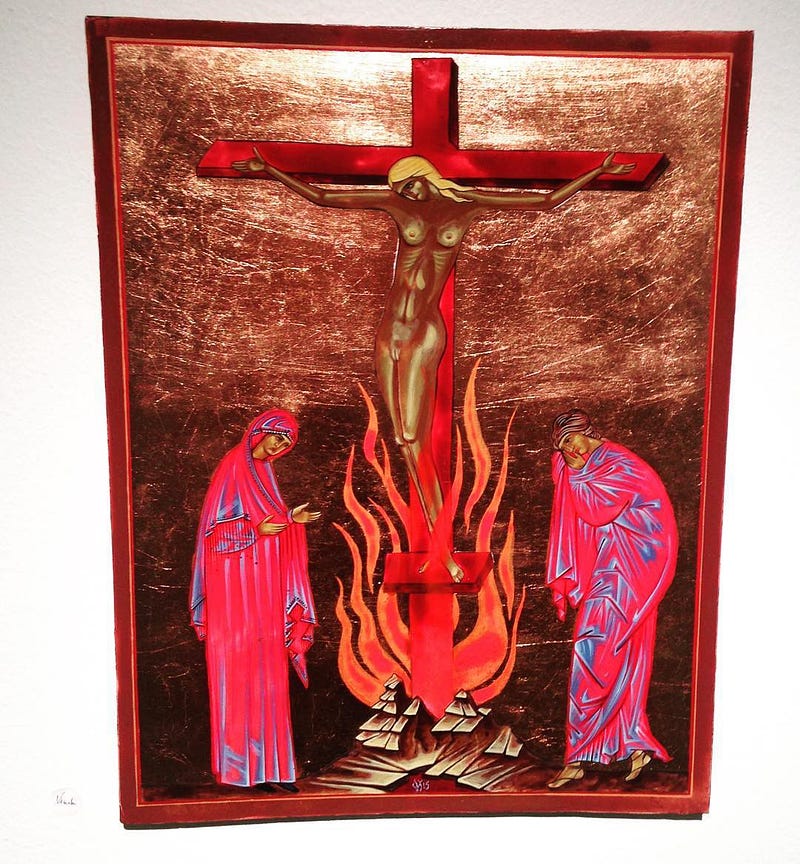
She protested the damage done by traditional Christian teachings on sex, but is not for me anti-Christian.
Rather, she deeply feels the messiah’s spirit. She experiences the reality of ‘Christianity’ as a betrayal of that.
A grave betrayal.
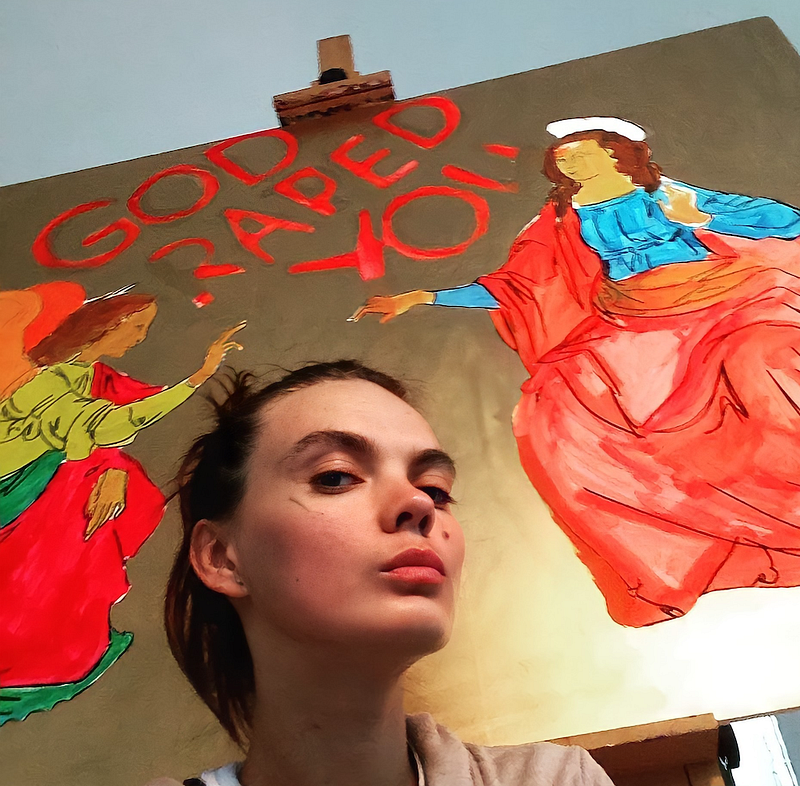
Heavy with sexual details, her work could be quite shocking—as when Jesus is being fellated by John on the cross.
But why not. Let whoever you’re fellating—be divine.
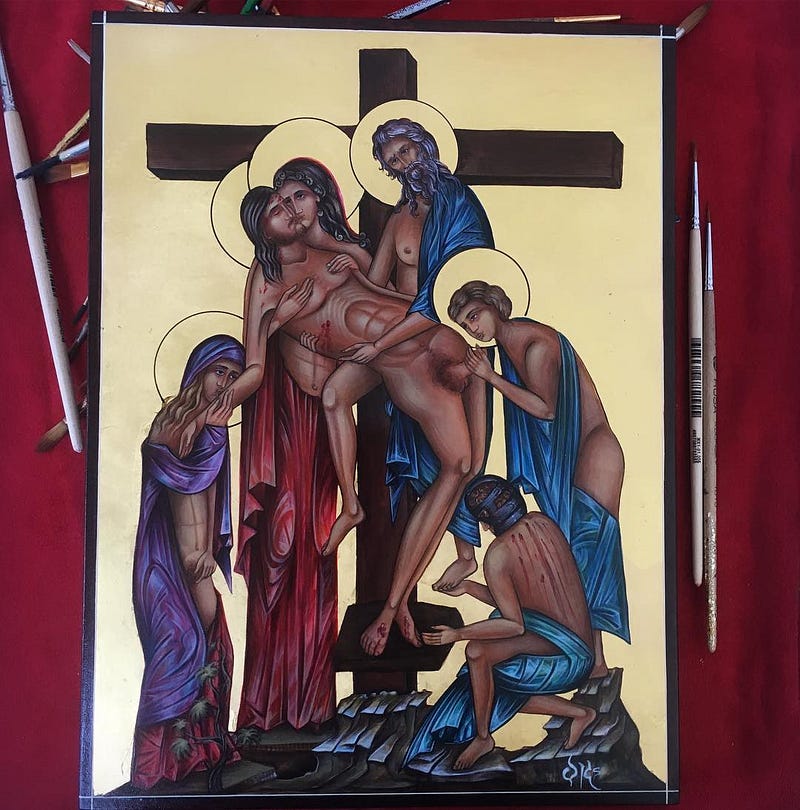
She was always so humorous.
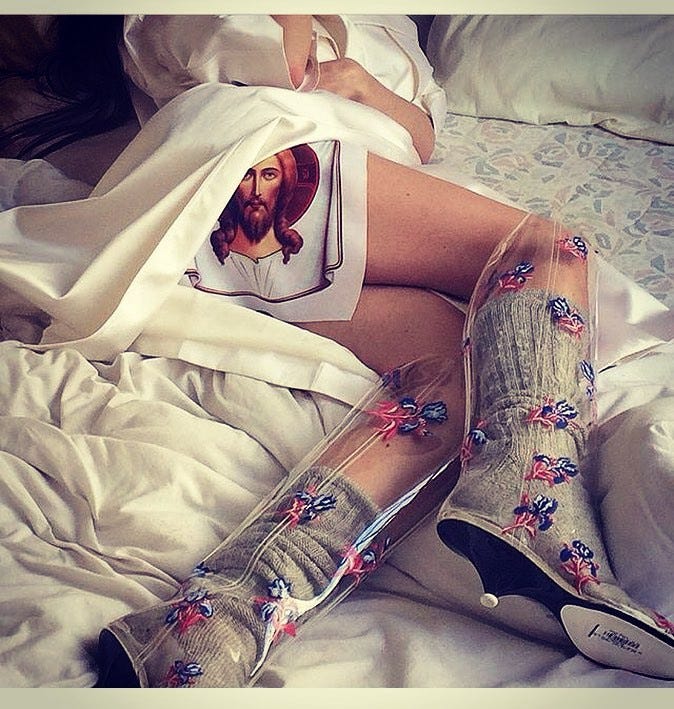
Could Jesus get any more queer?
It’s the great irony of history that an anti-gay religion saw its deity Jesus through ‘gay’ eyes. The key images of the messiah used by Christian tradition are by Leonardo, Michelangelo, Caravaggio—or Franco Zeffirelli, whose 1977 mini-series, Jesus of Nazareth, remains beloved.
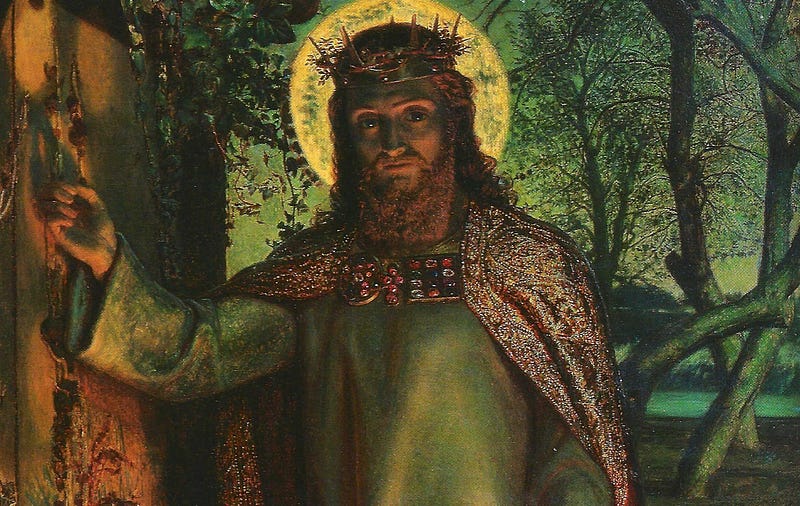
Even images that don’t seem queer—sort of are. Consider one of the most famous Jesus images in Christian history: William Holman Hunt’s The Light of the World (c.1856).
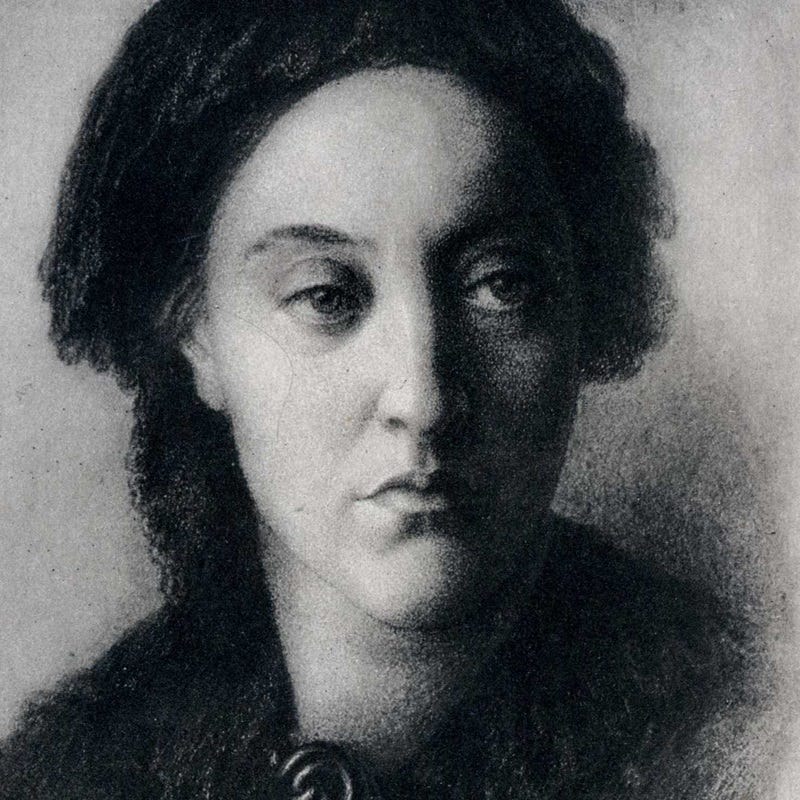
For the Jesus figure he used three models, two women and a man. For the face, he used Christina Rossetti, the poet, who was likely lesbian.
I love that it may capture a mystical side of Rossetti not as apparent in other portraits of her.
But Jesus gets queerer and queerer.
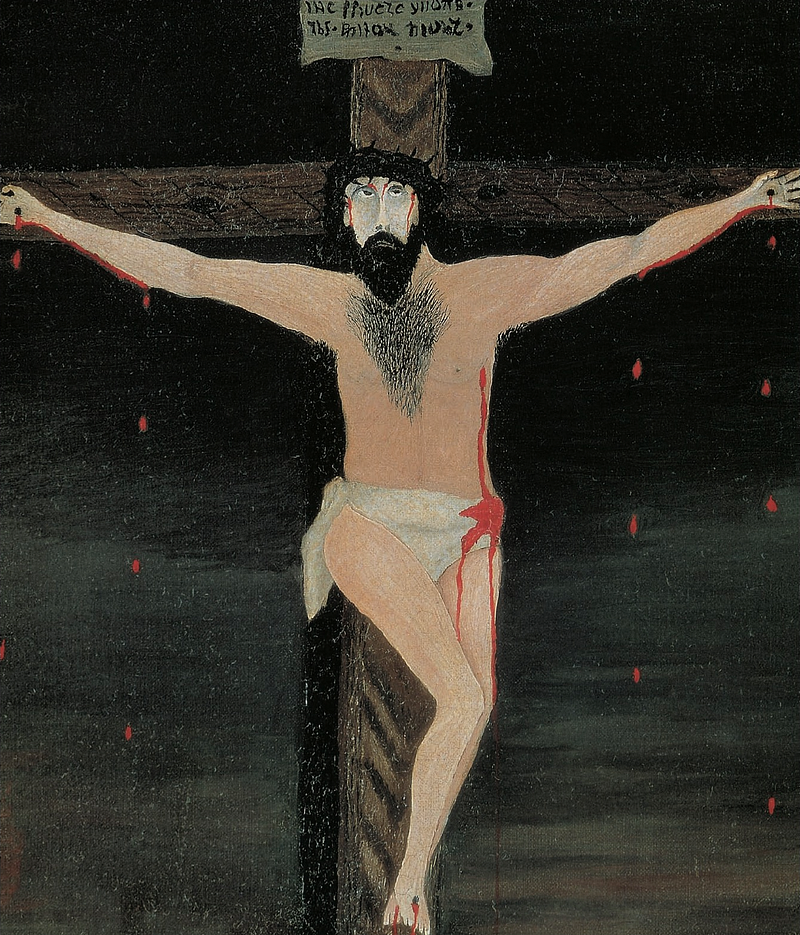
I was studying a 1943 Jesus painting, The Crucifixion by Horace Pippin, the great Black artist. I find little commentary on it. Is the gender strange?
The messianic legs seem almost ladylike, as the chest and armpits are unusually hairy. This Jesus hasn’t done the usual Christian manscaping.
As the blood is sopped up by Jesus’ loincloth, and running down the leg, I can’t help but think of menstruation.
I noticed some Jesus images in the work of Marsden Hartley.
He is known as America’s first great modernist painter. He lived from 1877 to 1943, and was homosexual. In his last years, Hartley worked Jesus into a range of queer situations.
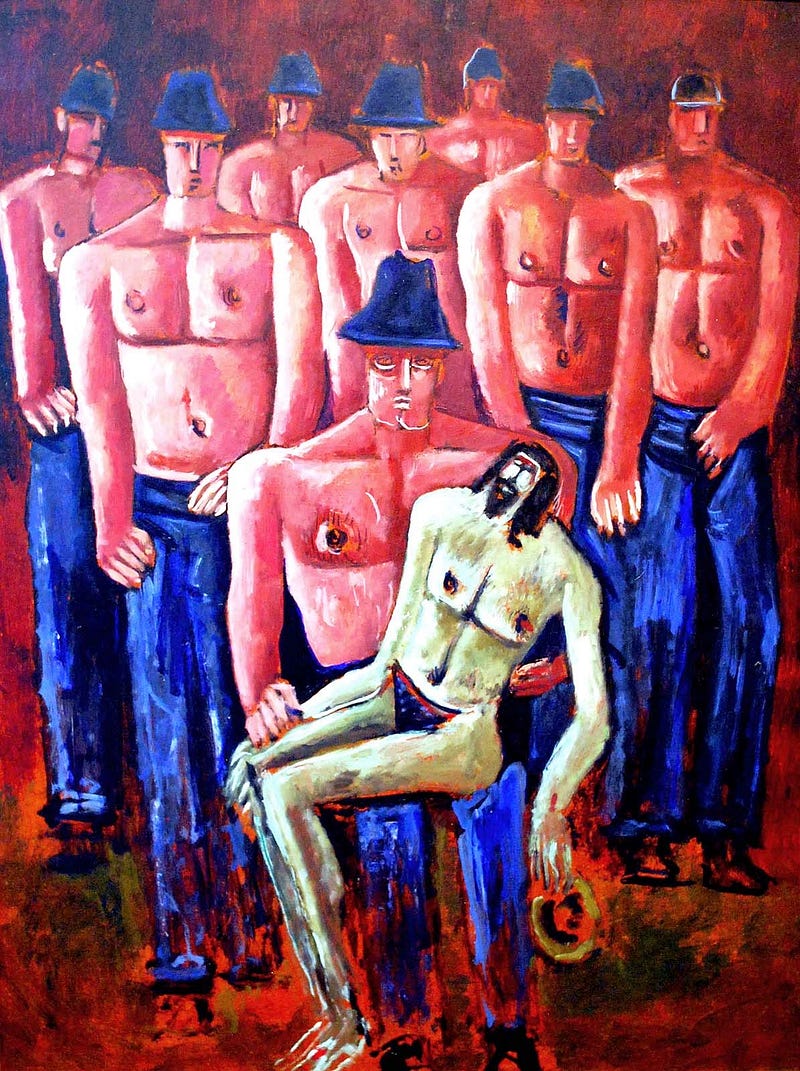
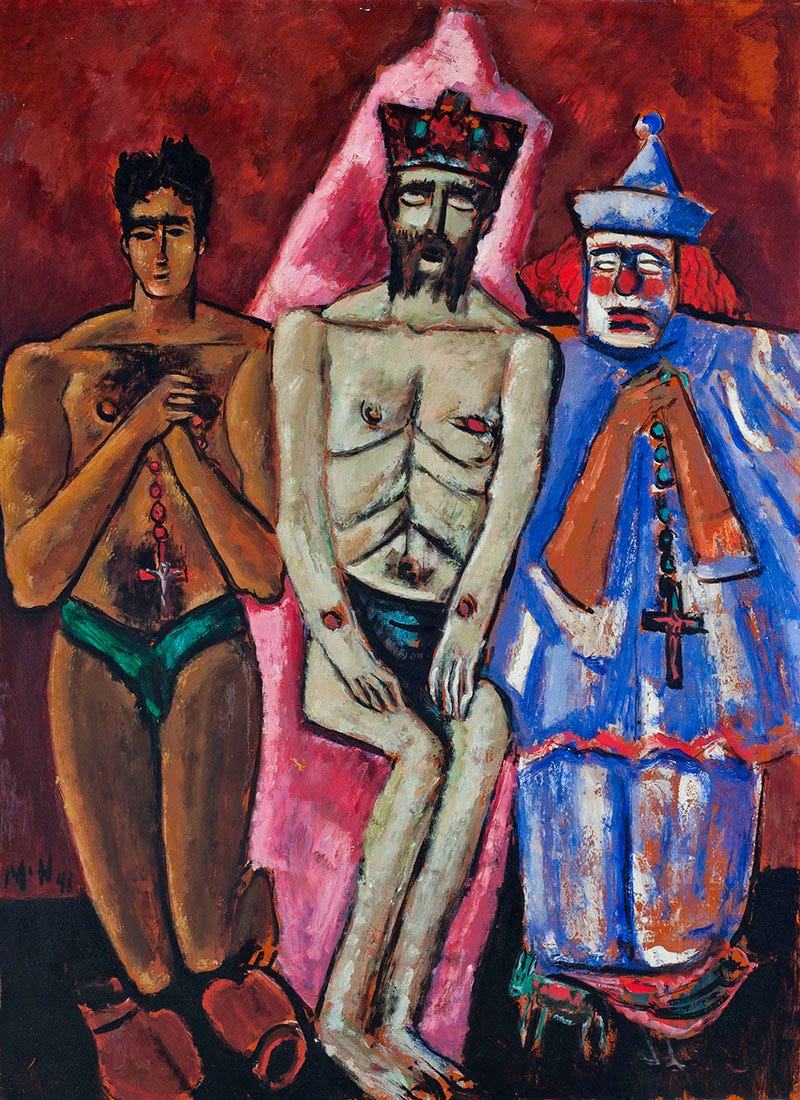
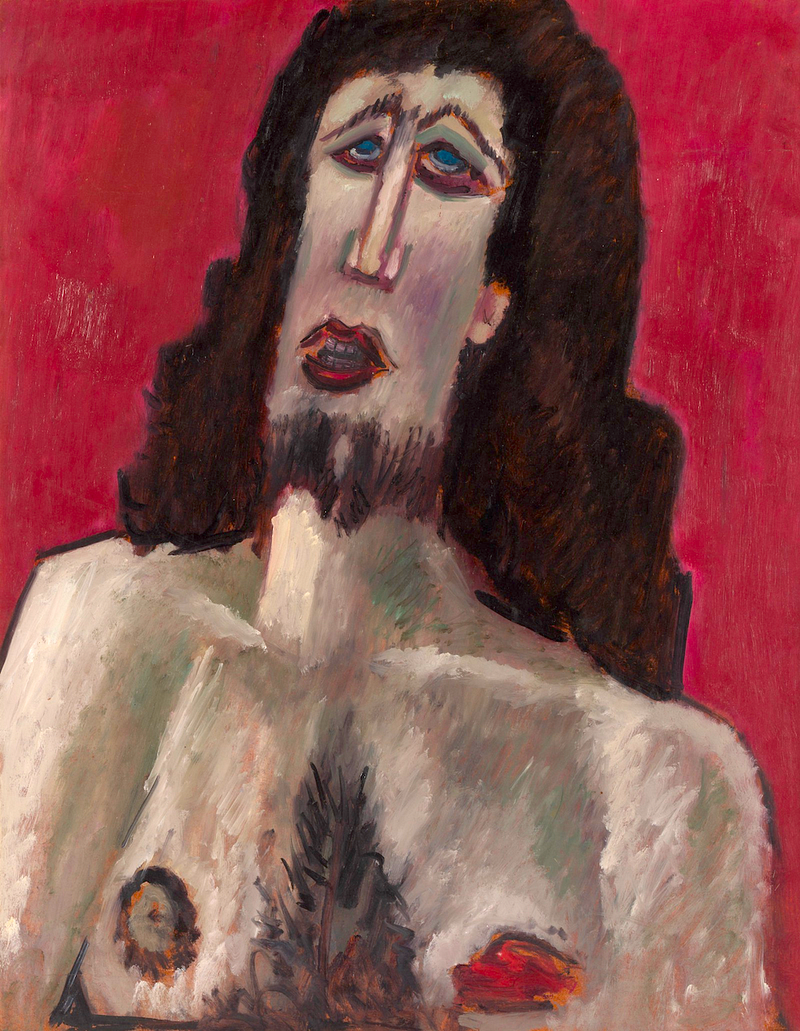
Christians may not like it—but they don’t own Jesus!
How easy it is to get lost in the profusion of imagery of the deity who seems permanently elusive. A divine reminder of all who society has ignored?
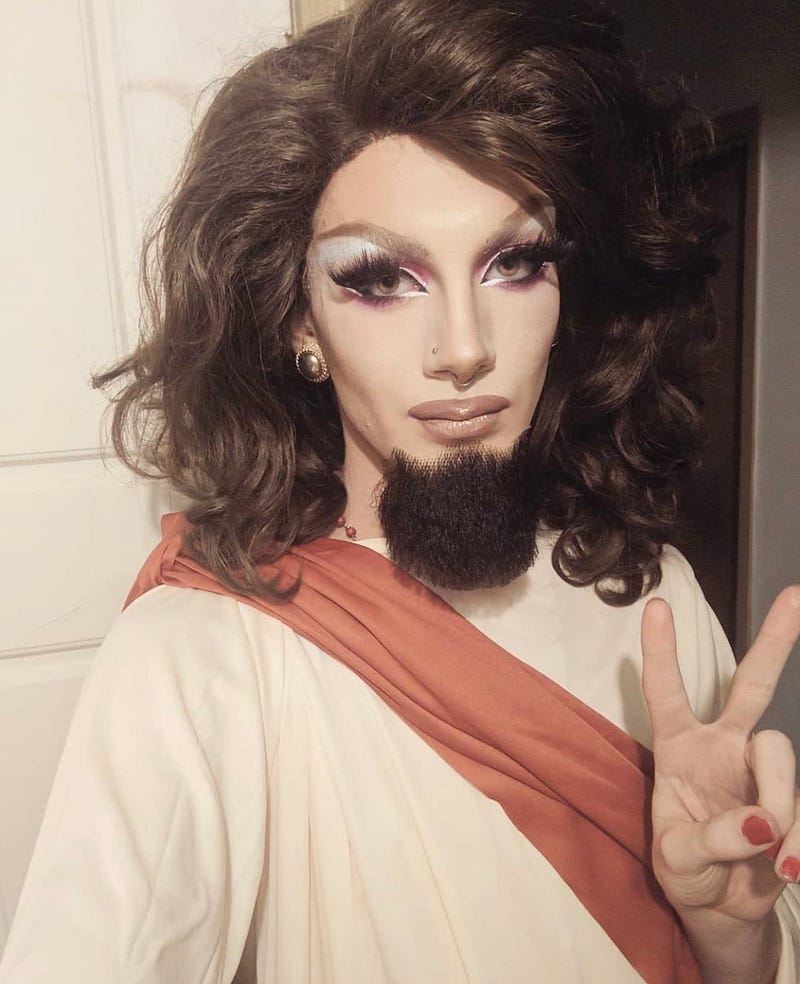
I even spot him—or her—in the drag performer Bosco doing Jesus as genderfucked messiah. An icon of some higher being, a higher self, as available to everyone, even Christians. 🔶