
NEUROPLASTICITY|MATERIALITY|SPIRITUALITY
Neuroplasticity Boosts The Brain For Self Materiality And Spirituality
The brain recognizes synaptic connections and makes changes for a better life
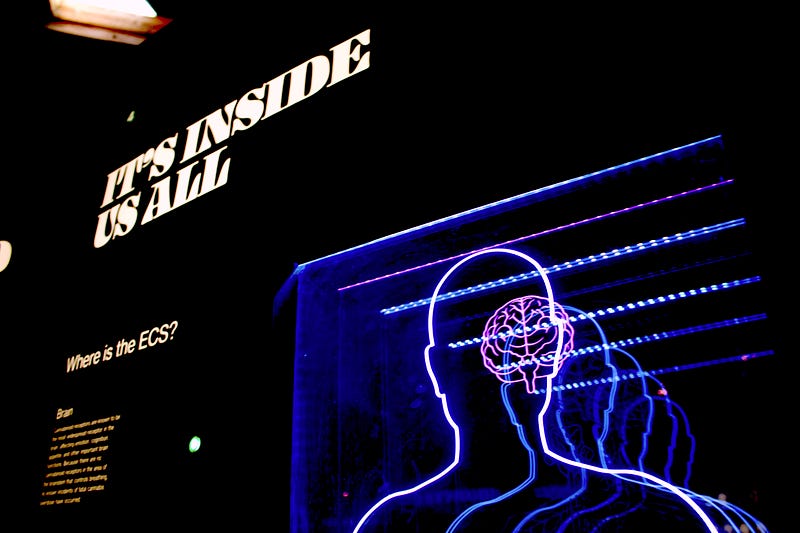
What is neuroplasticity?
Have you heard of the word neuroplasticity?
I was sitting with a doctor friend and she told me that there is a revolutionary discovery that the human brain can change itself.
“How is this possible”? I said. There must be some kind of surgery or medicines to improve or change the brain.
“Well no”, she said.
It shows that the human brain can change itself. This change in the brain can be brought about without any surgical intervention of the brain or medicines.
Science and medicine believed that the anatomy of the brain is fixed. The theory states that humans have an unchanging mind and those who were born with brain or mental deficiencies, or whose brain got damaged, would be damaged for life.
Neuroplasticity offers real hope to everyone from stroke victims to dyslexics It is the ability of the brain to adapt to changes in an individual’s environment by forming new neural connections over time.
It is commonly believed by people that the brain cannot ever alter its structure and find a new way to function if part of it was damaged.
The ability of the brain to form and reorganize synaptic connections, especially in response to learning or experience or following injury can now be changed through neuroplasticity.
“Neuroplasticity is the capacity of neurons and neural networks in the brain to change their connections and behavior in response to new information, sensory stimulation, development, damage, or dysfunction”.- Michael Rugnetta
The Types and benefits of neuroplasticity
There are two main types of neuroplasticity:
- Functional plasticity is when the brain can move forward from its damaged part to its undamaged part or fully functional brain.
- Structural plasticity: The brain’s ableness to make changes in its physical structure through learning new things.
The idea that the brain can change its own structure and function through thought and activity is the most important alteration of the brain.
The neuroplastic discovery has now brought about implications of how love, sex, grief, relationships, learning, addictions, culture, technology, and psychotherapies change our brains.
It is now believed that the brain behaves from what it learns in different fields such as humanities, science, social sciences, business, physical sciences. Each person is different and each brain is different and has different capabilities and understanding of the situation.
It is also believed that when situations change the brain reacts in a different way. It also gets altered when there is grief in someone’s life or joy. Things change in the brain.
The benefits of brain neuroplasticity are that the brain can adapt and change itself because
- It has the ability to learn new things
- It has the ability to enhance the existing cognitive capabilities of a person
- There is a possibility of recovery from a brain stroke and injury of the brain due to some trauma in his life.
- Through neuroplasticity, those areas of the brain can be strengthened where some functions may be lost or have suffered a decline
- Some forward steps can be taken for improvements that can help to promote brain fitness.
How does neuroplasticity boost the brain for self-materiality and spirituality?
In his 2007 book, “The Brain that Changes Itself: Stories of Personal Triumph From the Frontiers of Brain Science,” psychiatrist and psychoanalyst Norman Doidge said that the brain can be changed but there are limitations.
If there is a complete degeneration of the brain then nothing can be done but there is always hope.
Some of the activities listed can help in making the brain function. A good learning environment should be created and the patient should be encouraged to
- Learning a new language: Any new language will boost the brain to focus on a new language and engagement with this activity will enrich the brain.
- Learning how to play an instrument: Music helps in soothing the brain and alters its neurons. An instrument is a physical activity that stimulates the fingers and through it the nerves and finally the spine.
- Traveling and exploring new spaces in life: When you go to new places there are many benefits. You learn to adapt to the new culture and meet different kinds of people. Each place has some differences in the style of living, food, and language. The surrounding areas are different. These help in boosting the brain and learning new things.
- Creative activities: It is often said that when a child is young to give different colors to him for experimentation. Give scissors and ask him to make creative things out of paper like a paper boat, paper flower or some such creative work. These give natural movements to the hand and develop them making the brain alert.
These are some ways that the brain can be boosted through the techniques of neuroplasticity.
Example: My neighbor had a brain stroke. He was given the medication and he survived. His motor skills and walking and movement had became alright slowly but surely.
I was walking with him and asked him about his health.He said that he no longer had a slur in his speech, nor did he have any movement disability except that he was slightly slower compared to his normal days before the stroke.
He overcame his problem by playing carom with his grandchild. He could not even move his finger when he started playing. His grandson would win every day. Now he wins sometimes and he has a fair and equal competition.
His doctor had told him that the brain cells change with natural treatment by taking up a new activity. Such is the power of neuroplasticity.
The learnings
The human brain has a very complex formation. It has the whole nervous system in its control. It regulates the s internal processes and relationships with the external world. The brain thinks and distinguishes the bad from the good, the ugly from the beautiful, and the pleasant memories from the unpleasant.
The brain is the vehicle of our “spiritual life”. When the brain is functional a person will not commit activities that hurt others. He will be more positive in his consciousness.
A diseased brain cannot think. He can harm or be good to others because he has no feelings for others or thoughts of any events in his life.
How can he think of self-materiality or being spiritual when his brain is not his own or in a proper mental condition? The use of neuroplasticity brings him back to a normal cognitive behavior and he can think rationally.
The pathological disturbances of the subcortex create the effects of hysteria anger, fear with uncontrolled emotions like cries and shrieks. the brain is incapable of retaining complex or intentional ideas.
Such a person loses the power of rational self-control of his emotions, thoughts, and actions. There is a breakdown in logical thinking and in the general coordination of behavior.
Lack of emotional restraint takes the form of uncontrolled laughter, of irritation, and anger. Strange patterns of images and thought are woven by the sick imagination.
The new discovery can restore it to some extent. It may not completely alter the condition but it will certainly help.
To conclude
Neuroplasticity is a revolutionary find that the brain can change with little exercise and changes in thoughts of a person.
Since it boosts the brain and brings it back to normality it is worth trying to get relief and have the benefits of self materiality and spirituality.
I would like to end with a quote from Norman Dodge who wrote books on the brain;
“Neuroplasticity is the property of the brain that enables it to change its own structure and functioning in response to activity and mental experience.” ― Norman Doidge, (Author of The Brain that Changes Itself: Stories of Personal Triumph from the Frontiers of Brain Science)
©Dr. Preeti Singh, 2021. All rights are reserved by the author.


