
Neurographic Art
A therapeutic art form.
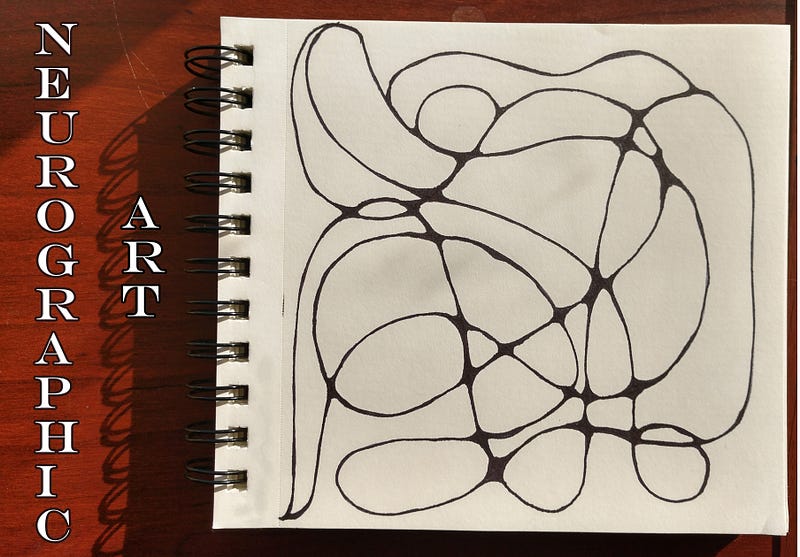
A New Art Form
Neurographica as an art form is relatively new and is created by scribbling loosely on a page to make large circles and a variety of shapes. It’s essentially a tangled line drawing method.
Definition Breakdown
Neuro — means brain
Graphic — means image
About Neurographic Art
It was developed by a Russian psychologist, artist, and architect, Dr. Pavel Piscarev in 2014. It invites us to draw freeform lines on paper, called neurolines. As the line travels across the page, it encourages us to relax. It acts as a form of meditation as the pen creates line and shape. We’re able to disconnect from the things we’re troubled by and focus on the drawing for a few moments. Sometimes the lines cross each other to make recognizable shapes and sometimes they are just bubbles. The idea is to find a reset through the process, and leave all your fear and stress on the paper.
The theory behind Neurographica is based on the scientific study of visual thinking and pattern identification. It’s also based on gestalt therapy and neuro research. Gestalt therapy is a form of therapy often used to treat anxiety and depression.
It has picked up several names, but they all describe the same line-drawing process.
· Neurographica
· Neurographics
· Neurography
· Neurodrawing
· Neuroart
Mental Health Benefits of Art in General
When we do something creative, especially in art, it reduces stress and encourages the production of dopamine in our brain. A surge of dopamine promotes a feeling of satisfaction, pleasure, and accomplishment, and leaves us feeling motivated. This is one of the reasons why art is used when working with patients with PTSD and ones who suffered trauma.
Benefits of Neurographic Art
As a therapy tool, Neurographica is a way for us to act out an ‘emotional throw’. If possible, we can release (throw) our negative emotions on the paper by disconnecting meditatively during this creative process.
I personally feel a sense of freedom as I draw the lines. My hand guides the pen, and the ink delivers the design. Whatever it will be. My mind involuntarily travels and the world around me is muted.
As the patterns emerge and design grows, I try to recognize form and shape. It’s exciting when I find a ‘picture’ in the tangle of lines. That image often leads to another and then another as I study the piece. Once I add color and perhaps added shapes, I feel a sense of accomplishment.
It’s not a Picasso painting but that’s not the point. I feel relaxed and that is the goal.
Pablo Picasso once said, “Art washes from the soul the dust of everyday life.”
Neurographic Art Therapy
Just like Zentangle art, which is the art of drawing structured patterns, Neurographics is trademarked, and you must be certified to teach it. Dr. Piskarev certified the copyright registration in September 2015 in Moscow.
I just want to add though that a Neurographic art teacher is not an art therapist. An art therapist holds a degree in psychology and counseling and will often have a masters degree in art therapy.
You don’t have to be artistic to do this. Start with the basic algorithm (steps) and then decide how you want to color the drawing.
A basic algorithm includes the following:
· Draw loose crisscrossing lines on a piece of paper using a pen or marker. By using an ink pen and not a pencil, you are forced to commit to the design. You can’t erase it.
· As you draw, think of the things that trouble you.
· Don’t focus on structure, just let your pen flow across the page.
· Where the lines cross and make sharp corners, round them out. Softening these edges is calmative.
· You can add shapes to your drawing.
· Now add color. Instead of adding shapes, you might want to use color to highlight shapes.
· Study the drawing and see if there are any recognizable shapes. Perhaps you see a leaf or a butterfly. Then color them in as if you were coloring in a coloring book.
My Conclusion
I’ve taken some art classes, but I’m by no means an artist. However, I love being creative because it gives me a moment in time when nothing else matters. It’s just me, the pen, the paper, and any sound that I allow into that moment. I can completely understand how art therapy is a beneficial tool for any therapist working with a traumatized or depressed patient. It’s so simple, yet so profound.
Thank you
Thank you for reading my article. I really appreciate your support and interest. To read more of my articles click here. https://medium.com/@cwstoryteller
Join Medium
Please consider joining Medium for $5 a month to get full access to all the incredible writers on the platform. Your membership supports writers like myself to continue doing what we love most. To write and entertain.
Please click on my referral link below to join.
Another article from Celeste that you might enjoy reading.
The Many Benefits of Lemongrass Essential Oil With Recipes
Sources
Neurographic Art
Herts Visual Arts
https://www.hvaf.org.uk/workshops-exhibitions/introduction-neurographic-art
Merriam Webster Dictionary
https://www.merriam-webster.com/medical/neurography
Neurographic Academy
https://neurographicacademy.com/neurographica-more-than-just-drawing/
Neurographica Psychology of Creativity Institute.


