Elon Musk implanted the first Neuralink chip into Someone's Brain
Elon Musk has announced the first human trial after the FDA (Food and Drug Administration, allowing this device to be tested on humans.
Tesla has been pushing a ton of different tech into multiple sectors, and Neuralink is another one that can become huge for medicine.
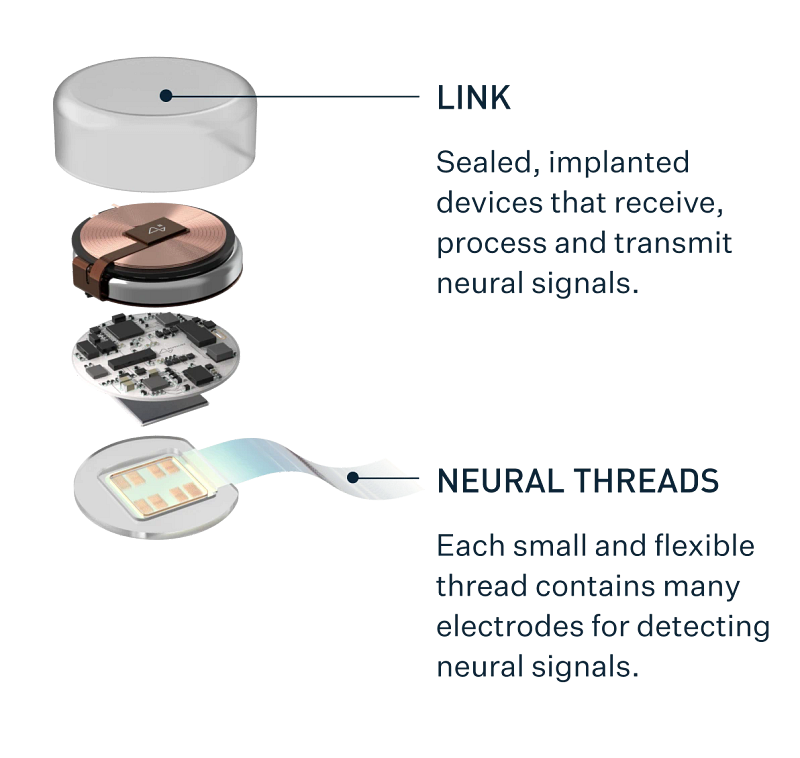
Neuralink is a chip that is directly wired into our brain, with 64 connections that allow us to read directly our brain signals, train a model of movement, and simulate muscle movement in real-time.
The current version of the device is still quite limited, as it is not easy to create too many connections in the brain, but this methodology can be scaled and revolutionize how we interface with technology because according to many brain scientists, our brain executes commands a lot faster than the time our muscles take to react and perform the action.
This means a person with a system like Neuralink, can virtually have faster reflexes and control a virtual device even faster than a regular person.
These links are safe, as they are so thin, that they completely avoid any kind of blood vessels, and connect directly into our brain. Depending on the area where the device is connected, it can perform multiple functions. Of course, the trick everyone wants to learn is how to control electronic devices with this system, but Neuralink is so much more than that, and the main focus is on medical applications, most specifically, Neuralink is targetting people with quadriplegia or spinal cord injuries.
The device can be used to restore mobility functions, but in the future it might also be used to restore vision, hearing, and many other brain injuries, depending on the region of the brain where the link is done.
Although the current interaction is already super interesting, it still has a lot of potential to grow. For instance, you won’t be able to see HD images with just 64 pixels, and our brains still hold a lot of information on how our own body works, and how well we can interface with it. In that field, Neuralink is doing great already. But who knows what the future might hold.
Watch a monkey gaming with Neuralink
Here’s an example of how Neuralink was used to help Pager, a monkey that has been studied and whose effort has been recorded to help develop a Neuralink system just for him.
At the beginning of the experience, the monkey, uses a joystick to control a cursor, while large amounts of data are recorded by the chip. This information is used to connect the movement intention and the actual movement of the monkey hand, and a model connects both pieces of information, to create a functional model for Pager.
Later in the video, we see Pager playing with the joystick unplugged, and eventually, it doesn’t even need the joystick, as the information is fed wirelessly from the Neuralink chip to the computer.
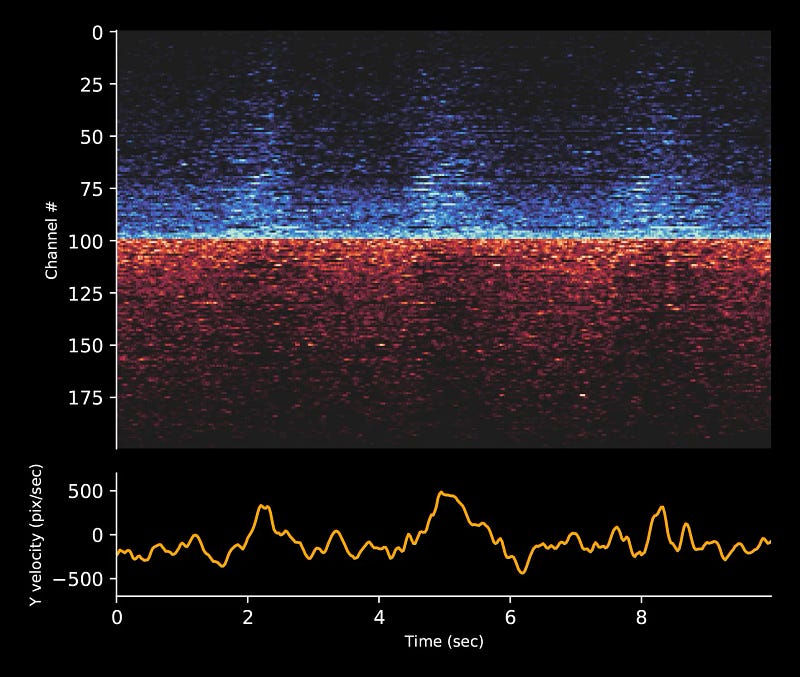
Neuralink has a lot more applications than just controlling a cursor, as it can record and reproduce muscle movement, and if necessary, this info can be directly streamed to other devices, to control muscle and movement, in case several injury as cut the direct connection we have between our brain and any limb.
The research is now finally taking its first steps into human patients, and right now, people with the desire to be treated using this methodology, are now able to register themselves through the Neuralink official website at Neuralink.com
About the procedure
The Neuralink has two main parts, the medical procedure that stitches multiple tiny wires into the brain, and the electronics set up over the sensor's connection. Depending on the treatment, the link can be done on different parts of the brain, to restore muscle movement, mobility, and in the future also vision and more.
Alongside the wires connected with the brain, there’s the whole chip interface, that reads those signals and transmits them into a wireless interface, there’s also a battery included and a full enclosure for the whole thing, that it’s hermetically sealed. The battery can be charged wirelessly, which is a plus, but there is no official information about how much time these last, or how much it would cost for a procedure to replace it.
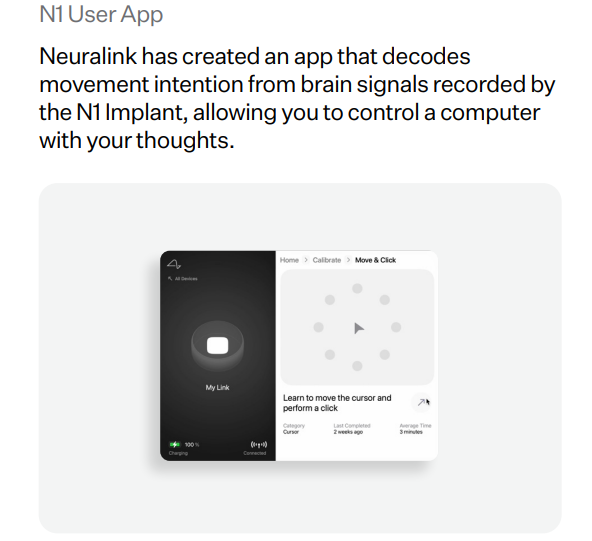
Neuralink uses an app to allow you to control a computer with the device wirelessly, but its applications can go way beyond being just a software interface.
According to the Neuralink brochure, the patient studies will take at least about 6 years to complete, but there will be some close-up attention during the first 18 months.
The first targeted patients must comply with the following rules:
“Have quadriplegia (limited function in all 4 limbs) due to spinal cord injury or amyotrophic lateral sclerosis (ALS) and are at least 1-year post-injury (without improvement)”
“At least 22 years old”
“Have a consistent and reliable caregiver”
Neuralink is “regrettably” not accepting people with active electronic implants, a history of seizures, any ongoing medical condition that requires MRI, or receiving any TRS treatment.
You can find all of this information and more in the Neuralink Study Brochure Or you can visit the Neuralink official website
If you missed the Neuralink event in 2022, here’s a quick peak of the best parts in just as little as 10 minutes, by CNET.