
Netherlands Just Banned All Cell Phones in Public Schools
By Giselle Castaneda and Dr. Benjamin M. Drury
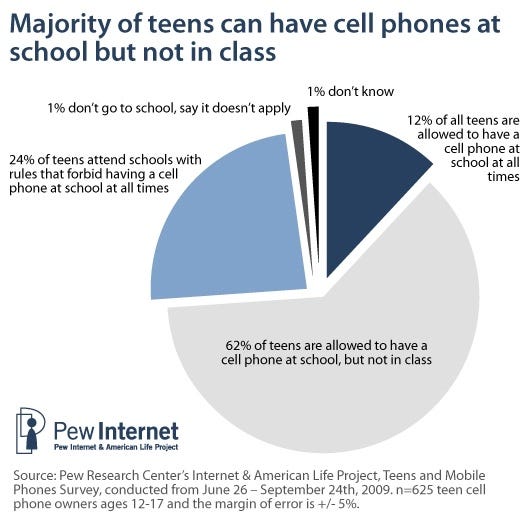
The Dutch government legislated against the use of mobile phones, tablets, and smartwatches in classrooms that could set a precedent for other countries moving forward. Netherlands has taken the first step in limiting access to an increasing ocean of technology that is eroding our ability to learn. Effective from January 1, 2024, these devices will be largely banned in schools throughout the Netherlands. The main objective behind this decision is to minimize distractions during lessons and create a conducive learning environment. Take a look at the graphic above and see that in 2009 the United States had lower respondents sharing that they had open access to their phone in school on a daily basis.
While it is not clear if by schools this will also include college classrooms, but why not? Do you know how many times I have lectured to a room full of people staring at their laps? Not to say that Karl Marx, or the social construction of gender, or deviance are topics that generally struggle to find students who are interested in learning more about them and discussing them with their peers. Rather, there is something seriously underdiscussed related to the use of media — specifically social media — which is that connecting with social media releases dopamine in human brains. When anything is found to release dopamine in our brains, we will continue to do it seeking the same release of a powerful chemical found within human bodies. We don’t let students drink alcohol. We don’t let students smoke cigarettes in class. For the most part, students are strongly discouraged from bringing coffee and outside food to class. Most anything that people can be seriously addicted to is considered taboo activity for class. Why do we then place phones into a different category?
Under the new regulations, mobile devices will only be permitted if they are specifically required for educational purposes, such as lessons focused on digital skills. Additionally, exceptions will be made for students who rely on these devices for medical reasons or due to disabilities. The intention is to ensure that the use of mobile phones and similar devices is limited to situations where their presence is essential for educational or individual needs. Education Minister Robbert Dijkgraaf emphasized that while mobile phones have become deeply integrated into our lives, they do not have a place in the classroom. The decision is based on scientific research that demonstrates how mobile phones can act as a source of disturbance, hindering students’ ability to concentrate and study effectively. In the United States, as seen below, there is evidence that young people do use their phones to learn new things. What that process looks like and how it can be assessed is worth of all professional educators to consider if they are seeking ways to improve community-school relationships.
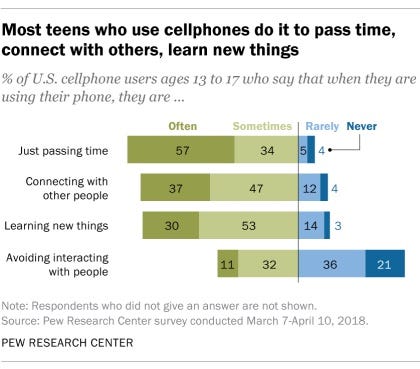
In terms of outcomes, the Dutch government wants to prevent students from being distracted while they are attempting to learn new things by providing them with an optimal learning experience. Banning mobile devices in classrooms is the outcome of an agreement between the Dutch Ministry of Education, schools, and related organizations. Schools are given the flexibility to devise their own methods of implementing the ban. However, if the desired outcomes are not achieved by the summer of 2024, legal regulations may be enforced to ensure compliance. This decision signifies a proactive approach by the Dutch government to address the potential negative impacts of mobile phone usage in educational settings. By limiting distractions and fostering an environment conducive to learning, the authorities aim to enhance students’ concentration and academic performance.
Trying to imagine a full-scale moratorium on on mobile phones and electronic devices in classrooms is a curious thought experiment, and one that will most likely never become a reality. Potential for successfully implementing educational policies that limit the access to technology depend a great deal on the societal context of the country and culture. Currently, the issue of mobile phone use in schools is a a subject of debate in many countries. In recent years, several countries and educational institutions have implemented policies or guidelines to regulate or limit the use of mobile phones in classrooms. These measures are typically driven by the desire to minimize distractions, foster focused learning environments, and address concerns related to cyberbullying or inappropriate content. Any decision to enforce a ban or impose restrictions on mobile devices ultimately hinges on the educational priorities, cultural values, and political will of each country. Some countries have already taken steps in this direction, while others may opt for alternative approaches such as promoting responsible device usage through guidelines, introducing technology education programs, or granting autonomy to individual schools to establish their own policies. It is essential to recognize that educational policies and practices can vary significantly between countries, and decisions concerning mobile phone use in classrooms are contingent upon local circumstances and priorities.