
Neighbor, a Handbook: Introducing This Book
Words, Their Power, and Love
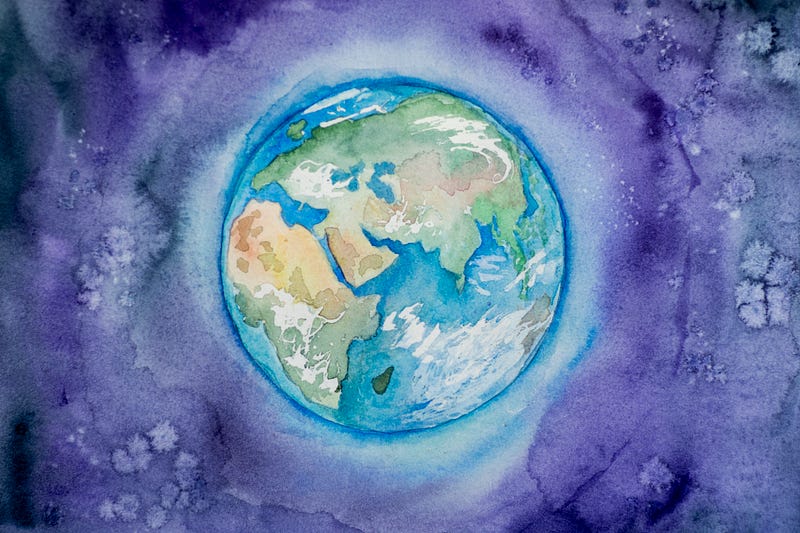
Sometimes all we have is the ability to love.
Always, the best thing we have is the ability to love.
I believe in love.
This is corny. I own that. It’s perhaps Pollyanna. I own that, too. My belief in love’s power and that there’s a central kernel of love living in each of us is perhaps foolish, but we all must plant our flag somewhere and this is where I return, over and over, even in the darkest of nights, to replant mine.
So, though I’m shy to do it, over the next number of months, I’ll be serial releasing chapters of a handbook on being a Neighbor written with those first three sentences at its heart. I don’t mean neighbor only in the sense of the people who live next door. I mean it in the highest, most far reaching sense of the word, the meaning I was taught in my spiritual upbringing where everyone is your neighbor because everyone is part of Love’s kingdom.
**
I first had the idea for this handbook in 2018, as I watched hate shaking our country. I watched people use words as weapons, use words as earplugs, talk louder to listen less or not at all, and use labels as a reason or excuse to dismiss another person or idea and ultimately even to hate them. I watched people become unafraid to say very hurtful things, and even feel pride when their insult struck the heart. I watched people unwilling to own their part in conflict yet willing to point a finger as though they were the only victim of this hate. I saw it in myself.
Recently, a friend told me about an idea she’d read that today in our country we’re forming communities in a new way (1). Instead of coming together out of geography, interest in the same thing, or affection and care for one another, we’re coming together to hate a common enemy. In this kind of community, it doesn’t matter who’s in our group, what choices they make as human beings, or if their choices reflect our values. Instead, the ticket to enter is simple: if you hate who I hate, we bond together. If you hate who I hate, I believe you. I support you. But, if you say something that goes against the beliefs or rules that are part of this community, I won’t listen, I will kick you out. In this new community, we do not look within. We only look out. And when we look out, we look for what’s wrong, then we blame it on whoever or whatever we’ve gathered to hate. Inflation? Their fault. Car break ins? Their fault. No conversation of possible varied causes. In these hate-based communities, neighborhoods that are the opposite of the Neighborhood driving this book, we may not even consider how foolish the blame might be, and we certainly won’t listen to discussion that threatens to weaken our hate. Fault assigned, hands brushed of it. Hate engaged.
Pause with that for a moment. As much as I hate to admit it, I see myself. Do you see you?
**
In 2018, as I watched this new form of community evolve, I also taught high school English to first years, juniors, and seniors. There, I entered a world that was not shaking itself with hate. Instead, into my classroom came students of all sorts, sizes, shapes, and makes, and most of them were bewildered by what was happening in the world around them. Ms. Payne, they’d say, what is going on? The hurt in their eyes hurt me.
Three of the values of the school where I taught were community, hospitality, and integrity. The students were incredible in how deeply most of them believed in their world built of and by these three values, and how, day after day as I watched, they did the bumpy and humbling work of making room for one another in support of this belief. It was truly inspiring to watch students, aged 14–18, hold space as best they could for every person, their uniqueness and differences, while outside our doors the adults of the world did the opposite.
It showed me that a diverse community, formed and run and embraced with intention, could work.
This didn’t mean there wasn’t smallness or pettiness or cliques. They didn’t all like one another, that’s true of any neighborhood. We still had conflict. We needed to co-create rules for civil discussion and brave conversation. We needed to dig deep to learn and understand more clearly. At times, people got offended or angry with one another and had to walk the road to resolution and forgiveness. I was also faculty co-chair of the restorative justice team that worked with the students who’d made suspendable mistakes to repair the damage they’d done, so I saw that at times students still deeply hurt one another and themselves. But, in general, what I witnessed in my classroom and in that restorative justice work was quite a beautiful and breathtaking thing: young people working together both to see one another and to heal what had broken between them.
Though I was their teacher, I did more learning at the hands of those kids than they did from me. I learned that kids, just like us, want connection based in love and they are healthier when they have it. They also taught me that our ability to see and honor the full humanity in one another is not only possible, it’s the key to peace and love. Peace among us and peace within us. Love among us and love within us.
Does that sound Pollyanna? Well, so be it.
When those young people asked me What is going on? as they watched the adults of their country, they were expressing the deep dismay and heartbreak that came from viewing the rupture of connection happening all around them. Adults were the people my students were supposed to count on. To shine a light, to guide, and to lead. What they witnessed instead was a never-ending series of acts that damaged and ended relationships. Acts intended to damage and cut other humans because of who they were and how they expressed themselves.
In this community where the kids were doing the exact opposite of our nation’s adults, I witnessed what these actions did to them. It made them bewildered and it made them afraid. It struck at the core of their hope. Looking at reports on our children’s mental health and addiction from around the country today, I would suggest witnessing these adult choices began to make them sick. Because, as they watched us wreck the future, as they listened to us spew anger and blame, they could not imagine what their own years ahead could possibly bring.
There is no hope in hate.
There is hope in our youth. But they cannot do it alone.
**
And so, the Book
The book is written as a reference handbook. As such, it’s broken into two parts. Each parts holds a different collection of terms, and while Part One can be read straight through, Part Two is really intended to be accessed like a handbook. You wonder what a word or concept means and then you open the book to look it up, learn its history, see it in action. Sometimes I tell a story, sometimes I may offer guidance in its use. The terms are yours to pick and choose. But I’d suggest that a feeling of resistance is as strong a nudge as curiosity when it comes to words for you that are worth exploring.
Part One
The first part of the book explores some of our ways of being in the world that help or get in the way of being a good Neighbor. The concepts in this section offer a very personal journey. Each chapter is an invitation to consider being a better neighbor through the lens of the chapter’s concept. There are concepts like love and can’t/won’t and calling in/calling out and caretaking your ancestors and individuation. This section can be read from beginning to end.
Picture Part One as a series of open doors that could lead to larger rooms should you wish to go deeper. For example, you may not have considered the role shame plays, or has played, in your world, so you decide to learn more. Or you discover in yourself an anger that never leaves, or a guiding loyalty you didn’t realize you had, and in the interest of being a better neighbor you want to understand it and how it impacts you. There are beautiful books written by experts on every single one of these topics, and if any light a spark for you, I encourage you to search them out.
I myself am no expert. Instead, I continually wrestle with every single one of these concepts myself. As a result, I know that to enter these chapters with an open mind and heart creates a real opportunity for growth. Though this requires work, sometimes discomfort, and is never done, it’s always been worth it. Doing the examination around each concept opens me to deeper understanding and then to better loving those around me and myself. Key ingredients, I’ve found, to being a better neighbor.
Part Two
I wrote Part Two to help shed light on words I see dividing us, in the hopes we can instead use them as tools rather than weapons. This section holds and defines words and phrases that I think of as some of today’s hot spot words; words that get people going. These are words like nonbinary and marginalized and intersectional. Patriarchy, gender pronouns, snowflake, and woke. These are words that many of our youth use with understanding and clarity, but I, or their parents/grandparents, do not.
For us, they’re new, or they’ve changed their meaning over the years. Take “Karen” as an example. Maybe you’ve noticed that everyone is suddenly calling people “Karen.” Maybe you’ve even begun calling people you don’t like Karen. And yet, if asked, you couldn’t define what a Karen is, or worse, would define it incorrectly. Or perhaps your grandchild referred to you as cisgender and you thought, uh, no, I’m a woman, but didn’t understand what they meant so felt too shy to ask.
The split in who understands this language and who doesn’t happens mainly along age lines. The youth, like my students, are usually the people who understand it. We older people (give or take a few decades from my age) are usually the ones who do not. The split can break down in other ways (race, gender, religion, geography, social status, etc) but often age is a factor in a person’s exposure, or lack of it, to the language and its meaning.
Here’s why. These hot spot words often speak to concepts that have not been not part of many of us older people’s lives. They weren’t part of our childhoods. The deep meaning of these words has always been there, of course, but before these past years, parts of the U.S. population (different parts for different terms) either hadn’t met them, hadn’t been asked to think about them, or were able to avoid or dismiss them. And now, for many reasons including fear and discomfort, these words have even been turned into weapons among those of us who don’t understand them.
Yet here is what I witnessed with my students: in the interest of creating community, they chose to get comfortable with this language, to learn what it meant, to make room for its continual development. To them, it was not a threat. Not in a personal or social way. For these students, being asked to understand and grow and expand the way they saw the world was not a threat.
Through my students, I realized that coming together or breaking apart because of these words was a choice.
Then, when I asked my students to teach me the words, and the concepts and humanity represented by them, I realized another deep truth: if adults, too, understood what the kids were already saying, our world could change. For the better.
It was then I thought, Oh, if only I could explain these words to other people like me. So.
Hi.
**
Why
When it comes to being a Neighbor, understanding these words is so important. They not only describe a person’s human experience, they often hold an individual’s humanity at their core. They may concern the way someone is made, what they have, who they love, what they’ve experienced, how they approach the world or the world approaches them. Because the youth understand the language, and keep working to understand it, they use it freely. They’re comfortable asking and correcting themselves and one another. They’re comfortable with what the language holds.
But many people my age, because we aren’t in a highschool classroom or a world classroom that can help, don’t run into these words in a way that gives us the opportunity to learn. Sometimes we hear a new word and don’t know who to ask, sometimes it doesn’t feel safe to ask, sometimes we simply don’t want to know, sometimes we’re given a definition that is wrong. So the terms in Part Two, though currently thrown wildy and often irresponsibly around (by the media as well as us), are terms I’ve found most people like me don’t truly understand. And yet, if we’re to all be one another’s neighbors, they are critical to understand. To understand doesn’t mean to automatically accept, but it does mean we approach them in a way that’s open and recognizes that we’re being asked to hear something important. Someone’s truth.
Not understanding might make you feel unsure. It makes me unsure. One outcome of feeling unsure is fear. Fear generally leads to closing down or learning more. Closing down usually leads to anger, and sometimes hate. Closing down also hurts other people, whether we mean to or not.
Learning, however, usually leads to openness.
Have you ever experienced someone turning toward you, and when you looked into their eyes they were there looking openly and kindly, maybe even lovingly, at you? Have you felt that? It’s amazing. Amazing to have someone be open to you. Amazing to be seen. To be seen as a fellow human. It is one of, if not the, greatest gifts a person can give another. It can be given anywhere. Across a dining table, work break room, grocery store counter, freeway lane, and in our own mirror.
Watching the youth at my school navigate courageous conversations, I saw them meet the world and the words in a very different way than the approach I saw from adults. The kids showed up. For one another. As the language changed and grew, they weren’t threatened. Ohhh, they’d say and they’d discuss. Not No or Oh Brother. They dug deeper. They’d listen, ask, then grow (their understanding, the way they spoke, their world view, whatever the growth required). They’d laugh when they misused a term or learned that its meaning had shifted. They didn’t lose their core values, they deepened them. When someone mistreated another, mistakenly or on purpose, they spoke up, and all the while tried to maintain a community. They had their pride in the right place. They were proud to be people working together.
Witnessing this, I realized that so many of our youth speak to one another and to the world with a love that extends beyond themselves. These young people are who I dedicate this book to, because they are this book in living form, wanting and willing to step into the role of Neighbor. They believe at a core level that being a Neighbor in the largest sense of the word is the right thing to do.
I do, too, and I hope you do as well. This handbook is one way to begin. It won’t teach you everything, but please know that I will do my best to meet you halfway.
**
Language is Living
This book is challenging to write in many ways, and one is that this language is an alive and evolving thing. Though I’ve done my best to select terms that are causing social confusion or currently used as weapons (or both), over time some will go away, change in meaning, or no longer hold heat. A book like this must forever be a work in progress. Just like us.
For each term, I’ll explain the meaning as best I can, give some history or context where it makes sense, and provide a real life example or two. Because of who I am, no matter how much work I do, I have a limited perspective and will make mistakes. One of the hardest parts of writing this has been the knowledge that I’ll mess up, and at times, hurt people. That’s the last thing I want to do. It has honestly stopped me cold. But part of growing is to not close down, then to own a mistake, and after that, to repair and change. I can do that. And in the end it matters more to me that the world come together. So I’m stepping into my own discomfort and proceeding. I ask that when I make a mistake you tell me, and that you do your best to tell me as one Neighbor would tell another. There’s a place for comments on Medium you can use. We may not always agree. But as long as you don’t show up in hate, of me or any other group or person, I’ll do my best to show up to your comments, to listen and grow. I may not answer directly but I’ll take them into true consideration. There are times people ask questions or make comments that hurt others, but the intent to hurt was not there. I’ll do my best to work with that because this is a place for people who want to grow. But please know, if you show up with intent to harm, me or anyone else, your voice will be removed from the conversation.
**
The Core Audience and Me
While I offer this book to anyone in the world, I’m writing it most of all for those like me. I hope with some of our similar life experiences my explanations will be helpful. I’m not writing to pose as the mouthpiece of other people but to share what I myself have learned. What you’ll read is a blend of my experience, what I’ve witnessed, and a lot of research. I’m an English teacher. I care about my sources and have spent a ton of time finding the best supported, most unbiased ones I can. When it’s someone’s opinion/idea, I’ll say that, too.
Just the same, who I am plays a huge role in this book because who I am and the culture in which I was raised inform the way I see the world. No matter the work I do to see beyond my own lens, it will always be there in some form. It gives both clarity and clouds. So, in the spirit of full disclosure, here’s me. I’m a mom, unmarried, White, female, in the middle third of life, straight, able bodied (my body fits our social norms), college educated, privileged. My ancestry is Scandinavian, midwestern, mainly farm and teacher stock, a little business thrown in. A large part of my family now is Chinese/Vietnamese, and began with my brothers who came to the U.S. as refugees from Vietnam when I was in seventh grade. I’ve lived on the east and west coasts and spent two years in the middle of the country. The first part of my career was business and the second was teaching, and whenever I could fit it in, writing. I was raised Christian though now I consider myself God’s kid. To me, God (or whatever word you use for God — Allah, Jehovah, Great Spirit, I Am, Source, Love, Connectedness, the Universe, etc) is much bigger than any human word we use and certainly bigger than any set of human rules we create. My spiritual life, grounded in the forever challenging desire to know and live Love, is of utmost importance to me. You see, what I believe about love is the thing that powers this book. I believe we are meant to step beyond our own doorsteps and love everyone beyond what we think is possible.
Finally, I’m doing my best to write this handbook in a way that’s easy to take in. As an English teacher, sometimes that old language will slip in. You cannot imagine how many times I’ve already deleted the word metaphor. I’m sorry! I do love language, but I hate it when language is used to divide in any way. Big words do not make a person better. Big words do not make a concept more important. Big words also do not make a person less (unless they’re trying to sound smart). Because this book is about expanding our word base and our understanding there will probably be a little bit of everything. With all that said, I hope you can be open; please know I’m doing my best.
**
Hiking and Hope
Just the other day, a friend was hiking and did a huge face-plant on the trail. The pictures of her poor face are gruesome. Bruises, blood, swollenness, stitches. But her learning from that experience was not pain, instead it was that everyone, near and far, came to help her. No one asked first what she believed, who she loved, which party she belonged to, if there was an immunization card or mask in her back pocket. They simply reached out. Helped her up. Cleaned her off. Sent her forward. She posted her experience on social media because of her wounds, but to say that on this day she had regained hope.
Another friend recently read an article claiming hope is as bad as worry. Both acts, the article said, are a way of not being in the present. While on the surface this may be true, I do not believe they’re the same at all. False hope is probably what they were referring to: either baseless belief, like hoping you’ll win the future lottery to pay the current bills you keep racking up, or a cop out, a comforting it’ll be ok or they’ll take care of it that stops you from action.
Real hope, though, is a beautiful thing. It’s the belief that better things are possible. It’s a vision of the future that picks us up and sends us forward into today’s world, time and time again, to be brave, to do our best, and to be open to that possibility in return. Hope lets us give and seek love.
If I decided to live in the present by accepting today’s division and awful behavior as the way it is, the best case outcome would be that I’d live my life by guarding my heart. The worst case would be that I’d give up. These are no way to live. We aren’t here to guard or to give up.
I believe, there’s a balance. We need to do both: guard and trust, let go and keep going. We need to meet the world with wisdom and innocence, as the saying goes.
My friend’s experience on the trail is one example among so many that supports my hope each of us is fully capable of seeing all other people for who they most are, one of us, and then of treating them with respect. Though these years have been hard on hope, it’s my belief in our ability, and even longing, to be in relationship with one another in these ways that powers the words on this page.
As a nation, we cannot successfully continue the way we are. There are issues at stake critical to human dignity and the earth’s survival. Without ever looking away from issues of justice and love, we must change the way we’re interacting. A whole bunch of people yelling changes nothing. It’s just noise that will make us all sick in the end.
And we have to lead our leaders rather than wait for them to join us. One by one. You and me.
Truth is, we can only do our own part, small or large as it is. If you’re like me, it can feel way too small. Often I feel powerless. But this is wrong. The fact is, we can choose to act, and though you and I will probably never know the impact of our choice to be a neighbor, it will have an impact. To make this choice is love in action, and I have entered this writing project and offer it to you because the work of loving is the most truly beautiful thing we can do on earth.
Each week or two, I’ll release a new chapter. If you follow me on Medium and click the email notification box, you’ll get word each time one comes out. So, I invite you to come along. To open. And at the risk of sounding too corny, to do the work together in creating a large and beautiful Neighborhood that holds and honors us all.
- My friend’s reference to the new communities that are based on who we’re against was drawn from David Brooks’ book, The Second Mountain, which I did not read. All the words and thoughts that sprang from her sharing the idea were my own. Any duplication of his ideas, I gladly acknowledge.


