
Negotiation Is War Fought by Other Means
Accept Russia’s imaginary Red Lines = snatching defeat from the jaws of victory
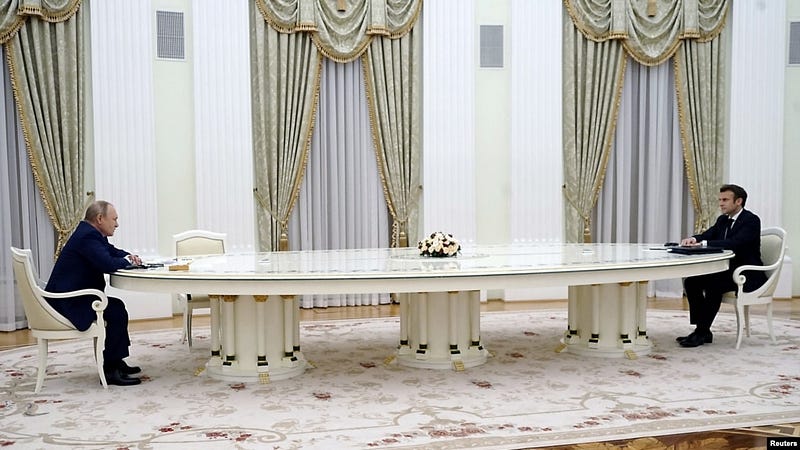
The blame NATO negotiate unconditionally crowd on the left repeatedly invokes Russia’s tactical nuclear threat if the West crosses Russia’s “red lines,” as if these lines were fixed in place with a nuclear trigger or tripwire.
Here’s why this is delusional: there isn’t a single Russian war aim, tactic or escalation measure that western restraint has changed. The negotiate unconditionally Code Pinkos and the carpe diem negotiation advocates like French President Emmanuel Macron and US Chairman of the Join Chiefs of Staff General Mark Milley share a conceptual error about Russia’s red lines being fixed.
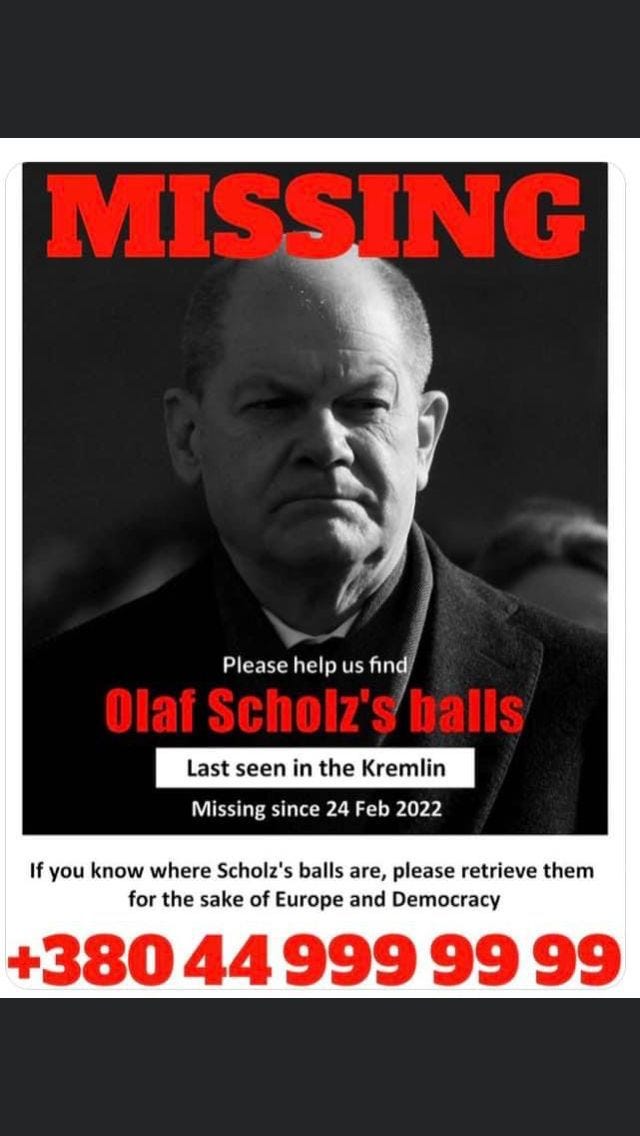
Here’s a quick summary that the West’s Axis of Prudence (Macron, Scholz, Milley, Biden) has not prevented:
- Flattening Ukrainian cities (Mariupol, Severodonetsk, Lyzychansk, Bakhmut)
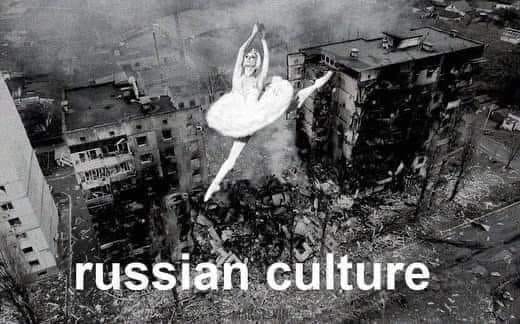
- Mass murder of civilians
- Mass bombing of civilian energy infrastructure
- Openly proclaiming genocidal war aims
- Annexation of four Ukrainian regions as non-negotiable war aims
- Mass deportations of Ukrainians, including 11000 children
- Rape deployed as a weapon of war
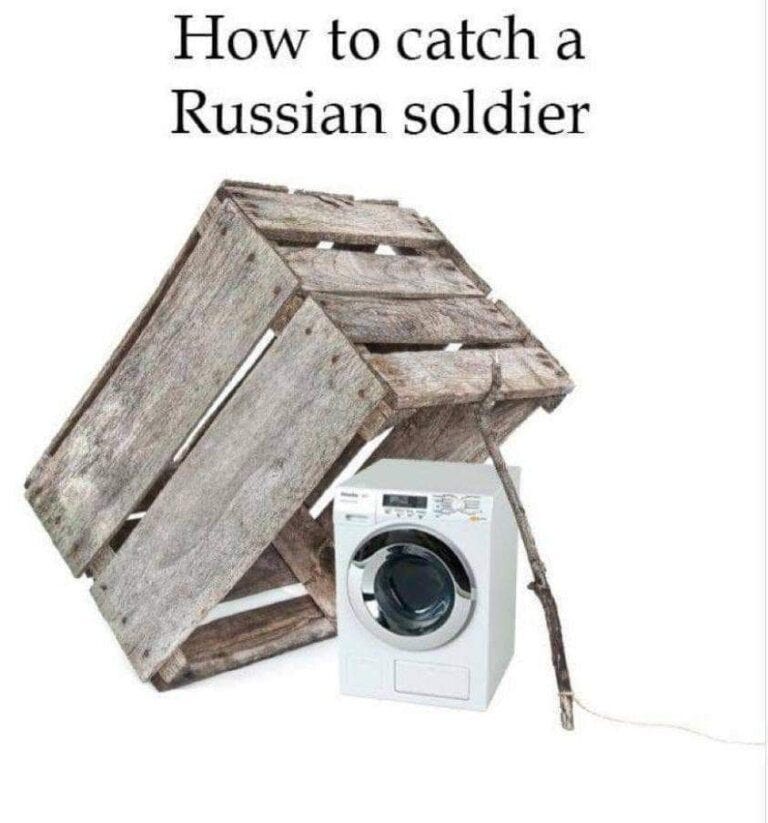
- Mass plunder and theft of Ukrainian assets — from grain to washing machines.
No war crime due to western restraint has remained uncommitted. No Russian war aim has changed. Yet the negotiate and ceasefire frozen conflict crowd concludes that the current apparent winter pause means that an undersupplied Ukraine can’t win and it’s time for the US to negotiate directly with Russia over Ukraine’s head, as the UK did with Germany in 1938. This is like blaming the rape victim after refusing to supply her with a gun, mace or pepper spray to defend against the rapist.
Listen to Valery Zaluzhny, the head of Ukraine’s armed forces:
Translation: During the Winter War Finnish president and commander in chief Baron Carl Gustaf Emil Mannerheim knew that the end of General Winter’s aid to the Finns with March 1940’s melting snow marked the peak of Finland’s defense. It made negotiating a territorial compromise peace sensible since that compromise would not turn Finland into a failed almost landlocked state. Zaluzhny “more territory” means enough to guarantee that Russia can’t freeze the war with Ukraine as an almost landlocked economically failed state.
Military Catchup to Political Victory and the Axis of Prudence
Prussian philosopher Carl Philipp Gottfried von Clausewitz taught war is politics fought with other means terms, Ukraine’s position is currently the exact reverse of Finland’s in March 1940.
Finland’s leaders could trade territory for neutral independence. A ceasefire leading to Ukraine trading territory in the land bridge between Donetsk and Crimea permanently cripples Ukraine’s economic viability.
Also, the offensives in Kharkiv and Kherson moved Ukraine from merely not losing to within sight of Crimea, to triggering Russia’s shambolic mobilization and strategically nullifying the “Russia forever” annexations of Kherson, where forever = six weeks, Zaporizhia, Donetsk and Luhansk:
“We have finished the Russian professional army, it is time to destroy the amateur army.” — General Valery Zaluzhny
The consistency of supply that enables proper operational planning helped win back Kharkiv and Kherson. It’s also essential to cut the land bridge to Crimea in Melitopol. But Ukraine’s needs have shifted due to Russia’s war crime air war against Ukraine’s civilian energy infrastructure and dispersion of more distant supply lines.
Escalation aversion in what The Financial Times called “the Western Axis of Prudence (Macron, Scholz, Milley, Biden)” that kept Ukraine supplied just well enough to avoid defeat has not kept up with the war’s evolution and ignores its sine qua non political aim: guarantee that Ukraine not become the failed state Russia wants as a neighbor:
“But many western Europeans worry that supporting too forceful a push by Kyiv against the Kremlin’s forces might trigger a nuclear escalation, a war between Russia and Nato or an irreparable rift between the alliance and the global south. That conviction is firmly shared by French president Emmanuel Macron, German chancellor Olaf Scholz and, crucially, US president Joe Biden. Their line — call it the realists’ Axis of Prudence — has, so far, imposed itself….Scholz — who intones the formula “decisive yet prudent” in interviews like a call sign — told a German newspaper that “our goal is that Russia ends its war of aggression and Ukraine defends its integrity”. Notably, both of these articulations are carefully ambiguous about how the war should end or what a sustainable peace would look like. — Financial Times, December 20
The Axis of Prudence strategy crosses Russia’s red lines incrementally, boiling the Putin frog in NATO hot water gradually to keep him just hopeful enough to refrain from breaking the nuclear taboo. But its fundamental conceptual error is that decisive Ukrainian victory crosses a FIXED Russian red line. But Ukraine’s military leaders now need predictable supply of longer range offensive weapons and air defenses to defend its urban energy infrastructure.
Zelensky makes clear that Ukraine not following up the victorious offensives in Kharkiv and Kherson with another quick breakthrough results from a western political decision about Russia’s imaginary “red lines,” not lack of Ukrainian military capacity or will to win. Combine the foregoing list of Russian behaviors unchanged by Western restraint with a quick list of Ukrainian victories that crossed Russia’s previously announced “red lines” later found to be imaginary:
- Russian Kyiv, Sumy and Chernihiv offensives defeated by Ukrainian use of western-supplied Javelins and other anti-platform weapons.
- Kharkiv thunder run breakthrough in September,
- Kerch bridge bombing in October,
- Kherson reconquest in November, ending a “Russia forever” annexation after six weeks.
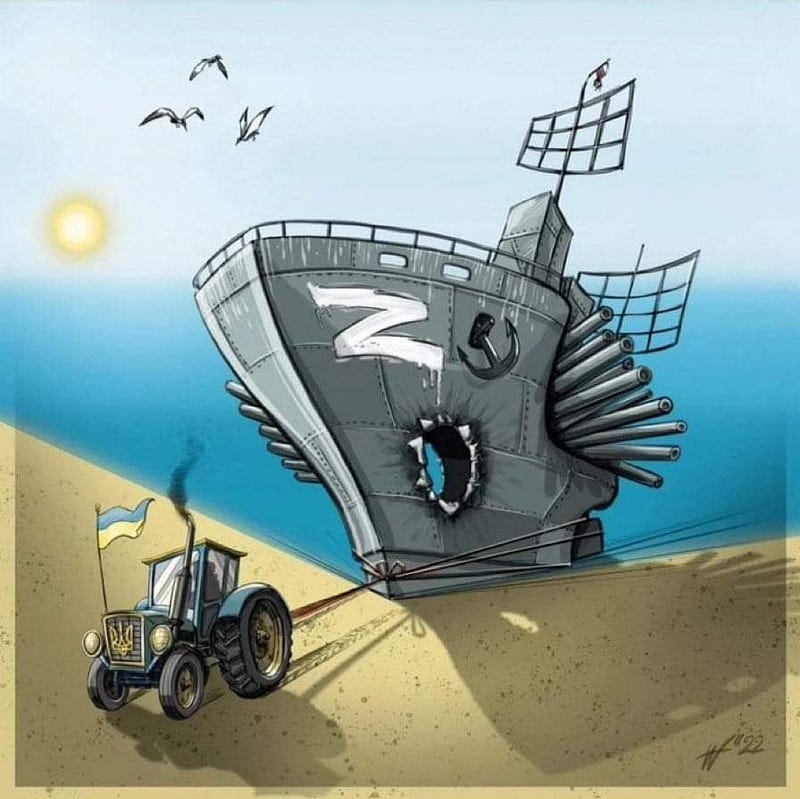
- The Moskva sinking last spring,
- Multiple bombings of Russian airfields in Saki, Crimea, Engels, Saratov, Belgorod and Kursk,
- Siberia’s biggest refinery and other Russian energy infrastructure burnt….and many more, but listing more here will exhaust readers.
Reviewing the two together shows that Russia’s “red lines” move continually, like rubber goalposts on a football field. Western supply and Ukrainian military success determine where they’re placed — and re-placed.
The don’t cross Russia’s red lines crowd essentially advocates that the West negotiate with itself before Ukraine negotiates with Russia. But the conceptual error in the “give Putin an off-ramp-don’t-humiliate-Russia” crowd’s reasoning remains in place because how it violates fundamental principles of statecraft remains unexamined.
Negotiation is war fought by other means
Since war is politics fought with other means, Russia has already lost. Its war’s fundamental political aim is now as unattainable as its failed army’s return to combined arms offensive operations. Russian leaders’ only hope for success is to manipulate Western public opinion in order to shape the negotiation battlefield. All resistance to delivering weapons to Ukraine gives Russian warmongers hope for victory.
Through the negotiate without conditions crowd that underpins the Axis of Prudence’s imaginary fixed red lines, Russia gains the time to freeze the status quo in place through the ceasefire that always accompanies negotiations. All those yelping about Russia’s “red lines,” “de-escalation,” and “unconditional negotiations” enable Russia’s frozen conflict endgame. The key here is the conceptual error of the fixed red line delusion.
US President Joe Biden (D-Delaware) sending Patriot missiles and Bradley Fighting Vehicles to Ukraine represents abandoning the fixed red line delusion. American policy is finally directed to moving those imaginary red lines to where Ukrainian generals finally plan the operations necessary to “beat this enemy.”
To survive all empires shift commitments and reallocate resources if they don’t want to end up like the Ottomans, the Austro-Hungarians and Russia’s Tsar in 1918. An overstretched America decided to cut bait and end its 20 year Afghan war. Russia is clearly an overstretched empire with a huge gap between military capacity and geopolitical ambition — unattainable parity with the West. So there’s nothing exceptional about empires redrawing previously solid red lines:
The writer who sent me the Zaluzhny quote asked: “So if we just give him all that, he could win the war, right? But if we can’t give him all that, maybe we should negotiate for peace.”
Since the western coalition clearly has the inventory and production capacity to supply Ukraine with all that Zaluzhny asks for, the answer to the first half of the question is a clear yes (South Korean inventory alone could).
The answer to the conditional second half of the question is that past Ukrainian performance in Kharkiv and Kherson proves that if the West gives Zaluzhny what he asks for the war will end much more quickly. The imaginary winter pause stalemate the negotiate now crowd uses to call for unconditional negotiations is the result of their own undermining of western support for Ukraine that drives the Axis of Prudence to give Ukraine enough to defend itself, but not to win.
Russia would choose to end the war if victory were seen as implausible. It’s only Russia’s western useful idiots on the anti-interventionist far left and the tiki-torched Tucker-Trumpster-MTG and kleptocratic Berlusconi-Salvini-Orban-LePen-iste right that give Putin hope western support will end.
Listen to this Latvian-American friend who wrote about the unused international legal and diplomatic leverage that could be deployed to shift Russia’s moveable red lines:
Shifting geopolitical winds in other parts of Russia’s near abroad, like Kazakhstan dropping cyrillic for the latin alphabet, Putin’s humiliation at the Eurasian Summit in Samarkand in September, or even inside non-European Russian republics, could substantially move Russian red lines previously thought to be fixed.
Since negotiation is war fought by other means, negotiating with oneself by offering to unconditionally freeze the conflict in place through a ceasefire during negotiations leaves a plethora of negotiation weapons foolishly unused.
Just as Ukraine shaped the battlefields in Kharkiv and Kherson before its stunning breakthroughs, the western coalition must apply the same shape the battlefield strategy in its approach to negotiations. This is the Clausewitzian nature of negotiations as war fought with other means that the western Axis of Prudence, the “don’t humiliate Russia” crowd and Russia’s western useful idiots calling for unconditional negotiations ignore. Negotiating with oneself in plain sight before post-armistice negotiations with an adversary whose failing military has already culminated is a fool’s game.