Zoom Partners
Need to Know with Coulthart and Zabel
How an Australian reporter and an American producer became friends without ever actually meeting in person. And how they decided that a world that doesn’t need another UFO podcast might just need another UFO podcast anyway.
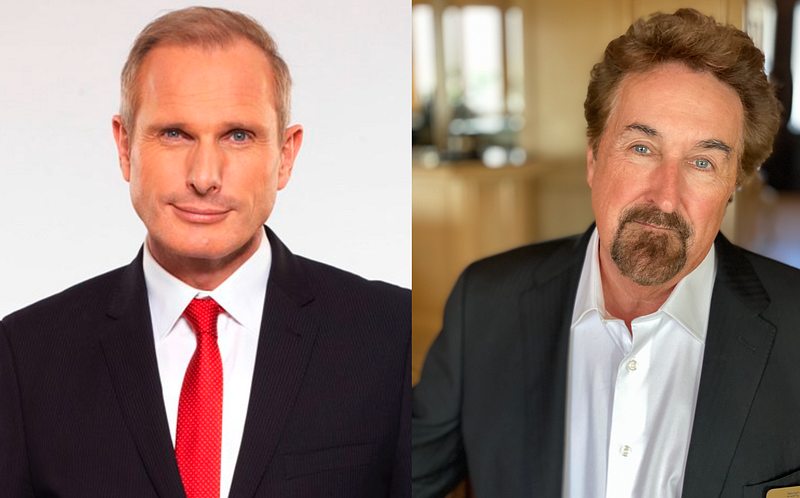
NOTE: Ross Coulthart and Bryce Zabel are the hosts of the new podcast, Need to Know with Coulthart & Zabel, debuting this week on what is the fourth anniversary of the 2017 New York Times front page article about government UAP investigations. For details, check out the website here.
SOMETIME IN THE LAST YEAR, ROSS COULTHART and I became friends. It started after I read his terrific 2021 book, In Plain Sight, and talked about it here on Trail of the Saucers. After I did that, a memory came back to me that Ross and I were supposed to have already met, before he published that book, but it didn’t quite happen.
In December of 2019, just months before the world entered that long tunnel of lockdown, my family planned a nearly month long Christmas trip to Australia. We were fleeing brush fires in California and wanted a complete change of scenery. In the run-up to leaving, the news from Australia was that that entire country now also seemed to be on fire. Down Under, they called them bush fires but they were no less devastating than our brush fires. We weighed whether to go or not, but information was not reliable and our airline wanted nothing to do with a refund. So, we went.
Of course, December of that year was a disaster that just kept getting worse in Australia. All our plans went out the window. Or, more literally, up in smoke. My wife and I fled our Canberra hotel in the middle of the night when we woke up and found the entire room filled with smoke. From that moment on, everything revolved around air quality checks and newscasts tracking the rolling disaster. Given that we’ve been evacuated from our Southern California home several times over fire danger, you might think we’d be prepared but, no, it still felt like we were vacationing during the apocalypse.
During this madcap status as fire refugees, I did still manage to meet with knowledgeable ufologist James Rigney who wanted to introduce me to his friend, journalist Ross Coulthart. But the fires were coming, my sons were flying in to Sydney, and my wife and daughter were unimpressed with the idea that I wanted to devote two days in a row to UFOs. So it never happened. It’s a shame because James was going to take me to where the famous 1966 Westall school sighting took place, and it’s one of the greatest UFO cases ever recorded.
Eventually, the Zabels came back to Los Angeles convinced that we had just stared the future of the planet in the face. Then, of course, it got worse. Within a few months of being back in the States, the coronavirus ended up sending us all into a pandemic lockdown.
After over a year of staying home, Ross Coulthart and I finally got to meet. It happened in the month after I’d reviewed his book on this site, and was invited to be a guest in a small UFO discussion group that included folks from the United States, the United Kingdom and Australia. Ross was one of the crazy Aussies who stayed up super late (or got up super early) to attend.
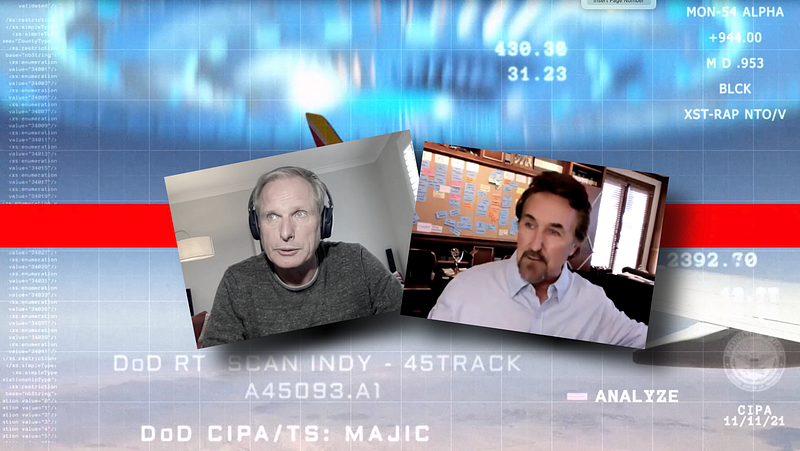
After that introduction, we just knew we had to talk to each other one-on-one so we set up a Zoom call. This is not the easiest thing to do on a casual basis, given that Australia is 19 hours in the future from my American perspective. Of course, from the Australian POV, I’m 19 hours in the past. It still confuses me enough that I got the times wrong in the opening Tweet I sent out announcing the Need to Know podcast.
In any case, we started talking shop and, as it turned out, we had plenty to talk about. Ross is a broadcast journalist who has won just about every award for investigative reporting that his country gives out. It’s an impressive body of work that has never ended. And, as it turns out, when I first came to Los Angeles, I was a CNN correspondent and then an investigative reporter working for a PBS show, Newsbeat, and won several awards of my own for investigative journalism. It turned out that we had a lot more in common than just UFOs.
The emerging story of UAP reality is a powerful magnet. Both of us first heard about UFOs when we were younger, took a skeptical position, and certainly never pushed our employers or assignment editors to put us on a story about Unidentified Aerial Phenomena. Yet we both came to the subject, did a deep dive into it, and came away with the understanding that there was something to it that was real.
Both Ross and I get interviewed a lot on various radio shows and podcasts. Given our backgrounds in broadcasting we’re probably on the “good guest” list in more than a few places. While the world probably doesn’t need another UFO podcast, we came to believe that maybe, just maybe, we might prove that assessment wrong.
We liked the dynamic of those Zoom calls. They were freewheeling and fast paced. We’re both good interviewers but no one was asking canned questions. We were bouncing off each other’s ideas, one concept leading to an example leading to a story leading to an analysis.
We thought: Hey, what if we could get the spirit of those Zooms onto tape and send them out into the world in the familiar form of the podcast?
You see we’re both not satisfied with stating the simple facts that there have been government cover-ups over the years or that there is an actual reality to this mystery. The U.S. government has pretty much admitted this in its June 25th “Preliminary Report on Unidentified Aerial Phenomena” that states there is a physical reality to these objects, sightings are common and, so far, impossible to explain, and they are not made in America, or likely by China or Russia either.
As journalists, we know a great story when we see one. And this, folks, is one great story. We want to know the ultimate answer to the ultimate questions.
Who are they? What do they want? Why have governments been classifying the very existence of the phenomena, let alone the details? Is there a hidden history to this subject that needs to be told now?
We don’t know those answers yet, maybe no one does, or maybe a few people do and they’re not sharing their work. All we know is that when confronted with a question they can’t answer, reporters start digging, so that’s what we’ve been doing and what we’re going to continue doing until we all have those answers.
Our hope is that these podcasts will sound as different to listeners as they feel to us. We are engaged in what the TV business calls an active investigation. While our first two episodes live in familiar territory, our hope is that we’re taking it on in a way that may broaden the audience for the material. Then, as we go forward, we hope that our future conversations will boldly test ideas, relate previously unrelated concepts, and bounce off the walls enough to compel an audience demo that, frankly, hasn’t ever really even considered listening to UFO podcasts.
We may do a few of them and see how it goes. Maybe it will turn into a weekly thing, something formal. Maybe it won’t, and they’ll be special moments for us as well as listeners. We expect to have guests, but hope that most of them will be the kind that we, as journalists, can ask tough questions and get straight answers.
We’ve been joined in this endeavor by producer Rich Johnson who is helping us navigate some of the thornier technical issues so that we might concentrate on that small task of breaking down what this now 75-year cover-up was all about and what might be in store now that the subject has entered the public sphere. Other folks have offered their help, too, and we’re grateful to get it.
The world is about to engage this issue in a much more serious way than ever before. Our intent is not to create another echo chamber where we interview other podcasters and they have us on their shows. Our intent with Need to Know w/ Coulthart & Zabel is to do what we’ve always done as broadcasters — to reach out to people who may not know about a topic, to engage them with facts and stories, and to let them make better decisions because of it.