Summary
The web content is a free verse poem that reflects on the beauty and mystery of nebulae, the life cycle of stars, and the poet's identification with the cosmos.
Abstract
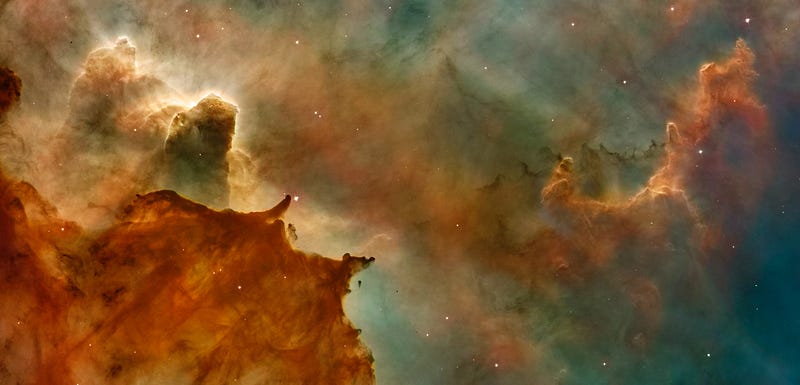
The poem "Nebula..." is a contemplative piece that explores the awe-inspiring nature of cosmic phenomena, particularly nebulae. It describes the vastness of these celestial structures, their distance in light-years, and the paradox of still being able to witness their beauty. The poem delves into the dynamic processes of the universe, such as the birth and death of stars, the formation and collapse of nebulae, and the cyclical nature of cosmic events. The speaker marvels at the towering pillars of cosmic dust and envisions mythical creatures traversing the galaxies. The poem culminates in a profound realization where the speaker identifies themselves as the cosmos, suggesting a deep connection with the universe. The author, Dr. Mehmet Yildiz, expresses gratitude to Illumination for publishing their work.
Opinions
- The poet expresses a sense of wonder and admiration for the grandeur of nebulae and the vastness of space.
- There is a reflection on the cyclical nature of cosmic events, emphasizing the interconnectedness of stellar life cycles.
- The poet seems to find a personal connection with the cosmos, equating themselves with it, which suggests a pantheistic viewpoint or a metaphorical representation of human existence within the universe.
- Gratitude is conveyed towards the publishing platform and its editors for their support in sharing the poet's work.