
Navy SEALs And The 7 Habits Of Highly Resilient People
Recently I came across a clip of Messi’s bodyguard, Yassine Chueko, carrying out his ‘bodyguardly’ duties with diligence; following the superstar so closely like he’d dutifully jump in front of a moving train should Messi do that. In another clip, I watched his crazy workout routine.
Yashine’s dedication to his work is topnotch, but what most people find super impressive about him, and what set the internet abuzz, is that he is a former US Navy SEAL. Unarguably, there’s something about SEALs that inspires admiration. A large chunk of that has to do with their training and job description.
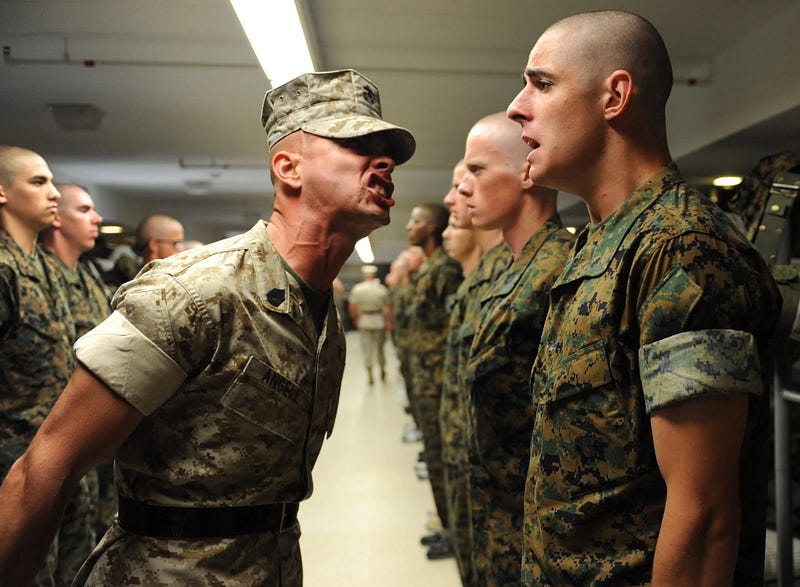
SEALs do what most of us can’t, and this is because of what they’ve been trained to endure. What they go through in BUD/S and Hell Week —the sleep-deprivation, beach runs, calves on fire, log PTs, and sadistic instructors trying to make them quit —make them appear more-than-ordinary and earn them admirable qualities.
What separates SEALs from non-SEALs and those who didn’t make it through the trainings is the fire that burns in their guts. The trainings are designed to test their resolve, and while anybody can become a SEAL, what marks those who eventually become it is resilience.
As resilient people, Navy SEALs exhibit these 7 qualities:
“We demand discipline. We expect innovation. The lives of my teammates and the success of the mission depend on me, my technical skill, tactical proficiency, and attention to detail. My training is never complete” —Navy SEAL Ethos
Calm, Innovative, Nondogmatic Thinking
Navy SEALs operate in complex environments where mistakes have immediate consequences: losing a body part, death, or losing the fight. Such environments have low tolerance for dogmatic reasoning, and because each situation is unique requires a SEAL to not just think on his feet, but to be innovative in doing so.
Resilience implies withstanding what would otherwise stifle others, and seeing things differently, ability to calmly weigh alternatives, and openness to new ideas and ways of doing things have a lot to do with it.
The ability to think in a calm and rational manner is rare, but this, in addition to the ability to see old problems from a new point of view is key to not being held down by what stifles others. This is a core part of the SEALs’ ethos, “we expect innovation.”
The Ability To Act Decisively
After thinking comes the need to take action. It is typical to want to wait to have it all figured out before you act, but resilient people know that moments of absolute certainty are rare.
What underpins the hesitancy to take action is usually the fear of mistakes and that of failure. But this fear is nothing short of an exposè on how one views life. Some view mistakes and failure as final, so they avoid making moves so they don’t have to deal with owning up to them.
Resilient people on the other hand are more likely to take responsibility for their actions; which is difficult, especially when things turn out bad. Yet, they don’t shy away from acting because they don’t judge mistakes and failures as fatal; rather, they see them as avenues to learn, improve, and to eventual success.
Tenacity
Becoming a SEAL starts with a decision, followed by the action of actually applying. After these, a SEAL faces the consequences of his decisions and actions, in the form of harsh trainings that forces him to carry out odd-defying tasks under unbearable conditions.
Failure happens here, so also broken arms and strained tendons. These are setbacks, and it’s tenacity that pushes SEALs to keep going. Without it, progressing through training is not achievable.
After decisions and actions, how willing are you to try again when your attempts fail, or keep going when a decision you made is taking you through so rough a terrain that quitting seems better than continuing?
This is what tenacity is about.
Whether it is Edison surviving 6000 failed experiments before coming up with the right combination of filament and bulb, or Abraham Lincoln pushing through numerous failures before eventually becoming America’s 16th president, history is replete with examples of those who succeeded because they kept at it and didn’t cower in fear and tiredness.
Matching your decisions with actions is sometimes not enough, it’s the ability to keep at it makes the most difference.
Interpersonal Connectedness
“The lives of my teammates…depends on me,” goes the SEAL ethos. When everyone say this, it’s easy to see how it will cohere into a strong sense of community among SEALs: looking out for each other, and not just considering how decisions will affect one alone, but also how they’ll affect others.
This habit of “team first” is drilled into them during trainings as they’re usually paired, and typically those that get ahead are those that look out for their teammates.
Interestingly, a sense of community is something that is natural to us. We are social beings.
No better study illustrates the role of interconnectedness in resilience than the Roseta study. In the 1960s, it was found that the Italian-American community of Roseto had death rate from heart disease that was much lower than the national average. This different could not be explained by difference in diet or generics, but by the strong social ties and sense of community in Roseto.
The people were known for their frequent social gatherings and other strong religious beliefs, which created a sense of belonging and purpose that helped to reduce stress and anxiety —which are known contributors to heart disease.
The surprising thing? When the people became more Americanized, abandoning this sense of community, mortality rate from heart disease increased.
Integrity
If interpersonal connectedness is this vital, the next trait of resilience people ought to be something that aids connection. It’s integrity.
Integrity is doing the right thing; not just what’s right for you, but for others also. Integrity is not a hit-and-run character, but a lifestyle. It creates an atmosphere that allows trust to grow, and where trust is, people feel freer to be open and vulnerable with each other; people are freer to seek for help, and sharing tough times with others make life more bearable.
Self-Control
When you have a goal, a lack of self-control is the greatest thing that could throw you off track. While there are many external things out to keep you from wining, a lack of self-control is an internal obstacle. The enemy within, they say, is a formidable foe.
We know the things that can help us achieve a set goal, or the things that can keep us from achieving them; so whether it is doing what pushes you closer to your goal or avoiding what wouldn’t, being self-controlled enough to keep at them matter the most.
Small wins pile up into big wins. Before the big win, you need self-control to keep doing the little things, to keep piling up little wins, until they become big. Without this, we lose the small fights and this steals our confidence to keep going, eventually robbing us of eventual success.
With the help of mean and sadistic instructors SEALs are made to do what they have to, even when they don’t feel like it. In a way this is how it works in real life. The route to self-control is not fun, you much go through doing what you don’t feel like, when you don’t feel like it. There are no alternative routes.
Optimism and Positive Perception On Life
How hopeful are you of the future? Do you believe that your hard work will pay off, that good will triumph over evil?
There’s nothing much you can achieve with a belief skewed in a negative way. Being optimistic matters, it’s makes you more goal-oriented and is keeps you motivated. When faced with adversity, optimistic people view challenges as having a greater purpose, while pessimists see them as dead ends. This makes optimistic people more resilient and tolerant of adversity than pessimists.
Those who keep going eventually wins.
The qualities we admire from SEALs come with a price. It’s the normal order of things that we pay prices before we can attain anything good. While resilience is good to have, it is built, little-by-little, in the small things, up until they can come into play in the bigger things. If resilience is a quality you admire; you already know what to work on to get it.


