
Navigating Troubled Waters
The Multifaceted Impact of Houthi Attacks on Global Trade
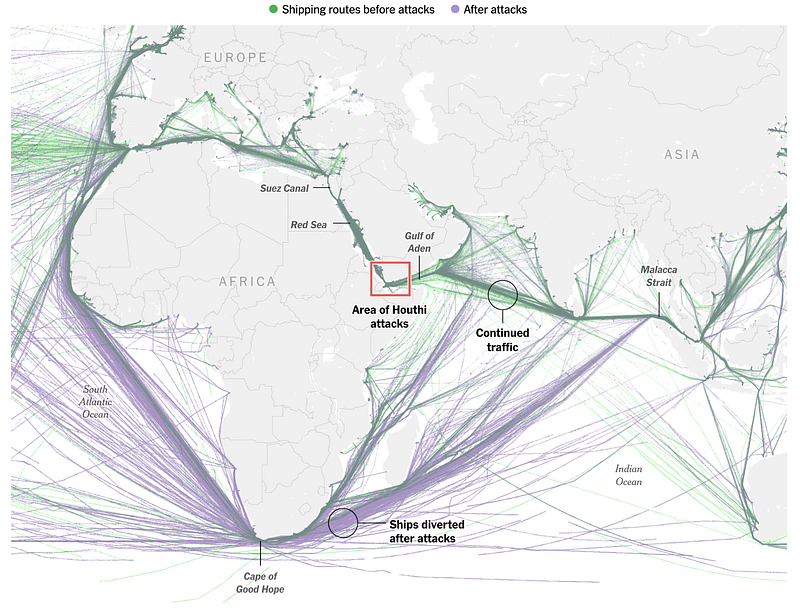
In the labyrinthine landscape of global commerce, the recent surge in Houthi attacks in the Red Sea stands as a foreboding challenge, disrupting not just shipping routes but also precipitating economic ripples and laying bare the complexities of extremism's role in hindering progress.
As hundreds of ships chart an extraordinary detour, circumventing the Suez Canal by an additional 4,000 miles around Africa, the true magnitude of the Houthi onslaught becomes apparent. This, of course, creates material additional costs to the shipping of goods flowing through to consumers. Picture this: a maritime dance where vessels pivot away from one of the world's vital shipping routes, the Red Sea, in response to relentless Houthi drone and missile attacks. The stakes are high, and the world is watching.
Impact on Global Shipping
The Houthi militia's ostensibly geopolitical agenda of disrupting shipping links with Israel has morphed into a global menace. Ships from over a dozen countries, including the United States and Britain, find themselves in the crosshairs. This indiscriminate targeting undermines maritime safety and has far-reaching consequences for global trade, as exemplified by the recent 150-ship decline in Suez Canal transit. The reasons for these attacks are, of course, complex and intertwined with religious motivation with the suggestion this strategy will ultimately put pressure on stopping the military bombing of Gaza. However, is putting innocent and non-military lives on these commercial ships at risk the best way to solve the problem?
Economic Consequences
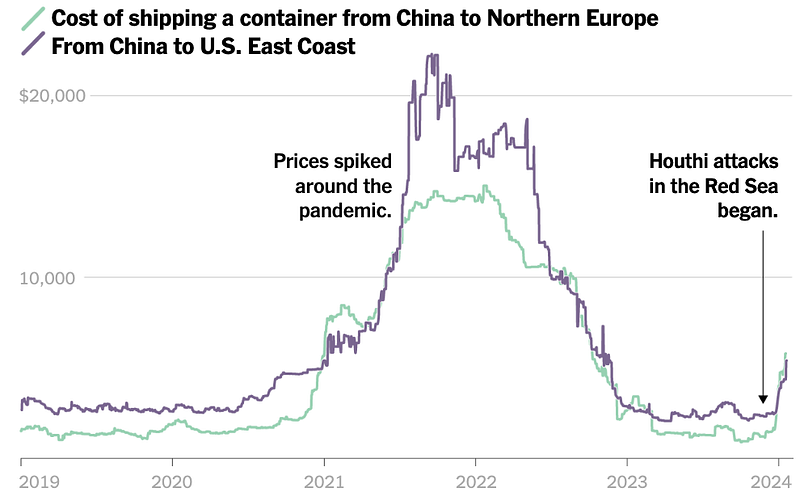
The economic fallout is palpable. Shipping companies, forced to reroute vessels, have tripled container prices from Asia to Europe. Tanker owners navigating the Red Sea face escalating insurance premiums. The resulting convoluted supply chains impede timely deliveries and contribute to an inflationary spiral, prompting giants like Ikea to issue cautionary warnings about merchandise delays and European car factories to grapple with production halts.
Geopolitical Implications
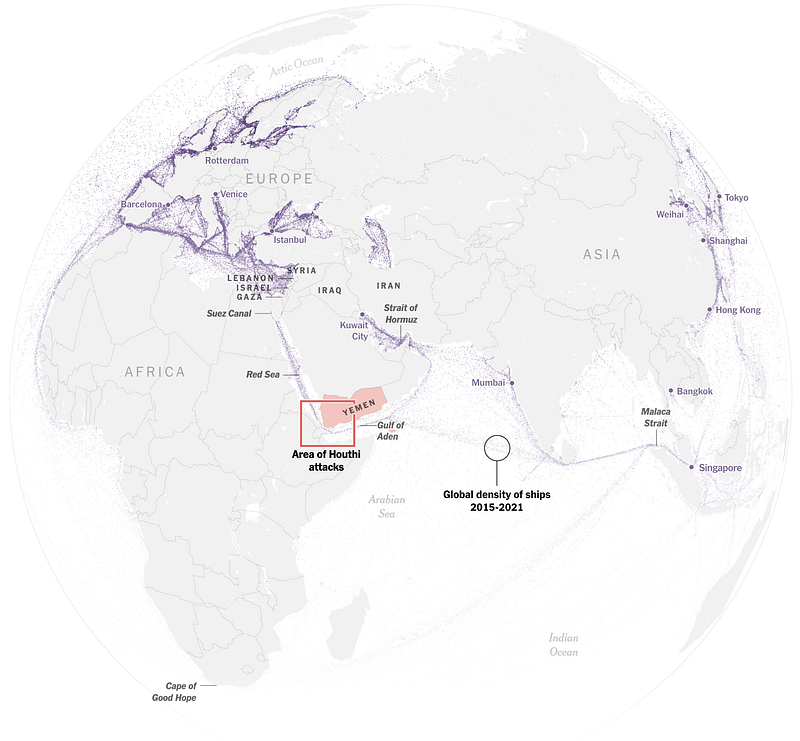
Beyond the immediate economic repercussions, the Houthi attacks reshape the geopolitical dynamics of the Red Sea. The region's heightened significance, driven by alterations in energy trade patterns in response to global events, now faces an additional layer of instability. The geopolitical equilibrium is at stake, with European nations reevaluating energy sources, and China's stance remains ambiguous. The situation is worsened by the influence of other state entities pulling the strings and providing funding to enable instability.
Broader Issue of Extremism
At its core, the Houthi-induced turmoil is symptomatic of the broader malaise of extremism. As the attacks underscore, unchecked extremism has the potential to dismantle the delicate web of global trade, impeding progress and prosperity. Beyond addressing immediate disruptions, nations must collaboratively tackle the root causes of extremism to foster a world that prioritizes peace, cooperation, and economic advancement. However, for example, the ongoing conflict between HAMAS and Israel does not seem to be solvable, particularly given the irreconcilable views that Israel should exist and an opposing view that it shouldn't—a topic for another time.
In navigating these troubled waters, the international community must confront the multifaceted challenges of extremism, recognizing that the impact transcends individual shipping routes and encompasses the foundations of global progress. We can all acknowledge many problems in the world; how do we solve them to improve the lives of all of Earth's people?
Until next time.
Thank you for reading! If you enjoy my writing, it will help me to follow and subscribe so I can keep contributing engaging content.


