
Navigating Through Modern Education & Careerism Without Losing the Human Soul
The emphasis on outcome and performance over authentic discovery. A reflection on my own generation.
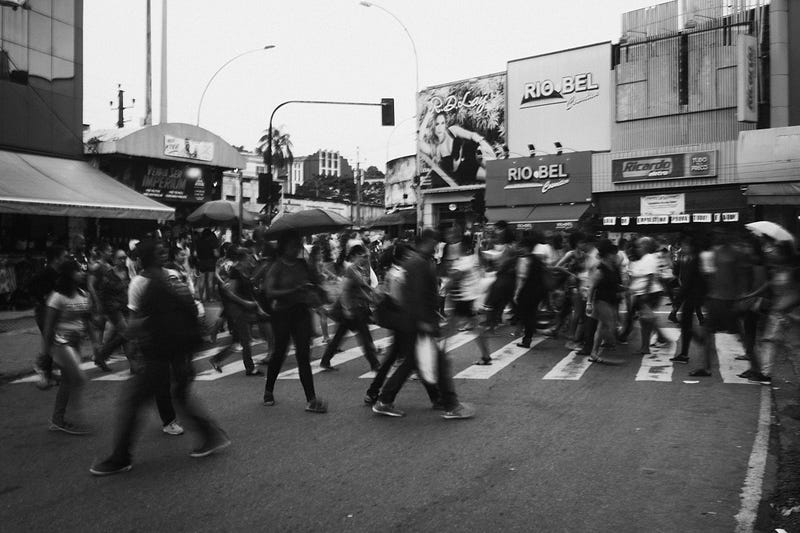
When I was young, I constructed juvenile fantasies about my future and how I wanted to live. It did not take long to approach the point of disillusionment after experiencing how the real-world operates. This reoccurring disjunction played a major role in remodeling my comprehensive worldview, and the narrowing gap between me and my reality was followed by disappointment fueled by uncertainty and identity frictions. But I wasn’t the only one struggling. With time, my generation organically shifted and developed a neurotic tendency to tie self-identities to the modern rat-race mimicked as authentic learning and careers decorated with robust mission statements. In my generation, individuals are placed into an assembly line frame. Students are slowly reduced to a piece of statistic, transforming into a fragment of the working class competition that tires the soul, and triggers a combination of both inferiority and superiority complexes. The system that helped civilizations evolve and progress were also demanding conformity and dulling an individual’s curiosity. And I could easily see how these fatigued students increasingly devoted their leisure time — they gave away their free time to escapism and coping mechanisms involving empty entertainment, recreational drugs, and other dysfunctional hobbies.
Unfortunately, our school and workplace do not exactly teach us about the critical pillars that build the maturity of mankind. That is, most formal systems do not teach us how to maintain and form positive relationships, master our emotions and self-awareness, manage finances, and develop mental resilience for times when we might founder. Our youth — the building blocks and foundation of our society — has to assemble a definitive guide for ourselves from scratch. However, this construction is not a fluent task. How would our generation have room for imaginative creativity and exploration when our mind space is bombarded with duties that are comprised of repetitive, machine-like regurgitation? How do humans find excitement in authentic learning when we are placed in a labyrinth of competition powered by hyper-efficiency and hyper-productivity? How many brilliant minds with potential have we lost and alienated because they simply did not know how to confine themselves to the standardized system?
And if we were to build an education paradigm from scratch, a foundation that targets the genuine nurturance of each human being that serves the exact opposite of extrinsically motivated ambitions, what would it look like?
Engineering Our Society in the Wrong Direction — it starts at an early age
Although we should each bear an individual responsibility regarding our navigations about the world, I find it more compelling to reproach the competition-driven, capitalistic marathon that depletes one’s initial zeal. I reproach the system that makes it harder for individuals to acquire genuine curiosity and compassion for the collective world. Currently, we have a system that is modeled on the interest of industrial development which forms around the mentality of a production assembly line. This mentality leaks into the community, which then penetrates to friends and families, and finally into the minds of the very individuals that constitute that larger community.
As British author and speaker Sir Ken Robinson notes, children are placed in a system that is “created for efficiency” instead of genuine learning and modern families reflect this system. Ever since the child is in the womb, the parent begins to contour their child’s life blueprint and form an obsession towards the unborn child’s future success. A UC Irvine film professor and critic of post-modernism society, Catherine Liu, gives an example: mothers of our post-modernism culture “have to do prenatal yoga while setting up intrauterine Mozart streams on pregnant bellies”, so they can prepare to fine-tune their children to reach “success” — a success that is one-dimensional. These children learn to worship exquisite success in preparation of his or her future career. And although the rewards seem appealing, Liu argues that the “intellectual and psychic price that has to be paid for compliance should be too high for any member of society”. Furthermore, the children that are raised in this superficial culture can grow up to masquerade as empathetic leaders in a strategic corporate environment. They display the “can-do” attitude, but unknowingly possess a sense of moral superiority by thinking they hold better “virtue, grit, persistence, erudition, specialized knowledge, prestige, and pleasure, along with cultural and actual capital” (Liu). Thus, the author indicates that humans are raised in a system where core human qualities such as empathy, warmth, and compassion are becoming transactional and superficial; and it is what the wellness-obsessed PMC uses to justify that their lifestyle in this assembly-line system is righteous. Altruism that extends beyond the instinctive “tit-for-tat” calculations rooted in self-interest (reciprocal altruism), is the base of a moral life. However, our generation may be steering towards engaging in ‘heroic altruism for public recognition’. If this continues, will we see and experience a progressively egotistical society that is heavily absorbed in consumerism? And how do we know what’s right if holding virtue is becoming a shallow trend?

Entering The Uncanny Valley
As noted in prior sections, humans are slowly guided into a territory that encircles around an ethos of intense productivity and optimization. What would happen if the children born in such contemporary societies advance beyond adolescence? The once enlivened, young soul becomes the quintessential worker bee, committing to novel technological advancements in a world that is increasingly turning into a sales room curated for practicing surveilled friendliness.
“I don’t really like my job, although it’s my dream job… I guess it pays really well and one day I hope I can use my salary for future happiness”, said an old classmate that was pressured to work for more than 70 hours a week coding algorithms for a famous tech-company. To me, it seemed like my generation was running on an endless treadmill. We were desperately trying to reach this unreachable happiness in a linear economic system of production. And my generation sensed that. We sensed that something was terribly wrong about our monotonous lifestyle. We just failed to identify what it was. A historian and author, Steve Fraser, claims that this new era is increasingly engaging in “spiritless work”, an “ideology propagated by the middle class”, which ultimately leads to “disempowerment”.
“In our new era, the nature of work, the abuse of work, exploitation at work, and all the prophecies and jeremiads, the condemnations and glorifications embedded in laboring humanity no longer occupied center stage in the theater of public life. The eclipse of the work ethic as a spiritual justification for labor may be liberating. But the spiritless work regimen left behind carries with it no higher justification. This disenchantment is also a disempowerment. The modern work ethic becomes, to cite one trenchant observation, an ideology propagated by the middle class for the working classes with enough plausibility and truth to make it credible.” — Steve Fraser
Around fifty years ago, Japanese scientists coined the term, “uncanny valley”, to illustrate the demoralizing and disquieting feeling that rises when humans are shown graphics of human-like representations that fall short of being a full human. The New Yorker writer and mainstream technology company ex-worker, Anna Wiener, wrote a memoir called Uncanny Valley which is synonymous to the paradoxical Silicon Valley, where the author writes about her experiences with the techno-libertinism culture and its decline of humanistic attributes in the working class community. She notes that our contemporary culture is about fulfilling the “mark of a hustler” where “everyone was optimizing their bodies for longer lives, which could then be spent productively”.
“Was that just buying into the industry’s own narratives about itself? I tried to summarize the frantic, self-important work culture in Silicon Valley, how everyone was optimizing their bodies for longer lives, which could then be spent productively… While perhaps not unique to tech — it may even have been endemic to a generation — the expectation was overbearing… The mark of a hustler, a true entrepreneurial spirit, was creating the job that you wanted and making it look indispensable, even if it was institutionally unnecessary. This was an existential strategy for the tech industry itself, and it did not come naturally to me.” — Anna Wiener
Not only are individuals pushed to overwork, the dominating techno-libertarianism culture cultivates a manicured image of people that are fueled by extrinsic motivations. Similar to Liu’s point of view where she points out that “policies about inequality, racism, and bias circle back to strengthening their sense of political agency and cultural and moral superiority”, Wiener writes that through experience, she learned that the city no longer had genuine concern for human connection and building appropriate culture, but revolved around exhibiting their virtuous identity through careful calculation about their public presence. She did not only experience this on a physical sense, but virtually — she notes that “the internet was a collective howl, an outlet for everyone to prove that they mattered”. Virtual systems does an effective job in displaying our generation’s lack of moral probity and authenticity.

What’s Actually Happening in Universities?
So, how is this happening so swiftly at such a fast-pace? We can approach the answer if we circle back to our education system. School is a system that can both liberate and oppress. And as a student in STEM, I observe a distinct gap between the high achieving STEM students that are maximizing every resource to maintain their top grades, and the ones that fail to do so.
Ideally, my writing would serve as a supplementary perspective that sparks thoughts about our contemporary society. However, some students found my piece unintelligible. I have shown this draft to some of my peers in university, where they politely described their willingness to disagree. Their narratives unveiled that they were raised in a sheltered environment where they had the luxury to enjoy the process of attending and excelling at school. Through their doctor, educator, and scientist parents, they learned to cherish the process of learning at an early age, and perhaps, they mainly cherished the unique experience of lingering on top of the quantifiable GPA-and-extracurricular-based statistics game. The high achieving individuals that did not come from a highly supportive, privileged background were usually fueled up with feelings of inadequacy and were forced into a perfectionist mentality; they found an average grade unacceptable. I often heard casual sayings along the lines of, “I wish everyone else did poorly, so the curve is higher”. And when asked about the classic, what are your dreams and passions? question, I rarely heard an answer with any depth. Most students were uncertain about their purpose, which is understandable, but that meant that they were grinding for the sake of grinding and winning the game in a competitive system, pressured to take action because everyone else was doing it. The ones that do not yet have the capacity to aggressively ‘win the game’ are the outliers; they are the ones that are left out, feeling more disconnected, lost, demoralized, and unworthy. In industrialized societies, rewards are apportioned to one’s contribution instead of interpersonal virtue. And though humans do not have an adequate understanding of justice, and the form of justice is not universal, this product-focused culture deteriorates humanities, and as quoted by Sir Ken Robinson, we must stop “[atomizing] people”, and shift our views about human capacity by recognizing that “most great learning happens in groups, that collaboration is the stuff of growth”.
“Many highly-talented, brilliant, creative people think they’re not — because the thing they were good at school wasn’t valued, or was actually stigmatized.” — Sir Ken Robinson
[ To alleviate such problems, public schools tied this issue to racial segregation and made efforts to promote racial integration. For instance, metropolitan cities like Louisville and Seattle announced a plan (Parents Involved, 2007) that involved increasing the minority population in white suburban schools; thus, schools would classify children as white or nonwhite and admit more nonwhite students if their minority population fell short. At that time, 98 percent of white suburban parents rejected desegregation, but today, more parents are accepting of the importance of cross-racial knowledge in this increasing global economy. However, even with the shift in attitude towards racial desegregation, racism and educational disparity are still persistent, and heavily influenced by a combination of factors including class segregation and socioeconomic conditions throughout the United States. ]
My intent is to reveal what reality is like for the rest of the population — the population that do not have the luxury to think about capitalizing on a new civilization on Mars or engineering a headband that holds multiple remote controls. For many students from top-tier households, university has always been an inspirational place where they could comfortably dig into their enthusiasm for mastery in the absence of the pressure of living in a dysfunctional household, poverty, toxic social stereotypes, or repeating generational insecurities. To my surprise, some students did not understand the prominence of kaleidoscopically integrating humanities or liberal arts into STEM fields; they indicated that being a well-rounded human is only detrimental because it dilutes your focus, making you unqualified for a decent job. “You gotta learn to narrow down on one thing to get a decent career and provide for your family”, one of my peers said. I vaguely agreed with him. That logic is reasonable in today’s society. Simultaneously, I wondered what would happen if every individual cornered on a single discipline and concerned only about themselves and their direct social bubble in a society that is fundamentally fragmented by competition and individualism. Was I too naive to think that the world is meant for humans to collectively explore, collaborate, and update our creative minds with new wisdom gained by our fresh surroundings? And what happens to the human soul if we hyper-focus on one field for the rest of our lives for the sake of chasing that notorious ‘security’? I favor the thought of seeking freedom, happiness, and security. However, I hesitate to believe that our modern way in contemporary society is willing to offer this as they advertise.
This mute yet sharp disconnection and hierarchy do not only happen among students, but among the university administrators as well. For instance, “prioritization”, is a popular term used by administrators to justify getting rid of liberal arts programs and unethically firing qualified experts that work for a liberal arts department. The exaggerated idealizations and false economic perceptions of a liberal arts education erodes the autonomy of liberal arts professions and creates disharmony in students that desire a path for further exploration. Without deeper awareness, policymakers are unlikely to take meaningful steps to understand or remedy the disparity of neighborhoods, or the educational segregation that flows from it.
Rewiring Mankind
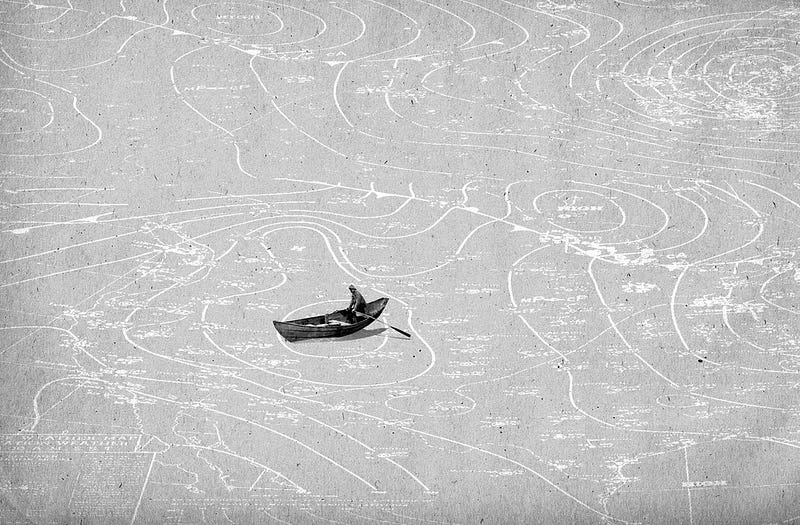
Human beings are inherently tied to creative abilities and principles that are process (not product) oriented. Aside from that, it is vital to marry the components of humanities into myriad fields that lack a humanity component and allow different fields to “have conversations”. Taking the learnings from a philosophy course and applying that wisdom to a biology course can lead to unexpected outcomes that alleviates the discomfort and injustice of society. Since everyone is equipped with their own unique understanding of the world, the incorporation of diverse perspectives, and continuously asking “why” we are performing the actions we execute daily, brings us closer to flourishing as part of a civilization.
According to Robert D. Newman, the founder of National Humanities Center, the contraction of humanities in modern society poses a serious threat to democracy. Humanities represent the centerpiece to human life, and the quality of human connections is the bastion of clarity and value of civilization. And ultimately, it is not about regurgitating information on a piece of paper as we are encouraged to do so in school, but more about engaging in “discovery and knowledge for knowledge’s sake”. Seldom do people think of humanities as a tool related to a “problem solving, imaginative bridging, argumentative clarity, evidence-based analysis”, and the perpetual misdirecting of humanities as a futile discipline leaves a detrimental trace to the framework of society. In addition, Newman states that no other area of study is as fundamentally adjacent to “human rights, compassion, the mutuality of the individual and the collective, and the essential preservation and exploration of freedom through life, liberty and the pursuit of happiness”.
Commitments to curiosity, discovery and knowledge for knowledge’s sake are the lifeblood of a vibrant civilization. Civil discourse and healthy debate foster such commitments. But all are in danger during prevailing crises that are simultaneously personal, cultural and planetary. The humanities investigate common questions like what it means to be human, what constitutes a good life, how we know the truth and how we preserve democracy. We can deepen these questions beyond abstractions by applying them in service to solving our society’s most vexing tangible concerns. To reverse their decline for another decade, the humanities must burst their residential bubble, which once was a necessity and is now a detriment.
— Robert D. Newman
Newman proposes that our current hollowness towards humanities can be restored through incorporating “humanities components in conversation with other fields”. We must explore what it means for a human to thrive, and how “commitments to curiosity, discovery and knowledge for knowledge’s sake” build up the “lifeblood of a vibrant civilization” and propel society towards a healthy democracy. This is integral to Liu’s argument regarding how it is necessary for humans to “understand ourselves as the universal subject of a history dominated by capitalism’s dynamic, exploitative, and punishing powers” and stop “making a virtue out of taste and consumption habits”. In an ideal world, more compassion and empathy could solve many problems, but studies prove that humans are not hardwired to go through the inconvenience of caring about those that are not present in our direct social bubble. Thus, we can read many literature that evokes strong emotions, but we can’t deny that the individualistic mental struggles of other individuals are still a vague territory to most of us. And although literature is undeniably advantageous at offering us knowledge and insightful guidance, it is rare to expand our capacity for understanding the experiences of others through mere reading. After all, you can only solidify the importance of altruism and practice compassion when you are undergoing unbearable hardship.
For the humanities to survive, democracy must survive, and the survival of democracy is predicated upon robust humanistic inquiry and principles. No area of study, whether the sciences, engineering, social sciences or medicine, is so fundamentally linked to human rights, compassion, the mutuality of the individual and the collective, and the essential preservation and exploration of freedom through life, liberty and the pursuit of happiness. Laws codify these practices. The humanities provide both the underpinnings of that codification and the methodologies by which they are refreshed and kept relevant.
— Robert D. Newman
I want to end with a note saying that I truly value and appreciate the continuous efforts made by my professors and community members. It is not the fault of the individual educator, parent, or student, but the system that is deeply rooted by various forms of injustice. Most of us will disregard to challenge the status quo and continue to run on this endless treadmill, but at the very least, we must continuously seek and implement humanistic values accompanied by genuine ethics and equity in an unbalanced society.


