
Navigating Polarization In The Family
Few tips to find common ground and maintain closeness among the relatives

During my recent visit “home” to see my family, I noticed an increasing number of topics that were off the table. They were topics that we politely avoided or we ended up in an argument.
It felt like a mutual agreement we never really verbally agreed on. It was quite sad but necessary in order to maintain a good atmosphere.
I first started to notice this strong polarization in my family (and society) during the US election that Trump had won, watched it get worse during the Covid pandemic, and see it again now with the war in Ukraine.
I know that there are people whose opinions are beyond my understanding, and I meet them daily. However, it has become a great challenge to face this polarization at home. Both sides are always dead convinced they are right and there is nothing anybody can say to bring the others to their side.
I’m not gonna lie, there are times when I tell myself I don’t want to have anything to do with some of the family members. But it’s of course not that easy since I love them very much regardless.
So it made me wonder
What could we do to bring some peace into our family’s discussions?
Should we keep avoiding an ever-increasing number of topics?
Can we learn to accept that everyone has a right to their opinion, no matter how bizarre it sounds to us?
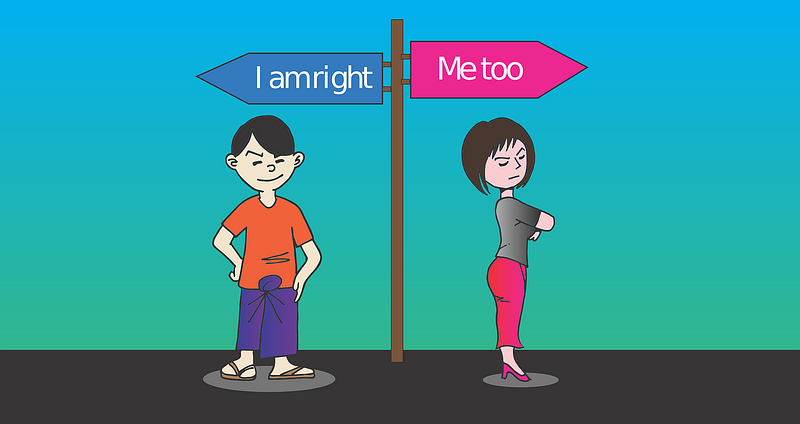
In my efforts to answer these questions, I’ve stumbled upon an organization called the Common Ground Committee. Through their events, podcasts, and stories, the Committee has dedicated its work to helping people find common ground in the increasingly polarized world. Finding common ground turns out to be the most important tool in preventing the growth of distance among family members over opposing opinions.
Finding common ground
According to the founders (Bruce Bond and Erik Olsen), these are the steps you can take to get along and find unity with the people on the opposing side.
1. Get motivation from the stories of others
When we see examples of other people overcoming their differences, it inspires us to do the same. Bond explains that “Good news on a personal level can captivate people and give them something to exemplify.” Seeing how others successfully counteract polarization within their families makes us optimistic and gives us hope that opposing opinions do not have to lead to separation in our own families.
2. Listen and find empathy
The essence of any good relationship. Active listening — really listening to the other person, accepting their opinion without judgment, and finding ways to empathize with an open mind — helps us better understand the opposing side and find aspects to agree on. This creates a foundation upon which we can attempt to build common ground.
Olsen also adds: “Common ground is an aspect of the conversation, it’s not something that occurs everywhere. And sometimes it’s OK to agree to disagree. But if you listen, you may find new understanding.”
3. Consider the environment for discussions
Creating a positive environment for important discussions affects the ability to find common ground in a great way. The setting in which your arguments are presented, listened to, and addressed navigates the direction of that discussion.
As an example, some social media prevent a productive discussion due to their limits on character count, offering anonymity, and protecting people from taking personal responsibility. Users have the option to reduce their attention to just proving their point and reposting opinions, instead of creating learning opportunities and engaging in an authentic discussion.
In brief
Firstly, we should be motivated to seek common ground by seeing other polarized families who manage to overcome their differences.
Secondly, active listening and a desire to understand the other’s perspective is far more fruitful than looking for points to disagree with.
Lastly, we should start taking personal responsibility and time to listen to others instead of posting opinions on social media, as this has led to even greater polarization within the families over the past few years.
Is it enough?
All the mentioned advice by the Common Ground Committee members is certainly useful and a great first step towards understanding. I myself have realized while reading this that in our family we tend to specifically look for the points we disagree on as opposed to focusing on what we do have in common.
However, I think that we can’t forget to put our relationships into context. It’s important to take into account the history and background of our relationships, and the nature of our characters. Our reactions are based on years of relationship-shaping. Whether it is hierarchical, with one person trying to preach and the other one resisting the lesson as a habit. Or when our characters clash and we both refuse to accept the truth of another one as a consequence of this.
Therefore, we should be careful to never try to “win” a discussion or focus on who is the winner/loser in an argument. As Bruce Bond puts it, it’s important to realize that “Finding common ground is not about compromising on principles, those don’t need to be sacrificed. Rather, it is about taking the other side into account in order to achieve a more desirable outcome.”
All in all
Tackling polarization within my family remains a challenge, as I’m sure is the case in many other families. Years of automatic responses towards a family member add to the challenge unless both sides are going through an enlightened process towards a change in their dialogue.
On the other hand, what is life without challenges? I know I can’t change other people, and all I can do is try to be a better person myself. Therefore, I’ll continue to try to address these issues with an open mind and try to lead a conflict-free discussion at least from my side, instead of ignoring the issues.
After all, family — whether by blood or by heart — is our support network and an essential part of our lives. Tackling polarization in a family is, therefore, crucial to the quality of our lives.