
Navigating Panel Discussions at Tech Conferences.
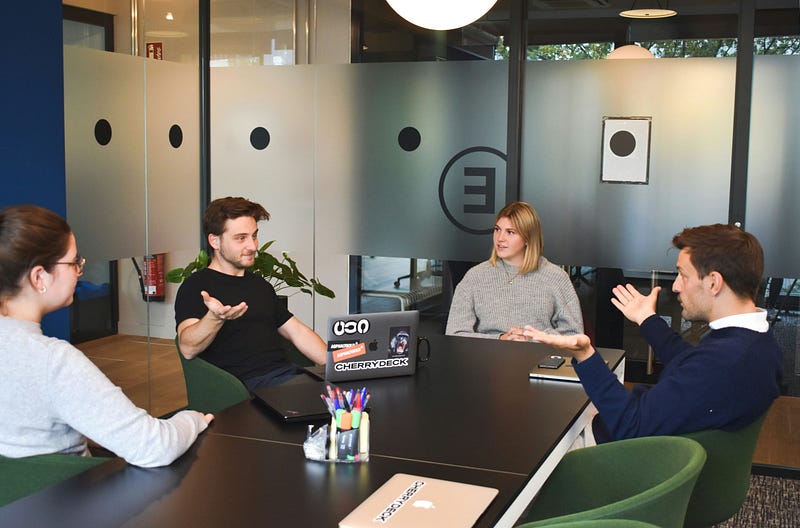
I don’t know about you, but I have been attending a lot of tech conferences lately!!
Since COVID mostly, since that was a brief time in the history of conferences when they all went virtual and, of course, free!!
Since then, I have attended a mix of in-person as well as hybrid conferences.
Panel discussions are one of the segments of a tech conference that I have come to look forward to, mainly because of the wealth of perspectives, ideas, and insights that one may gain from the many perspectives of the panelists.
Having said that, it is surprising to see many of the unsaid best practices being flouted on a panel.
Here is my ring-side view.
Panel Chair/Host — Eternal Context Setter
This is the most annoying of the lot. I see a lot of it today!
At one of the tech conferences I attended last year, I observed a panel host gobble up a full 8 minutes of the opening discussion in a monologue under the guise of setting the context for the discussion!! I observed the same panelist do it again at a later discussion in another conference, while the panel speakers held their breath impatiently waiting for him to finish.
I casually gestured to one of the attendees later on during a break as to how this was a bad practice. The retort I got was “hey!! He’s a big guy in this field!”!! It was almost like he had a free pass to do whatever he wanted.
In this case, for the 20-minute panel discussion, the panel host’s 8-minute context-setting monologue prevented the 3–4 other panelists from contributing effectively to the discussion.
Just a few days ago, at a premier conference, I saw the same act in play again, this time by a different panel chair, who kept rambling off for minutes before the panel could speak!
Is this wrong?
Let’s clarify something: The panel host is present to moderate the discussion among the panel of experts. The panel host may also be well-informed or a subject matter expert himself, but as far as I’m concerned, this is secondary.
Moreover, in no parallel universe (provided they exist), should a panel host take more than 2–3 minutes to set the context for a discussion!
If, as a panel host, you do wish to speak for upto 30% of the time or hog most of the discussion, then social media is your real playground. Please start a YouTube channel where you can talk for as long as you want, and perhaps even set up some chatbots in virtual rooms with visual emoticons to give the flavor of a panel.
Now we move to the panelists !!
The Historical Context
Every now and then, you would run into a panelist who, when probed about his opinion about a certain topic, would take a huge step back in time that nobody asked for!
For example: -
Question: How do you think responsible AI could impact driverless cars?
Panelist response: See, let’s take a step back. Let’s understand what transport really is. When Henry Ford built the first car, it had .. yadda yadda yadda, (a minute later) .. so when AI came into the picture, it was actually in the 80s, and there were neural networks, but we had no way to run them. Oh, then Andrew Ng came along, and then Deep Learning, and .. yadda yadda .. (a good 4 minutes before actually coming to his point, which .. hold your breath was) .. I think the government and industry need to collaborate to ensure that standards are developed to ensure safety in driverless cars.
Lesson:- A lot of times, the audience is already aware of the historical contexts, especially in tech conferences. Spare us the history lesson and make your points sooner!!
The Extremely Vague use case
Another pet peeve of mine is when panelists skirt around divulging their experience (due to whatever reasons) and instead present very vague and opaque illustrations of what they intend to convey.
At an AI panel discussion recently, a panelist, when asked how AI is used in his firm, said this:
Panelist: At our bank, we use AI very effectively in fraud detection. Because of this, we were able to save thousands in fraud.
Yeah, that was pretty much it. Once again, I could have easily found the same information by searching topics online and gaining a more comprehensive understanding.
Panelist: We’ve done an end-to-end augmentation of our entire business process with AI agents (this is the new buzzword now), and we’ve increased customer satisfaction and shortened ticket response times.
Lesson: Audiences at a tech conference love the little details and nuances that are not captured in online articles; this is what we come for!!
The Seemingly insincere response
At another conference, another panelist was asked the now-famous question:
Panel Host: — There has been a lot of talk about job losses in the industry due to A.I. What is your take on that?
Panel member: Well, I don’t see this as a temporary phenomenon. I believe AI will gradually result in more jobs being created than jobs being lost. There are new jobs emerging in ethics and regulation that are now gaining traction. These are some of the new skills. There will be more..
Later on, I checked a few job portals and discovered that there were jobs matching the description mentioned above, although they were not hiring in bulk.
Of course, there will be new jobs! The point here is that there is also news of large layoffs in tech firms globally, both in products and services across the board, in 2023 and even in 2024.
Lesson: Administering a truth serum is sometimes an important pre-quel to a panel discussion. The ability to disagree and sometimes openly question the narrative and speak practically about issues is important instead of stubbornly holding on to the said narrative, even when it doesn’t make sense.
Don’t get me wrong. I still love attending tech conferences, despite all these minor glitches. I end up walking away with lots of knowledge.
Many times, panel hosts are chosen for the role because the conference convenor wants to highlight their expertise or laurels as moderators of the panel. This can occasionally be an issue because the panelist may not be accustomed to moderating panels but rather speaking at conferences.
Lesson: Choose panel hosts carefully and brief them on their roles, including the rules and best practices.
Last but not the least, as the panel host, you shine by giving your panel the spotlight.