Nature’s Pace
Kim Vertue
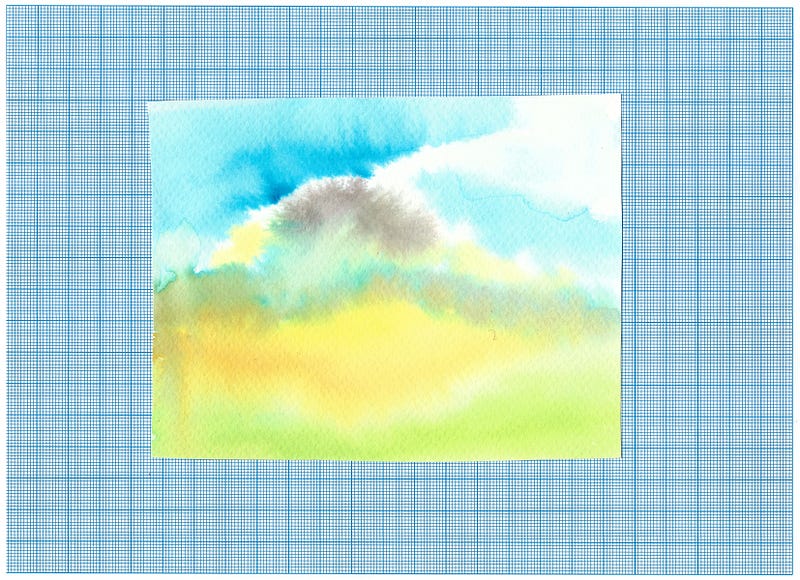
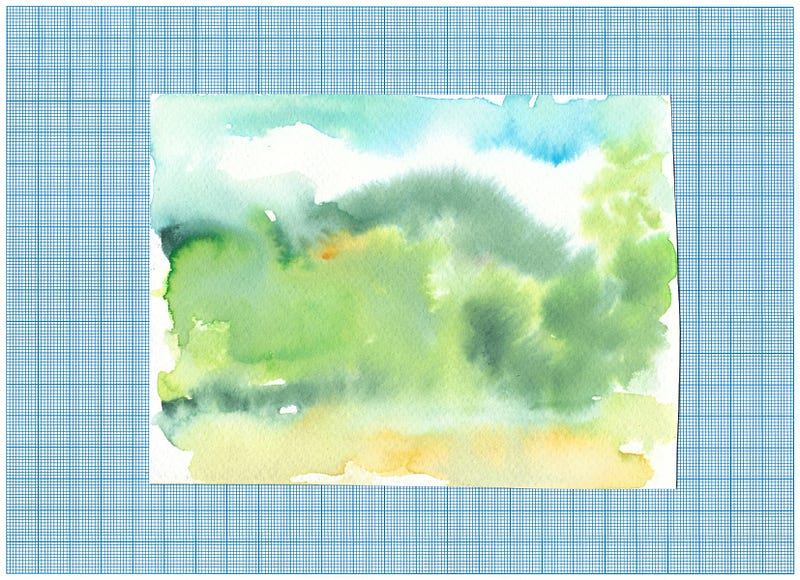
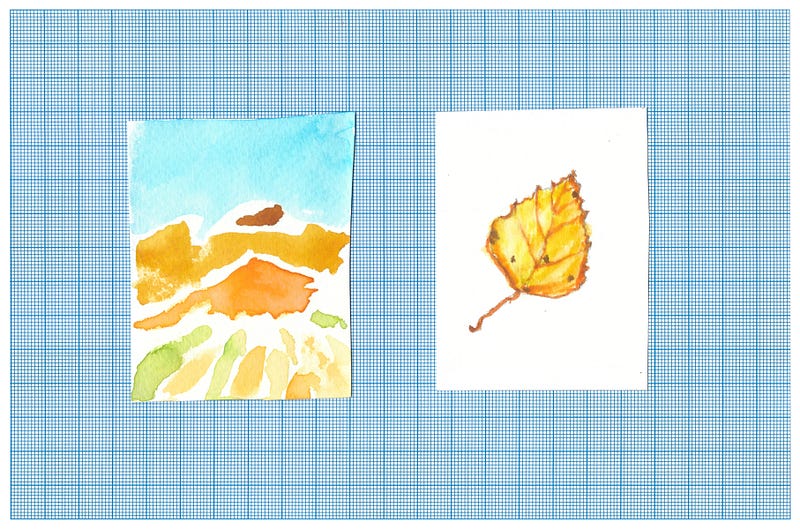
Kim Vertue on ‘Nature’s Pace’
During the lockdown 2020 we were lucky enough to walk daily through woods that offered a view of the mountain we lived on. We grew familiar with its changing moods and often vibrant colours.
The mountain that inspired me held its own secret. During the Second World War it harboured the nation’s most treasured art masterpieces, a safe refuge from the National Gallery and London’s Blitz. Churchill knew how important it was to protect this culture. Innovative science of the day was used to preserve the paintings from their dark dank environment, and occasionally a painting returned to the National Gallery by special request to feed the souls of embattled Londoners during Britain’s darkest hours.
It is hard to imagine how it was back then, but during May 2020 the only aircraft we heard above the birdsong on our woodland walk was a prop plane from that era. Perhaps it had taken part in the VE day anniversary commemorations that year. It conjured the wartime era vividly, especially as we also met an elderly lady on this walk who had lived on the local farm during war time. She pointed to pasture which her father had dug up to grow potatoes, and she remembered the delicious taste of buttermilk.
This nostalgia and the idea that paintings by Raphael, Rembrandt, Van Gogh were once hidden within the mantle of our mountain came to influence my painting during the Covid pandemic’s ‘darkest hour.’ I made quick mini water colour studies outside using only the water available on that day — dew on moss, raindrops caught on leaves, soft drizzle. This reflects the struggle of preserving such masterpieces at a constant temperature and humidity within the mountain. I scanned the works on a graph paper background, entering into a dialogue of scale and linking back to the technology they had at the time — after all, the graphic artists designing the spitfire did not have computers to help them…
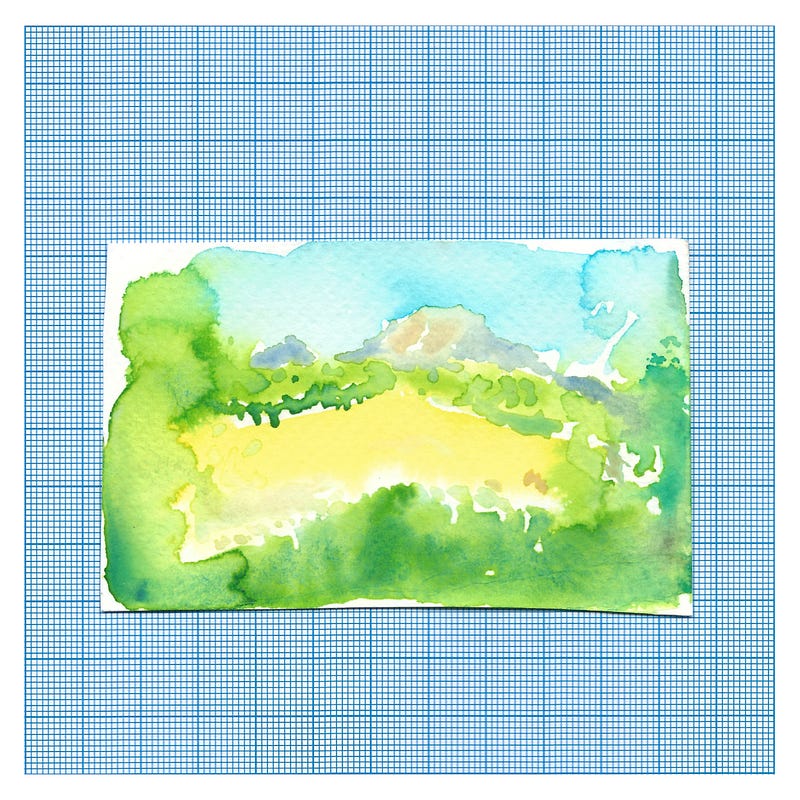
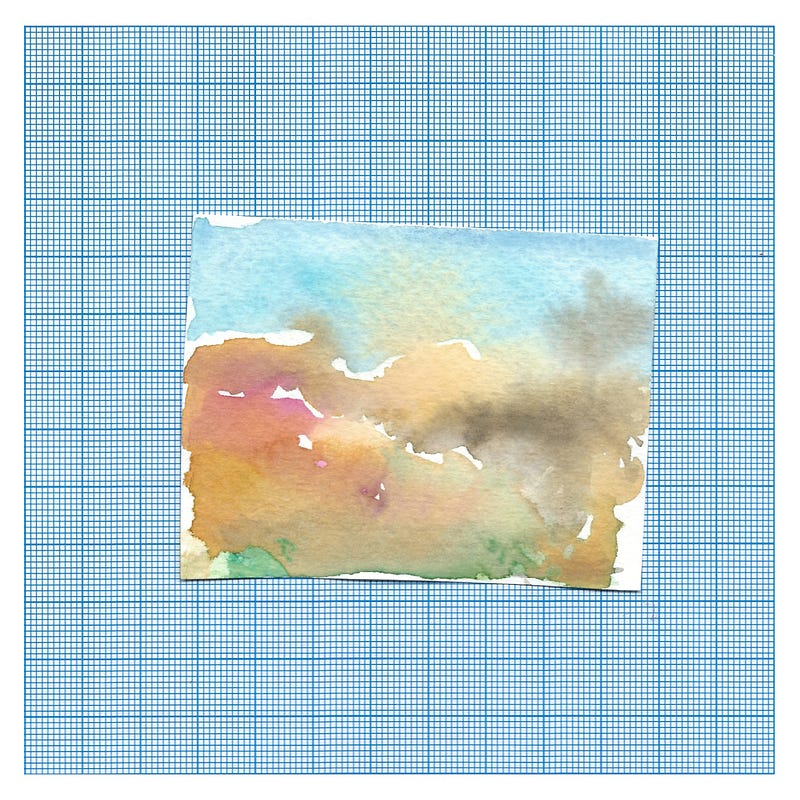
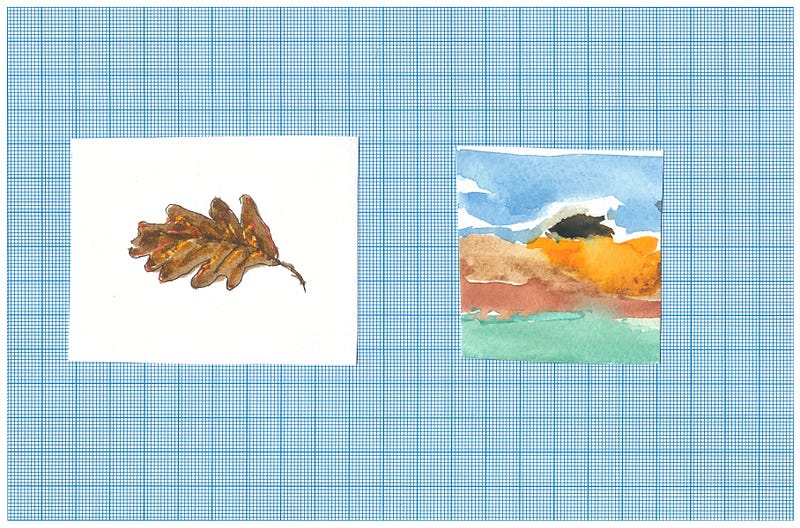
These paintings are vivid because the changing seasons, weather and light offer these fleeting glimpses; bright images of a traditionally austere landscape. It reminded me of the haystacks of Monet, how he painted them in different light, at various times of day, as I worked on this same view over and over. It also reminded me of the ‘Stargate Sequence’ in 2001: A Space Odyssey, which portrayed starscapes but also views of landscapes and seascapes in impossibly bright colours — green skies, red seas. We can glimpse that on our own spaceship Earth every day if we pause to look.
As we enter a new age of the Anthropocene, these Cambrian mountains will see even stranger skies because of climate change — such as red skies when Saharan dust drifts across a landscape formed by glaciers long ago, and strange pale pearl skies, which persisted during the 2022 heatwave in sustained temperatures up to 31 degrees Celsius.
Once again, we need to look to science to stabilise our climate, and art to envision a better future.
Kim Vertue