
Nature Coaching Doesn’t Always Need Nature to Be Effective
3 easy ways to improve your coaching practice by using the power of nature and metaphor
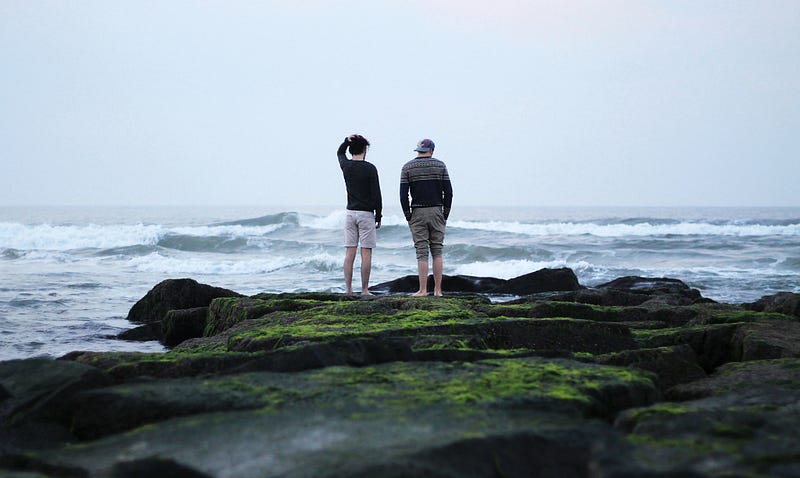
Nature has an unmatched power to transform, and the best thing is you don’t need environmental expertise to harness its power in coaching.
Nature has been proven to have many positive health effects, including the reduction of blood pressure, heart rate, muscle tension, and the reduced production of stress hormones.
Beyond physiology, people report emotional and mental health benefits. There’s an emerging field of ecopsychology where studies have shown:
Nature is not only nice to have, but it’s a have-to-have for physical health and cognitive function.” — Jim Robbins, Yale School of the Environment
When I first embarked on becoming a coach, I was curious about how to bring nature into my practice as it had been such a significant part of my personal and professional journey to that point.
Yet the practical and economic realities of taking clients into the natural world from the heart of the city for a coaching session seemed initially prohibitive. As I worked with more and more people, I found new ways to bring nature into my coaching practice.
Here’s three easy ways to get going that anyone could include regardless of whatever coaching niche you might have or expertise you bring.
1. Use actual nature
For me this is the gold standard, as nothing beats getting out into nature for an immersive experience.
Doing this in every coaching session may present logistical challenges but incorporating it occasionally can help shift patterns. I worked with one interstate client by phone over a period of months.
On a visit to her city, we arranged a session in an easy-to-access National Park. As we drove there, things already started to shift. The perspective of leaving the city behind was enough to create a sense of detachment from her day-to-day patterns.
The entrance to the park has a stunning vista with an extended view over mountains, fields, and out to the ocean. There was a physiological shift in each of us as we stood there.
The heightened perspective gave greater distance from the daily challenges and with it came perspective. By the time we returned later that day, she had more personal shifts than all our previous sessions combined.
Naturally, this kind of session may not be feasible on a daily or monthly basis, especially if you are coaching executives or leaders. That gives rise to other possibilities.
2. Invite your client to go for a walk
Another client lived in the city and was working from home during the pandemic. Again, we lived in different states and our coaching was over the phone.
He had been feeling stuck in several areas in his life and I wondered whether his environment was limiting his perspective.
To shift our approach, I asked if we could have our session over the phone while he went for a walk. The results were immediate.
He chose a path along the shore of Sydney Harbour. From the more expansive space of being outdoors, and having a view that extended several kilometres, I could hear the difference in his breathing, his tone, and his outlook. Space influences our mood and perspective.
He was no longer limited by the 15" frame of a monitor sitting two feet in front of him. He now had a wider viewpoint.
In his book Thinking, Fast and Slow, Daniel Kahneman shares a story about the influence of walking on our thinking, but the walking pace needs to be just right. He aimed for one mile every 17 minutes or so. Even quickening this to 14 minutes increases the level of concentration needed on maintaining the pace.
Slow meandering walks through a park without attention on the destination or navigating street crossings allow one to tap into other types of thinking.
3. Use powerful nature metaphors
Another client and I have yet to meet in person (most of my clients are virtual). And while the focus of our engagement is mostly around leadership coaching, we honour the power of nature in our sessions.
The most powerful metaphors are always the ones the client comes up with. My client has a keen interest in the environment and uses metaphors fluidly. I am attentive to the metaphors people bring up in coaching, as it is reflective of how they think about their situation.
Spring-boarding off their comments, I ask them to elaborate on what the metaphor means:
“You described your situation as an impossible mountain, what wisdom does that metaphor offer you in this situation?”
Metaphors are shortcuts for describing a complex situation using simple images. I’ve noticed people use metaphors unconsciously without necessarily examining the component parts of the image.
Because nature and landscape images are frequently used in spiritual texts, ancient myths, and contemporary stories, they are some of the most easily accessible metaphors available.
One doesn’t need to be an environmentalist or scientist to be able to speak the language of landscape. In asking someone what wisdom a metaphor offers will almost always reveal new layers of understanding.
And the cool thing is that the coach doesn’t need to have any expertise either. I often ask my clients, what images come to mind that could help you make sense of this situation?
One client had a particular interest in the intertidal zone on the shores of the ocean. I had very little knowledge about this landscape and was curious to find out what wisdom it held for her.
She went on to describe the volatility of the environment and the adaptability of a particular crustacean who lived there. She spoke of the rhythms and cycles of the tides, and knowing what to do and how to respond in each cycle.
Without any knowledge or effort from me as coach, my client came to a fuller understanding of the situation she was in and how to approach it.
The ideas here can equally be applied to individual or group coaching. Indeed, metaphor can be a powerful language for teams.
In whichever context you might work, I’m confident you’ll see powerful shifts in perspectives using these ideas. I’d love to hear your experiences in working with metaphor or nature.