avatarScienceDuuude

Summary

The website content discusses the complexity of genetic variation and its role in the evolution and individuality of living organisms, with a focus on human diversity, sex determination, skin color, and the influence of microbes on human development and behavior.

Abstract

The article "Naturally Selected Haikus" delves into the intricate world of genetics, emphasizing that while all humans share a common genetic code, subtle variations in our DNA give rise to the vast diversity observed within our species. It explores the genetic underpinnings of traits such as sex and skin color, revealing that even seemingly straightforward characteristics are governed by a multitude of genes. The text highlights recent findings that many genes contribute to skin color variations, particularly in diverse African populations. Beyond genetics, the article also examines the impact of environmental factors and the crucial role of the human microbiome. It suggests that the microbes within us are not merely passengers but active participants in our bodily functions, potentially influencing our evolution and contributing to our unique identities.

Opinions

  • The article conveys that genetic diversity is the foundation upon which natural selection acts, leading to the evolution of new species.
  • It challenges the simplistic view of sex determination, illustrating the complex genetic dance involved in the development of testes in mice, which by extension implies complexity in human sex determination.
  • The piece posits that our physical appearance is a result of a complex interplay of numerous genes and environmental influences.
  • It suggests that the human microbiome, once considered passive, is actually an essential component of our biological identity, potentially shaping our thoughts, feelings, and actions.
  • The article implies a symbiotic relationship between humans and their microbes, hinting at co-evolution and the need to view the human body as an ecosystem rather than a single organism.
  • It hints at the possibility that our individuality could be partly defined by the unique collection of microbes that inhabit our bodies.

Naturally Selected Haikus

Scikus dedicated to the proposition that all living things vary…

Photo by fauxels from Pexels

Genes

Written in our genes that bind and separate us, Evolution sleeps.

We are all bound by the DNA in our cells into a single book of humanity, a single species. Yet the genes and other information encoded in DNA also spell out the tremendous differences we see in each other — in our sex, skin color, height, hair, personality, down to many of the diseases that plague us. Those variations are the raw materials on which natural selection acts to evolve new species.

But even the simplest characteristics are complex genetically. For example, sex appears to us like a simple dichotomy: male and female. Simple to control by a single genetic switch, right?

Contrary to common sense, our sex is built by a complicated choreography of genes and biological processes.

Here is a chart showing some of the genes involved in just one step of sex-determination, the development of testis in mouse:
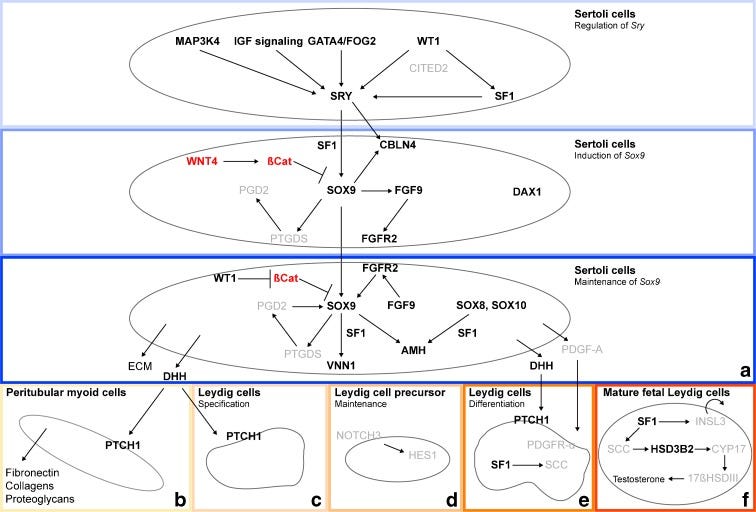
Genes and pathways for developing testis in mouse (Figure 2 in Eggers and Sinclair, 2012, Creative Commons)

Recent genetic studies of diverse African populations showed that many genes contribute to variations in skin color.

But genes do not act alone. What we see in the mirror emerges from a fog of factors, including many genes (our nature) and many things in our environment (our nurture).

And we are now discovering that our individuality is influenced by things at the hazy boundary between nature and nurture, the cloud of microscopic organisms covering every portion of our skin and innards. We are now finding out that the collection of microbes on and within our bodies are not only beneficial (helping digestion, preventing infections, etc.), but that they may be essential and even define who we are.

These microbes are not passive passengers on and within our bodies, as if we were a bus. They may be evolving with us and influencing our own evolution. We may have to think of them as part of us, all one system, one organism.

Evolution of Guts

Will you have some milk? I’m lactose intolerant. Well, forget you then!

For more on #30daysofScikuchallenge

Science
Poetry
Haiku
Evolution
30daysofscikuchallenge
Recommended from ReadMedium