
NATO’s Training Initiatives for Ukrainians
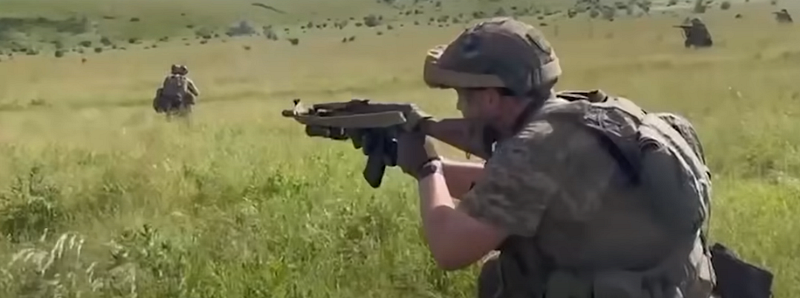
NATO has been actively involved in supporting Ukraine through various training initiatives. A joint training center is set to open in Poland, which will allow Ukrainian forces to train alongside NATO troops. This move is part of NATO’s broader strategy to bolster Ukraine’s defense capabilities against Russian aggression.
Russia’s Strategic Position
Russia’s advances in Ukraine, while resulting in some territorial gains, are largely perceived as more symbolic than strategic. The ongoing conflict has significantly impacted Ukraine, leaving the nation more vulnerable as it grapples with the repercussions of two years of warfare. The slowing of aid and Russia’s incremental territorial gains have compounded the challenges faced by Ukraine. However, the stability of Russia’s position is questionable, with indications that it is losing the war despite acquiring land.
The situation on the ground reveals a complex picture. Russia controls nearly 18% of Ukraine’s internationally recognized territory, including significant portions of Luhansk, Kherson, Zaporizhzhia, Donetsk oblasts, and Crimea. The capture of key locations such as Avdiivka represents Russia’s largest victory since the fall of Bakhmut in May 2023. Despite these developments, the UK Ministry of Defence has suggested that Russian forces may lack the combat effectiveness to immediately exploit the capture of Avdiivka.
On the other hand, Ukraine’s resilience in the face of adversity has been notable. The country has managed to withstand relentless attacks, even as it faces challenges such as being outnumbered and outgunned, with dwindling ammunition supplies. The fall of Avdiivka, after months of fierce resistance, underscores the intense pressure Ukrainian forces have been under.
The economic toll of the war is substantial for both nations. Ukraine is facing a dire human cost, with millions of civilians suffering, and the long-term impact of the war expected to be felt for generations. Russia, while sustaining significant military losses, is also incurring considerable economic costs, with estimates of direct military costs reaching $40 billion as of September 2022. Despite these losses, analyses suggest that Russia’s economy can sustain these costs for several years.
NATO’s Response to the Conflict
NATO’s Response to the Conflict NATO has consistently condemned Russia’s invasion of Ukraine, characterizing it as a brutal and unprovoked war of aggression against an independent, peaceful, and democratic country. The alliance has been unwavering in its support for Ukraine, providing unprecedented levels of assistance to help the country uphold its fundamental right to self-defense. This support has included coordinating Ukraine’s requests for aid and facilitating the delivery of humanitarian and non-lethal assistance, such as cold-weather clothing, body armor, fuel, transport vehicles, secure communications, combat rations, demining equipment, and medical supplies.
In addition to material support, NATO has significantly strengthened its political ties with Ukraine by establishing the NATO-Ukraine Council (NUC). This joint body allows Allies and Ukraine to sit as equals, advancing political dialogue, engagement, cooperation, and Ukraine’s aspirations for membership in NATO. The NUC serves as a forum for joint consultations, decision-making, and activities, as well as a crisis consultation mechanism between NATO and Ukraine.
The NUC was launched at the 2023 NATO Summit in Vilnius as part of a three-part package of support that brings Ukraine closer to NATO. This package includes a multi-year program of assistance to help the Ukrainian armed forces transition from Soviet-era to NATO standards, training, and doctrines; help rebuild Ukraine’s security and defense sector; and continue to cover critical needs. The Council can convene at various levels, including Heads of State and Government, Foreign and Defence Ministers, ambassadors, or at the military level, including Chiefs of Defence.
NATO’s response to the conflict has been robust and decisive, with the alliance placing tens of thousands of troops under direct NATO command, along with significant air and naval assets, to protect against Russian aggression. Secretary of Defense Lloyd J. Austin has emphasized that NATO’s determination to protect every inch of NATO territory is unwavering, and the alliance stands united in solidarity with Ukraine.
The NATO-Ukraine Council has also proven to be a reliable crisis consultation mechanism, with NATO continuing to provide Ukraine with urgently needed non-lethal assistance. As part of the efforts to support Ukraine’s long-term deterrence and defense, NATO is developing a roadmap for Ukraine’s transition to full interoperability with NATO and is working on new projects on humanitarian demining, medical rehabilitation for wounded Ukrainian soldiers, and Ukraine’s defense industrial capacity.
Ukraine’s Military Advances
Ukraine’s Military Advances Ukraine has exhibited remarkable resilience and strategic acumen in its military operations against Russian forces. Despite facing a formidable adversary, Ukraine has not only withstood the onslaught but has also achieved significant breakthroughs, particularly in the south, showcasing its capacity to reclaim territory. This has been evidenced by Ukraine’s successful counteroffensives, which have led to the recapture of key areas previously under Russian control.
In recent months, Ukrainian forces have demonstrated their ability to conduct rapid and effective counterattacks, exploiting Russia’s vulnerabilities and recapturing swathes of territory. For instance, the Ukrainian military’s strategic use of “operational art” has allowed them to outmaneuver Russian forces, achieving a position of advantage despite being outnumbered and outgunned. This has been particularly evident in the northeast, where Ukrainian troops have liberated towns and villages, including strategically important locations such as Izyum and Kupiansk.
Moreover, Ukraine’s counteroffensive has been marked by the use of deception and surprise, managing to conceal large military formations and intentions despite the challenges posed by modern open-source intelligence. This has enabled Ukrainian forces to launch unexpected attacks, catching Russian troops off guard and leading to significant territorial gains.
The Ukrainian military’s advances have not only been tactical but also strategic, as they have managed to disrupt Russian supply lines and isolate their forces, thereby weakening their operational capabilities. The recapture of territory has also had a symbolic significance, bolstering the morale of Ukrainian forces and the civilian population, while simultaneously demoralizing Russian troops.
Latest Developments
Latest Developments The conflict in Ukraine has indeed reached a phase where entrenched positions have made significant territorial advances challenging for both sides. As the war approaches its third year, the frontlines have largely stabilized, but this does not imply a cessation of hostilities. Instead, there is a persistent exchange of artillery and skirmishes along the contact lines. The recent reports indicate that Russian forces have made limited advances along the front line, with the war in Ukraine about to enter its third year.
Ukraine continues to demonstrate remarkable resilience in the face of these challenges. However, the country is grappling with the need for continuous supplies and military aid. The international community’s support remains a linchpin in Ukraine’s ability to sustain its defense efforts. This support has been substantial, with Ukraine receiving nearly $350 billion in aid, including $77 billion from the United States, though it warns of donor fatigue.
The human cost of the conflict remains high, with fighting and air strikes inflicting nearly 22,000 civilian casualties, while 5.1 million people are internally displaced, and 6.2 million have fled Ukraine. An estimated 17.6 million people need humanitarian assistance. On the military front, both sides have suffered heavy casualties, with the number of military casualties climbing to an estimated half a million.
Despite these sobering statistics, there have been developments that offer a glimmer of hope. For instance, Ukraine has stepped up drone attacks on Russian ships and infrastructure, showcasing its growing military capabilities and adaptability. Moreover, the international community continues to express its solidarity with Ukraine, emphasizing the importance of maintaining pressure on Russia to end the conflict.
In conclusion, the situation in Ukraine remains complex and fluid, with ongoing military engagements and strategic maneuvers. The international community, particularly NATO, plays a crucial role in supporting Ukraine’s sovereignty and territorial integrity. As the conflict continues, the need for sustained aid and military support for Ukraine becomes ever more apparent.