
Native women are exposed to high rates of violence in America — and it's driving the political agenda.
Four in five Native women experience violence in their lifetime. Now, healing and reconciliation are top of mind for voters.
This story is a project of the Indigenously newsletter. Sign up today. It’s free.
The day my mother told me my abusive father would be moving out, I fake cried to mask my happiness. At eight-years-old, I was a victim of repeated domestic violence, although I didn’t see myself that way. I was just a Native kid growing up in the early 1980s when society mostly ignored such cases of chronic abuse. The story of Pulitzer Prize-winning journalist, Seymour Hersh, is a testament to these times. He knew that President Richard Nixon beat his wife in 1974 but didn’t report it. “I was obtuse to the notion that it was a crime,” Hersh told Amy Goodman of Democracy Now! in 2018. “I didn’t get it.”
To Hersh’s modest credit, prior to 1984, battery on a household member was hardly seen as criminal. Most police were restricted from legally making an arrest unless they witnessed the violence. And even then, the punishment was minimal — misdemeanor charges — despite extreme acts involving strangulation or assault with a deadly weapon. For a good while, policing these kinds of incidents routinely ended in advising abusive husbands and boyfriends to “take a walk around the block.” In Native households, of which I grew up in, the ignoring was far worse.
Today, domestic violence is still largely not seen as a crime in America. At least 25 states treat at-home abuse as nonviolent offenses. Until this year, that was the case in Oklahoma, the backdrop to my storied childhood violence.
In May, Oklahoma Governor Kevin Stitt, who’s Cherokee, signed into law a bill that reclassifies several domestic abuse charges as violent crimes while subjecting offenders to stiffer penalties. It takes effect Nov. 1 two days before Election Day — but perhaps not soon enough.
Less than a month ahead of what many are calling the most historic and divisive general election in the American timeline, unraveling at a point when tensions are high after months of coronavirus quarantining — October also marks Domestic Violence Awareness Month. And this year, new risks for people in un-safe relationships have been revealed including a reported increase in cases and of harsher violent incidents. Native households are not immune.
The current political climate has had a galvanizing effect across Indian Country. A record number of Native American candidates are running for office this election year, including Native women. The trend is in large part carried by the historic victories seen from the 2018 midterm elections that sent the first two Native American women to Congress — Deb Haaland (Laguna Pueblo) and Sharice Davids (Ho-Chunk). Both women have led on platforms to combat extreme rates of violence against Indigenous women. It’s no surprise then that this year, more Native American women are running for Congress than ever before.
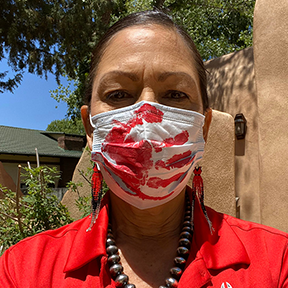
Among a majority of Native women candidates, their top campaign issues have carried a compassionate tone, from caretaking of the land, to healing from intergenerational trauma. More than anything, these campaigns have been driven by correcting an invisibility of Indigenous issues and history— a circumstance that no longer feels allowed.
“Native women, being part of systems, is how we’re disrupting the status quo,” said Lt. Governor of Minnesota, Peggy Flanagan, a tribal citizen of the White Earth Nation. “We’ve already seen the difference it’s made to have Deb Haaland in Congress and Ruth Buffalo in the North Dakota statehouse with the kind of attention it’s getting for Native issues,” she added in a recent live-streamed town hall.
Buffalo, a Mandan, Hidatsa and Arikara woman became the first Native woman Democrat elected to the North Dakota legislature in 2018. Both she and Rep. Haaland campaigned for justice for Indigenous women and have been successful in passing related legislation in their first terms in office.
For these reasons, there’s a sense that in this moment of racial awakening, and as we near Election Day, it’s Native women who are driving the political agenda in Indian Country on platforms of healing and reconciliation from White supremacist outcomes — social dialogue from an Indigenous perspective that’s largely been left out of political conversation.
Overall, Native Americans have experienced some of the highest rates of violence in the United States based on available data. More than 1.5 million Indigenous women have experienced some form of violence including sexual assault, domestic abuse, stalking, or even psychological aggression by an intimate partner. In some demographics, Native teens and women are killed at rates higher than all other Americans — some groups exceeding ten times the national average. Native men are also victimized, leading in deaths by police violence more than any other racial group in the nation. Per-capita, tribal citizens are twelve percent more likely to die by police violence than Black Americans and three times more than Whites, according to the Centers for Disease Control and Prevention.
At the polls, there is far less data that tracks how Native Americans have historically turned out to vote, or over what issues. The Census Bureaus’ 2018 midterm analysis left out Native Americans and Alaska Natives completely from their statistics. All other polls were mere samplings, as reviewed in Indigenously’s latest newsletter.
What we do know is that across the 35 states where today’s tribal nations are situated, as many as 20 bills addressing Native violence were introduced in at least eleven state legislatures in 2019. This year, another 18 proposed measures went before nine statehouses. The trend began in North Dakota where Rep. Buffalo sponsored a bill, now law, calling for a database to track missing Indigenous women. Meanwhile, at the congressional level, two legislative proposals were enacted this month targeting similar violence prevention laws.
On Oct. 10, President Donald Trump ratified Savanna’s Act and the Not Invisible Act, two measures backed by decades of grassroots organizing behind the movement known as “Missing and Murdered Indigenous Women” or MMIW. Last year, Trump devoted a White House task force to the issue, and as advocacy efforts have expanded, it’s grown to include Native victims across all genders. Such unity delivered widespread praise for the recent passage of the two laws.
“Today is a historic day for tribes across Indian Country,” said Navajo Nation President, Jonathan Nez, in a press release. The tribal leader oversees a reservation which spans three states in the American Southwest and has one of the highest murder rates per capita in Indian Country — an average of twenty homicides a year, according to FBI data from 2017, 2018, and 2019.
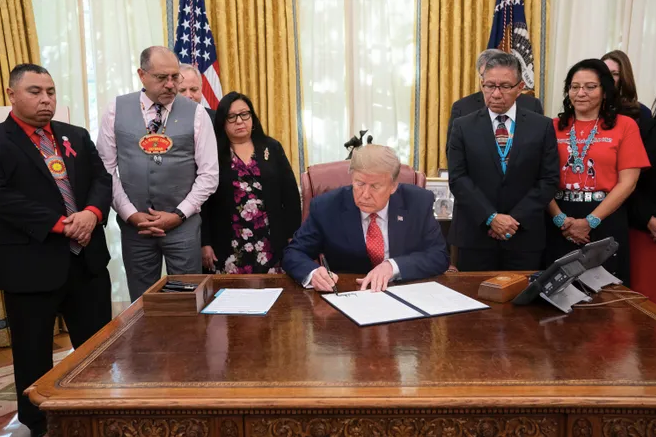
The Not Invisible Act creates an advisory committee on violent crime while Savanna’s Act — named in honor of Savanna LaFontaine-Greywind, a 22-year old pregnant mother of the Spirit Lake Nation who was murdered in August 2017 — will create new guidelines for responding to such cases.
“It was an absolute miracle that these bills became law when they did, by this administration,” said Elizabeth Carr, Senior Native Affairs Advisor for the National Indigenous Women’s Resource Center.
The NIWRC, a lead advocacy organization aimed to stop violence against Indigenous women, steadily lobbied for passage of the two laws as well as the re-authorization of the Violence Against Women Act which expired in 2018. But even with these legislative strides, and as domestic violence cases are seemingly on the rise, political polarization has stalled efforts to renew VAWA.
“We don’t think the Senate is going to be able to come to an agreement in this term,” said Carr. “Unfortunately, this puts VAWA on the back burner.”
The delays are added strain to violence prevention programs already strapped nationwide. Indian Country is no exception.
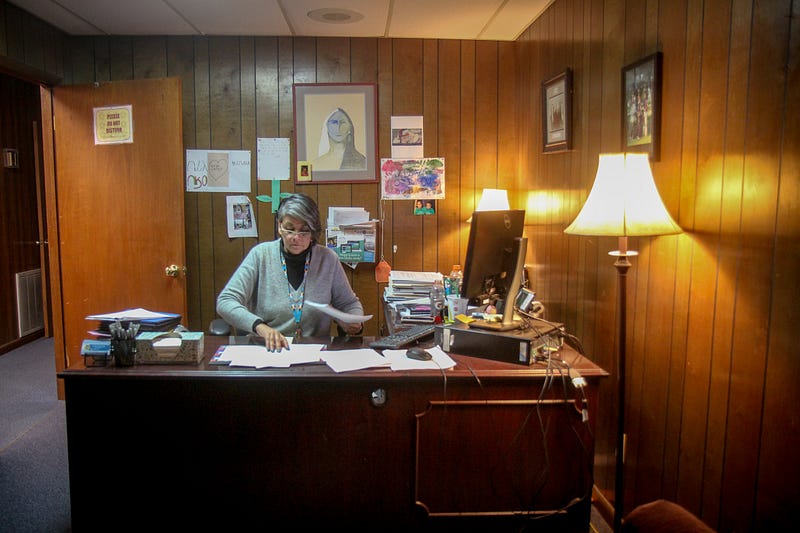
Stocked inside a cramped closet inside the Osage Nation’s Family Violence Prevention Department are supplies that Olivia Gray keeps on hand to give to the dozens of clients she sees each year. There are sensor lights to hang over doorways, small canisters of pepper spray to combat attackers, and heavy-duty door locks to keep abusers out. These are the affordable safeguards the tribe relies on to protect the mostly female clientele who visit the center each year.
The office, situated along the historic sleepy streets of downtown Pawhuska, OK, is one of 266 victim advocacy providers across Indian Country; its shelter, one of only 57 currently active in tribal communities nationwide. Combined, these safehouses represent roughly five percent of total domestic centers combined in the U.S. — what Native advocates call a “resource gap.” A third of Native women have reported unmet service needs when seeking escape from violent abuse, according to the National Institute of Justice.
Gray, a tribal citizen of the Osage Nation, said there never seems to be enough funding to keep pace with the needs of her clients. One unmet resource: transitional housing.
“It gives them a fighting chance to make it. It really does,” said Gray.
Most shelters in America limit a victim’s stay to up to thirty days before they are told to move on —but to where is as good a guess as any. Some seek other shelters. Others may wind up in the vicious cycle of returning back to their abuser. Gray and other advocates find such circumstances intolerable.
“After you’ve been in an abusive relationship for whatever length of time, but especially if it’s been long-term, you can not get your life together in 30 days. It’s ridiculous to even expect that.”
When coronavirus hit, the Osage Nation ordered all tribal offices to shut down. This included the domestic violence center and its shelter. The closure lasted for several months and when it re-opened Gray said while she was relieved that there wasn’t an uptick in domestic violence cases, something else disturbed her.
In mid-March, as a nationwide lockdown took effect, a special docket was created in Oklahoma to expedite the release of those detained on low-level offenses due to the COVID-19 outbreak. Oklahoma County, the county seat of Oklahoma City, released some 200 “nonviolent” prisoners. Tulsa County jail, a facility an hour away from Pawhuska, released dozens more.
After learning this news, Gray grew terrified. Many domestic violence abusers, considered “nonviolent” under Oklahoma state law, were now back on the streets.
“They just let them roam free,” she said.
From this, Gray said her clients came back to the re-opened center with stories that frightened her. The violence had gotten more violent, said Gray.
“Victims are pretty much trapped with their abuser,” said Joy Samuelson, Services Coordinator at StrongHearts Native Helpline and a tribal citizen of the Standing Rock Tribe.
National data is only emerging which suggests a spike in domestic violence during the pandemic. Meanwhile, StrongHearts coordinators say they are only beginning to track activity from calls made to their helpline. They’re also monitoring use of a new feature the organization introduced because of the lockdown — a chat option.
“When you’re trapped with your abuser, you need to get creative in your safety planning,” said Samuelson.
To this end, StrongHearts marketing of the chatline is even creative: “Get help without saying a word.”
In a matter of days, Oklahoma’s new law will take effect that will treat domestic abuse by strangulation or with a dangerous weapon, a violent offense resulting in stiffer sentencing.
The day Gov. Stitt, a Republican, signed the bill into law, he posted a video message on his Twitter account. “Domestic violence will not be tolerated in Oklahoma.”
This underwhelmed Gray, who has been an anti-violence advocate in Oklahoma’s Indian Country for decades. She called the reform legislation “piecemeal” explaining that the new law left out several other provisions to keep women and children safe.
“Lawmakers need to meet with grassroots organizers — the boots on the ground — to truly understand our needs,” said Gray who, last year, started her own nonprofit organization NOISE, the Northeast Oklahoma Indigenous Safety and Education foundation. It was her personal response to help close the resource gap in her greater community and on the Osage Nation where a history of neglected violence against Indigenous women extends back to the 1920s Oklahoma oil boom. The Osage have a name for this period: the “Reign of Terror.” In this way, Gray is critical of the pair of MMIW laws recently enacted by Trump.
“If Congresswoman Haaland would come and sit with organizers, I know that it would make a difference,” said Gray. Haaland was a lead sponsor of the Not Invisible Act and campaigned heavily on the issue of curbing violence against Indigenous women in the 2018 midterm election.
“I’ve heard Haaland defend the Violence Against Women Act; I’ve seen her get teary-eyed over it. I know that she cares,” said Gray — her words, a subtle slight to the two Native American Republican men running for re-election in her home state — Rep. Tom Cole (Chickasaw) and Rep. Markwayne Mullin (Cherokee).
Even though Cole and Mullin, along with Rep. Davids of Kansas joined Haaland in sponsoring the Not Invisible Act, Gray said the two men have had years to address the safety of Native women, but haven’t.
“They just blow this stuff off.”
Back when I was a kid, the extent of violence prevention across Indian Country literally represented writing on the wall — government posters that would hang in Indian hospitals and tribal courthouses with the popular slogan, “Violence is not our tradition.”
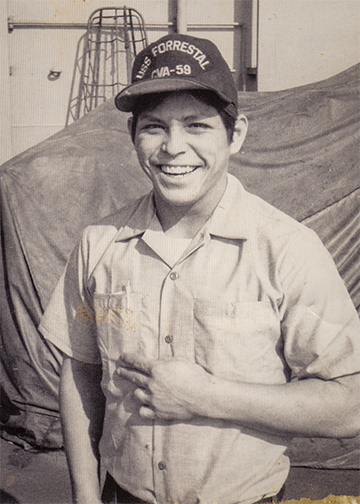
I remember those posters well simply because I, myself, was a poster child to this cycle of violence, although it would take me decades to process this past. I have since learned that my abuser, my Turtle Mountain Chippewa father, was also a victim of abuse, himself. His father, my grandfather, had beat his children, too — what relatives say stemmed from violence endured at a Catholic boarding school not far from the Turtle Mountain reservation.
It strikes at the heart of the intergenerational trauma and a widespread need for tribal communities everywhere to heal — and it’s Native women candidates like Deb Haaland who are addressing this need.
In late September, Rep. Haaland and Sen. Elizabeth Warren (D-MA) introduced a bill that seeks reconciliation for stolen Native children and their communities. The Truth and Healing Commission on Indian Boarding School Policy in the United States Act intends to establish the first formal commission in U.S. history to investigate, document, and acknowledge past injustices of the federal government’s cultural genocide and assimilation practices through its Indian Boarding School Policy — what my Turtle Mountain grandfather endured.
“Native people are resilient and strong, but the painful and traumatic history of genocide and forced assimilation by the federal government lives on in our communities,” said Congresswoman Haaland. “Our people have never been able to fully heal.”
It is but one more example of how Native women are setting the political agenda for Indian Country — as caretakers, as culture bearers — and at a time when few elections until now have felt so important.
Election SOS Fellows Miacel Spotted Elk and Tsanavi Spoonhunter contributed to this article.
Reprints and reposts: Indigenously encourages you to make free use of this article by taking these easy steps.